

Why Is My Dog Shaking? The Practical Decision Guide Worried Owners Actually Need
If your dog is shaking, the quickest useful question isn’t “Why is this happening?” but “What else is going on with my dog?” Mild trembling can come from cold, stress, excitement, or a body that’s simply tired after exercise, but shaking plus pain, vomiting, collapse, wobbliness, or possible toxin exposure needs vet attention fast.
What to look at first
- Shaking matters most when you look at the context, not the movement alone.
- Cold, stress, and excitement can cause mild trembling, but pain, nausea, or injury often look similar.
- Emergency signs include collapse, trouble breathing, pale gums, seizure activity, and suspected poisoning.
- If the shaking is new, repeated, or paired with vomiting, diarrhea, weakness, or limping, call your vet the same day.
What does the shaking look like, and what was happening right before it started?
The same shaking can mean very different things depending on where it shows up and what happened right before it started. A full-body tremble after a chilly walk is a different problem from one front leg quivering while your dog refuses to put weight on it, or a head bob that appears out of nowhere while the rest of the body stays still.
Body-wide shaking often points to temperature, stress, pain, nausea, or a problem affecting the whole system. One-leg trembling makes me think more about injury, strain, or something painful in that limb or paw. Head tremors can be harmless in some dogs, but they can also be neurologic, which is why the surrounding context matters so much.
Timing is a huge clue. Shaking after a swim, a bath, or a cold night is often plain shivering. Shaking after eating can fit nausea, an allergic reaction, or pain. Shaking that starts during fireworks or a thunderstorm may be fear-related, while shaking after a new medication, chew, or houseplant raises the question of poisoning or a drug reaction.
Pair the shaking with what you can see and hear. Panting, lip-licking, pacing, hiding, vomiting, diarrhea, whining, limping, a hunched back, or a sudden refusal to settle all push the situation away from “probably fine” and toward “something is bothering my dog.” The American Kennel Club and PetMD both emphasize that context and companion signs are what make trembling meaningful, not the movement alone.
Could this be harmless, or is my dog in pain?
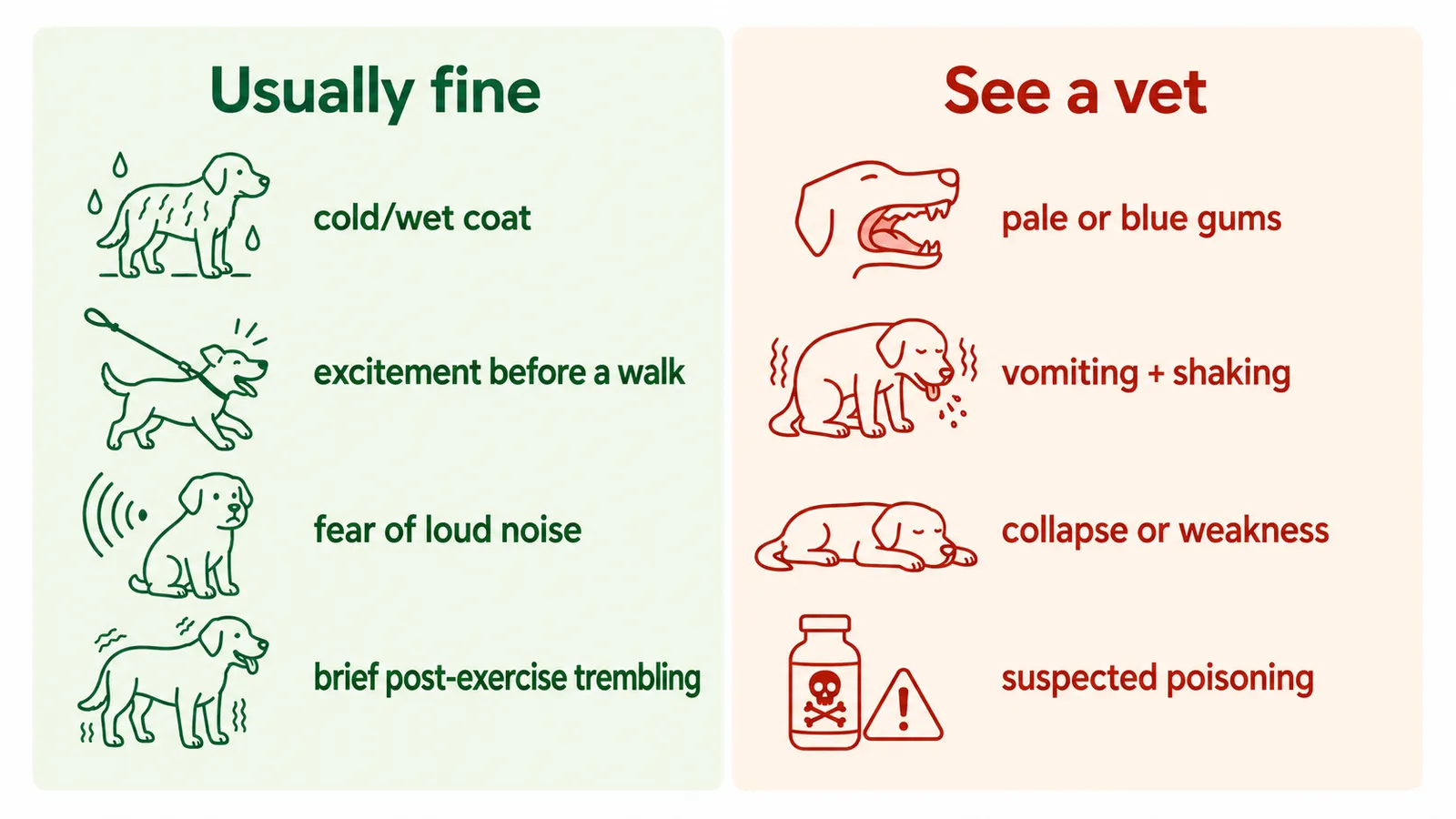
Shaking can be harmless when it matches the situation, but pain and illness often look deceptively similar at first. A dog that is cold or excited usually looks otherwise normal. A dog in pain often changes posture, moves carefully, avoids contact, or can’t settle because the body is trying to protect something that hurts.
| Possible cause | Typical clues | What owners often miss | Home monitoring or vet care? |
|---|---|---|---|
| Cold | Occurs after a bath, swim, icy walk, or sleeping in a draft; dog otherwise alert | Shaking can stop once the dog is warmed, but a wet coat can keep them chilled longer than you think | Home monitoring is reasonable if it stops quickly and the dog acts normal |
| Fear or anxiety | Triggered by storms, fireworks, strangers, car rides, vet visits | Some dogs shake quietly without barking or hiding, so the fear looks smaller than it feels | Usually monitor at home if the trigger is obvious and the dog recovers normally |
| Excitement | Starts around guests, walks, meals, or play | Excitement shaking should settle once arousal drops; if it does not, look deeper | Home monitoring is usually fine unless other symptoms appear |
| Pain | Hunched posture, trembling when touched, reluctance to move, limping, whining, guarding a body part | Dogs hide pain well, especially if they are stoic or have arthritis | Vet care is more appropriate, especially if the shaking repeats or worsens |
| Nausea | Lip-licking, drooling, swallowing, grass-eating, restlessness, vomiting | A dog may shake before vomiting, not just after it | Vet advice is wise if it persists, repeats, or comes with vomiting or lethargy |
| Fever or illness | Warm ears, low energy, loss of appetite, wanting to lie alone | Not every sick dog looks miserable at first; some just seem “off” | Vet care is appropriate if shaking is paired with illness signs |
| Low blood sugar | Weakness, wobbliness, confusion, collapse; more likely in tiny dogs or puppies | People sometimes mistake it for simple tiredness | Urgent vet care is needed; do not wait if the dog seems weak or disoriented |
| Toxin exposure | Tremors, drooling, vomiting, agitation, unsteady walking, seizures | Owners may miss a lick of chocolate, xylitol, cannabis, a slug bait, or a human medication | Emergency or poison helpline level concern, depending on the substance |
Age and body size change the odds. Puppies and toy-breed dogs are more vulnerable to low blood sugar. Older dogs are more likely to shake because of pain, arthritis, or neurologic disease. Dogs with diabetes, a history of seizures, or recent surgery deserve a lower threshold for veterinary advice. The Merck Veterinary Manual and Cornell University College of Veterinary Medicine both stress that background health matters when shaking is part of the picture.

When should I take my dog to the vet for shaking?
You should seek emergency help if the shaking comes with trouble breathing, collapse, a seizure, a bloated or hard belly, blue or pale gums, or suspected poisoning. You should call the vet the same day if the shaking is repeated, unexplained, or paired with vomiting, diarrhea, pain, fever, marked lethargy, wobbliness, or a sudden behavior change.
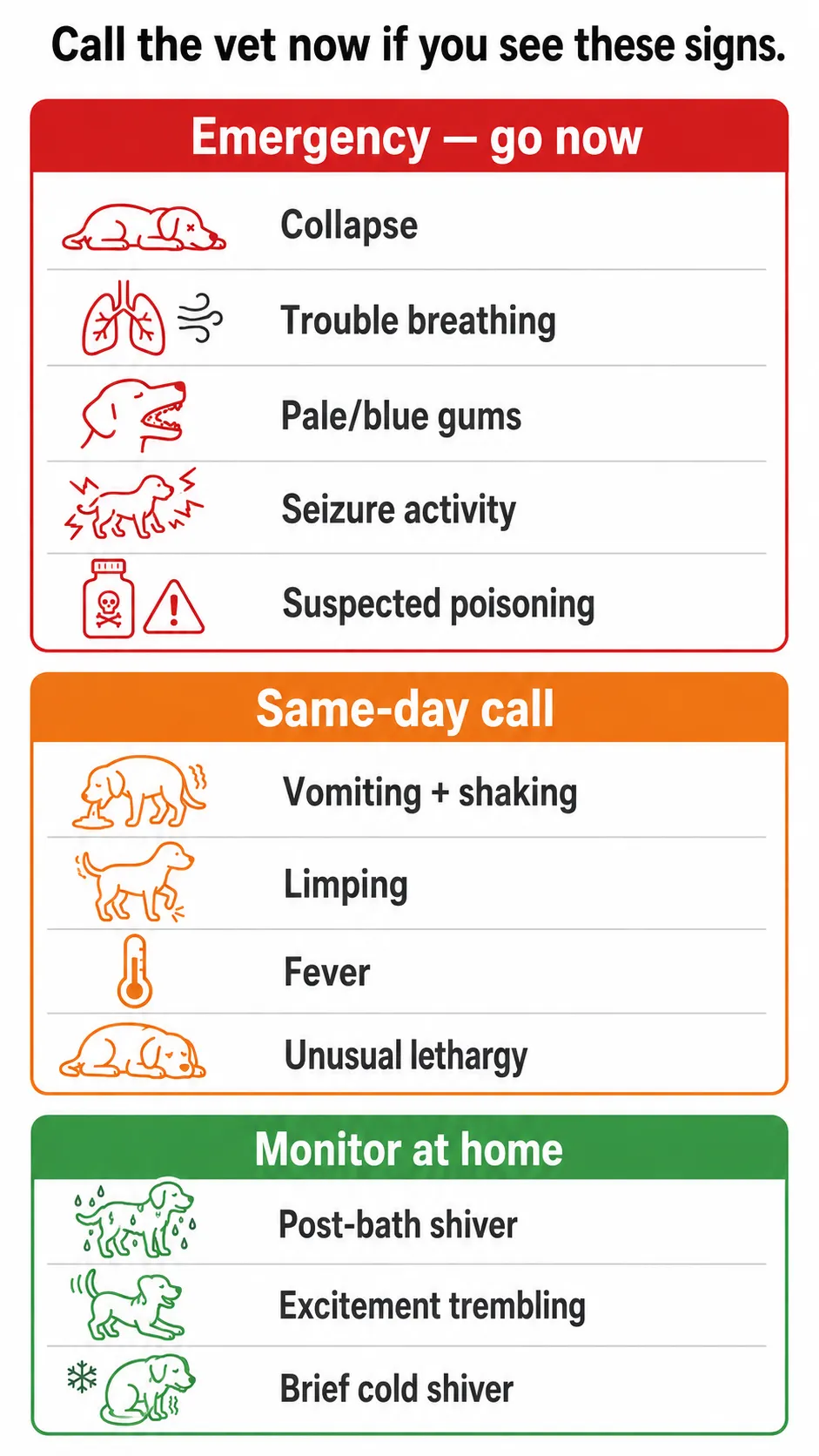
- Emergency signs: trouble breathing, collapse, seizure activity, blue or pale gums, a swollen abdomen, or known/suspected toxin exposure such as chocolate, xylitol, cannabis, rodent bait, or human medication.
- Same-day vet reasons: shaking with vomiting or diarrhea, obvious pain, fever, repeated tremors, limping, weakness, refusal to eat, or a dog that seems unusually dull or withdrawn.
- Call a poison line right away if you think your dog ate something toxic. In the US, that means the ASPCA Animal Poison Control Center or Pet Poison Helpline.
- If the dog is stable but the shaking is new, persistent, or hard to explain, your vet should hear about it today rather than tomorrow.
- Have the onset, duration, and any triggering event ready before you call. A short video can save a lot of guesswork.
What should I do right now if my dog is shaking?
Your job in the moment is to make the dog safe, keep things calm, and avoid accidental harm. If the shaking seems mild and the dog is otherwise normal, warmth, quiet, and observation may be enough while you decide whether to call the vet. If the dog looks unwell, don’t try to “wait it out” for long.
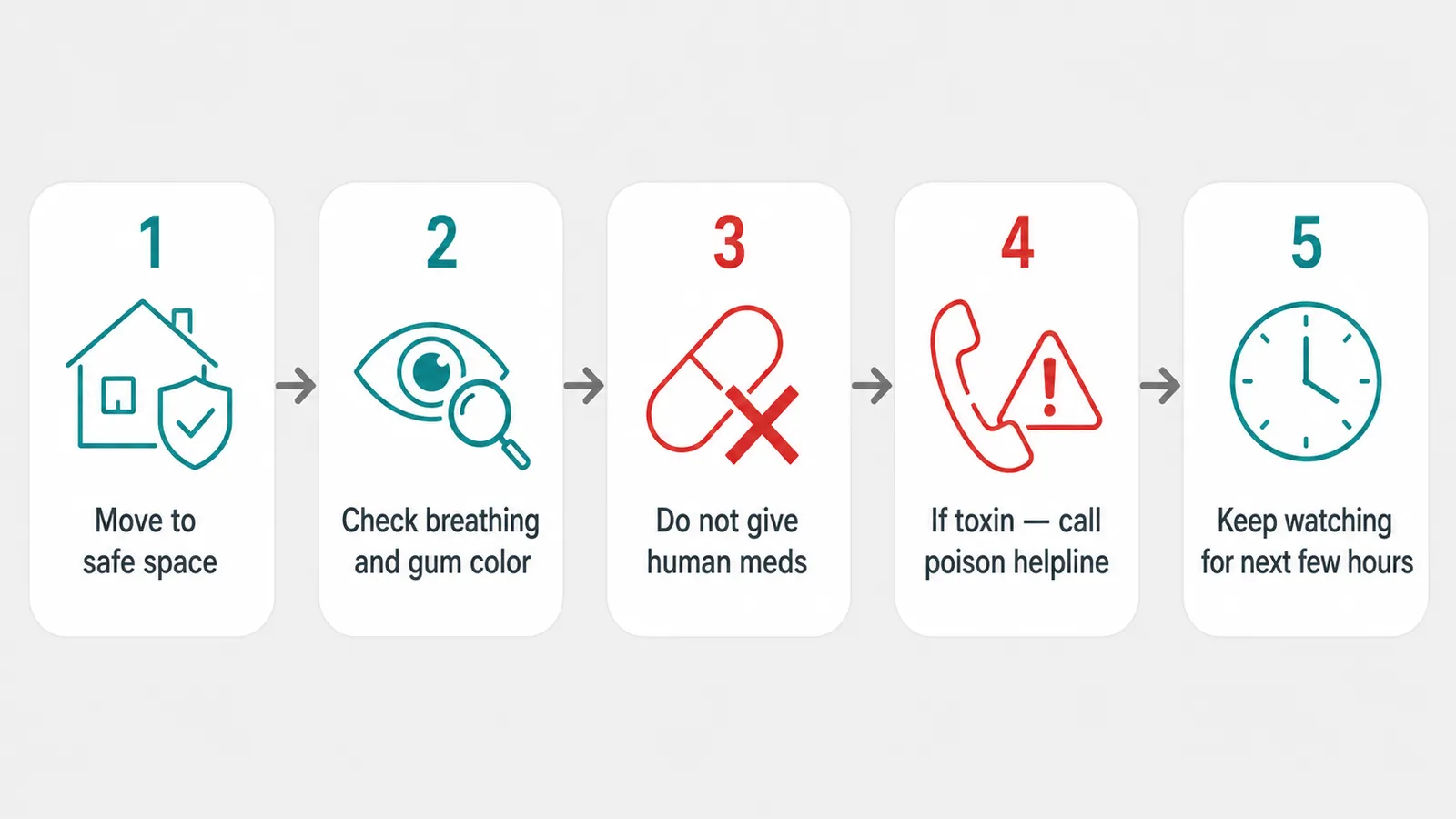
- Move your dog to a quiet, safe space away from stairs, slippery floors, and other pets. If the dog seems cold, offer a blanket or a warm room rather than direct heat.
- Watch the breathing, gum color, and ability to stand. If your dog is struggling to breathe, collapsing, or becoming less responsive, treat it as an emergency.
- Do not give human pain medication. Common medicines like ibuprofen and acetaminophen can be dangerous for dogs, and a quick attempt to “help” can make the problem worse.
- If toxin exposure is possible, remove access to the substance and call a poison helpline or emergency clinic immediately. Don’t force food, milk, salt, or random home remedies.
- If the dog is alert and able to swallow normally, water is usually fine. Hold off on food if nausea, vomiting, or abdominal pain is part of the picture until a vet advises otherwise.
- If the shaking settles, keep watching for the next few hours. If it returns, worsens, or is joined by any other symptom, upgrade the response level instead of talking yourself out of it.
A quick at-home sorting guide for worried owners
This three-part check helps you sort a shaking episode without pretending you can diagnose it at home. I use it as a decision filter: Context, Companion Signs, and Duration. If all three point in the same mild direction, watchful waiting may be reasonable. If even one points hard toward illness, pain, or toxin exposure, act sooner.
| Criterion | What to look for | Usually watchful waiting | Same-day vet advice | Emergency care |
|---|---|---|---|---|
| Context | What happened right before the shaking started? | After a bath, cold walk, surprise noise, or exciting event; dog returns to normal once the trigger ends | After a meal, new medication, recent injury, or a day of seeming “off” | After possible toxin exposure, a fall, heat stress, or sudden collapse |
| Companion Signs | What else is happening with it? | Dog is alert, drinking normally, moving normally, and eating normally | Mild vomiting, limping, hiding, repeated lip-licking, shakiness that keeps coming back | Trouble breathing, blue/pale gums, seizure, collapse, severe vomiting, a swollen belly, severe weakness |
| Duration | How long does the shaking last, and does it repeat? | A brief episode that stops when the trigger ends and does not return | Repeated episodes, shaking that lasts longer than expected, or a pattern over the day | Continuous tremors, worsening shaking, or any episode with neurologic changes or collapse |
The mistake most worried owners make is judging by intensity alone. A small tremble with pale gums and vomiting can be more serious than a dramatic shake after a thunderclap. The RSPCA and Blue Cross UK both lean on the same practical idea: look at the whole dog, not just the movement.
How to prepare for the vet call or visit
A good vet conversation gets faster and more accurate when you bring the details, not just the headline symptom. A short video of the shaking is one of the most useful things you can have. It helps a vet tell trembling from weakness, twitching, a seizure, or pain-related guarding.

Write down when the shaking started, how long it lasted, whether it came and went, and what your dog was doing right before it began. Add any changes in food, treats, medications, supplements, grooming products, flea or tick products, travel, trash access, or time outdoors. Vets may also ask about vaccines, recent boarding, contact with other animals, and any chance your dog got into human medicine, compost, rodent control products, or cannabis.
If you’re unsure whether to call your regular vet, an emergency clinic, or a poison service, start with the highest-risk possibility you can reasonably imagine. That may feel dramatic at 11 p.m., but it’s better than missing a toxin or brushing off pain that’s getting worse. The AVMA recommends giving your veterinarian enough context to help sort urgency quickly, and that starts with clear notes from you.
The calmest next step is usually the smartest one: warm the dog if cold seems likely, keep the environment quiet, and get help quickly if the shaking is new, repeated, or paired with anything that makes you uneasy. If your gut says this is more than a passing tremble, trust that instinct and make the call.
Common questions
Why is my dog shaking but acting normal?
Mild shaking with otherwise normal behavior can happen from cold, stress, excitement, or a brief moment of discomfort. If it keeps happening, starts after eating or medication, or comes with any other symptom, it deserves a vet call.
When is dog shaking an emergency?
It’s an emergency if the shaking comes with collapse, trouble breathing, a seizure, pale or blue gums, a hard or swollen belly, or suspected toxin exposure. Don’t wait if your dog is getting weaker or less responsive.
Can pain make a dog shake?
Yes. Pain can absolutely make a dog tremble, especially if you also see limping, a hunched posture, reluctance to move, or trouble settling. Shaking that seems to protect one area of the body should be taken seriously.
Should I give my dog food or water if she is shaking?
Only if she is fully alert, able to swallow normally, and not vomiting. If the shaking may be related to nausea, toxin exposure, or sudden illness, it’s better to call the vet first than to guess.
What if my dog is shaking after vomiting?
Shaking after vomiting can mean nausea, pain, or something more serious, including toxin exposure or abdominal disease. If it happens more than once, or your dog seems weak, painful, or unusually quiet, contact your vet the same day.
Sources and further reading
The veterinary references behind this guide:
- AKC, Why Is My Dog Shaking? Causes and Solutions
- VCA Animal Hospitals, Shaker Syndrome in Dogs
- Merck Veterinary Manual, Tremorgenic Neuromycotoxicosis in Dogs
- ASPCA Animal Poison Control Center
- AKC, Should I Call My Vet? Knowing When to Ask