
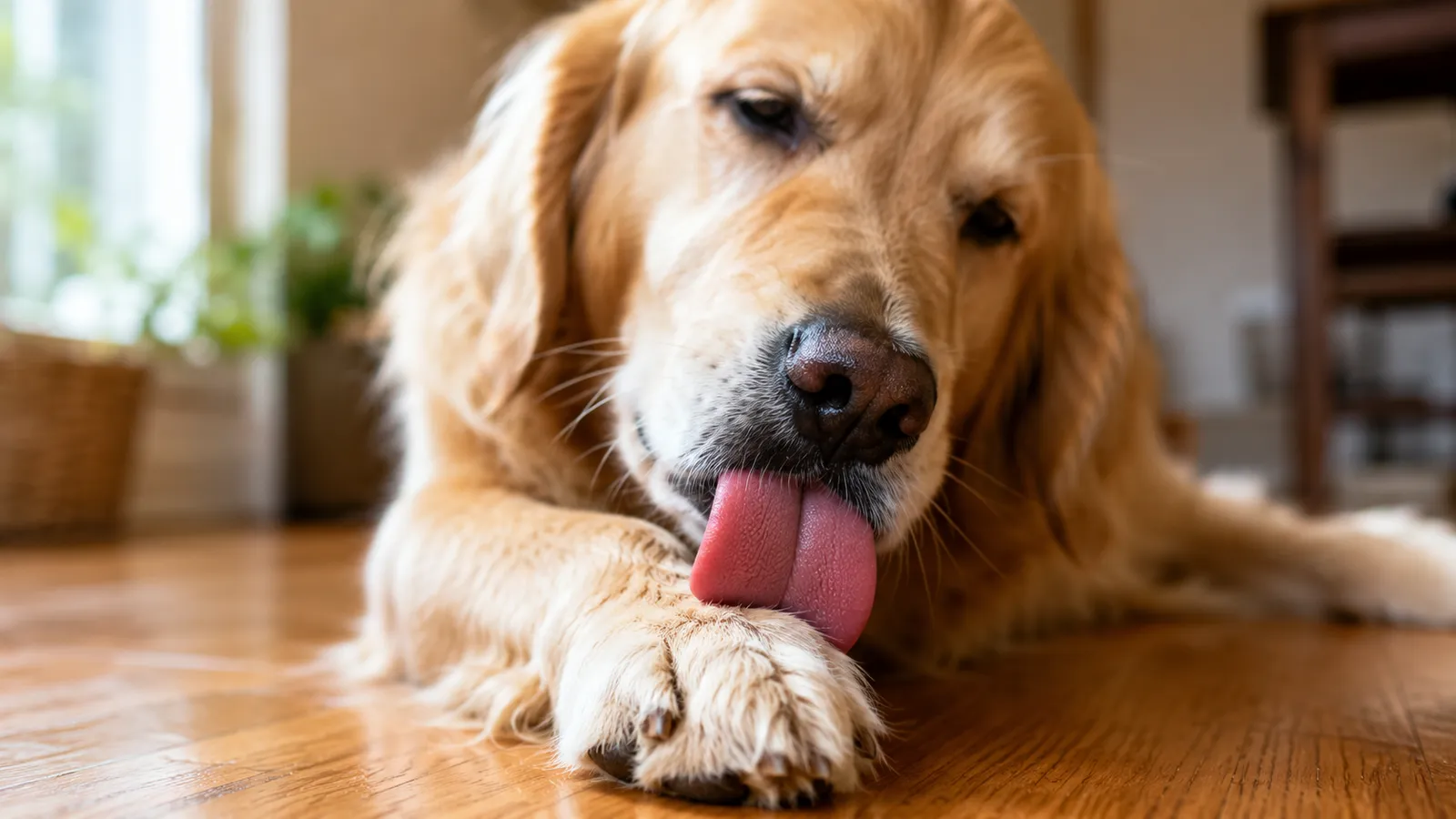
Why Does My Dog Lick His Paws Constantly? How to Tell Allergy, Pain, and Stress Apart
Why is my dog licking his paws constantly? Most of the time, it means something is irritating him, hurting him, or just making him uncomfortable. A little licking is normal grooming. Constant licking usually points to a problem such as allergies, a paw pad injury, something stuck between the toes, infection, fleas, arthritis, or stress.
- A little paw licking is normal; constant licking usually means something is wrong.
- One paw suggests a local issue like injury or pain; all four paws often points to allergies or irritation.
- Wet, red, smelly, or swollen paws raise concern for infection and need vet attention.
- Stress can contribute, but it should not be assumed without ruling out pain and itch first.
The quickest way to figure it out is to look at the pattern, not the licking itself. One paw or all four, after walks or after rest, dry skin or skin that’s red, wet, or smelly, and calm grooming or frantic licking all point in different directions.
What does the pattern of licking tell you?
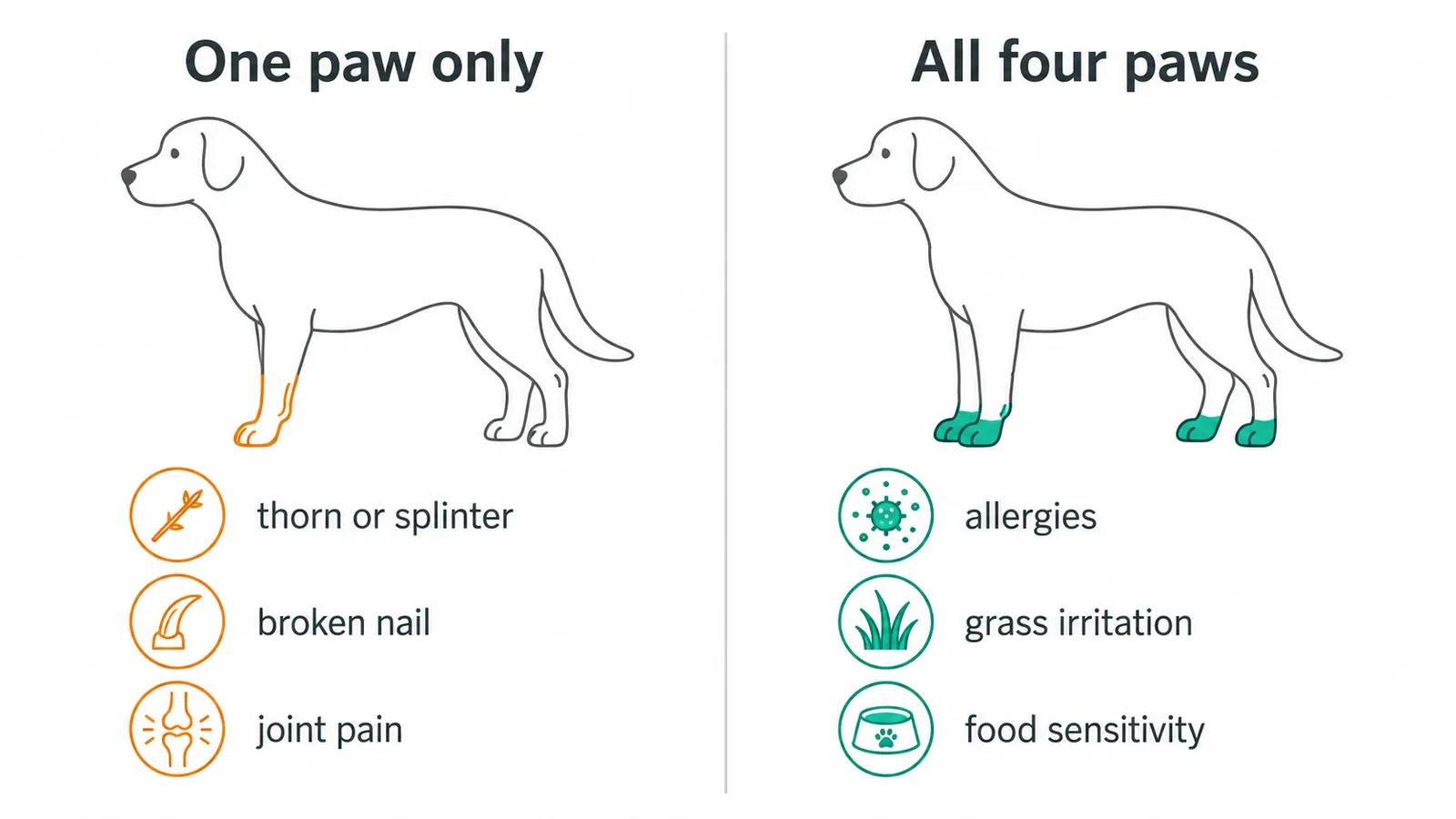
- One paw only often points to a local problem such as a thorn, cut nail, splinter, toe injury, or a painful joint on that leg. All four paws, or a dog that rotates between paws, more often suggests allergies, irritation from grass or salted sidewalks, or a behavior pattern that is becoming hard to interrupt.
- Licking that starts after walks makes me think first about environmental irritation, small debris, foxtails, salt, cleaning residue, or contact with pollen and grass. Licking that shows up after naps or at night can lean more toward pain, stiffness, or a habit that becomes more obvious when the house is quiet.
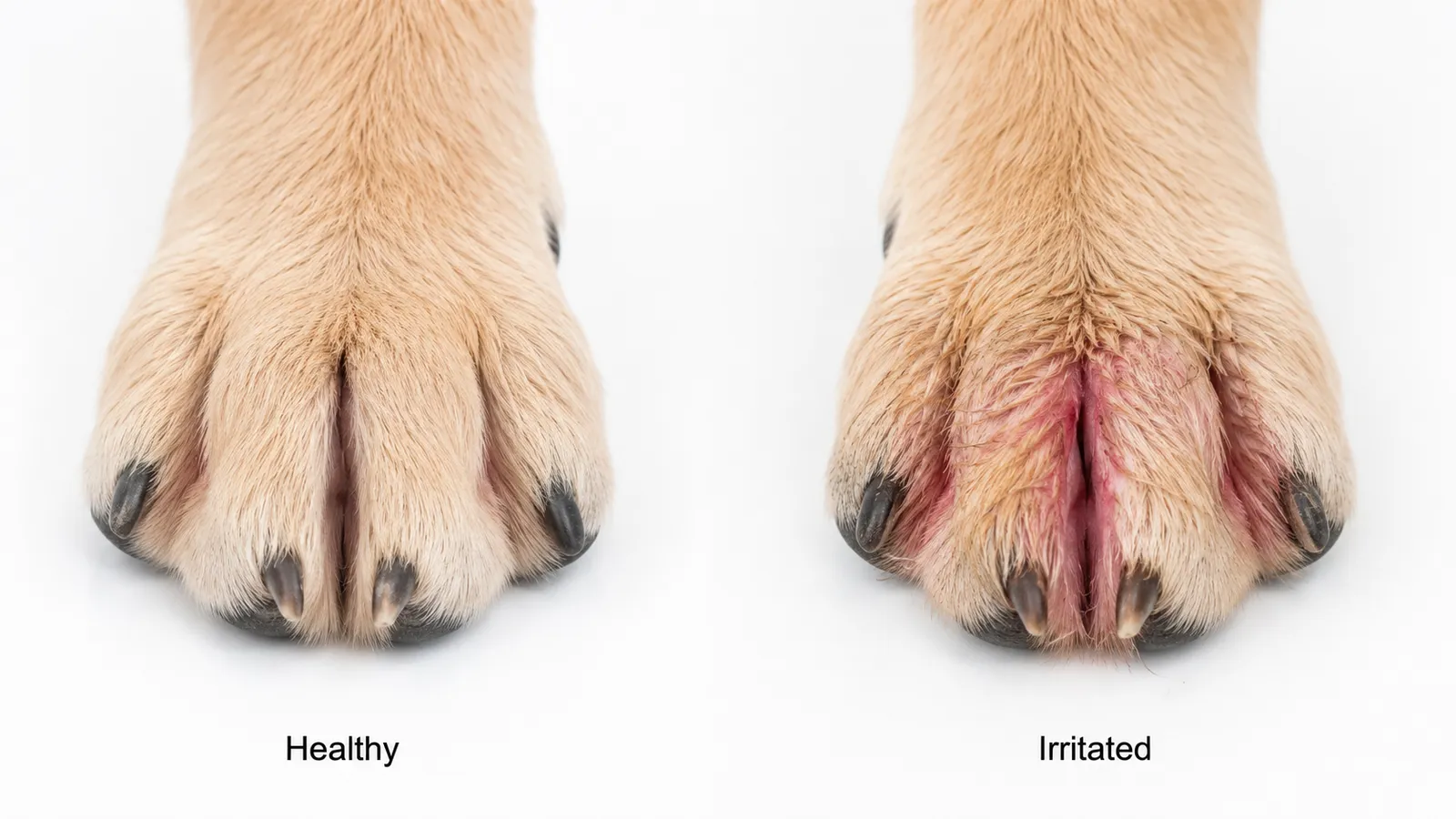
- Wet fur between the toes, redness, a sour smell, or staining from repeated licking usually means the skin is already inflamed. If the dog is licking and chewing instead of just licking, or if he also has head shaking, limping, or scratching, the problem is more likely to need a vet visit than a watch-and-wait approach.
Could it be allergies, an injury, or something stuck in the paw?
| Possible cause | Typical pattern | What the paw may look or smell like | Other clues |
|---|---|---|---|
| Environmental allergies | Often both front paws or more than one paw, sometimes seasonal or worse after grass, pollen, or walks | Red skin between toes, wet fur from licking, sometimes mild swelling | Itchy ears, face rubbing, flare-ups after outdoor time; Earthborn Holistic Pet Food notes environmental allergies are a common trigger |
| Food allergies | Can look similar to environmental allergies and may be more persistent than seasonal | Inflamed paws, repeated licking, possible chronic itch | Often comes with broader skin issues, not just paws; it is usually a vet-workup question rather than something you can confirm by guessing |
| Foreign body or paw pad injury | Usually one paw, often sudden, sometimes after a walk | A cut, broken nail, swelling, trapped debris, or tenderness; may smell if infection has started | A thorn, glass, seed awn, or cracked pad can make a dog lick hard enough to hide the original injury |
| Skin infection | Often follows another problem or develops after repeated licking | Odor, moisture, redness, discharge, crusting, or sores | A bad smell or pus is a strong sign this is beyond simple irritation; Bright Vet notes constant licking can lead to infection and open sores |
| Fleas or parasites | May involve multiple itchy spots, not only the paws | Skin irritation, scabs, or general itch rather than a clean-looking paw problem | PetMD includes fleas among common causes, especially when licking is paired with other itch signs |
A bad smell, discharge, or obvious swelling usually moves the problem out of the “probably just irritation” category. Once the skin gets wet and damaged, infection can move in fast, and the licking keeps feeding the cycle.
Is paw licking ever about pain or arthritis?
Yes. Dogs with pain often lick one paw, one toe, a nail, or the lower part of a front leg because that spot hurts, feels unstable, or is taking the load from stiffness somewhere else. Adobe Animal Hospital notes that one-paw licking can point to joint pain or another underlying issue, and Best Friends Animal Society lists arthritis and joint pain among the triggers behind obsessive paw licking Adobe Animal Hospital Best Friends Animal Society.
Pain-driven licking is easy to miss because the dog may still walk, eat, and greet you like normal. Watch for the smaller signs: stiffness after rest, slower starts on stairs, hesitation to jump into the car, licking that starts when he settles down, or one paw that gets most of the attention after exercise.
Arthritis is especially worth considering in middle-aged and older dogs, but it is far from the only pain source. A sore nail bed, a strained toe, or pain higher up in the leg can all make the paw look like the problem when the paw is really where the discomfort shows up.
Could stress or boredom make my dog lick his paws constantly?
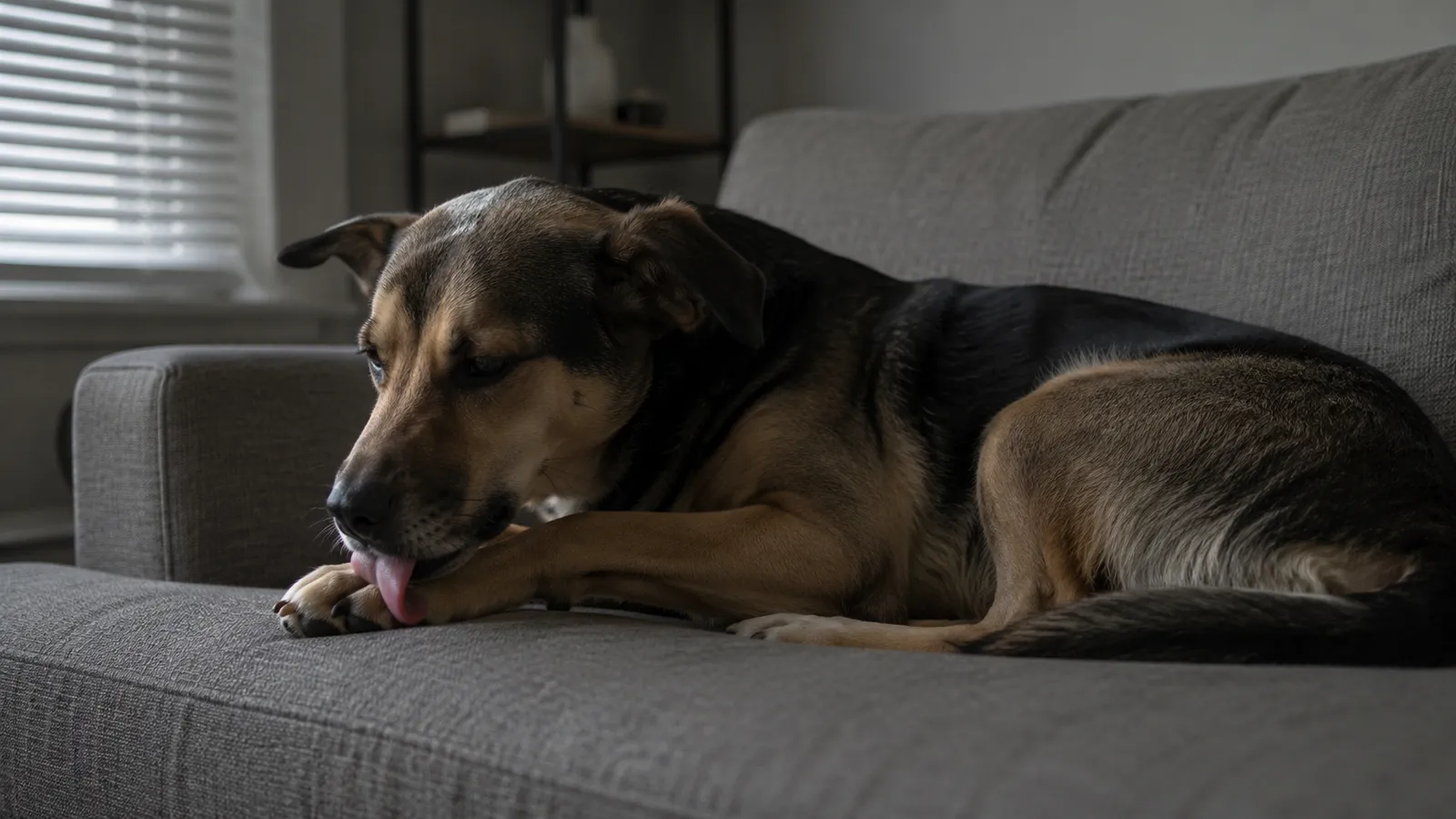
- Watch for context. If the licking starts when your dog is left alone, after visitors, during household changes, or when the house is quiet, stress or under-stimulation becomes more likely. Adobe Animal Hospital compares this to nail-biting in people: a self-soothing habit that can start small and become repetitive.
- Check whether the licking changes with engagement. A dog that stops when you call him, offer a walk, or start a food puzzle may be showing a habit loop or boredom as much as a physical problem. A dog that keeps licking despite distraction deserves a more careful look for pain, itch, or infection.
- Look at the shape of the behavior. Calm, brief grooming looks different from hard-to-interrupt, almost trance-like licking. Once the behavior becomes repetitive enough to irritate the skin, it can turn into acral lick dermatitis, also called lick granuloma, which Best Friends Animal Society flags as a condition that can develop from obsessive licking.
- Don’t assume stress is the main cause just because the dog is anxious. Stress can add fuel, but it can also be secondary, with the dog licking because something hurts or itches and the repeated behavior becomes a habit.
What can I check at home before calling the vet?
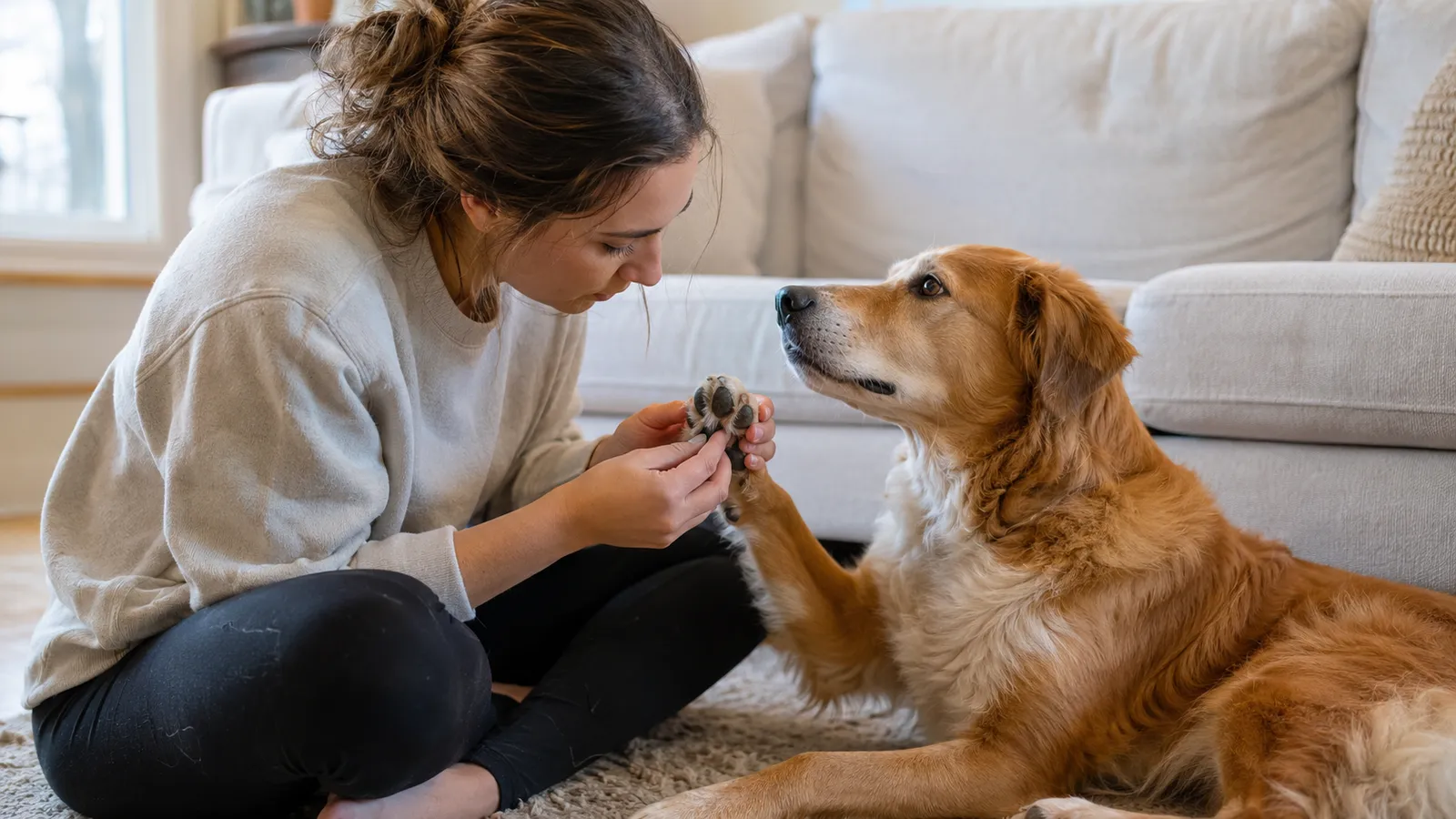
- Inspect each paw in good light. Look between the toes, around the nails, under the pads, and along the top of the foot for thorns, grass seeds, cuts, cracked pads, swelling, mats, or a broken nail.
- Rinse or wipe the paws after walks, then dry them well, especially between the toes. This helps remove salt, pollen, grass residue, and other irritants that can keep a mild problem going.
- Prevent more licking if the skin is already getting damaged. A temporary e-collar or a protective boot may help while you arrange care, but only use them as a bridge, not a substitute for figuring out why the licking started.
- Write down what changed recently. New walking routes, new cleaning products, a recent bath, a different food, more time alone, a move, or a change in exercise can all matter when the vet is trying to narrow the cause.
When should I see a vet for constant paw licking?
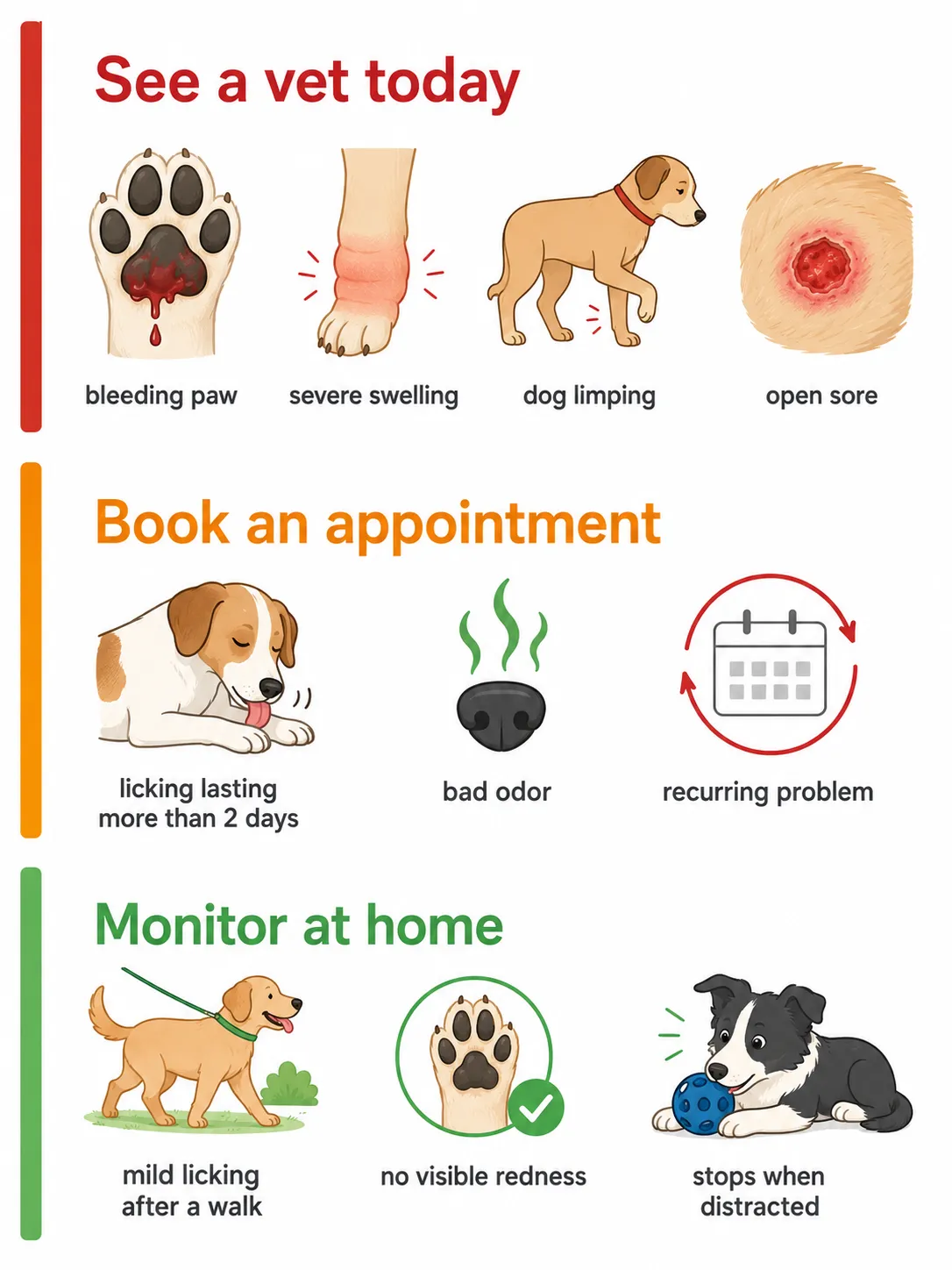
- See a vet promptly if you notice redness, odor, bleeding, pus, swelling, limping, obvious pain, or a dog that will not stop licking even when distracted.
- Book an appointment if the licking lasts more than a day or two, keeps returning, or is getting worse instead of settling down.
- Treat persistent or repeated licking seriously because it can develop into acral lick dermatitis, or lick granuloma, where the skin becomes self-traumatized and much harder to calm down.
- If your dog seems painful, suddenly lame, or too sore to let you examine the paw, that is reason enough not to wait.
A simple way to sort paw licking causes before your appointment
| Signal | What it usually suggests | What to tell the vet |
|---|---|---|
| One paw only, sudden start | Foreign body, paw pad injury, broken nail, local pain, or arthritis on that limb | Which paw, when it started, whether there was a walk or jump beforehand |
| Multiple paws, especially after grass or outdoor time | Environmental allergies or contact irritation from pollen, grass, salt, or cleaning residue | Where the dog was walking, whether it is seasonal, and whether ears or face are itchy too |
| Wet, red, smelly, or crusted skin | Skin infection, often made worse by repeated licking | Whether there is odor, discharge, swelling, or sores |
| Licking after rest, with stiffness or hesitation | Pain, soreness, or arthritis | Whether the dog is slower to rise, reluctant on stairs, or favors one leg |
| Frantic, repetitive licking that changes with attention or routine | Stress, boredom, or a compulsive habit that may have started from itch or pain | What is happening at home when it starts, and whether enrichment or exercise changes it |
This framework helps because it keeps you from jumping straight to “allergies” every time a paw gets licked. Location, timing, skin condition, and behavior together tell a much clearer story than any single clue on its own.
If you can, bring the vet a short note with which paw is involved, when the licking happens, what it looks and smells like, and what changed in the last two weeks. That little bit of detail can save time, sharpen the exam, and make it easier to decide whether the next step is skin care, pain management, parasite control, or a behavior plan.
Common questions
Is it normal for dogs to lick their paws sometimes?
Yes. Occasional paw licking is normal grooming, especially after walks or when a paw feels dusty. It becomes concerning when it is frequent, intense, or focused on one spot.
Why does my dog lick his paws after walks?
After walks, paw licking often points to grass, salt, pollen, dirt, or a small object trapped between the toes. If it keeps happening, check for redness, cracks, or swelling.
Can allergies make a dog lick his paws constantly?
Yes. Allergies are one of the most common reasons dogs lick or chew their paws repeatedly, especially if all four paws are involved or the skin looks red and wet.
When is paw licking an emergency?
It is an emergency if the paw is severely swollen, bleeding heavily, the dog cannot bear weight, or you suspect a toxin, foxtail, or sudden severe pain. A same-day vet call is safer if the licking is nonstop and the skin is broken.
What is lick granuloma?
Lick granuloma, or acral lick dermatitis, is a skin lesion caused by repeated licking. It can start as a habit but quickly become a painful, inflamed wound that usually needs veterinary treatment.
Sources consulted
Sources consulted for this article:
- Why Is My Dog Licking Their Paws Constantly? - Adobe Animal Hospital
- Dog Licking Paws Obsessively | Best Friends Animal Society
- Why Do Dogs Lick Their Paws? Understanding the Behavior and Potential Causes - Earthborn Holistic Pet Food
- Why Do Dogs Lick and Chew Their Paws? | PetMD
- Stop Excessive Dog Paw Licking: Causes and Solutions
- Dog Licking Paws, Common Causes and When to See a Vet | Bright Vet