Why Does My Dog Follow Me Everywhere?
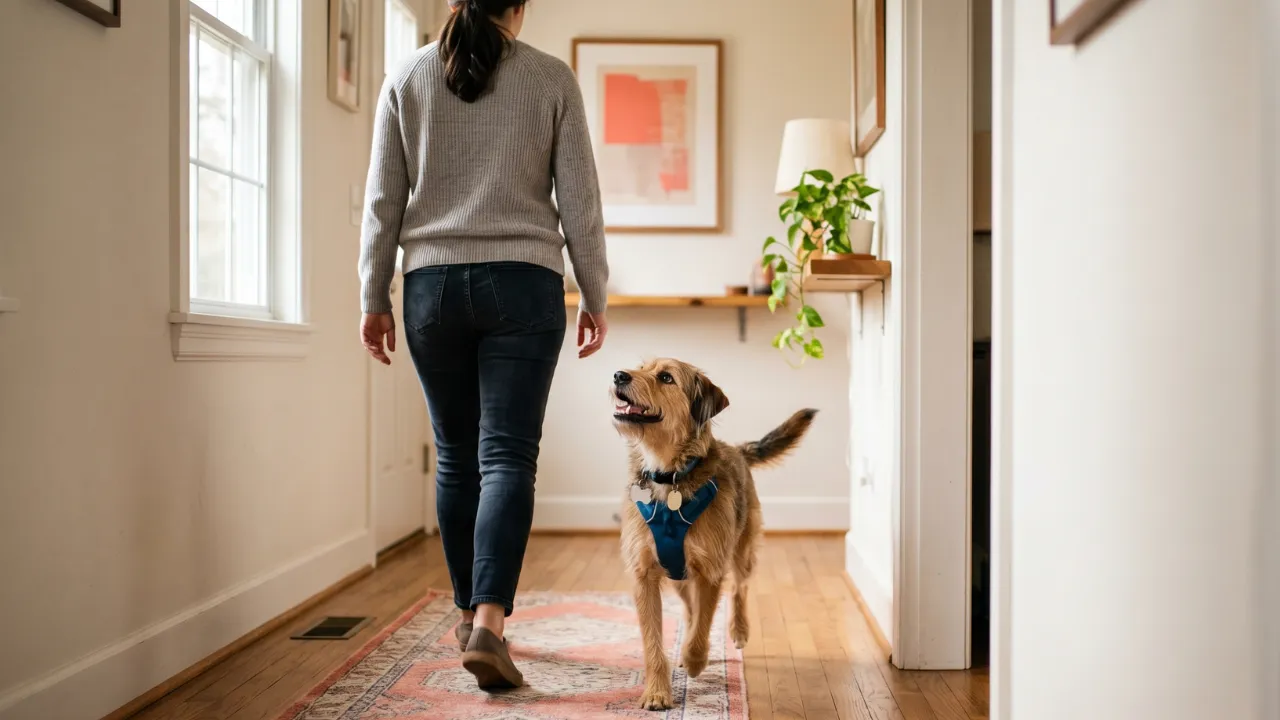
Barnaby once followed me into the laundry room, sat down on the cold tile, and watched me move wet towels into the dryer with the rapt attention of someone witnessing a moon landing. There is nothing interesting in the laundry room. There has never been anything interesting in the laundry room. And yet there he was, just as he is for the hallway, the kitchen, and the four steps to the front door. If you live with a dog, you've asked the exact question I asked that day: why do you follow me everywhere? The answer turned out to be far more interesting than I expected. And the first thing I learned is that following you isn't a problem to fix. It's a behavior to understand.
- For most dogs, shadowing is completely normal, a blend of social instinct, habit, and breed wiring rather than a sign that something is wrong.
- Thousands of years of living beside humans hardwired dogs to stay close; being near you is, quite literally, written into the species.
- You may have reinforced it without realizing, every glance, word, and dropped crumb that follows your dog into a room quietly rewards the behavior.
- The line that matters is calm versus anxious: a relaxed companion settles once you sit down, while an anxious follower can't, and panics at closed doors or departure cues.
- In senior dogs, sudden new clinginess is a medical flag first, pain, fading senses, or canine cognitive dysfunction can all show up as velcro behavior, so rule those out with a vet before assuming it's behavioral.
The Shadow Spectrum: where does your dog actually fall?
Before you try to change anything, it helps to know where on the spectrum you actually are. I call this the Shadow Spectrum, and it takes about two minutes to place your dog on it.
| Level | Profile | What it looks like | What to do |
|---|---|---|---|
| Level 1 | Social Companion | Follows from habit, curiosity, or breed instinct. Relaxed body language. Settles independently when a barrier appears. No distress at departure cues. | Nothing, this is normal dog behavior. |
| Level 2 | Anxious Follower | Follows with visible tension. Whines at closed doors, paces when you're out of sight, ignores toys and food when alone. Comes when called but can't fully settle. | Start independence training at home. Watch for escalation. |
| Level 3 | Clinical velcro | Destructive when separated, door-scratching, howling, chewing. Ignores high-value treats once departure cues appear. Panting, drooling, house-soiling. Can't settle even in the same room. | Veterinary or certified behaviorist consultation, training alone won't be enough. |
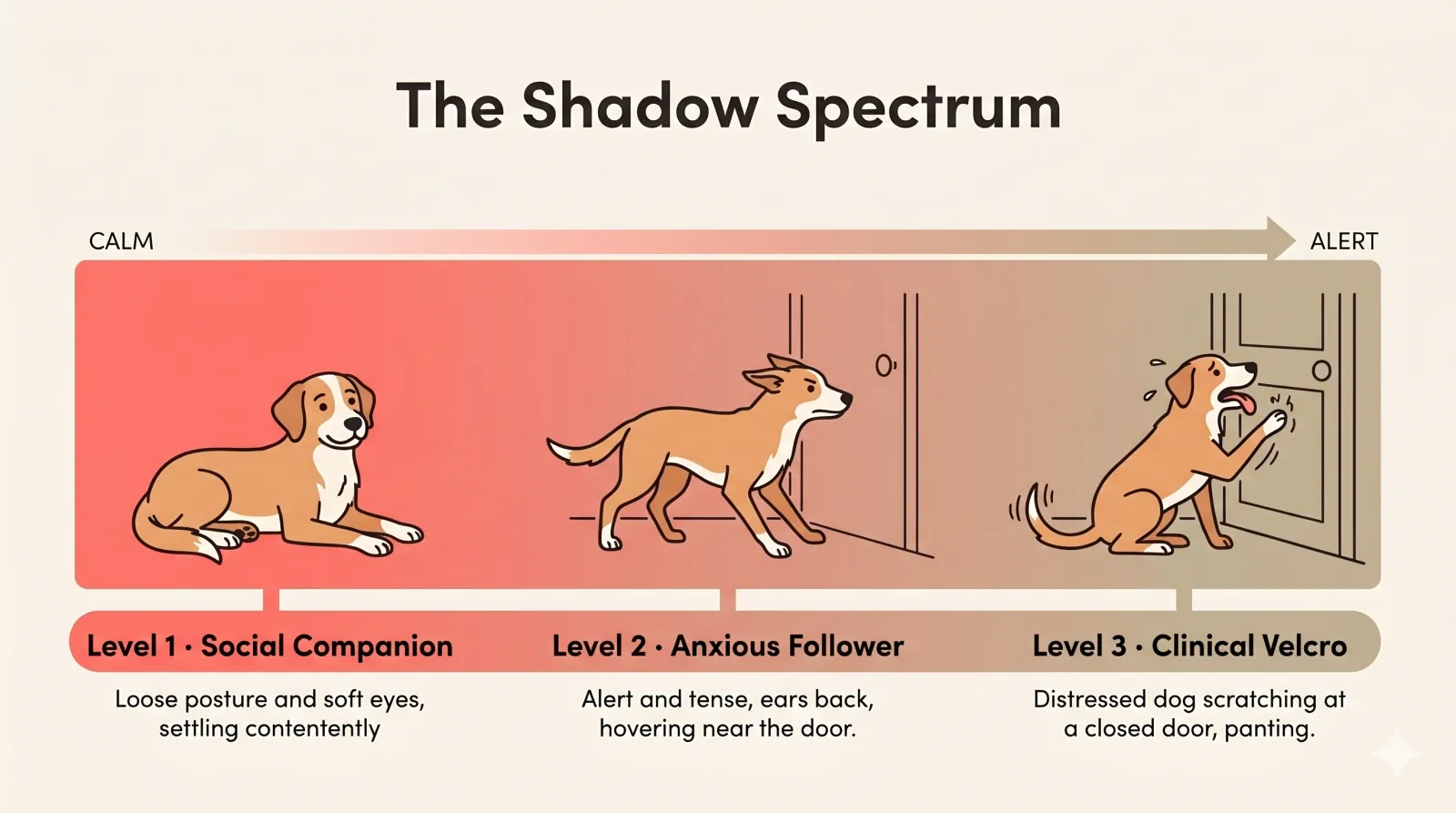
Here's the reassuring part: the large majority of dogs sit comfortably at Level 1, where following you is just a happy quirk of sharing your life. Level 2 is also very common, and the good news is that it responds beautifully to a bit of structured independence work at home, most dogs there never need anything more than patience and a plan. Level 3 is the least common of the three, but it's the one that needs honesty: a dog in genuine distress when you leave isn't being stubborn or dramatic, and it won't simply grow out of it. That's a situation for professional support, not just more reassurance.
Why dogs follow you: the real reasons behind the behavior
Once you stop treating shadowing as a single mystery and start seeing the layers underneath it, the behavior makes a lot more sense. Three forces are usually at work, and most dogs are running all three at once.
The evolutionary bond, wolves, cooperation, and 15,000 years of proximity
Long before dogs were companions, they were opportunists. The leading theory of domestication isn't that humans went out and tamed wolves, but that wolves tamed themselves, the bolder, friendlier ones crept closer to human camps for scraps and warmth, and the ones who tolerated us best ate best and survived best. Over thousands of years of this, staying near humans stopped being a strategy and became an instinct. Proximity to us was, for the ancestors of your dog, the difference between thriving and starving.
That history left a permanent mark. Dogs are extraordinarily attuned to us in ways their wolf cousins simply aren't, they read our gestures, follow our gaze, and look to us for help when they're stuck. Scientists have even found a shared bonding loop driven by the hormone oxytocin: when a dog and owner gaze at each other, both of their oxytocin levels rise, the same chemistry that bonds a parent and infant. Wolves don't show this effect. So when your dog trails you from room to room, part of what you're seeing is roughly fifteen thousand years of "stay close to the human, it's safer here." It isn't clinginess. It's ancestry.
Learned reward loops, how you accidentally trained this
Here's the part nobody means to do but almost everyone does. Every single time your dog follows you and something nice happens, you glance down and smile, you say "hey buddy," you scratch an ear, a crumb hits the floor while you cook, you've just rewarded the act of following. Dogs are relentless pattern-finders, and the pattern they've cracked is beautifully simple: good things happen near the human. As the American Kennel Club points out, this kind of unintentional reinforcement is one of the biggest everyday drivers of shadowing, built one tiny reward at a time.
I want to be clear that this is not a parenting failure on your part. It's not a mistake, and you don't need to feel guilty about it, affection and attention are the whole point of having a dog. It only becomes worth managing if the following has tipped into anxiety, which we'll get to. For a Level 1 dog, this reward loop is just the warm background hum of a good relationship. It sits right alongside the other common behaviors that puzzle owners, the quirks that feel mysterious until you realize there's a simple logic underneath.
Breed wiring, when following is literally the job
For some dogs, shadowing isn't learned or emotional. It's a job description. Herding and working breeds, Border Collies, Australian Shepherds, German Shepherds, Vizslas, and the famously people-glued Labrador, were bred for generations to stay oriented to a human partner and respond to constant cues. A Border Collie watching your every move isn't anxious; it's doing exactly what centuries of breeding designed it to do, monitoring its handler for the next instruction. The following is the work.
Companion breeds shadow for a different reason entirely. A Cavalier King Charles Spaniel or a Bichon Frise wasn't bred to herd anything, it was bred, across many generations, purely to be near people and delight in their company, so its following is pure affection rather than task-focus. This is part of why some companion breeds seem to velcro themselves to one person so readily; closeness is their entire design brief. Worth adding: how independent any dog becomes is also shaped by experience, and good early socialization, gentle, varied exposure in puppyhood, helps a dog learn that being briefly alone is safe and unremarkable.
Healthy companion vs anxious follower: how to tell them apart
This is the distinction that actually matters, and for a long time I wasn't sure how to read it in my own dog. With Barnaby, the tell I eventually learned to trust isn't whether he follows me, he always does, but what his body does when I stop. A calm, happy follower flops down with a contented sigh the moment I sit, sometimes dozing off within a minute. The one time I got genuinely concerned was during a stretch when he'd trail me to a closed door and stand there rigid, panting, unable to let it go. That tension was the difference. Relaxed shadowing is a dog enjoying your company; anxious shadowing is a dog who can't feel okay unless you're in sight.
| What to observe | Level 1, Social companion | Level 2-3, Anxious follower |
|---|---|---|
| Body language when following | Relaxed, loose, soft eyes, slow tail | Tense, panting, ears back, hyper-scanning |
| Reaction to a closed door | Waits calmly or wanders to a resting spot | Whines, scratches, paces, vocalizes |
| Behavior when you sit back down | Settles quickly, may doze off nearby | Takes several minutes to calm, stays hypervigilant |
| Response to departure cues (keys, shoes) | Neutral or mild interest | Immediate alertness, following, attempts to block exit |
| Appetite when briefly alone | Eats treats normally | Ignores high-value food; may refuse meals |
There's a trap hiding in all of this, and it's a loving one. When a dog gets distressed as we leave, or even as we move toward the door, our instinct is to rush back, soften our voice, and shower them with comfort. It feels like kindness. But to an anxious dog, that big emotional reunion teaches a damaging lesson: being apart really was a crisis, and the panic worked to bring you back. You've accidentally rewarded the anxiety itself, and reinforced the very loop you want to loosen.
The fix is to make your comings and goings spectacularly boring. Leave without a long, guilt-ridden goodbye, and come back without the joyful homecoming party, a calm, neutral "hi" and a few minutes of ignoring the dog before you greet them properly. It feels almost cruel the first few times, especially when they're thrilled to see you. But low-drama departures and arrivals are one of the kindest things you can do for an anxious dog, because they slowly teach the nervous system that doors opening and closing simply aren't a big deal.
Barnaby's "velcro phase" and what I did about it
Barnaby went through a stretch I now think of as his velcro phase, and it taught me more than any article I'd read. It started after a small change that didn't seem like much at the time: I'd shifted my work schedule, and suddenly the long, predictable mornings he was used to became choppy and unpredictable. Within a couple of weeks he'd gone from a content Level 1 companion to something closer to Level 2, hovering at the edge of every room, getting up the instant I did, and giving a thin little whine whenever I stepped behind a door. Nothing destructive, nothing alarming. But a dog who suddenly couldn't relax.
My first instinct was, predictably, the wrong one. I tried to reassure him out of it, more cuddles, more "it's okay buddy," following his anxiety around with attention. It backfired completely, and looking back it's obvious why: I was pouring fuel on exactly the loop I described above, confirming that his unease deserved a response. He got more watchful, not less. The turning point came when I stopped trying to comfort the feeling and started, gently, teaching the skill underneath it.
The thing that actually shifted it was a "place" command, a specific mat in the living room that became Barnaby's spot. I built it up slowly, rewarding him for going to the mat and staying there while I was nearby, then while I moved around the room, then while I stepped briefly out of sight and came back before he had a chance to worry. That last piece mattered most. I started treating his departure cues, picking up keys, putting on shoes, as nothing events, doing them randomly throughout the day and then not leaving, until the keys stopped meaning anything at all. And I gave him something to do when I genuinely left: a food puzzle or a stuffed chew that turned my absence into the best part of his afternoon rather than the worst. Distance got built one boring, successful repetition at a time.
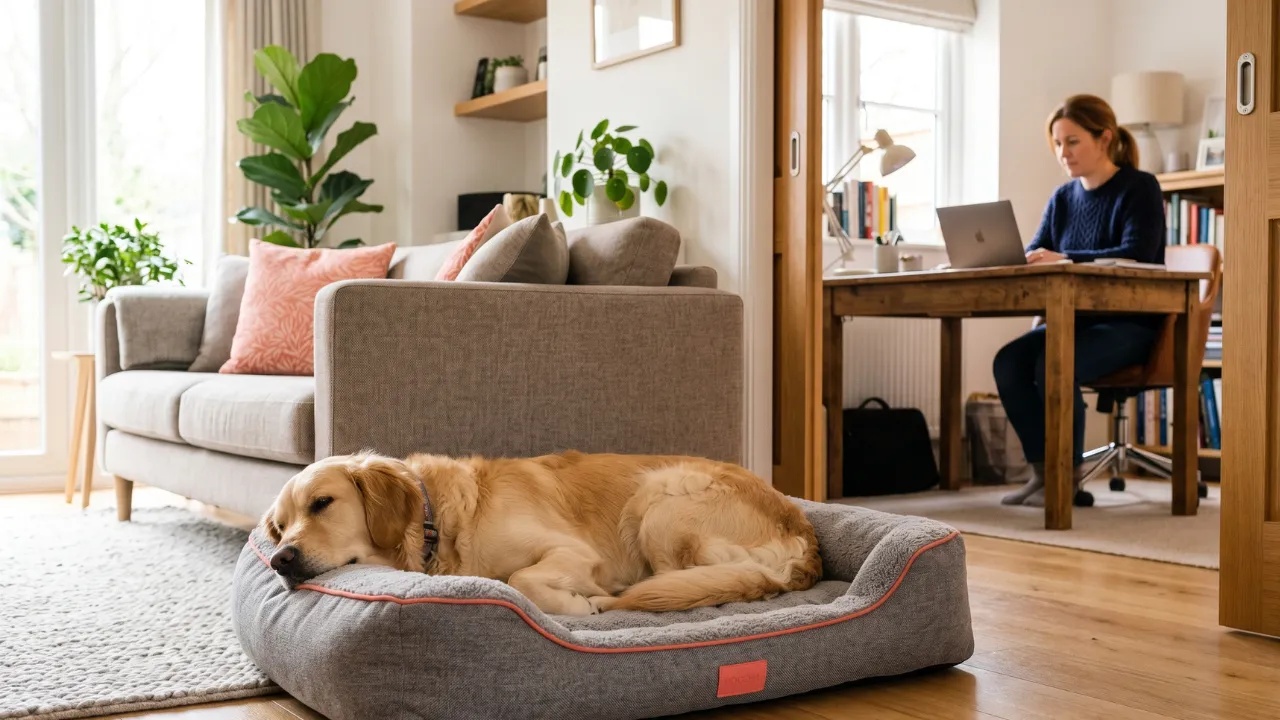
If I'm honest about what independence work really takes, it's this: patience, consistency, and a firm refusal to expect overnight results. There was no single magic morning when Barnaby was "cured." There were a few weeks of small, slightly tedious practice, a couple of backslides, and then one ordinary day when I realized he'd stayed snoozing on his mat while I went to answer the door, and hadn't even lifted his head. That's what success looks like. Not a dog who stops loving your company, but a dog who has quietly learned that you always come back.
When does following become a medical question?
Most shadowing is behavioral and harmless. But sometimes a dog's sudden need to stick to you isn't about emotion at all, it's the body sending a signal through the only channel it has. This is where I've learned to slow down and ask a different question.
Senior dogs and sudden clinginess
The clearest red flag is an abrupt change in an older dog, especially one who used to be perfectly happy in their own company. When an independent senior suddenly becomes a shadow overnight, the cause is often physical rather than emotional. Pain is a big one, arthritis that makes a dog feel vulnerable and want to stay close to their safe person. So is sensory loss; a dog whose eyesight or hearing is fading may follow you simply because you're the anchor they can still find in a world that's gone blurry and quiet.
Then there's canine cognitive dysfunction (CCD), the dog equivalent of dementia, which is estimated to affect somewhere between 14% and 35% of dogs over the age of eight. Increased clinginess and overdependence are recognized signs of it, alongside disorientation, pacing, and disrupted sleep. The reason this matters so much is that the right response is a vet, not a trainer. If your senior dog's clinginess arrives with unexplained shaking or disorientation, or alongside other changes like appetite loss or increased thirst, please get them checked before assuming it's a behavior problem. A good vet will rule out pain and illness first, exactly as they should.
I learned this lesson secondhand, and I'm grateful I did. A friend's normally aloof older dog became suddenly, intensely clingy, and she assumed he was just getting needy in old age. She mentioned it almost as an afterthought at a checkup, and it turned out he was in real discomfort from arthritis he'd been hiding, the way dogs do. The clinginess was him telling her something hurt. Ever since, I've held onto that as a rule: with an older dog, rule out the body before you diagnose the mind.
When to call a professional
For behavioral cases, the question becomes who to call, and the answer depends on where your dog sits on the Shadow Spectrum. A Level 2 dog, tense and unsettled but not destructive, is usually well within the reach of a good force-free trainer who can coach you through the kind of independence work I did with Barnaby. That's the right, proportionate level of help for the large majority of anxious followers.
A Level 3 dog is a different conversation entirely. When separation triggers genuine panic, frantic escape attempts that injure paws or teeth, sustained howling, or house-soiling in a fully trained dog, you've moved past what training alone can fix. The ASPCA and veterinary behavior specialists are clear that true separation anxiety at this level often needs a combined approach: a veterinary behaviorist, a behavior-modification plan, and sometimes medication to bring the dog's anxiety down to a point where learning is even possible. This is also true if the clinginess travels with other anxiety-driven habits, such as compulsive behaviors like constant licking. Reaching for professional help here isn't an admission of failure, it's the same as calling a doctor for a problem that's beyond a home remedy.
Common questions
Is it normal for my dog to follow me to the bathroom? Yes, it's completely normal, and it's one of the most common quirks dog owners ask about. To your dog, you getting up and moving is a small social event, in their instinctive world, the group moves together, so they move with you. A relaxed dog who trots after you and then waits calmly outside (or flops down on the bath mat) is just being a sociable companion. The only version worth a second look is frantic distress, whining, scratching, or panicking at a closed bathroom door, which points toward anxiety rather than ordinary togetherness.
Do dogs follow the person they love the most? Often, yes, dogs tend to form a primary attachment figure, much like a child bonds most strongly with one caregiver, and they'll frequently shadow that person above others in the household. That bond is built less by grand gestures than by daily ones: the person who feeds, walks, trains, and reliably shows up tends to become the anchor. There's a breed wrinkle worth knowing, though. A working or herding dog may glue itself to its handler out of bred-in task focus rather than pure affection, so "follows you most" and "loves you most" aren't always the same thing. Either way, it's a compliment.
Why did my dog suddenly start following me everywhere? A sudden change is a genuinely different situation from a dog who has always been a gentle shadow, and it deserves more attention. Gradual, lifelong following is almost always just personality and habit. But a noticeable shift, an independent dog who abruptly becomes clingy, can signal something underneath, especially in older dogs, where hidden pain, fading senses, or cognitive decline are common culprits. As a rough rule of thumb: if the new behavior persists beyond a week or so, or arrives alongside any other change like altered appetite, thirst, sleep, or mobility, book a vet visit to rule out a medical cause before treating it as behavioral.
Can you train a dog to stop following you everywhere? Yes, with some honest caveats about what "stop" really means. A Level 1 dog doesn't need training at all, at most, you're teaching gentle boundaries like a reliable "place" command, not curing anything. A Level 2 anxious follower responds very well to structured independence work: desensitizing departure cues, building alone-time gradually, and rewarding calm settling. A Level 3 dog with true separation distress needs professional help rather than DIY training. And the framing matters: you're never training a dog to stop loving you or wanting your company. You're teaching them that being apart, for a while, is safe.
If you'd like to keep learning about the quirks and questions that come with sharing your life with a dog, our plain-language dog health guides cover the whole territory in clear, jargon-free terms, because understanding the behavior is almost always more useful than trying to override it.
Sources and further reading
- Why Does My Dog Follow Me Everywhere? | American Kennel Club
- Why Does My Dog Follow Me Everywhere? | Cesar's Way
- Is Anxiety Why My Dog Follows Me Around The House? | Alliance of Therapy Dogs
- 5 Reasons Why Your Dog Follows You Around Everywhere | VHA Vets