When Do Puppies Open Their Eyes? A Clear Timeline, What’s Normal, and When to Worry
Most puppies open their eyes between 10 and 14 days after birth. If yours haven't opened by day 16, that's your cue to call a vet, not panic, but act.
The timeline in brief
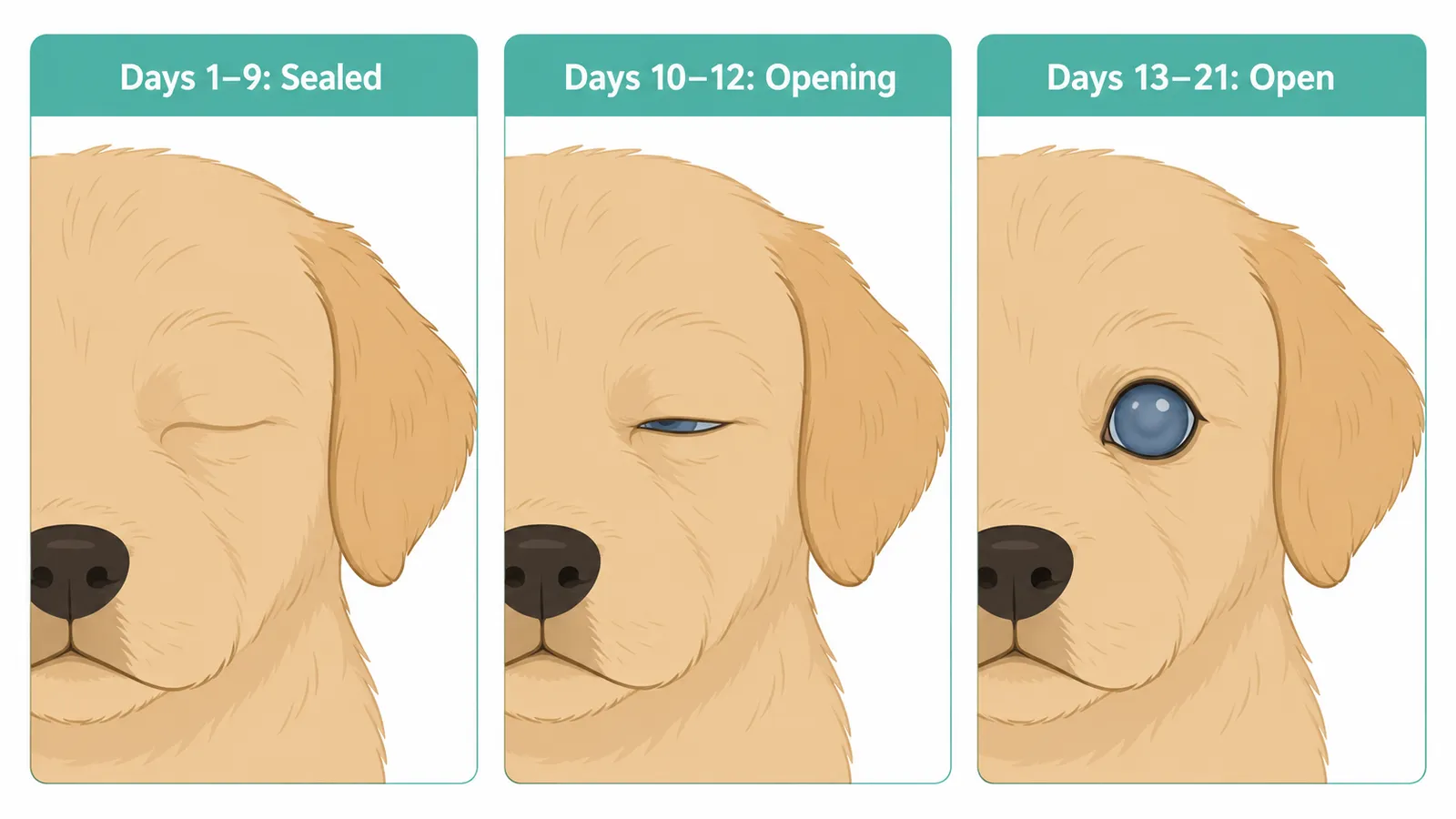
- Most puppies open their eyes between 10 and 14 days old.
- Eyes may not open evenly, one eye often opens a day or two before the other.
- Newly opened eyes look cloudy and blue-gray; this is completely normal.
- Sealed eyelids are protective, not a defect, the eye is still developing behind them.
- Eyes still closed at day 16 or showing bulging and discharge require veterinary attention.
What Happens in the First Two Weeks?
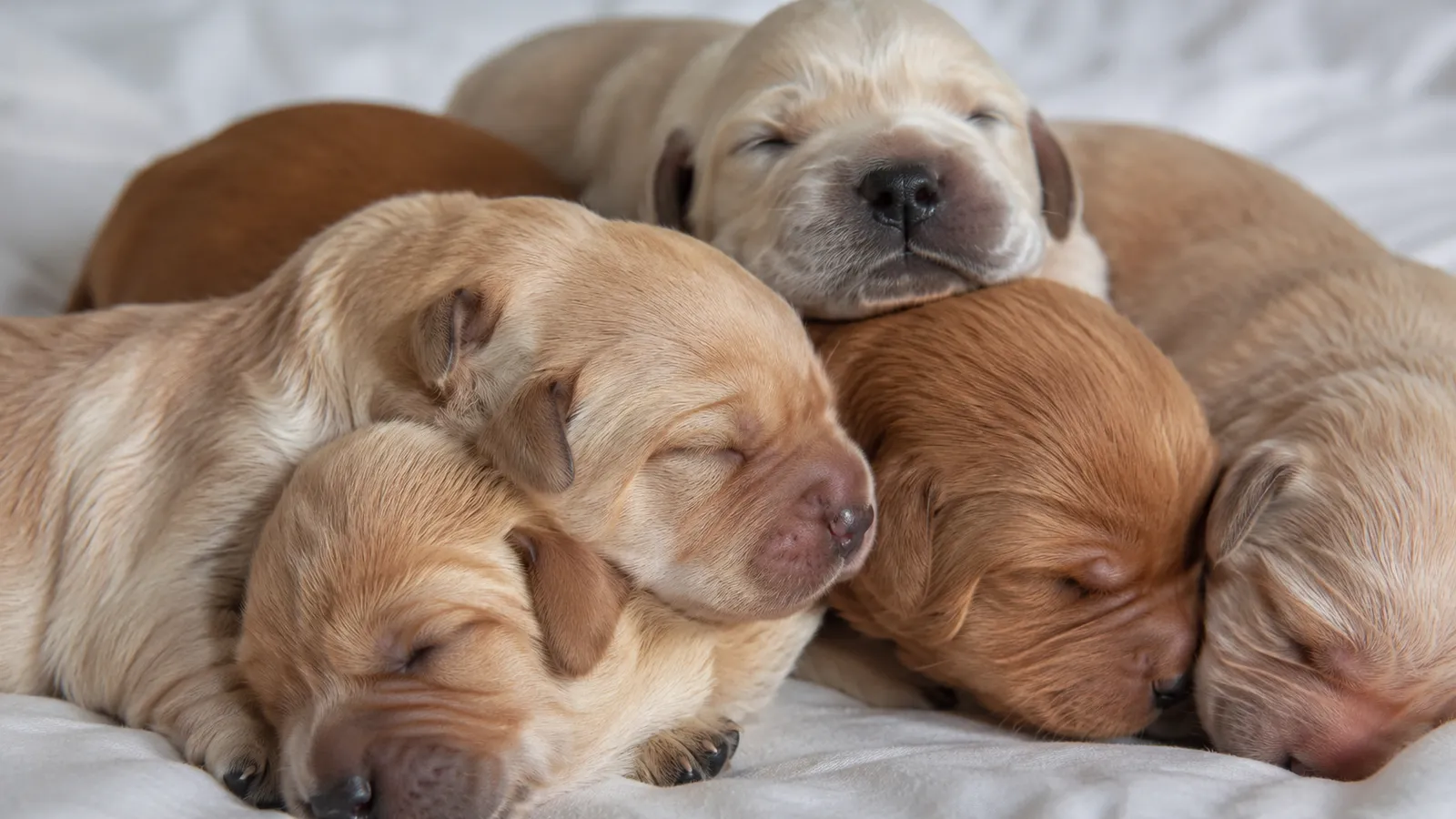
Newborn puppies arrive in the world in a state that surprises many first-time breeders. They are blind, deaf, and unable to regulate their own body temperature. Every instinct is directed toward a single goal: finding the mother and nursing. The American Kennel Club describes the neonatal window, birth through roughly two weeks, as a period when puppies' senses "haven't started working." They navigate entirely by touch and smell.
The sealed eyelids serve a precise biological function, not a defect. A puppy's eye is not fully formed at birth. The photoreceptor cells in the retina, the rods that detect motion and low light, and the cones that process color, are still maturing. Direct light exposure before that development completes could cause lasting damage. The eyelids fuse shut to protect those delicate structures while the final stages of ocular growth happen outside the womb.
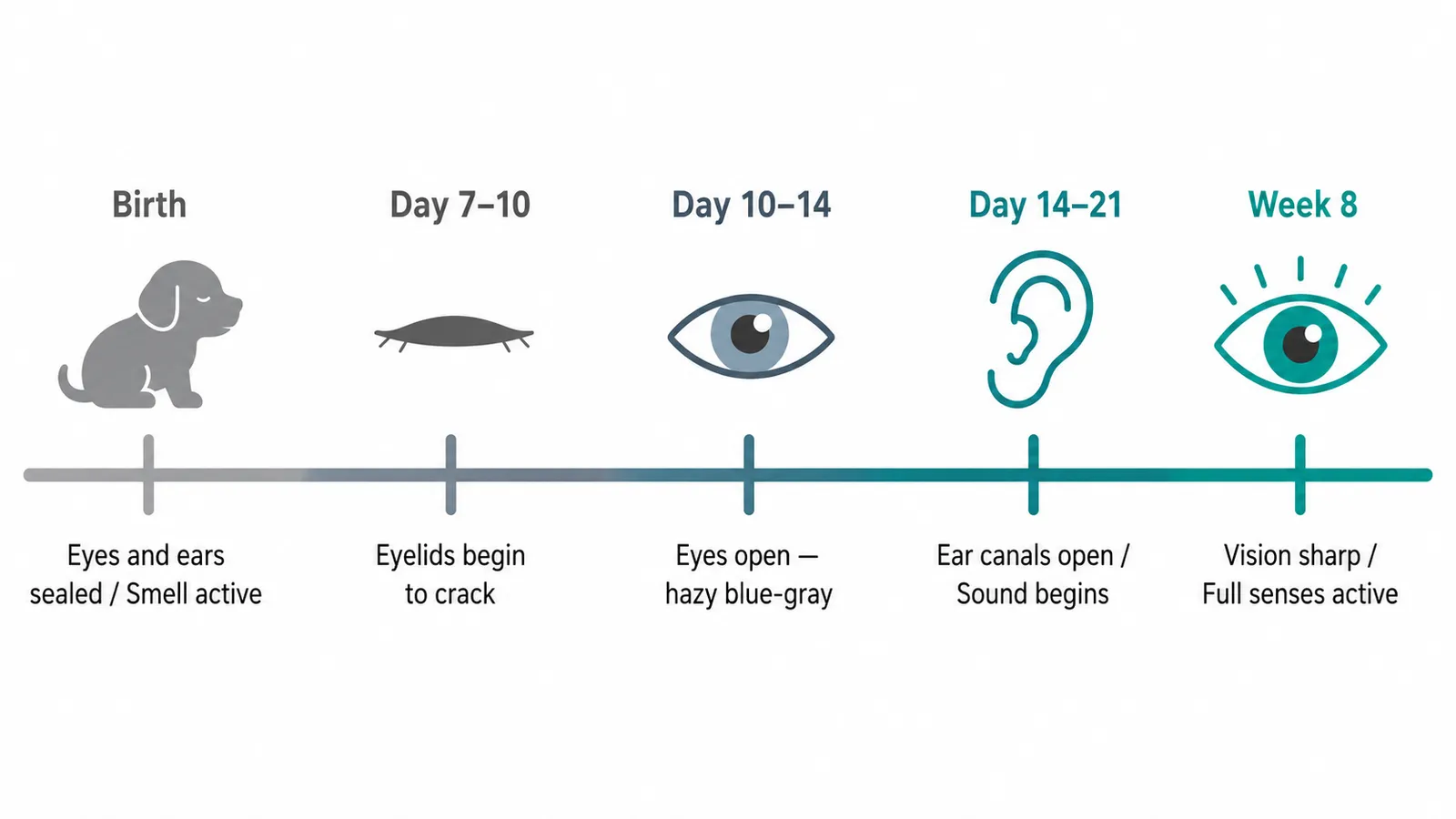
According to VCA Animal Hospitals, most puppies open their eyes within seven to fourteen days of birth. The AKC's early training resources note that eyes normally open to sight between ten and thirteen days. There is genuine variation within that window, and both extremes can be perfectly normal.
Development Timeline
| Age | What Happens With Eyes and Senses | What This Means for the Puppy |
|---|---|---|
| Birth, Day 7 | Eyes and ears fully sealed; navigates by smell and touch | Entirely dependent on mother; do not separate from the litter |
| Day 7, Day 10 | Eyelids may begin to show a thin slit along the margin | Opening is imminent; avoid bright lights near the whelping area |
| Day 10, Day 14 | Eyes open, usually one at a time; appear cloudy and blue-gray | Vision is limited to light, shadow, and movement at close range |
| Day 14, Day 21 | Ears open; puppy begins responding to sound; vision slowly sharpens | The transitional period begins, a rapid leap in sensory awareness |
| Day 21, Week 8 | Vision, hearing, and smell all active; begins socializing with littermates | Ideal window to introduce early socialization and new stimuli |
What Do Newly Opened Puppy Eyes Look Like?
The first glimpse of a puppy's open eyes is often less dramatic than new breeders expect. Here is what you will typically see, and what should concern you.
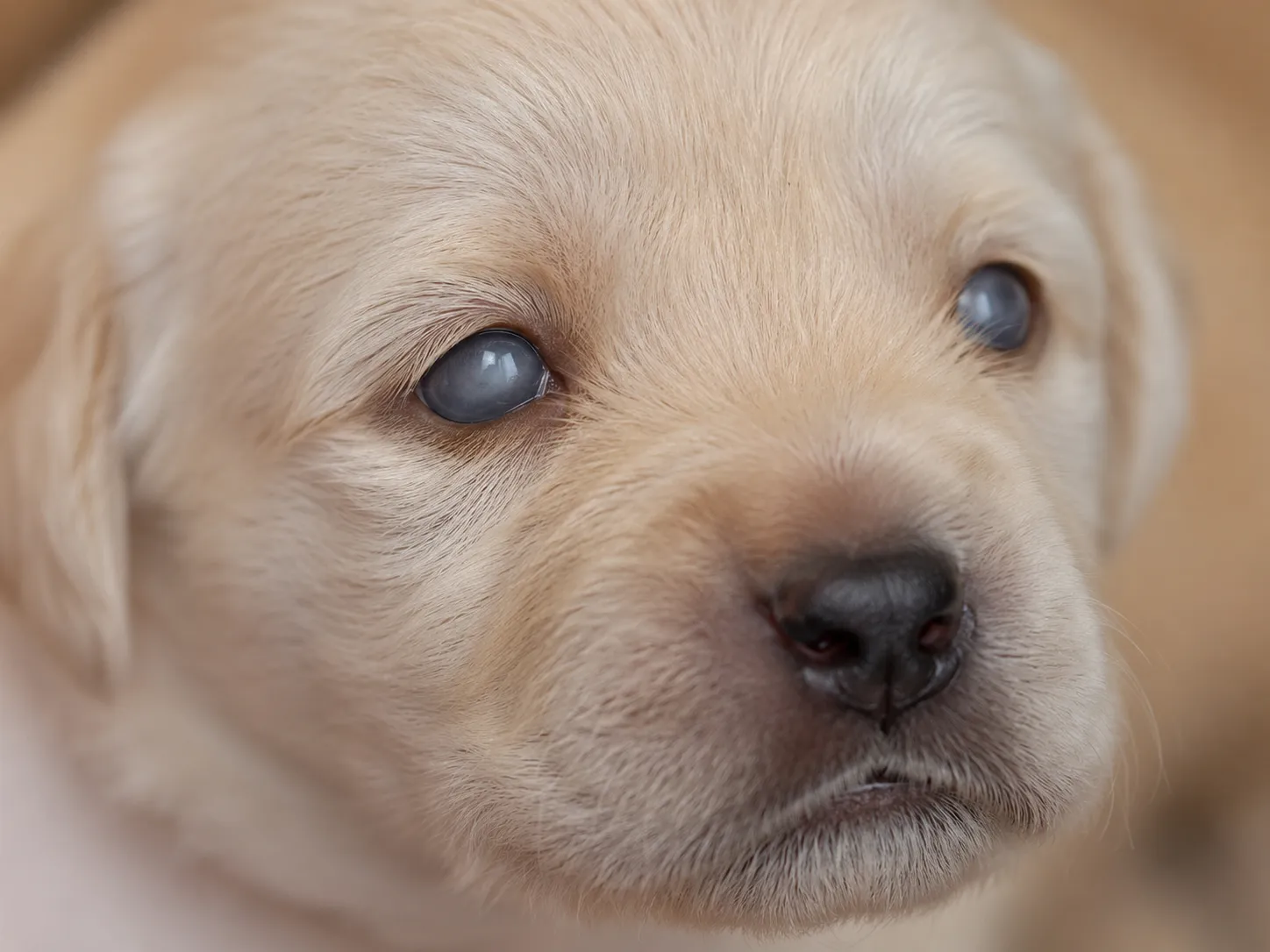
Normal appearance:
- A hazy, milky blue-gray color covering the entire iris and cornea
- A slightly unfocused, glassy quality, like a fogged-up window
- The eyes may appear to look in slightly different directions at first
- One eye may be more fully open than the other for a day or two
The blue-gray cloudiness comes from the cornea still thickening and the tapetum lucidum, the reflective layer behind the retina that gives dogs their famous night-vision advantage, not yet fully formed. Over the following two to four weeks, the cloudiness clears, and true adult eye color begins to emerge. Do not expect permanent color to be visible until around ten to twelve weeks.
Warning signs to watch for:
- Puffiness or swelling visible under a still-closed eyelid
- Yellow, green, or white discharge seeping through sealed lids
- An eyelid that appears to bulge outward
- Eyes that remain fully closed past day 16
- Redness or crust forming around the eye margin after opening
- One eye open significantly longer than the other, with the second showing no movement
Any discharge underneath closed eyelids, even a small amount, can signal neonatal conjunctivitis. This is an infection that develops before the eyes have opened, and it requires prompt veterinary care. The discharge itself may look like a small damp patch at the corner of the lid.
Why Do Some Puppies Open Their Eyes Earlier or Later?
The short answer: it's individual, not always breed-specific. The timeline varies within a single litter, and it varies between breeds.
The AKC notes that eyelids form during fetal development around day 32 of gestation, with final ocular maturation continuing after birth. The pace at which that maturation completes differs from puppy to puppy.
Breed size plays some role, though not a predictable one. Smaller breeds sometimes reach developmental milestones earlier, and some working breeds or terriers may open their eyes a day or two ahead of large guardian breeds. But I would not lean on breed generalizations as a reason to delay calling a vet. If one puppy in a litter still has sealed eyes at day 17 while the others opened at day 11, that is worth a professional opinion regardless of breed. Lower birth-weight puppies also tend to develop slightly more slowly, not alarming on its own, but worth tracking.
The S.E.A.L. Framework: Is This Normal or a Vet Call?
After years of watching litters develop, I created this four-part framework to help breeders and owners cut through the anxiety of "is this normal?" questions.
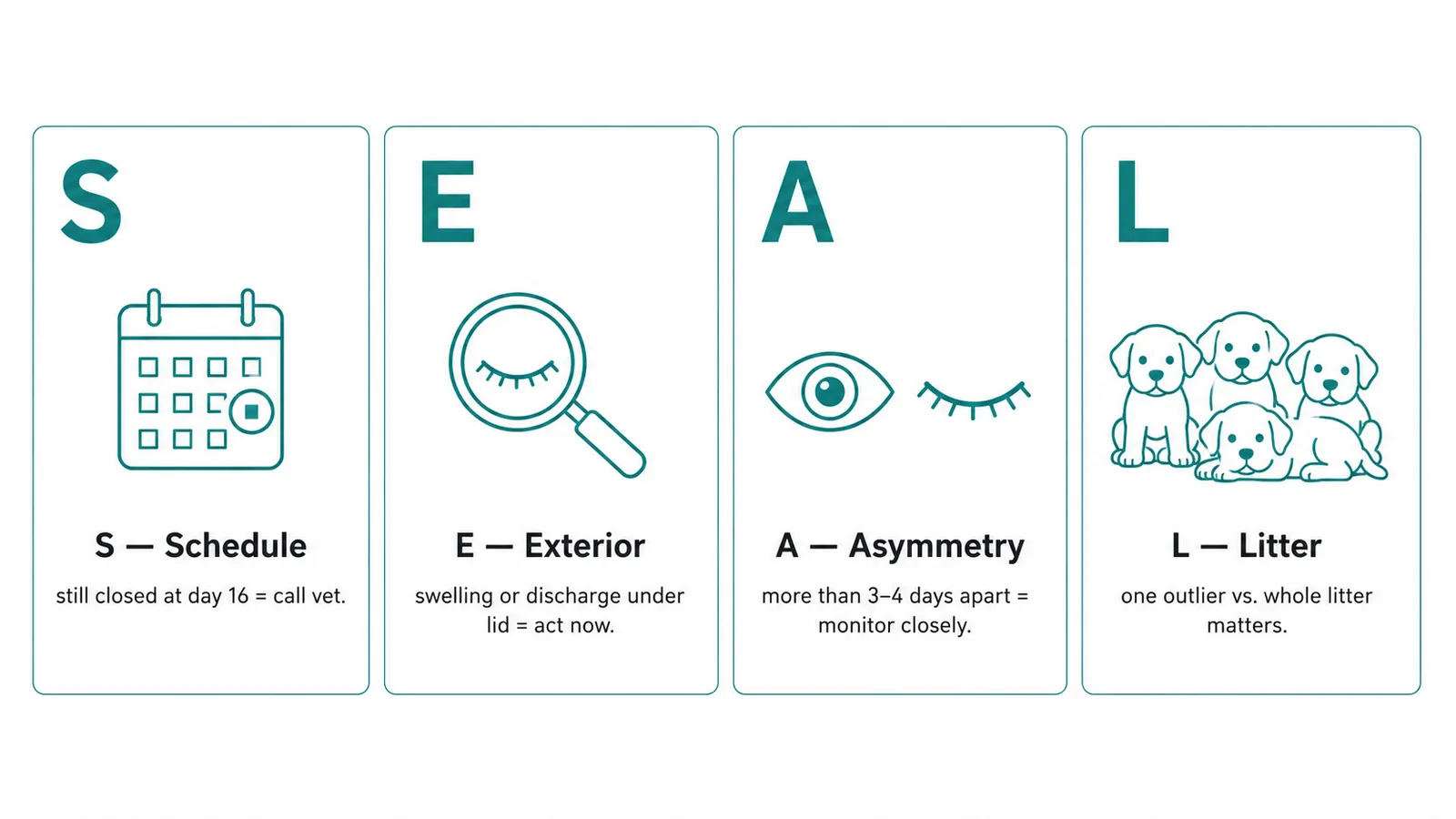
S, Schedule
Is the puppy on schedule? If the eyes are still closed by day 14, the clock is running but you are not yet in emergency territory. The concern threshold is day 16. Mark the birth date clearly and count forward. Vague phrases like "a couple of weeks" cause owners to miss the window. Use exact dates.
E, Exterior signs
Look at the outside of the eyelid before worrying about what is inside. Is the skin over the lid smooth, flat, and dry? Good. Is there visible swelling, moisture, or a bulge pressing outward? That is your cue to act now, not watch and wait. Infection behind sealed lids progresses quickly in a puppy this small.
A, Asymmetry
One eye opening before the other by a day or two is entirely normal and very common. Asymmetry becomes a concern when it extends beyond three to four days, when the second eye shows no sign of progress, or when the more-open eye looks red or irritated. A puppy compensating for one closed eye will also tend to tilt or favor one side of its face, watch for this.
L, Litter context
Compare the individual puppy to its littermates. If every other puppy in the litter opened their eyes on day 12 and one has not opened them by day 15, that single outlier deserves closer monitoring than a puppy in a litter where the whole group opened between days 12 and 16. Context tells you whether you are looking at normal variation or a real outlier.
When Should I Call the Vet?
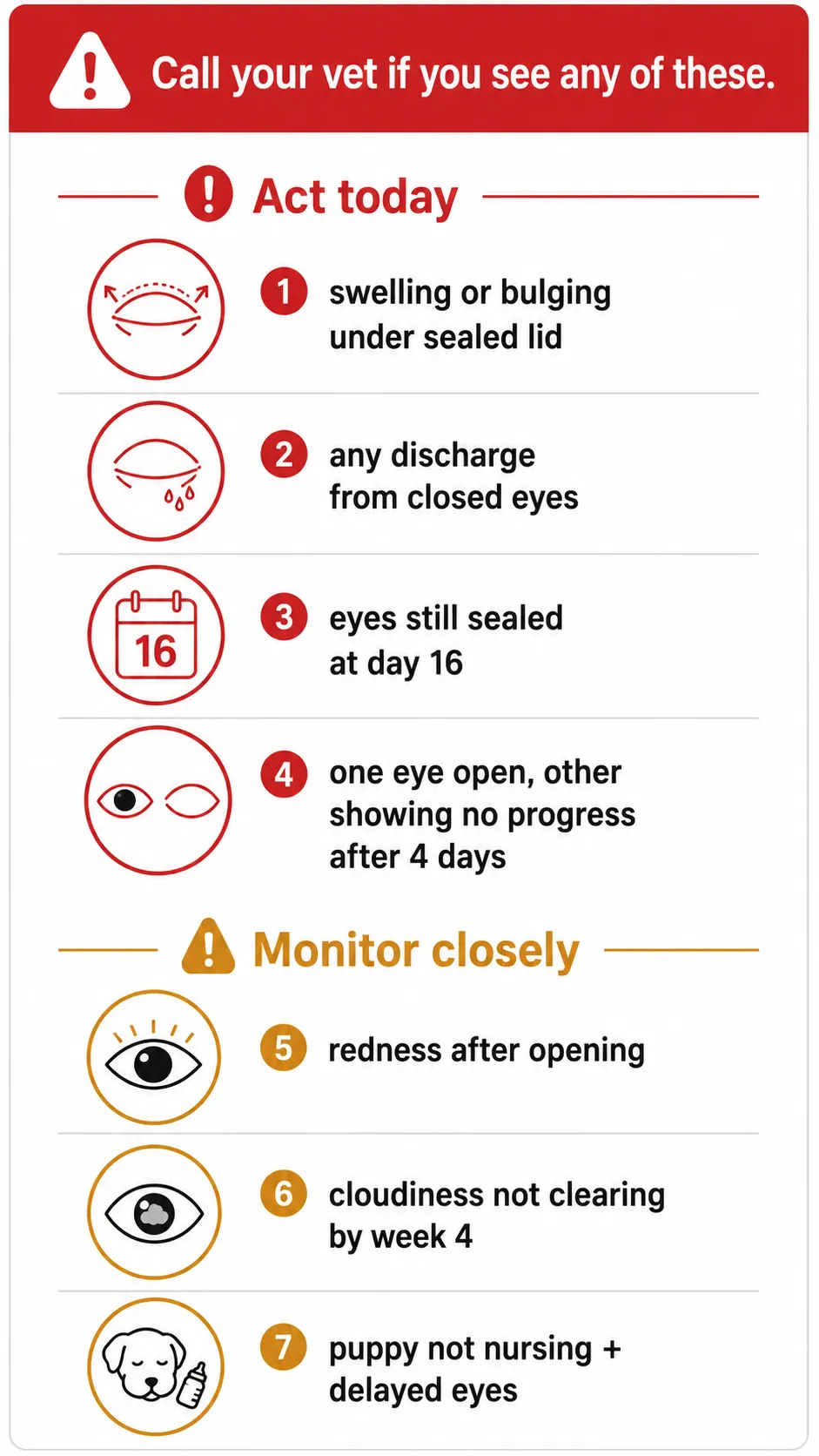
Use this list as your escalation guide. Any one of these conditions warrants a call or visit.
- Eyes have not opened by day 16, regardless of how healthy the puppy otherwise appears.
- You see swelling, bulging, or a raised area beneath the closed eyelids of any puppy.
- There is any discharge, yellow, white, green, or watery, seeping from a still-closed lid.
- One eye opened normally but the second has shown no movement at all after three to four days.
- After opening, the eyes appear bright red, deeply inflamed, or the puppy keeps them squeezed shut.
- The opened eye has visible clouding that does not clear within a week, or shows a visible film.
- You notice any discharge that could be related to skin or eye irritation, especially if it looks yellowish or has a crust along the eyelid margin, as this can sometimes indicate symptoms requiring veterinary evaluation.
- The puppy is losing weight, not nursing, or crying excessively alongside delayed eye opening.
VCA Animal Hospitals specifically states that if the eyes have not opened within 14 days, the puppy should be examined by a veterinarian. Trust that guidance.
Can I Help My Puppy's Eyes Open Faster?
No, and you should not try. The eyelids open when the underlying eye structures are ready for light exposure. There is no safe way to speed that process from the outside.
I understand the impulse. Watching a litter and seeing one puppy still sealed while the others peer around can feel urgent. But forcing the eyelids open before the eye is ready can damage the cornea and expose immature tissue to infection.
VCA Animal Hospitals notes the only situation in which any intervention is appropriate: when swelling or discharge is visible under the lid, and even then, a warm damp cotton ball can gently soften the area only while you make the vet appointment. The veterinarian opens the lid. You do not.
Keep the whelping area at a moderate light level. Avoid direct bright light around newborns.
Common questions
Can a puppy's eyes open at 7 days old?
Yes, occasionally. Some early developers show a thin slit of opening around day 7, though full opening before day 10 is less common. As long as there is no discharge and the puppy is nursing and gaining weight normally, early opening is not a cause for concern. Continue monitoring as you normally would.
Do all puppies in a litter open their eyes at the same time?
Not necessarily. It is normal for one puppy to open eyes a day or two before another, and common for individual puppies within the same litter to stagger over a three-to-four-day window. What matters is that all puppies in the litter have completed the process by around day 16.
My puppy's eyes look blue and cloudy after opening, is something wrong?
The blue-gray, cloudy appearance is normal for newly opened puppy eyes. The cornea is still developing thickness and clarity, and the eye's internal structures have not yet reached adult form. This cloudiness should clear over the following two to four weeks. If it persists beyond four weeks or appears as a white spot on the cornea, mention it to your vet.
What causes eye infections in puppies before their eyes open?
Neonatal conjunctivitis, an infection behind closed lids, can result from bacteria transmitted during the birthing process or from the environment in the whelping area. The eyelids are not a perfect seal, and pathogens can enter through the small gap at the lid margin. Keeping the whelping area clean, monitoring the mother's health, and watching for any sign of discharge on closed lids are the primary preventive measures.
When does a puppy's permanent eye color appear?
Most puppies show initial eye color in the weeks following opening, but the color visible at three to four weeks is not the final adult color. True permanent coloration typically stabilizes around ten to twelve weeks of age. Dogs with brown adult eyes often show a muddy amber or gray during this in-between period.
Medical disclaimer: This article is intended for general informational purposes only and does not constitute veterinary advice. Always consult a licensed veterinarian for guidance specific to your puppy's health.
Sources
- Raising Puppies | VCA Animal Hospitals
- A Puppy Growth Timeline: Transitions in Puppyhood, American Kennel Club
- Puppy Senses: How Your Puppy Sees, Hears, and Smells the World, American Kennel Club
- Eye Structure and Function in Dogs, Merck Veterinary Manual
- Early Puppy Training Is an Important Foundation, American Kennel Club