
Puppy Vaccination Schedule First Year: What to Expect, Week by Week
Editorial Note: Emily Harper is not a veterinarian. This article is educational in nature and reviewed against trusted, institutionally authoritative pet care sources, including the American Animal Hospital Association (AAHA) 2022 Canine Vaccination Guidelines and the American Veterinary Society of Animal Behavior (AVSAB) position statement on puppy socialization. It does not replace advice from a licensed veterinary professional. Always consult your vet for decisions specific to your puppy's health.
If there's one thing I wish someone had told me when Barnaby was a puppy, it's this: the vaccine schedule isn't complicated, it just looks that way. Most of us arrive home with a new puppy, open the paperwork, and see a list of abbreviations (DHPP? DA2PP? Bordetella?), a series of follow-up dates, and a vague sense that getting any of it wrong will be catastrophic. That fear is real. I felt it too. And I spent an embarrassing number of evenings down various rabbit holes trying to figure out what was actually mandatory, what was situational, and, crucially, why puppies need so many shots in the first place.
The answer, once you understand the biology, makes the whole schedule click into place. What looks like an arbitrary series of vet visits is actually a carefully timed response to a specific biological window in your puppy's immune development. This article gives you that biological foundation, a week-by-week schedule anchored to the AAHA 2022 Canine Vaccination Guidelines, a framework for thinking through lifestyle-based vaccines, and clear guidance on what to do if your puppy came to you without complete records. By the end, you should feel prepared, not just compliant.
How the first year works
- Untreated parvovirus carries a mortality rate of 91% or higher. With aggressive hospitalized care, most puppies survive, but that care can cost $1,500, $5,000 and outcomes depend heavily on how quickly treatment begins. The vaccine series exists precisely to make this a non-issue.
- The reason puppies need multiple doses isn't because any single shot fails. It's because maternal antibodies (MDA) passed from the mother through colostrum can block vaccine response in young puppies, and the series is designed to keep trying until that interference window closes.
- At 12 weeks of age, research suggests only about 50% of puppies have been successfully immunized against distemper and parvovirus, due to MDA interference. This is why the schedule continues through 16 weeks and sometimes beyond.
- The AAHA 2022 Canine Vaccination Guidelines recommend completing the final DHPP booster no earlier than 16 weeks of age, and in high-risk areas, 18-20 weeks is preferred.
- The AVSAB (American Veterinary Society of Animal Behavior) states that socialization before full vaccination is complete is the standard of care, because the behavioral risk of missing the socialization window exceeds the disease risk of carefully controlled early exposure.
- Titer testing (a blood test measuring existing antibody levels) is a legitimate tool for dogs with unknown histories and for adult dogs approaching booster schedules, but it is most useful for adult dogs, and your vet's judgment is essential for interpreting results in puppies.
Why the Puppy Vaccine Series Works the Way It Does, The Biology Behind the Schedule
Before we look at the schedule itself, let's talk about why there is a schedule, because this is the part almost nobody explains, and it's the piece that makes everything else make sense.
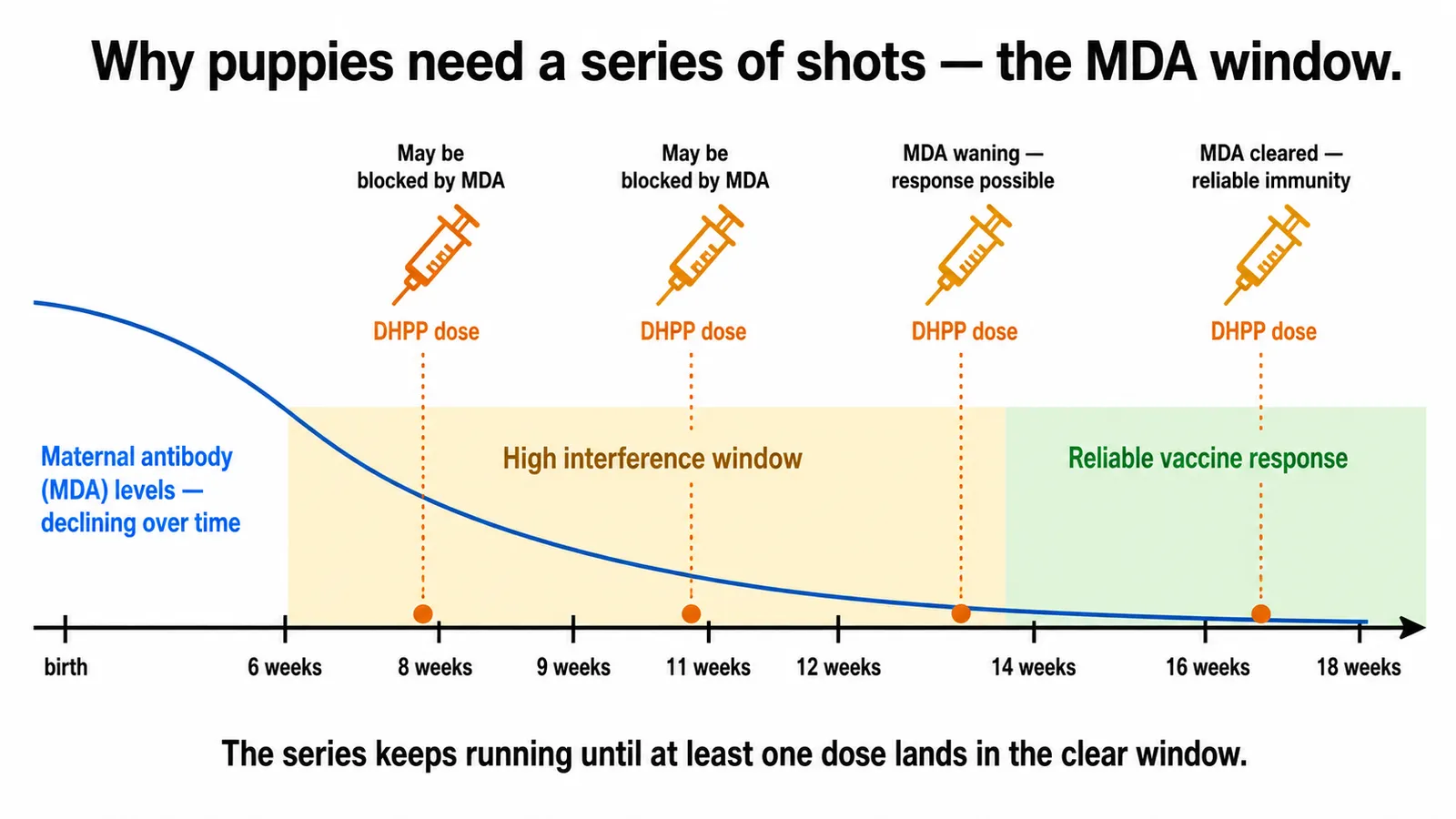
When a puppy is born, its immune system is essentially a blank slate. It hasn't been exposed to the pathogens it will eventually need to fight, and it doesn't yet have the fully developed machinery to mount a rapid defense on its own. To bridge this gap, puppies receive a temporary form of borrowed immunity: antibodies passed from their mother through colostrum, the first milk produced in the 24-48 hours after birth.
These maternal antibodies, called maternally derived antibodies, or MDA, are genuinely protective in those early weeks. They circulate in the puppy's bloodstream and can neutralize viruses before the puppy's immature immune system even needs to respond. The problem is that they don't last. MDA levels decline over weeks and months, and the rate of decline varies considerably between individual puppies, even within the same litter. One puppy might still have high MDA levels at 12 weeks; another from the same litter might have dropped below the protective threshold by 8 weeks.
Here's where the timing problem becomes critical: MDA can't distinguish between a real threat and a training drill. When you vaccinate a puppy whose MDA levels are still high, the maternal antibodies neutralize the vaccine, the same way they would neutralize an actual virus. The vaccine is cleared before the puppy's immune system has a chance to mount its own response and build lasting immunity. The vaccine visit happened; immunization did not. This is the primary cause of what veterinarians call "vaccine failure" in puppies under 16 weeks of age.
Think of it this way: MDA is like a highly zealous security system that can't tell the difference between a legitimate visitor and an intruder. Until that security system dials back its sensitivity, no amount of proper training will get through to the puppy's immune response. The series of shots every 3-4 weeks is designed to keep running those training drills, repeatedly offering the vaccine, until the security system has finally settled down enough for at least one dose to fully take.
This is why "one shot at 8 weeks and done" leaves a puppy genuinely unprotected. It's also why a puppy you adopted at 16 weeks with no vaccination records cannot be assumed to be protected, even if they appear healthy. The 2022 AAHA Canine Vaccination Guidelines are explicit on this point: MDA against parvovirus can persist for 13-15 weeks or possibly longer, meaning the earliest doses may not have produced immunity at all.
One more implication of this biology: the series must end late enough to be confident. AAHA's guideline for the final puppy DHPP booster is no earlier than 16 weeks of age, because only at that point can we be reasonably confident MDA has waned enough for the vaccine to have worked.
The Puppy Vaccine Schedule, Week by Week
The following schedule reflects the 2022 AAHA Canine Vaccination Guidelines for owned puppies in standard (non-shelter) settings. Your veterinarian may adjust timing based on your puppy's specific history, the vaccine brand being used, and local disease pressure, but this is the AAHA-aligned baseline.
Core Vaccine Schedule
| Age | Vaccine | Notes |
|---|---|---|
| 6-8 weeks | DHPP dose 1 | First core combination (Distemper, Hepatitis/Adenovirus, Parvovirus, Parainfluenza). May not fully take if MDA is still high, but essential to begin the series. |
| 9-11 weeks | DHPP dose 2 | Second attempt, MDA typically beginning to wane. Intranasal Bordetella can be given here if puppy classes or boarding are planned. |
| 12-14 weeks | DHPP dose 3 | Mid-series booster. Leptospirosis dose 1 may begin here if lifestyle or geographic risk warrants it (see below). |
| 14-16 weeks | Rabies (first dose) | Timing governed in part by local law, check your jurisdiction's requirements. Leptospirosis dose 2 given here if series was started. |
| 16-18 weeks | DHPP dose 4, AAHA final puppy booster | AAHA recommends this dose no earlier than 16 weeks for reliable immune response. In high-parvo or high-distemper areas, 18-20 weeks is preferred. |
| 12 months | DHPP booster + Rabies booster | Transition to adult schedule. Rabies may be a 1-year product at this stage, followed by a 3-year product thereafter, depending on local law and vaccine used. |
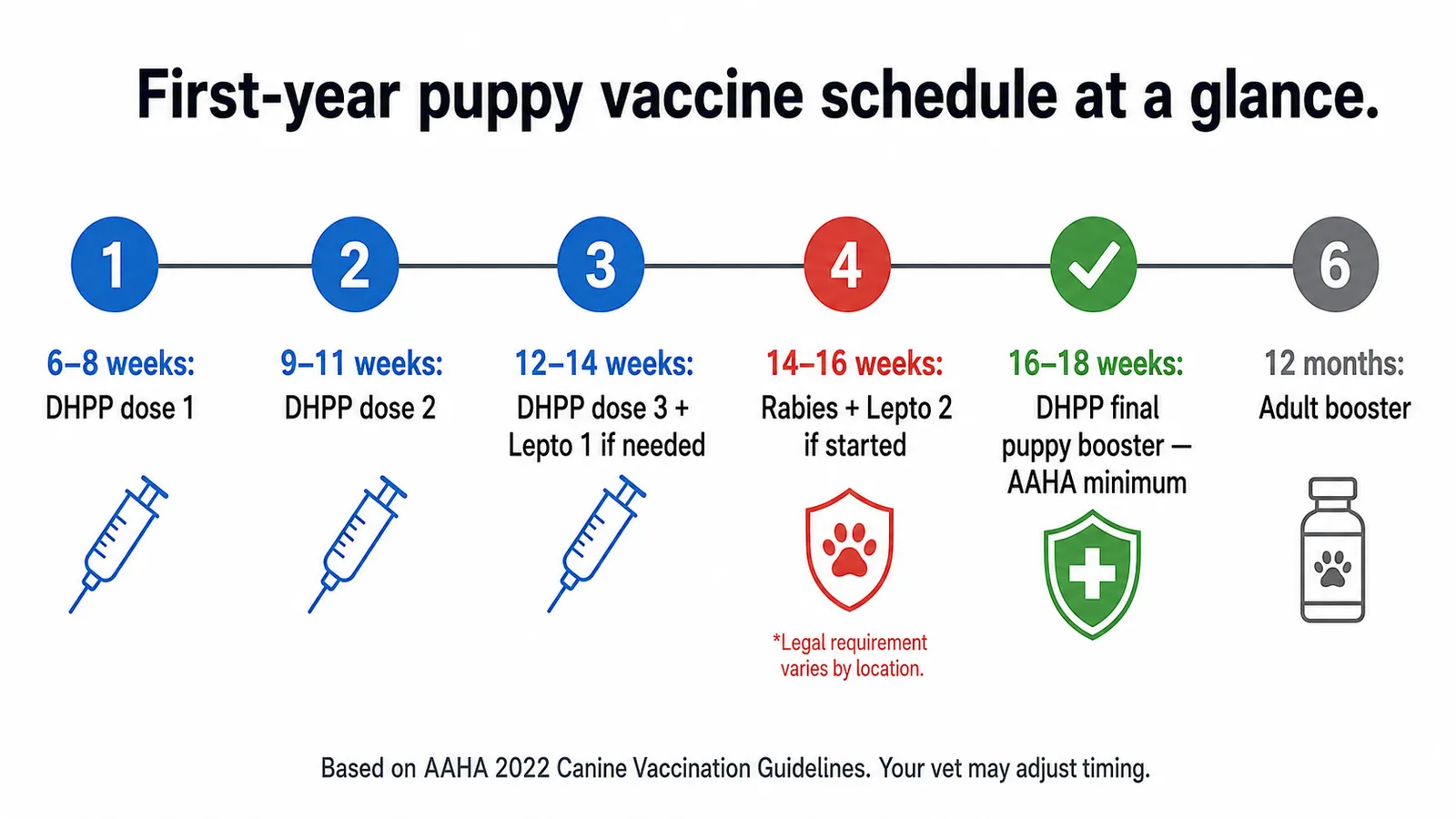
A note on this table: This schedule is based on the 2022 AAHA Canine Vaccination Guidelines and reflects standard practice for healthy puppies in the US. Dosing intervals are every 3-4 weeks. Your veterinarian may adjust timing based on vaccine brand, your puppy's health history, local disease pressure, or whether your puppy came from a shelter or rescue. The schedule above is the anchor, not a rigid checklist that overrides your vet's clinical judgment.
Lifestyle Vaccines, What They Are and When They Apply
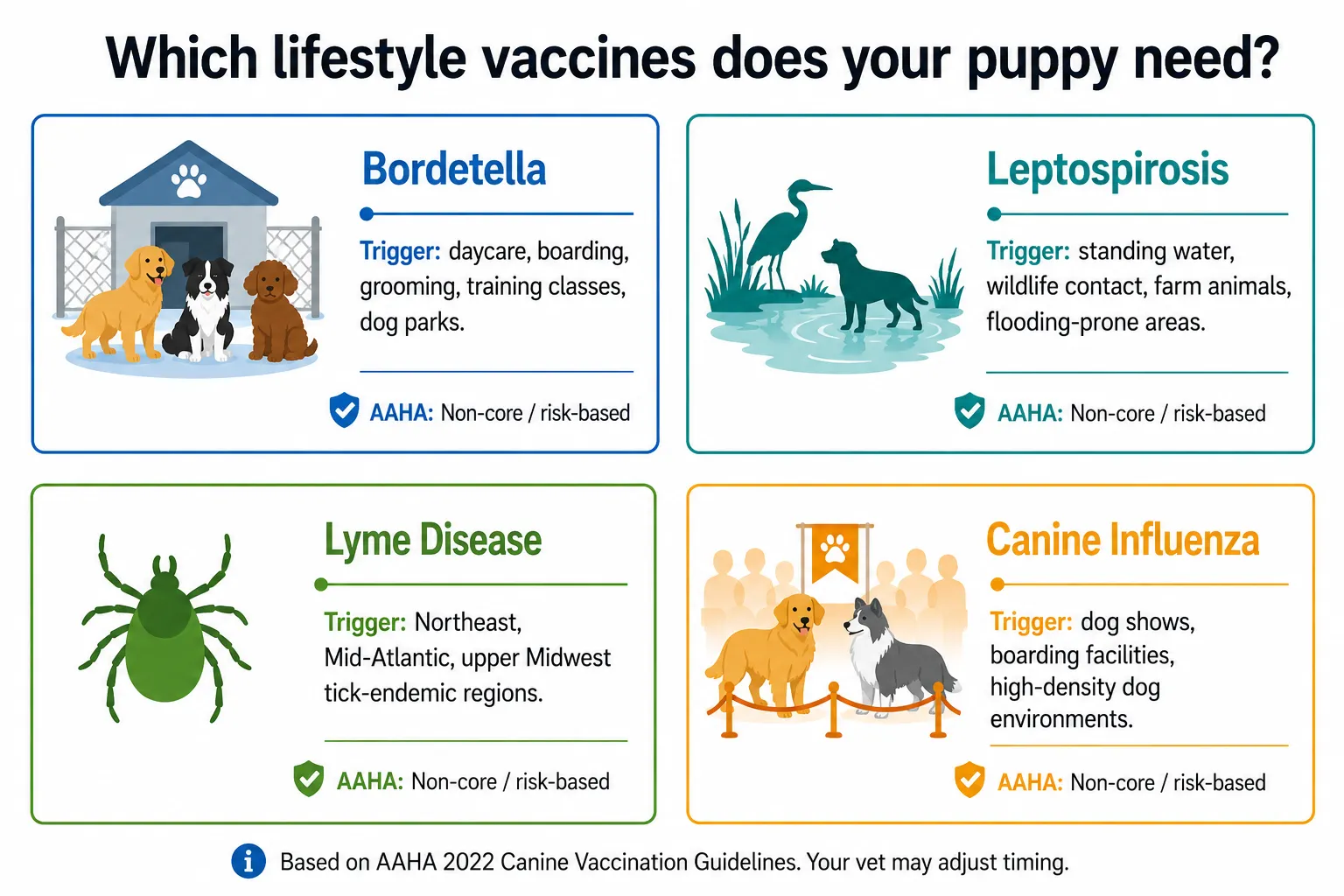
These vaccines are not recommended for every puppy, they're recommended based on specific exposure risks. For each, the key question your vet will ask is: what does your puppy's life actually look like?
Bordetella (kennel cough)
- Trigger: Puppy will attend daycare, boarding, grooming salons, dog parks, training classes, or any environment with dogs of unknown vaccination status.
- Timing: Can begin as early as 8 weeks with intranasal product; 2-dose injectable series for some products. Annual booster, or more frequently before boarding.
- AAHA classification: Non-core / risk-based. Strongly recommended for dogs in social or boarding environments.
Leptospirosis
- Trigger: Exposure to standing water (ponds, puddles, streams), wildlife (raccoons, rodents, deer, coyotes), farm animals, or flooding events. Geographic risk is elevated in Appalachia, the upper Midwest, central Texas, and eastern US. Updated AAHA 2024 guidance now recommends leptospirosis as a core vaccine for all dogs, reflecting increasing geographic spread. Note: the 2022 guidelines classified it as risk-based; your vet will apply the most current guidance.
- Timing: 2-dose initial series, 3-4 weeks apart; annual booster thereafter.
- AAHA classification: Moving toward core; currently risk-based in the 2022 guidelines, core in the 2024 update.
Lyme disease
- Trigger: Dogs living in or traveling to tick-endemic regions, primarily the Northeast, Mid-Atlantic, upper Midwest, and Pacific Northwest.
- Timing: 2-dose initial series; annual booster.
- AAHA classification: Non-core / geographic risk-based.
Canine Influenza (CIV)
- Trigger: Dogs that board, attend dog shows, visit dog parks, travel frequently, or are housed in environments with dense dog populations. CIV tends to circulate in localized outbreaks rather than continuously, so your vet's knowledge of current local activity is important.
- Timing: 2-dose initial series (bivalent H3N8/H3N2 recommended); annual booster.
- AAHA classification: Non-core. Not recommended for all dogs; indicated for high-social-contact dogs.
Core vs. Lifestyle Vaccines, What's Mandatory and What's a Decision
The AAHA classification system gives us a useful framework here.
Core vaccines are recommended for all dogs, regardless of where they live or how they spend their time. Currently, that means DHPP (distemper, hepatitis/adenovirus, parvovirus, parainfluenza), Rabies, and, as of the 2024 AAHA update, Leptospirosis. These aren't optional. The diseases they protect against are either highly contagious, potentially fatal, legally mandated (rabies), or all three.
Non-core / risk-based vaccines are vaccines that are genuinely important for some dogs based on their specific exposure risk, but that don't carry the same universal recommendation. This is where Bordetella, Lyme disease, and Canine Influenza sit. "Non-core" does not mean unimportant; for a dog that boards regularly, Bordetella is just as essential as DHPP.
A practical way to think about this: core vaccines are the floor. They apply to every puppy by default. Risk-based vaccines are the walls, you build them based on what's actually in your dog's environment.
When I was figuring this out for Barnaby, I found it helpful to think through each vaccine one scenario at a time. Will this dog be in environments with other dogs whose vaccination history I don't know? → Bordetella, probably. Does this dog swim in ponds or encounter wildlife on walks? → Lepto, definitely. Does this dog travel to dog shows or board in large facilities? → Discuss CIV with your vet. The AAHA's lifestyle-based vaccine calculator (available at aaha.org) can also help structure this conversation before your puppy's appointment.
The Socialization Dilemma, Behavior vs. Protection
Here's the tension that doesn't get enough attention in most vaccination articles, and that I think deserves a direct, honest answer: the puppy vaccination series typically isn't complete until 16-18 weeks of age. But the primary behavioral socialization window, the developmental period when puppies form their fundamental relationship with the world, closes around the same time.
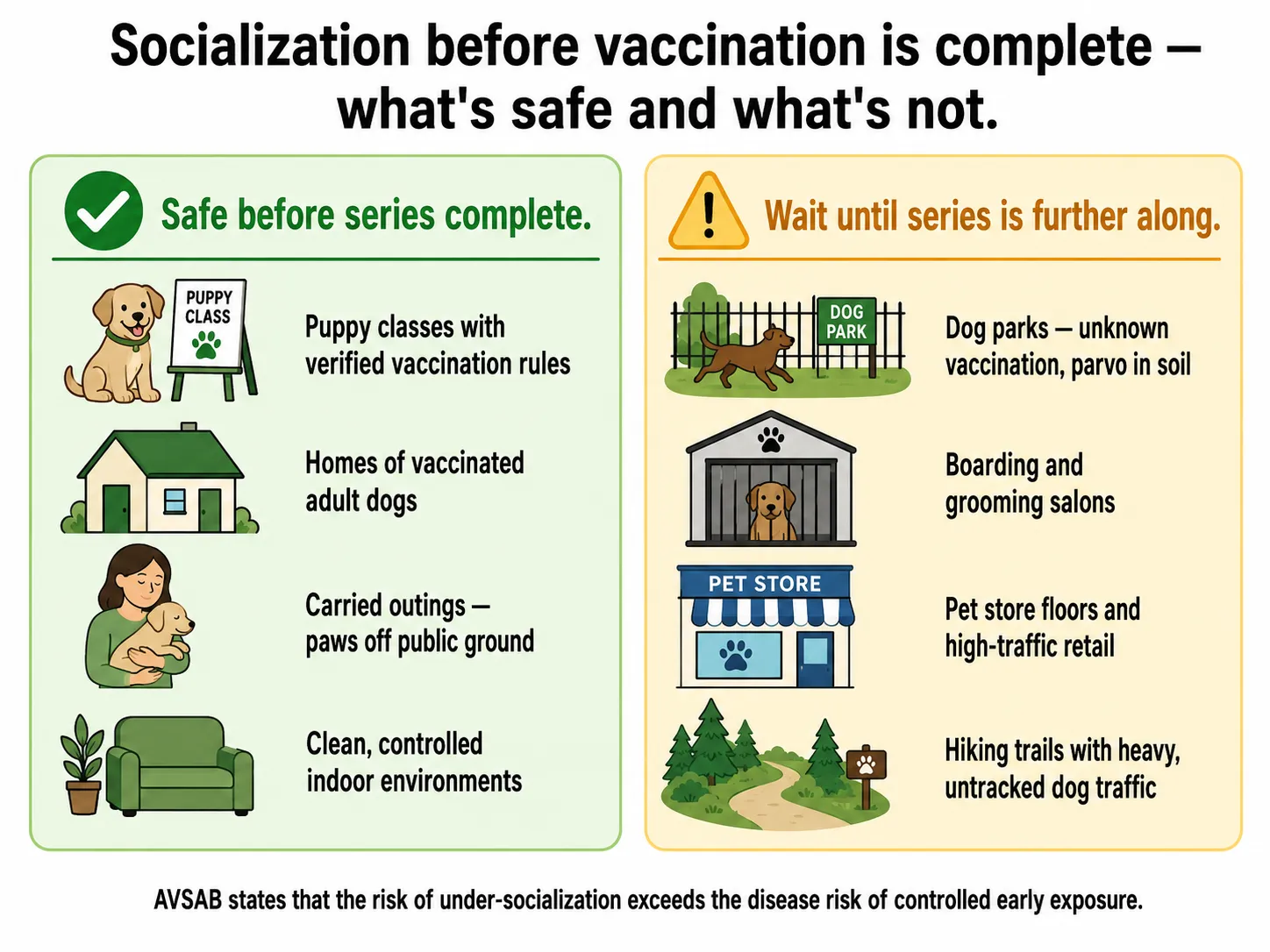
The American Veterinary Society of Animal Behavior (AVSAB) has a clear position on this. Their position statement states that the socialization window is the first three months of life, and that this period, when sociability outweighs fear, is the "primary window of opportunity for puppies to adapt to new people, animals, and experiences." Incomplete or improper socialization during this window increases the risk of behavioral problems including fear, avoidance, and aggression later in life. The AVSAB goes further: they believe it should be the standard of care for puppies to receive socialization before they are fully vaccinated, because the behavioral risks of missing this window exceed the disease risks of carefully controlled early exposure.
This doesn't mean taking your 9-week-old to a dog park, that's a real risk, and parvovirus doesn't care about your good intentions. What it means is that there are low-risk socialization options that should start well before the series is complete, and that waiting until full vaccination before any socialization is not the guidance that behavioral experts give.
Safe before the series is complete:
- Puppy classes that verify vaccination status of all attendees, this is specifically what AVSAB recommends
- Visits to homes of vaccinated adult dogs
- Clean indoor environments
- Carried neighborhood walks (paws off high-traffic grass, off the ground in public areas with unknown dog traffic)
- Controlled exposure to people, surfaces, sounds, and new environments
Wait until the series is further along (or complete):
- Dog parks (unknown vaccination histories, high parvo contamination risk)
- Boarding facilities and grooming salons
- Pet store floors and high-traffic retail environments
- Trails and areas with heavy, untracked dog traffic
The practical goal is this: your puppy should be meeting vaccinated dogs, experiencing new environments, and being handled by different people well before their final booster, just in controlled, vetted contexts. A puppy that emerges from 18 weeks of near-isolation may be physically healthy but behaviorally fragile in ways that become serious problems in adolescence and adulthood.
If Your Puppy Is Behind, Adopted with No Records, or Came from a Shelter

This is probably the most common situation that doesn't get a clear answer in most vaccine articles, so let's be direct.
You adopted a puppy with incomplete or no records. Don't guess, and don't assume protection because the puppy looks healthy. Bring whatever documentation you have, photos of paperwork, records from the rescue, anything, to your vet. Your vet will assess the puppy's age, review what documentation exists, and decide whether to restart the series, continue from a logical point, or run additional testing. The AAHA's position on unknown history is essentially: when in doubt, vaccinate conservatively. For a puppy with unknown history, the most common approach is to begin or complete the full DHPP series with the final dose no earlier than 16 weeks.
Your puppy missed a scheduled appointment. Puppies who fall behind don't always need to restart from scratch. The appropriate response depends on how much time has lapsed and which vaccines were involved. If the gap was short (a few weeks), your vet will likely continue the series from where it left off. If the gap was longer, or if you're unsure, treat the appointment as a clean start and discuss the full picture with your vet rather than trying to calculate it yourself.
You're wondering about titer testing. A titer test is a blood draw that measures the level of antibodies your dog currently has against specific diseases, most commonly distemper, parvovirus, and adenovirus. A positive titer result means an immune response has occurred at some point; a negative result suggests low antibody levels.
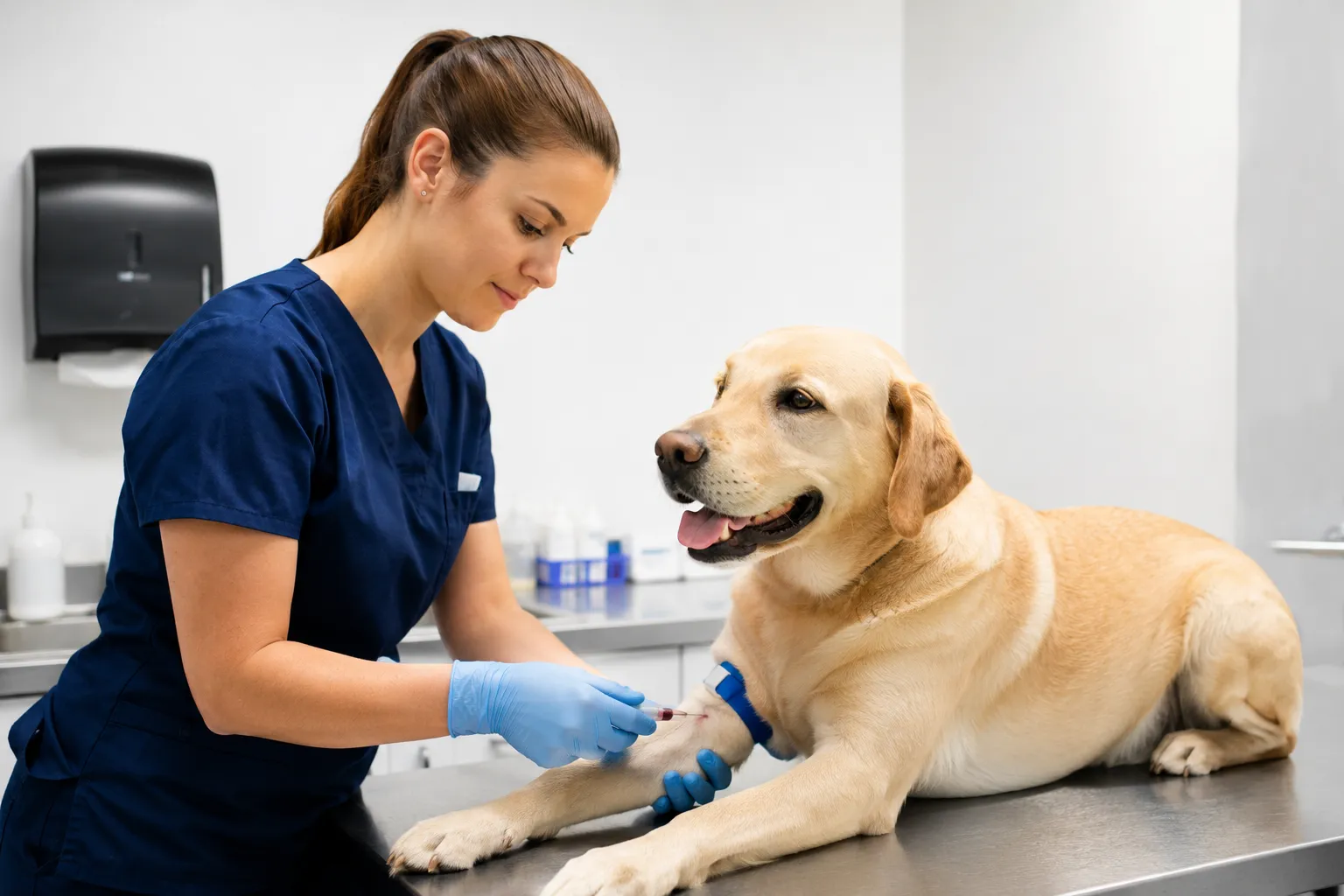
For adult dogs with known vaccination histories approaching their 3-year booster window, titer testing is a legitimate and increasingly common tool. Some dogs maintain immunity for 7-9 years after vaccination, and titer testing can help owners and vets make evidence-based decisions about whether a booster is actually needed.
For puppies with unknown or incomplete records, titer testing is more complicated. The AAHA's 2022 guidelines note that the presence or absence of antibodies is "not necessarily indicative of protection or susceptibility" titer levels are one data point, not a complete picture of immunity. A puppy with a positive titer may or may not be fully protected; one with a low titer may have cell-mediated immunity that the blood test doesn't capture. The AAHA notes that titer testing is most appropriate when dogs have a history of vaccine reactions, when there's a suspicion of vaccine-related autoimmune issues, or when owners have significant hesitancy about revaccination.
What this means practically: if your puppy's history is unknown, a titer test can be informative, but your vet will likely recommend completing the series conservatively rather than relying solely on the titer result. These two things aren't mutually exclusive, your vet may run a titer and complete the series, using the titer result as additional context. The specific guidance here really does require a conversation with your veterinarian, because the interpretation of a puppy titer in the context of unknown MDA history is genuinely complex. What you should not do is skip that conversation and either assume protection or administer boosters without guidance.
Side Effects, What's Normal and What Needs a Call
The vast majority of puppies sail through their vaccine appointments with minimal fuss. But knowing what to watch for, and crucially, when, makes you a more confident owner.

Normal, monitor at home
| Side effect | Why it happens |
|---|---|
| Mild lethargy for 12-24 hours | The immune system is actively responding to the vaccine, this is the process working, not a malfunction. Think of it as a low-grade immune workout. |
| Mild soreness or swelling at the injection site | Normal localized inflammatory response. Usually resolves within a day or two. |
| Reduced appetite for 12-24 hours | Common, mild, and self-limiting. |
| Low-grade fever | Reflects immune activation, not illness. |
These effects are expected and do not require a vet call unless they persist beyond 24-48 hours or worsen.
Call your vet today
| Reaction | Timing note |
|---|---|
| Facial swelling, hives, or raised welts on the skin | Watch for within 30-60 minutes of vaccination, this is the window when anaphylactic-type reactions typically occur. If you can, stay in or near the clinic for 15-20 minutes after each appointment. |
| Vomiting or diarrhea within the first hour after vaccination | May signal an immediate allergic response rather than normal GI upset. |
| Collapse, extreme weakness, or difficulty breathing | Emergency. Do not wait. |
| Persistent swelling at the injection site beyond 2-3 weeks | While rare, some injection-site reactions can persist. Have your vet evaluate rather than waiting it out. |
| Lethargy that extends well past 24-48 hours | Mild fatigue is expected. Significant prolonged lethargy is not. |
Note that serious vaccine reactions in dogs are uncommon. The AAHA guidelines describe them as "uncommon to rare." But they do happen, and knowing the timing (that window within 60 minutes of vaccination for the most serious reactions) helps you make a fast decision if something looks wrong.
A Practical Decision Framework for the First Year
When you're sitting across from your vet trying to decide which vaccines to prioritize, these five questions help organize the conversation.
| Factor | What it means for you |
|---|---|
| Age and timing window | Is your puppy within the primary series window (6-16 weeks)? Has the final DHPP dose been given no earlier than 16 weeks? Emily note: if the answer to the second question is no, because a well-meaning breeder or shelter gave an early series that ended at 12 weeks, your puppy may need that final dose completed. |
| Record certainty | Do you have documented proof of vaccines given, with dates and products? Emily note: a verbal "yes they had their shots" from a breeder is not a medical record. Ask for the actual paperwork, or photograph the clinic records before you leave. |
| Exposure risk | What environments will your puppy actually encounter in the next 6-12 months, daycare, dog parks, hiking trails, farm visits, boarding? Emily note: be honest here; there's no penalty for saying yes to lifestyle vaccines if your dog's life warrants them. |
| Local disease pressure | Is parvo, lepto, Lyme, or CIV currently circulating in your area? Emily note: your local vet knows this better than any website does. Ask them directly. |
| Current health status | Is your puppy healthy and showing no signs of illness at the time of the appointment? Sick or immunocompromised puppies may need to delay certain vaccines. Emily note: this is a good reason to do the physical exam before the vaccine, not after. Your vet should assess your puppy before injecting, every time. |
Questions owners ask

What is the puppy vaccination schedule in the first year, week by week?
The standard first-year schedule, aligned with the 2022 AAHA Canine Vaccination Guidelines, begins with the first DHPP dose at 6-8 weeks and continues with a dose every 3-4 weeks until the final puppy booster at 16-18 weeks. A rabies vaccine is typically added around 14-16 weeks (timing varies by local law). Leptospirosis, if indicated, begins as a two-dose series at around 12-14 weeks. At 12 months, a DHPP booster and rabies booster mark the transition to the adult schedule. Lifestyle vaccines like Bordetella, Lyme disease, and Canine Influenza are added based on your puppy's specific exposure risks, your vet will assess these at your puppy's first appointment. The exact timing may be adjusted based on your puppy's history and which vaccine products your vet uses.
Why do puppies need so many shots, can't one dose protect them?
This is the question at the heart of everything, and the answer is worth understanding properly. It comes down to maternal antibodies (MDA), the temporary immunity passed from mother to puppy through colostrum in the first 24 hours of life. These antibodies protect the puppy in early weeks but also block vaccine response: when you vaccinate a puppy with high MDA levels, the maternal antibodies neutralize the vaccine before the puppy's immune system can build its own response. The problem is that MDA wanes at different rates in different puppies, even littermates. Research cited in the AAHA guidelines indicates that MDA against parvovirus can persist for 13-15 weeks or longer in some puppies. This means that even at 12 weeks of age, roughly half of puppies may not yet be successfully immunized. The series keeps repeating every 3-4 weeks until MDA has declined enough for at least one dose to take reliably. The AAHA recommends the final puppy booster no earlier than 16 weeks, precisely because only then can we be confident the window of MDA interference has passed for most puppies.
When can my puppy go to the dog park or start daycare?
The general answer is after the full puppy vaccine series is complete, typically after the final DHPP booster at 16-18 weeks, with at least 7-10 days for the immune response to develop. Dog parks in particular carry meaningful parvovirus risk, since the virus can persist in soil for over a year and spreads before infected dogs show symptoms. For daycare and boarding facilities, most will require proof of specific vaccines (commonly DHPP, Bordetella, and rabies at minimum) before admitting your puppy, so check their requirements in advance.
That said, this is not a reason to keep your puppy isolated until 16-18 weeks. The AVSAB's position is that controlled, low-risk socialization, puppy classes with verified vaccinations, visits to vaccinated dogs' homes, carried outings, should begin well before the series is complete. The distinction is between high-risk environments (dog parks, unknown-status dogs, high-traffic areas) and low-risk ones (known vaccinated dogs, supervised classes). Your puppy can and should be engaging with the world; the question is which parts of it. The same reasoning applies to house training, which works best when it starts early and stays consistent.
What if my puppy missed a vaccine appointment or came with no records?
Don't guess, and don't assume protection. If you missed an appointment, call your vet and explain how much time has passed. For short gaps (a week or two), the series usually continues from where it left off. For longer gaps or uncertain timelines, your vet may recommend restarting from the most recent confirmed dose or beginning fresh. If your puppy came with no records or incomplete documentation, bring everything you have, including photos of any paperwork, to the appointment and let your vet make the call. The AAHA's guidance for unknown vaccine history is conservative: when in doubt, vaccinate. A puppy who received a 3-dose series that ended at 12 weeks may not have been successfully immunized against parvo or distemper, even if all three doses were properly given, because MDA may have blocked them all. Your vet may recommend completing the series with a dose at or after 16 weeks to be certain.
Are puppy vaccines safe, and what side effects should I watch for?
Yes, puppy vaccines are safe, and the AAHA describes serious adverse reactions as uncommon to rare. The most common side effects are mild and expected: fatigue for 12-24 hours (the immune system doing its job), soreness at the injection site, and a temporary reduction in appetite. These don't require a vet call. What does require a call, or an immediate return to the clinic, is any sign of an allergic reaction in the first 30-60 minutes after vaccination: facial swelling, hives, vomiting, or collapse. This is the window when anaphylactic-type reactions typically appear, which is why staying near the clinic for a few minutes after each appointment is sensible. Persistent swelling at the injection site after several weeks, or lethargy that extends well beyond 48 hours, also warrants a call. For most puppies, a quiet afternoon after each vaccine visit is the full extent of what you'll see.
What is a titer test and should I ask about it for my puppy?
A titer test is a blood draw that measures the level of circulating antibodies your dog has against specific diseases, most commonly distemper, adenovirus, and parvovirus. A positive result tells you that an immune response has occurred; a negative result suggests low antibody levels and may point toward a need for revaccination.
Titer testing is most commonly discussed in the context of adult dogs approaching their 3-year booster window. Some dogs maintain measurable immunity for 7-9 years after vaccination, and titer testing can help owners and vets make a more individualized, evidence-based decision about whether a booster is truly needed in any given year.
For puppies specifically, the picture is more nuanced. The AAHA's 2022 guidelines are careful to note that antibody levels are not a simple on/off indicator of protection, a positive titer doesn't guarantee immunity, and a negative titer doesn't definitively mean susceptibility. This is particularly true in young puppies with unknown MDA history, where the interaction between maternal antibodies and vaccine-induced antibodies is complicated. Because of this, titer testing rarely replaces the primary puppy series; rather, it's used as additional information alongside it. Where it becomes genuinely useful for puppies is in the scenario of adoption with an unknown history: a titer test may reveal that a puppy has some existing immunity, which helps the vet make a more informed decision about how to proceed with the series. Still, the AAHA's default guidance for dogs with unknown histories leans conservative, your vet will typically complete the series to be safe, and may use a titer as supporting context rather than a substitute for the final doses.
The short version: it's a legitimate conversation to have with your vet, especially if your puppy came to you with incomplete records, or once you're thinking about adult booster schedules. Don't skip the primary series in favor of titer testing, use both tools, with your vet's guidance.
Sources and further reading
- AAHA 2022 Canine Vaccination Guidelines, American Animal Hospital Association https://www.aaha.org/resources/2022-aaha-canine-vaccination-guidelines/
- AAHA: Key Vaccination, Canine Parvovirus (CPV) https://www.aaha.org/resources/2022-aaha-canine-vaccination-guidelines/canine-parvovirus-cpv/
- AAHA: Key Vaccination, Canine Distemper Virus (CDV) https://www.aaha.org/resources/2022-aaha-canine-vaccination-guidelines/canine-distemper-virus-cdv/
- AAHA: Utilization and Interpretation of Serologic Titers https://www.aaha.org/resources/2022-aaha-canine-vaccination-guidelines/utilization-and-interpretation-of-serologic-titers/
- AVSAB Position Statement on Puppy Socialization, American Veterinary Society of Animal Behavior https://avsab.org/wp-content/uploads/2018/03/Puppy_Socialization_Position_Statement_Download_-_10-3-14.pdf
- AVMA: Leptospirosis in Dogs https://www.avma.org/resources-tools/pet-owners/petcare/leptospirosis
- Merck Veterinary Manual: Canine Parvovirus https://www.merckvetmanual.com/infectious-diseases/parvoviridae-and-circoviridate/canine-parvovirus
- PetMD: Parvo in Dogs and Puppies https://www.petmd.com/dog/conditions/infectious-parasitic/parvo-in-dogs
- VCA Animal Hospitals: Puppy Vaccine Schedule https://vcahospitals.com/pediatric/puppy/health-wellness/puppy-vaccine-schedule
- AKC: Your Complete Guide to First-Year Puppy Vaccinations https://www.akc.org/expert-advice/health/puppy-shots-complete-guide/
- CDC MMWR: Human Case of Leptospirosis During a Canine Disease Outbreak, Wyoming, 2023 https://www.cdc.gov/mmwr/volumes/73/wr/mm7327a1.htm
- Horecka et al. (2020): A Decade of Treatment of Canine Parvovirus in an Animal Shelter, PMC https://www.ncbi.nlm.nih.gov/pmc/articles/PMC7341501/