
Puppy Diarrhea Causes and Home Remedies: What’s Safe, What’s Not, and When to Call the Vet
Why does my puppy have diarrhea, and what can I safely do at home? The most common causes are a sudden food change, scavenging something nasty, stress, parasites, or infection, but puppies dehydrate faster than adult dogs, so repeated watery stools, mucus, blood, vomiting, or a flat, tired puppy should go to the vet sooner rather than later.
- Puppies dehydrate faster than adult dogs, so diarrhea needs closer watching.
- Common causes include diet changes, scavenging, parasites, stress, and infections.
- Safe home care is limited to small bland meals, water, and close monitoring.
- Do not fast a young puppy or give human anti-diarrheal medicine without a vet.
- Blood, vomiting, lethargy, black stool, or repeated watery diarrhea means call the vet.
Why does my puppy have diarrhea?
Puppy diarrhea usually means the gut is moving too fast, irritated, or both. The usual triggers are plain but real: a new food, too many treats, rich chews, table scraps, scavenging on a walk, stress from a new routine, parasites, and infections. Dr. Harvey's notes that diarrhea happens when stool is made too quickly, which is a useful way to think about it. In a puppy, that speed matters because small bodies lose fluid quickly.
That’s why puppy diarrhea is not the same as an adult dog having a loose stool after a big meal. Young puppies can go from “a bit off” to dehydrated faster than you’d expect, especially if they’re vomiting or stop drinking. One soft stool after a new treat may be a watch-and-see situation. Several watery stools, any blood, or mucus changes the picture.
The practical question isn’t only “what caused it?” but “how likely is this puppy to bounce back on its own?” A healthy older puppy with one messy stool and normal energy is very different from a nine-week-old pup with frequent diarrhea and a wet nose that seems unusually dry. That gap in age and hydration is why home remedies for puppy diarrhea have to be more cautious than the advice you’ll see for adult dogs.
Which puppy diarrhea causes are most common, and which ones are more worrying?
The safest way to sort puppy diarrhea is by clues, not guesswork. Recent food changes and mild scavenging often point to a short-lived stomach upset, while parasite exposure, under-vaccination, vomiting, blood, black stool, or a very young age push the situation toward veterinary care.
The table below uses three questions I find useful: how recognizable the cause is, how quickly it can lead to dehydration, and whether trying to manage it at home is reasonable or too risky.
| Cause | Typical clues | Dehydration risk | Home care reasonable? |
| Sudden diet change or too many treats | Diarrhea starts within a day or two of switching food, new chews, or extra snacks; puppy may still act fairly normal | Low to moderate | Sometimes, but only with careful bland feeding and close monitoring |
| Garbage, compost, or table-scrap scavenging | Loose stool after eating something rich, greasy, or unknown; occasional vomiting can happen | Moderate | Maybe, if it was a small exposure and the puppy is bright and drinking normally |
| Stress or routine change | Symptoms after moving house, boarding, a new schedule, or a busy first week | Usually low | Often yes, if the puppy is otherwise well and improving |
| Parasites (roundworms, hookworms, Giardia, coccidia) | Recurring or intermittent diarrhea, mucus in stool, foul smell, poor weight gain, pot-bellied appearance | Moderate to high in puppies | No, needs a fecal test and specific veterinary treatment; home remedies won’t clear a parasite infection |
| Viral or bacterial infection (parvovirus, Salmonella, E. coli) | Watery diarrhea with vomiting, lethargy, fever, or a puppy that seems “off”; especially worrying in under-vaccinated puppies | High | No, this is a veterinary emergency |
| Foreign object or toxin | Sudden diarrhea plus repeated vomiting, abdominal pain, drooling, bloating, or a known chewing or ingestion incident | Urgent | No |
| Food intolerance or overfeeding | Loose stool after rich meals or large portions; may recur with the same food pattern | Low to moderate | Sometimes, if the puppy is otherwise stable and your vet has ruled out other causes |
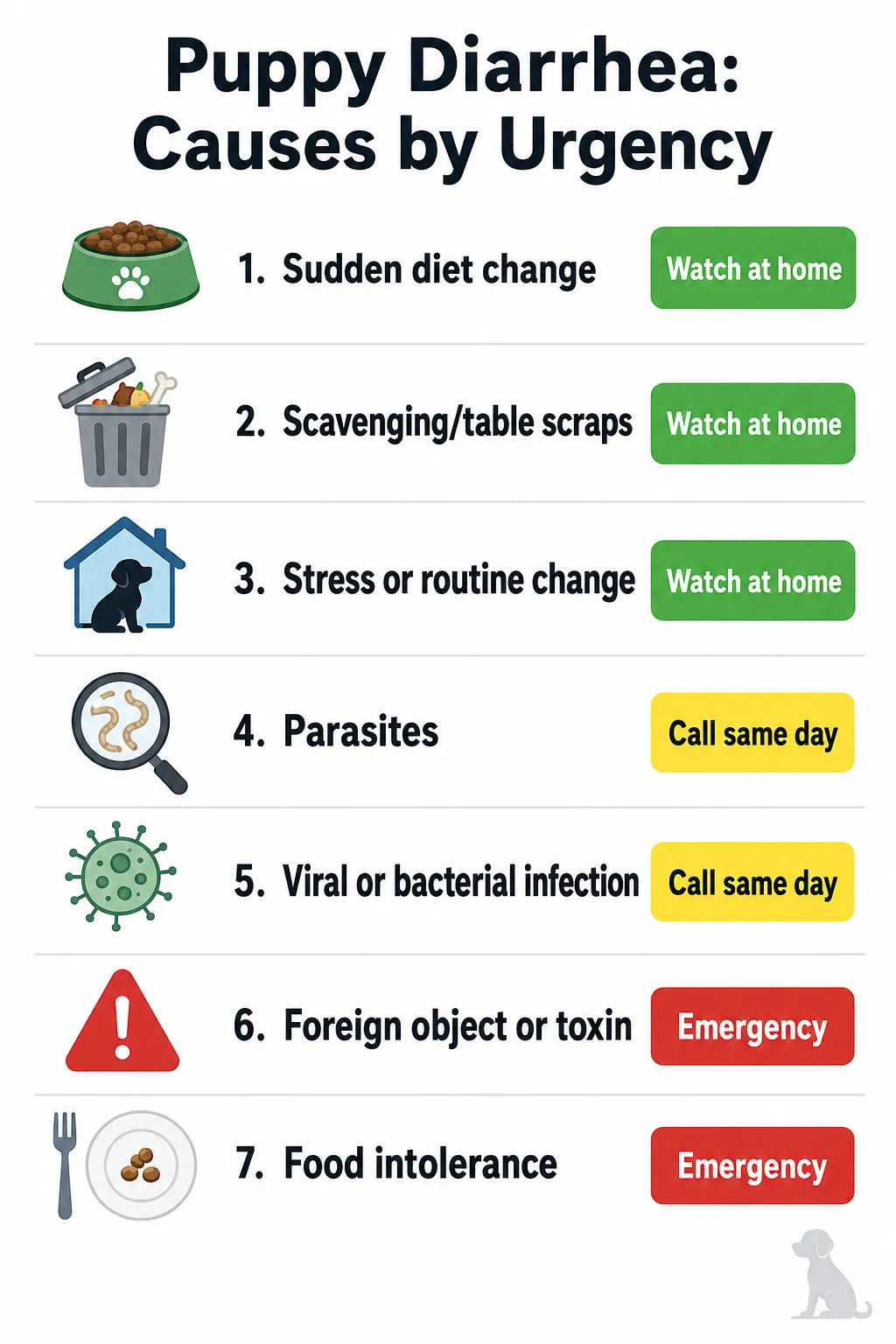
My rule of thumb: if the puppy is over 12 weeks, fully bright, drinking normally, and had one mild episode after an obvious food mistake, watch closely. If the puppy is under 12 weeks, under-vaccinated, having repeated watery stools, vomiting, or blood, call the vet instead of trying to manage it at home.
Center Star Vets points out that even mild diarrhea should be addressed by a veterinarian when it isn’t settling quickly, which is especially true for puppies because the margin for error is smaller. The main takeaway is this: common causes are not equally safe. Parasites and infections can look like “just an upset stomach” at first, but they require diagnosis and treatment, not a bland meal and a wait.
What home remedies are actually safe for puppy diarrhea?
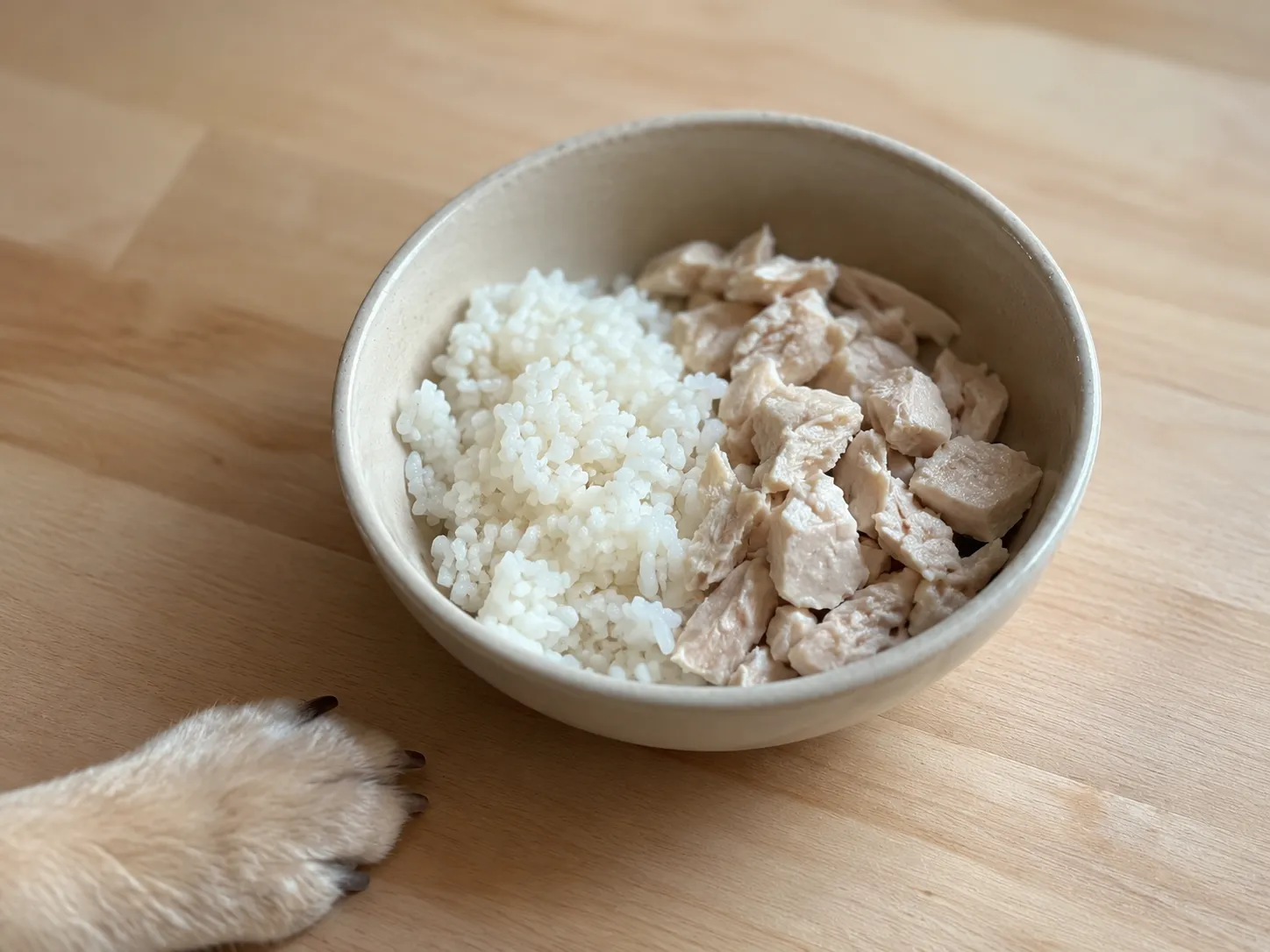
Puppy diarrhea home treatment is narrower than adult-dog care because fasting is usually the wrong instinct for young pups. Some adult-dog advice still gets repeated online, including 24-hour fasting, but that does not sit well with many puppies because they need steady calories and are less resilient once dehydration starts. VCA Hospitals recommends small, frequent meals of a bland, easily digestible diet such as plain cooked white rice with boiled, skinless chicken, which is the most practical place to start when a vet says home care is appropriate.
A safe at-home plan is simple, not dramatic. Offer small portions more often instead of one big meal, keep water available, and choose plain foods that are easy on the gut. Dogs Naturally Magazine also discusses bland foods like boiled chicken as part of a cautious approach, but moderation is the important part. If your puppy gobbles the bowl and then has another loose stool, the portion was too large or the stomach problem is bigger than a simple dietary upset. For puppies, this is the place to remember the framework above: home care is for the bright, drinking pup with a mild, explainable episode, not the one with repeated watery stools or a vaccination gap.
If your veterinarian has already recommended a fiber supplement, psyllium such as Metamucil may be used in some cases, but this is not something I’d try casually in a young puppy. The dose, the reason for using it, and the puppy’s age all matter. Franklin TN Vet / Marc Smith DVM includes psyllium as an option for diarrhea in dogs, but puppies are where owner-led trial and error can go wrong fast.
What should you avoid? Don’t give human anti-diarrheal medication unless a veterinarian has specifically told you to. Don’t fast a very young puppy for convenience. And don’t keep changing foods every few hours in hopes of “finding the right one.” That usually irritates the gut more, not less. A puppy with diarrhea needs consistency more than creativity.
What should I watch for over the next 12-24 hours?
What does the stool look like, and what can it suggest? Soft stool after a new treat or food change leans toward a mild digestive upset. Mucus can show that the colon is irritated. Watery stool raises the dehydration risk fast. Blood, black stool, or stool that keeps turning loose again after seeming to improve is a stronger warning sign and deserves vet attention.
- Count how many times your puppy passes stool and whether the amount is decreasing.
- Note whether the stool is loose, watery, mucusy, or streaked with blood.
- Watch appetite and drinking, especially after meals and play.
- Check energy: bright and interested is different from flat, clingy, or sleepy.
- Look for vomiting, lip-smacking, pacing, or signs of belly discomfort.
- Watch for dehydration signs such as tacky gums, dry mouth, sunken eyes, or reduced urination.
What should you do if your puppy is otherwise acting normal? If energy, appetite, and drinking stay normal, and you can link the diarrhea to one clear cause like a diet change or a stolen snack, it is reasonable to watch closely for a short period. Keep the routine steady, avoid more rich food, and use the decision framework above: one mild episode in an older, vaccinated puppy can be monitored, but repeated watery stools or a younger, under-vaccinated pup should not be treated like a routine upset.
When should I take my puppy to the vet for diarrhea?
The next day matters because real improvement usually shows up in small, clear ways. You want fewer trips outside, stool that is less watery, and a puppy that still wants to drink, move around, and respond normally. If the diarrhea comes from a mild dietary upset, the first change is often that the stool gets softer rather than fully liquid, while the puppy’s energy stays fairly steady.
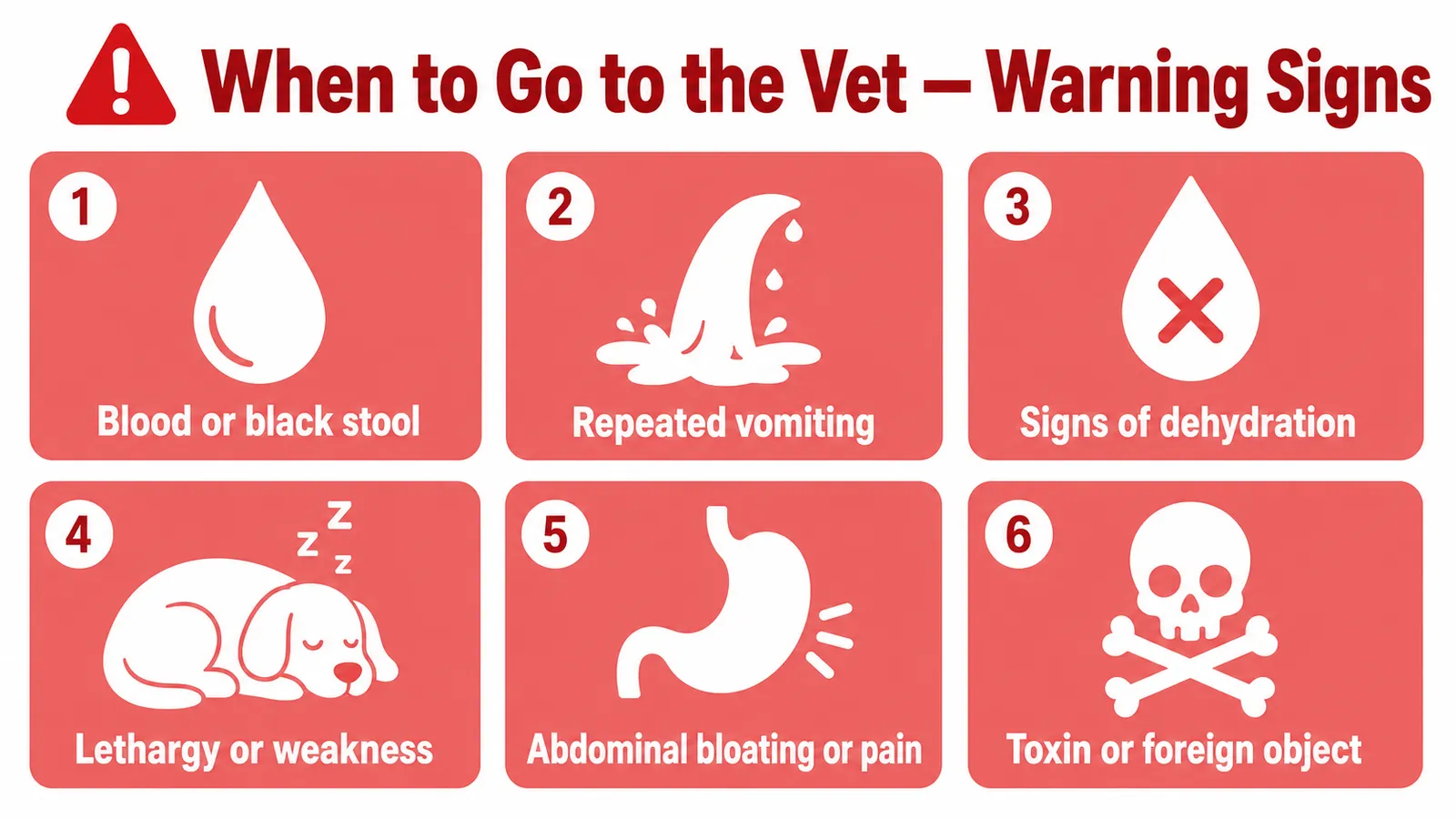
- Go to the vet urgently if your puppy has diarrhea plus repeated vomiting or cannot keep water down.
- Call the vet the same day for blood, black stool, severe lethargy, bloating, or abdominal pain.
- Get veterinary advice earlier for puppies who are very young, under-vaccinated, or recently exposed to unknown dogs or contaminated areas.
- Do not wait out diarrhea that keeps going beyond 24-48 hours, especially if your puppy is drinking less or acting dull.
- Seek immediate help if you suspect a toxin, medication ingestion, or swallowed object.
Worsening usually has a pattern. The puppy keeps having accidents, starts vomiting, loses interest in food, or seems weaker rather than better. If the stool is still very watery after a full day of careful feeding, or the puppy keeps asking for water but can’t keep it down, that is no longer a simple “let’s monitor” situation.
How can I prevent the next episode?
Call a vet the same day if your puppy has repeated vomiting, blood in the stool, black stool, obvious abdominal pain, bloating, weakness, or refuses to drink. These signs matter because diarrhea can be a symptom of something much bigger than an upset stomach, including infection, parasites, toxin exposure, or a foreign object. A puppy that is under-vaccinated or very young needs a lower threshold for care. Under 12 weeks, I would be especially cautious: repeated watery stools, vomiting, or any sign of dehydration should move you out of home-care territory.
- Transition to a new food gradually rather than changing it all at once.
- Keep treats small and avoid piling on new chews, snacks, and rich extras in the same week.
- Block access to garbage, compost, and human food on counters or low tables.
- Stay current on parasite prevention and bring fecal samples when your vet requests them.
- Ask for a proper workup if diarrhea keeps coming back instead of repeating the same home remedy each time.
Even if your puppy is still eating a little, that does not always mean the situation is safe to manage at home. Puppies can look deceptively okay between bathroom trips. If the pattern is frequent, watery, or paired with vomiting, I’d rather have a vet say “watch carefully” than have an owner lose a day hoping a bland meal will fix something infectious or parasitic.
What should I do right now if my puppy has diarrhea?
- Check your puppy’s age, vaccination status, and energy level first.
- Look at the stool for blood, black color, or mucus, and note whether vomiting is present.
- If your vet has already cleared home care, offer small portions of plain cooked white rice with boiled, skinless chicken.
- Keep fresh water available and watch for dehydration signs over the next few hours.
- Call the vet the same day if the diarrhea is watery, frequent, worsening, or paired with a flat, tired puppy.
- Skip fasting, human medications, and random supplements unless your veterinarian tells you to use them.
Prevention is mostly about cutting down on gut surprises. Switch foods slowly, measure treats instead of free-pouring them, and keep rich chews and table scraps to a minimum. Puppies are explorers with poor impulse control, so trash cans, compost, and dropped food need to stay out of reach.
Quick answers
Can I give my puppy the same home remedy I’d use for an adult dog with diarrhea?
Not always. Puppies usually need a more cautious approach because some things that are fine for adult dogs can cause problems for young ones. Fasting, for example, is sometimes recommended for adult dogs with a stomach upset, but it is generally not appropriate for puppies, especially those under 12 weeks, because they need steady calories and are less resilient once blood sugar drops or dehydration starts. Human anti-diarrheal medications are another adult-dog recommendation that should not be carried over to puppies without a vet’s guidance. If your puppy has diarrhea, the safest starting point is a small bland meal, fresh water, and a call to your vet before reaching for any supplement or over-the-counter product.
Should I stop feeding my puppy if they have diarrhea?
Usually no. Withholding food from a young puppy is rarely the right call. Unlike adult dogs, puppies have less energy reserve and can become hypoglycemic or dehydrated more quickly when they go without food. The more practical approach is to offer smaller, more frequent meals of something gentle on the gut, plain cooked white rice with boiled, skinless chicken is the most widely recommended starting point. If your puppy is vomiting and cannot keep anything down, that changes the picture and warrants a vet call rather than continued home feeding.
What does diarrhea from parasites look like in puppies?
It can vary, but the most common pattern is soft, recurring, or intermittent diarrhea rather than a single acute episode. Stool may be pale, greenish, foul-smelling, fatty-looking, or coated with mucus. Some puppies also pass blood. Giardia and coccidia tend to produce watery or greasy loose stools, while roundworms and hookworms more often cause a chronic soft stool with poor weight gain, a bloated belly, and a puppy that seems hungry but never quite thrives. The important thing to know is that parasite infections can look like a simple dietary upset at first, a fecal test is the only reliable way to tell the difference.
When is puppy diarrhea an emergency?
Go to the vet urgently, same day or immediately, if your puppy has any of the following:
- Blood in the stool, or black or tarry stool
- Repeated vomiting alongside diarrhea
- Signs of dehydration: dry or tacky gums, sunken eyes, or skin that does not spring back quickly
- Obvious weakness or lethargy
- Abdominal bloating or pain
- Known exposure to a toxin or foreign object
Puppies under 12 weeks and those that are under-vaccinated warrant an earlier threshold for care, because conditions like parvovirus can progress very fast. When in doubt, call your vet rather than waiting one more day.
How long is too long for puppy diarrhea?
As a general guideline, diarrhea lasting more than 24 to 48 hours in a puppy deserves a vet call, even if the puppy seems otherwise okay. If the diarrhea is watery, frequent, or paired with vomiting or reduced drinking, do not wait that long. A single soft stool after an obvious food mistake in an older, bright, well-hydrated puppy can reasonably be monitored for a short period. But the younger the puppy, the shorter that monitoring window should be, and any episode that is getting worse rather than better, or that keeps coming back, is a sign to investigate rather than continue treating at home.
Where this information comes from
Sources consulted for this article:
- Home Remedies for Dog Diarrhea: Help Your Companion Feel Better, Dr. Harvey's
- 4 Effective Home Remedies for Dog Diarrhea - Marc Smith DVM
- Managing Puppy Diarrhea: A Natural Guide
- 8 Home Remedies For Dog Diarrhea & 2 That Could Be Dangerous
- Common Cause of Diarrhea in Dogs & How to Stop it | Killen Vets