
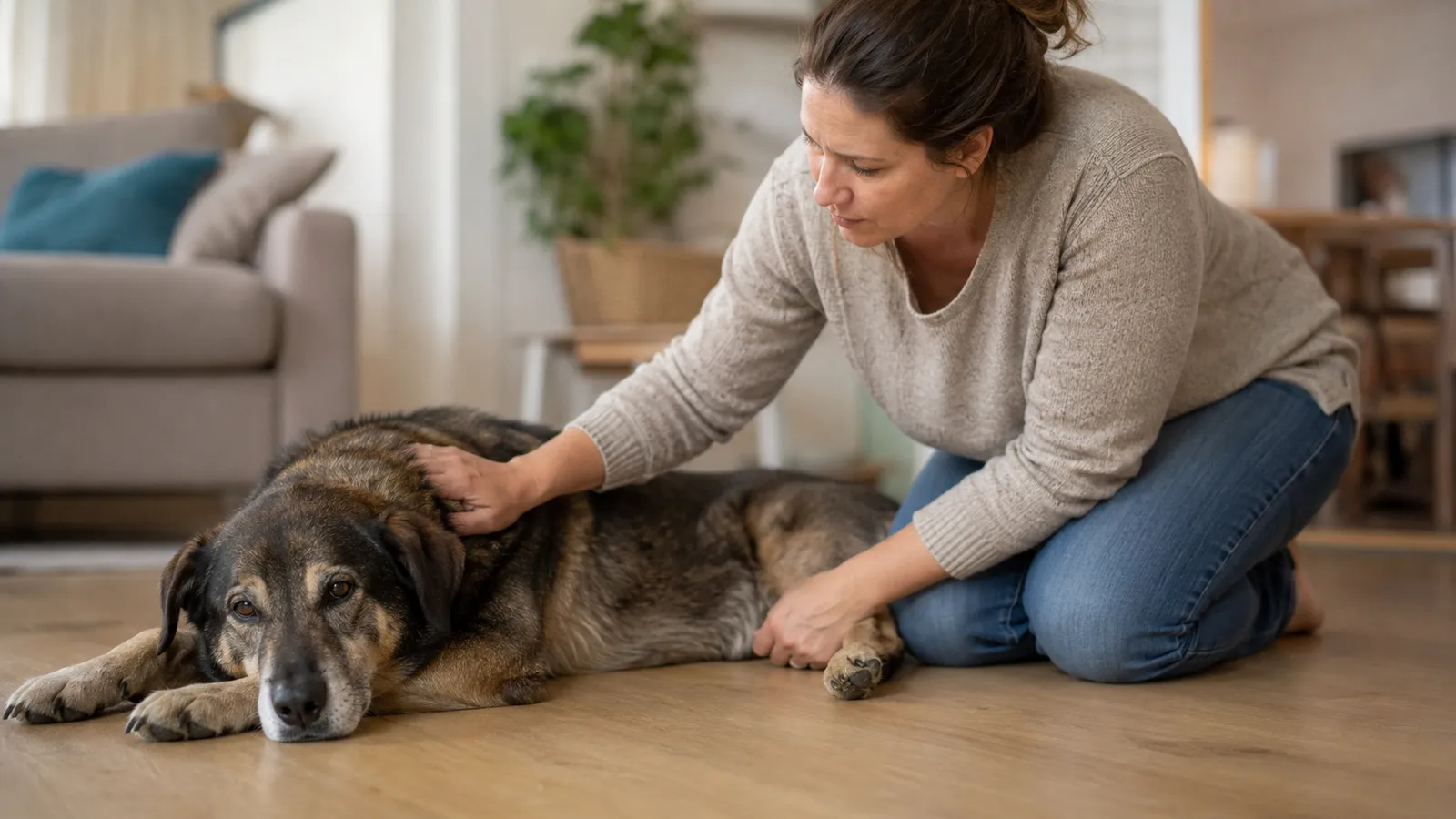
Pancreatitis in Dogs Signs and Symptoms: How to Spot the Pattern Before It Gets Worse
Pancreatitis in dogs is inflammation of the pancreas, and it usually shows up as a pattern: vomiting, abdominal pain, lethargy, loss of appetite, diarrhea, and dehydration. In worse cases, that pattern can slide into collapse or shock, which is why a dog that seems “off” and is also painful or repeatedly sick needs real attention, not a wait-and-see shrug.
The tricky part is that pancreatitis rarely shows up as one neat, obvious symptom. A dog may seem quiet at first, then refuse food, then vomit, then stand with a hunched back or a tense belly. That cluster matters more than any single sign, and it’s what helps separate mild stomach upset from something that can turn into an urgent veterinary problem.
- Pancreatitis in dogs usually shows up as a cluster, not one isolated sign.
- Vomiting plus abdominal pain, loss of appetite, or lethargy is more concerning than vomiting alone.
- Severe cases can progress quickly to dehydration, collapse, or shock.
- Other problems like toxins, gastroenteritis, and kidney disease can look similar at first.
- A vet diagnosis is needed because you usually cannot confirm pancreatitis at home.
⚕️ Medical disclaimer: This article is for educational and informational purposes only. Emily Harper is not a veterinarian. The content on Froqel is reviewed against trusted veterinary sources but does not constitute veterinary advice, diagnosis, or treatment. If your dog is showing signs of illness, especially vomiting, abdominal pain, lethargy, or collapse, contact a licensed veterinarian immediately. In an emergency, go to your nearest animal hospital without delay.
What are the pancreatitis in dogs signs and symptoms?
The core pancreatitis in dogs signs and symptoms are vomiting, abdominal pain, lethargy, loss of appetite, diarrhea, and dehydration. WebMD describes pancreatitis as inflammation of the pancreas, and PetMD lists the same practical symptom set, with severe cases sometimes moving on to collapse and shock WebMD.
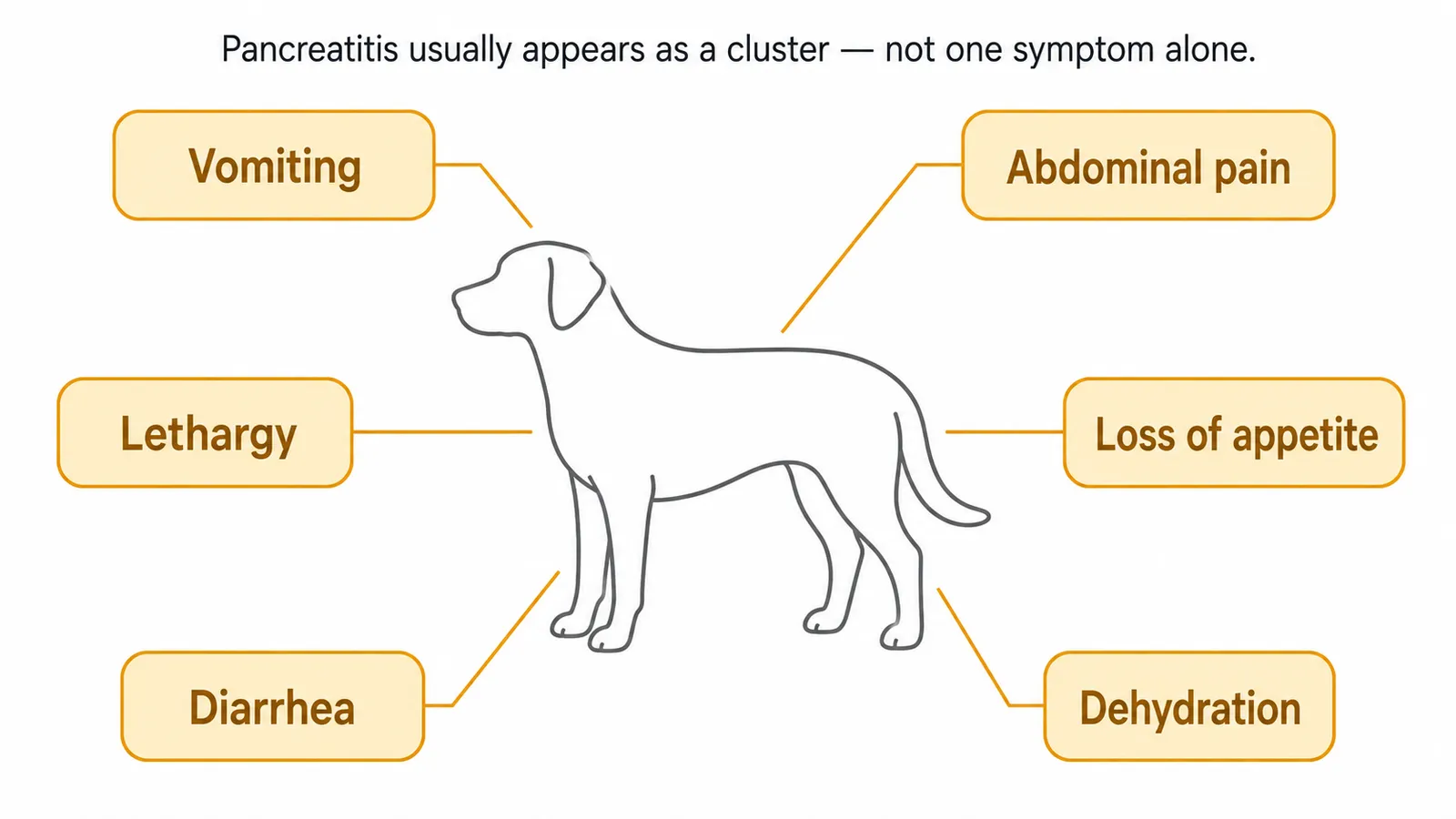
That pattern tells you more than any one clue on its own. A dog with an upset stomach may vomit once and perk up, but pancreatitis more often looks like a dog who feels genuinely unwell: they stop wanting food, move carefully, may tremble or stand hunched, and often seem painful when picked up or when lying down PetMD.
Trembling, a tense posture, or a tucked or hunched back usually points to discomfort rather than a separate disease. Lovet notes that pancreatitis can cause intense abdominal pain, nausea, and general discomfort, and dogs often show that discomfort physically because they can’t describe it Lovet.
If you remember one thing, make it this: pancreatitis is usually a cluster problem, not a single-symptom problem. A little vomiting matters a lot more when it shows up with pain, appetite loss, and low energy.
Which symptoms are most concerning versus easy to mistake?
| Symptom pattern | How strongly it points toward pancreatitis | Common look-alikes | Practical action level |
|---|---|---|---|
| Repeated vomiting plus abdominal pain | Strong concern, especially if the dog acts guarded or won’t settle | Dietary indiscretion, gastroenteritis, toxin exposure | Call the vet today; urgent if the dog cannot keep water down |
| Loss of appetite with lethargy | Moderate concern on its own, stronger when it appears suddenly | General nausea, fever, pain from another cause, kidney disease | Monitor closely if mild and brief; same-day vet advice if it persists |
| Diarrhea with vomiting | Concerning, but not specific by itself | Simple stomach upset, dietary change, infectious gastroenteritis | Call the vet today if it is repeated or paired with pain |
| Dehydration with vomiting or diarrhea | Raises the urgency no matter the cause | Any illness causing fluid loss, including kidney disease | Urgent vet visit; emergency if severe or worsening |
| Severe lethargy, collapse, or shock | Very serious and compatible with severe pancreatitis | Other emergencies, including severe infection or toxic exposure | Emergency care now |
The biggest mistake is treating one symptom as the diagnosis. Vomiting alone can come from something minor, but vomiting plus abdominal pain is a different conversation, especially if your dog is also refusing food or moving like their belly hurts. Great South Veterinary Specialists emphasizes vomiting, pain, and lethargy as key warning signs, and that combination is the one that should make you suspicious fastest Great South Veterinary Specialists.
Dogs hide pain well, so posture and movement matter. A dog standing with a rounded back, lying in an unusual position, or flinching when picked up may be telling you the abdomen is the problem even if the other signs seem mild.
How do pancreatitis in dogs signs and symptoms usually progress?
Mild pancreatitis often starts with reduced appetite, quiet behavior, and a vague sense that something is off. The dog may still walk around, but they are less interested in food, slower to greet you, or reluctant to settle comfortably after eating.
Moderate cases usually add repeated vomiting, diarrhea, and obvious abdominal discomfort. This is the stage where the pattern becomes hard to ignore because the dog is no longer just “not themselves”; they are actively losing fluids and showing signs of pain at the same time.
What makes a case look severe?
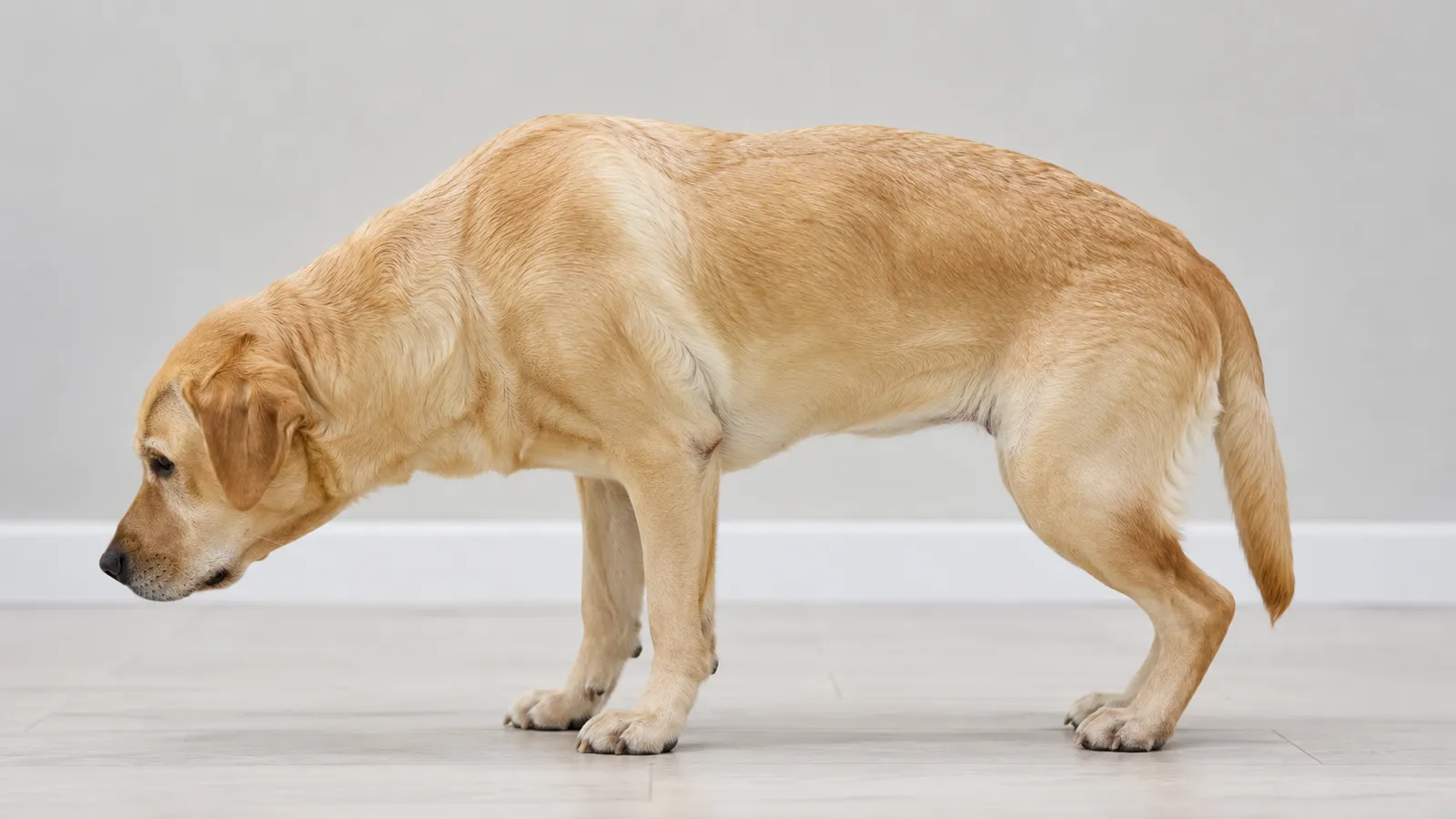
Severe pancreatitis can bring marked dehydration, severe lethargy, collapse, or shock. PetMD specifically lists collapse and shock as possible severe signs, and that is the point where the problem stops looking like a questionable stomach bug and becomes a true emergency PetMD.
The danger is speed. Acute pancreatitis in dogs can worsen over hours, not days, which is why a dog that starts with mild nausea and ends the evening vomiting repeatedly needs a lot more concern than the first symptom suggested.
What does a mild, moderate, or emergency case look like?
| Pattern | Appetite | Vomiting | Hydration | Pain behavior | Energy level | Recommended action |
|---|---|---|---|---|---|---|
| Monitor closely | Slightly reduced or picky, but still eating some | None or a single mild episode | Normal drinking, no obvious dehydration | Maybe quieter than usual, but no clear pain posture | A bit low, still interactive | Watch the pattern for progression; call if it changes |
| Call the vet today | Refusing meals or only licking food | Repeated vomiting or vomiting with diarrhea | May be drinking less or starting to seem dry | Hunched back, tense belly, reluctance to move or be picked up | Noticeably lethargic | Same-day veterinary advice |
| Emergency care now | Unable to keep food or water down | Persistent vomiting, often with diarrhea | Clear dehydration or worsening weakness | Marked abdominal pain, collapse, or a dog that cannot get comfortable | Severe lethargy, collapse, or shock | Go to emergency care immediately |
This table is a triage aid, not a diagnosis. It turns the symptom cluster into urgency levels, because that is what worried owners need at 11 p.m., when one more episode of vomiting can change the picture fast.
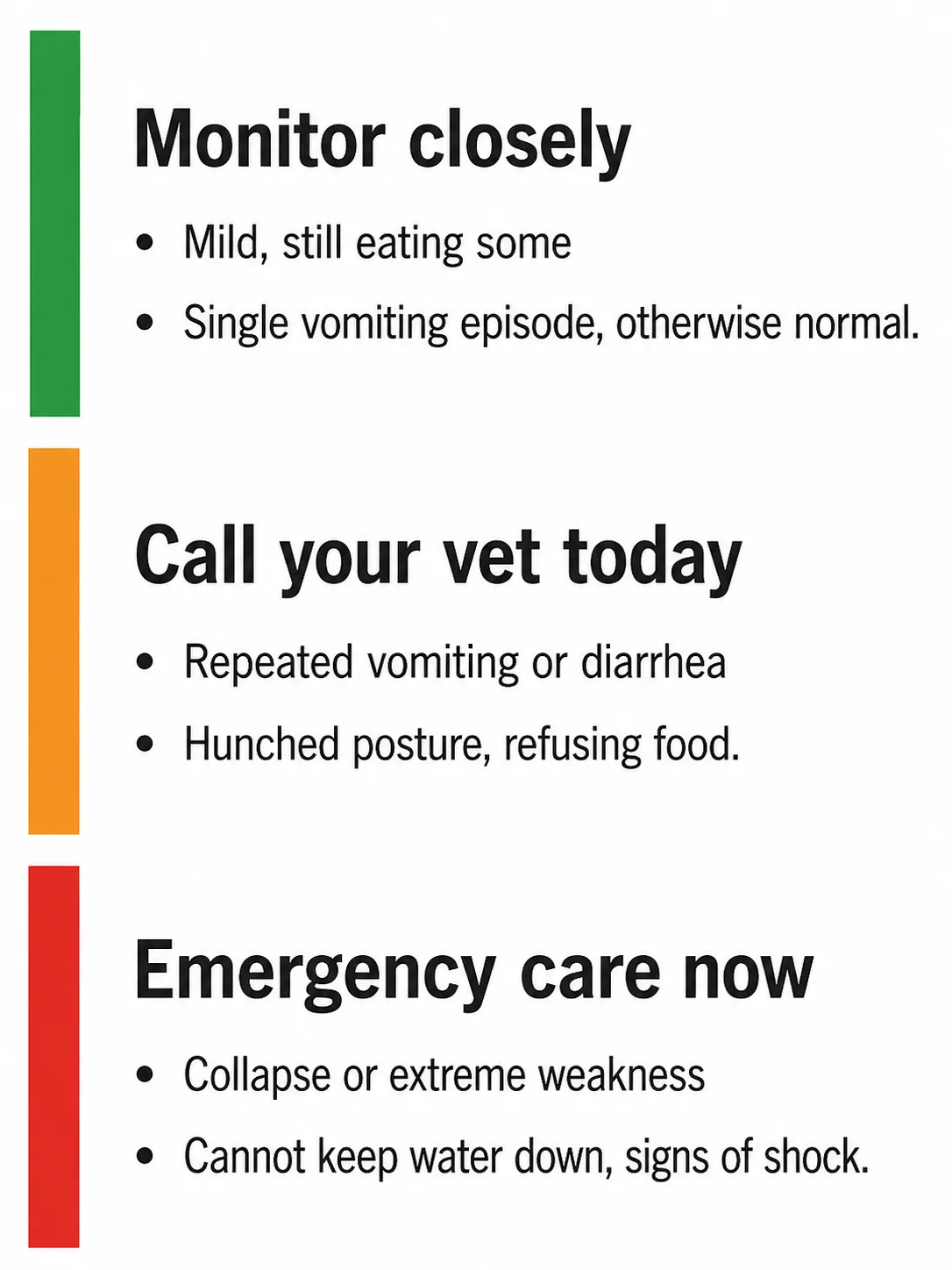
The key pivot is the combination of appetite loss, vomiting, hydration status, pain, and energy. If all five are heading the wrong way, the safest assumption is that this needs veterinary attention now, not tomorrow.
What can pancreatitis look like instead?
- Eating something disagreeable or toxic can cause sudden vomiting and diarrhea, sometimes with drooling or restlessness, and it may look very similar at first.
- Kidney disease can also cause vomiting, poor appetite, dehydration, and lethargy, which is why those signs do not point to pancreatitis on their own.
- Simple gastroenteritis can produce vomiting and diarrhea without the abdominal pain pattern that often makes pancreatitis more likely.
- General abdominal pain from another cause may create a hunched posture, reluctance to move, or a guarded belly, so the posture matters but does not identify the cause by itself.
- Dog lethargy and appetite loss appear in many illnesses, so timing, severity, and whether the symptoms are stacking together matter more than any isolated sign.
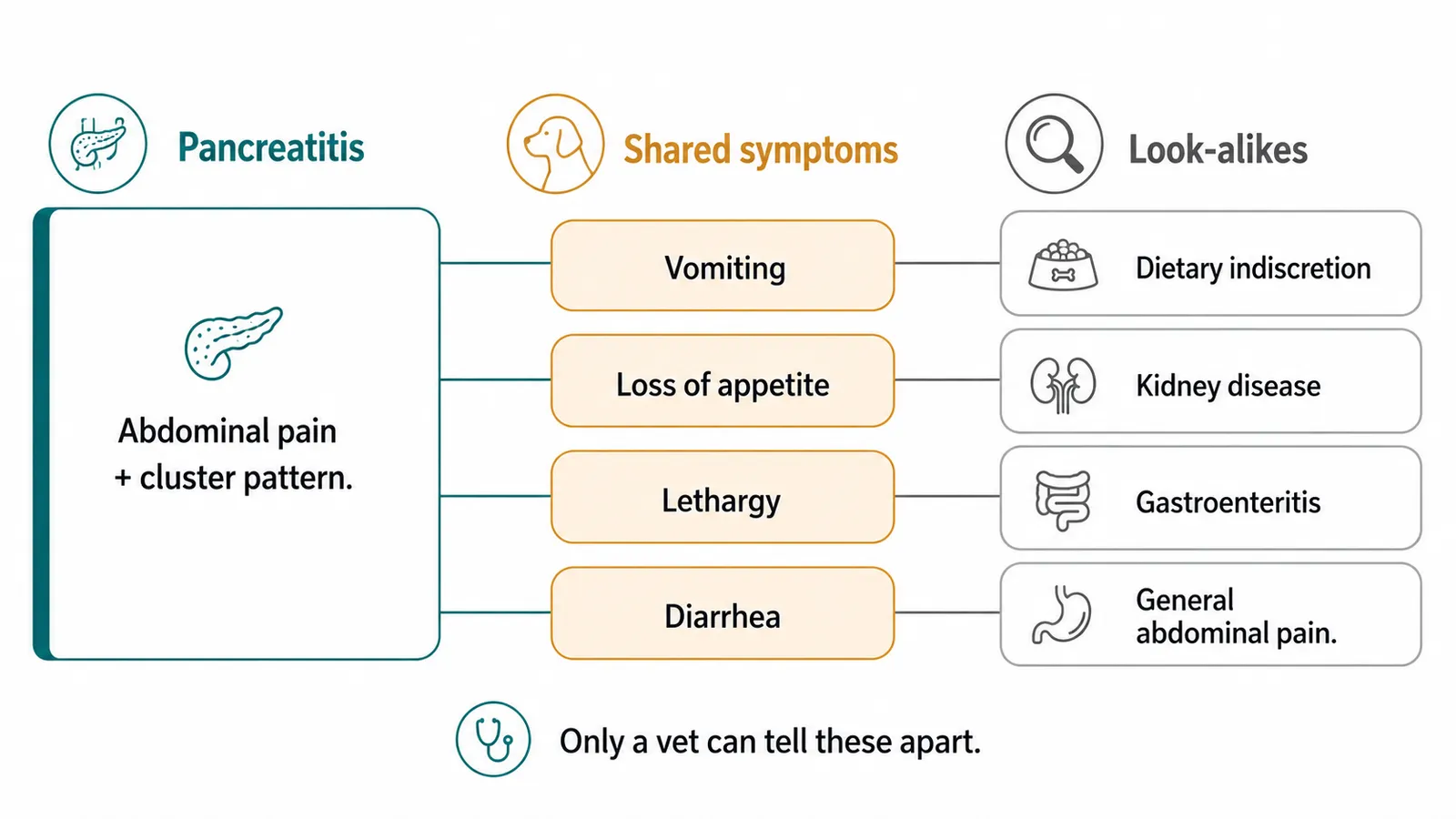
This overlap is exactly why guessing at home has limits. The same dog that looks like they have a stomach bug may actually have pancreatitis, kidney disease, or something more urgent, and the first few hours often look frustratingly similar.
Metropolitan Veterinary Associates stresses that owners often struggle to recognize pancreatitis and that only a veterinarian can confirm it and prescribe medication to ease symptoms Metropolitan Veterinary Associates. That matters because the symptom pattern tells you how worried to be, not what the disease definitely is.
When should I take my dog to the vet for pancreatitis symptoms?
- Call your vet the same day if your dog is vomiting more than once, refusing food, or showing vomiting plus abdominal pain. Those combinations make pancreatitis more likely and dehydration more likely too.
- Treat repeated vomiting with diarrhea, obvious abdominal tenderness, or a hunched, guarded posture as urgent rather than routine. Waiting can allow fluid loss and pain to build.
- Go to emergency care if your dog is collapsing, extremely weak, severely lethargic, or showing signs of shock, or if they cannot keep water down. Those are severe warning signs, not something to watch overnight.
- If the pattern is getting worse over a few hours, do not wait for the next day’s appointment. Acute pancreatitis can escalate quickly, and a dog that starts mildly sick can become much sicker by morning.
- Use your dog’s trend, not your hope, as the decision rule. A symptom that is fading is different from one that is stacking up with new vomiting, less drinking, and more pain.
Pancreatitis needs a veterinarian because the goals are confirmation, pain control, and preventing dehydration. That workup also helps separate pancreatic inflammation from other problems with similar signs, which is the part owners can’t do reliably at home.
What does a vet need to confirm pancreatitis?
A veterinarian confirms pancreatitis by looking at the whole picture, not by relying on one symptom. They weigh the exam findings, the vomiting pattern, the abdominal pain, the hydration status, and any clues that point toward another cause with overlapping symptoms.
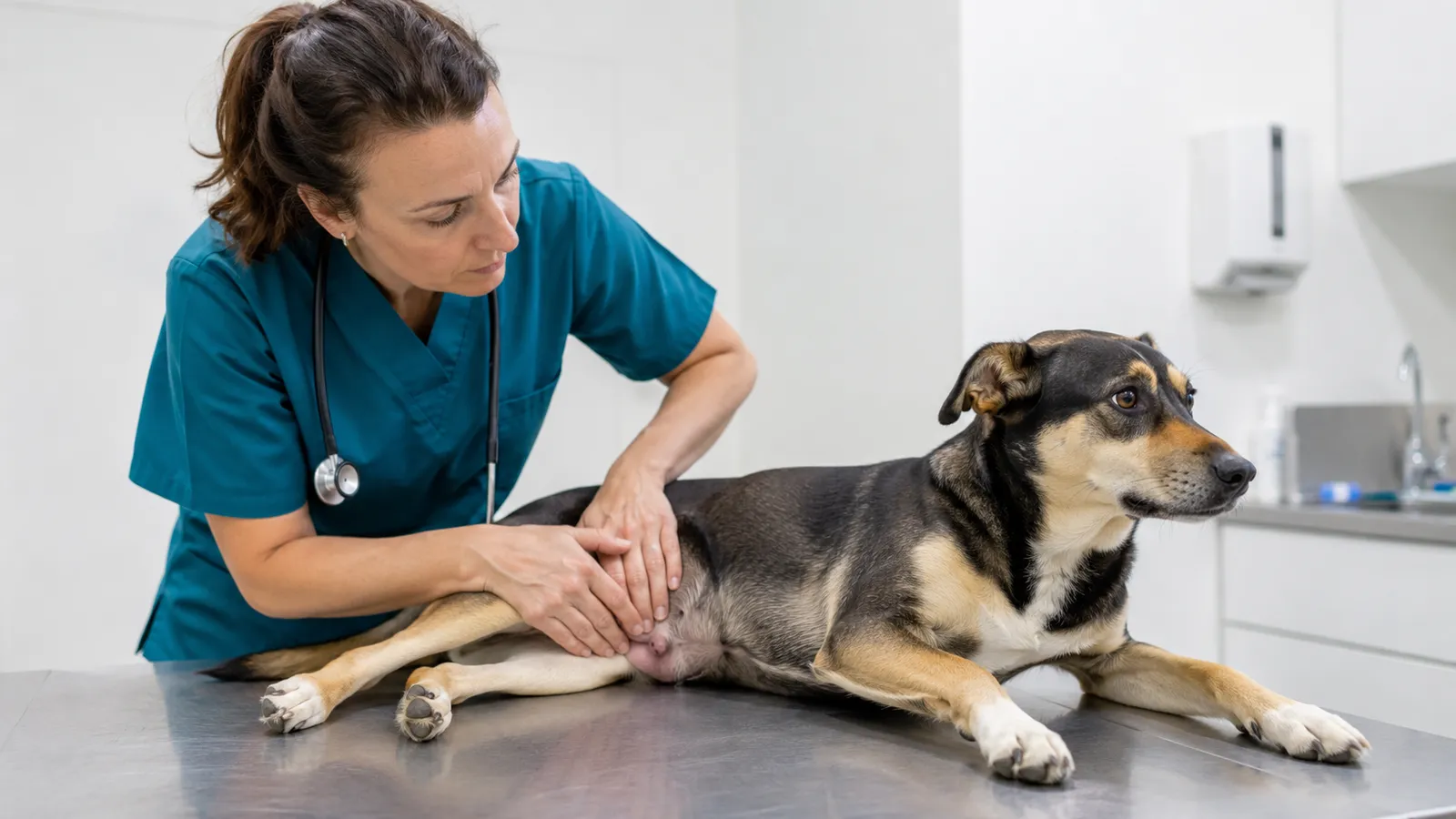
That distinction matters because treatment is aimed at stabilizing the dog, reducing discomfort, and correcting dehydration while the vet sorts out what is driving the illness. The symptoms may look similar from the outside, but the medical decision-making is about ruling out look-alikes and preventing complications.
If your dog seems dull, painful, and unable to settle after vomiting, that is enough to justify a call. You do not need to prove pancreatitis first; you just need to notice that the pattern is no longer a simple one.
The hardest decision is usually not whether the signs are real. It is whether the pattern is serious enough to move now. If your dog is still eating, not vomiting again, and acting mostly normal, monitoring may be reasonable. If appetite is dropping, vomiting is repeating, or pain is showing up in the posture, call the vet today. If collapse, shock, or severe dehydration enters the picture, that is emergency territory.
Quick answers
What are the first signs of pancreatitis in dogs?
The first signs are often vague: reduced appetite, quiet behavior, vomiting, and a dog that seems uncomfortable or less willing to move normally. The pattern matters more than any single symptom.
Can pancreatitis in dogs go away on its own?
Sometimes mild cases seem to improve briefly, but pancreatitis can also worsen fast or come back if the underlying issue is not addressed. It should be checked by a vet, especially if vomiting or pain is present.
Is diarrhea always part of pancreatitis in dogs?
No. Some dogs with pancreatitis have diarrhea, but others mainly vomit, stop eating, and act painful or lethargic. The absence of diarrhea does not rule it out.
When is pancreatitis in dogs an emergency?
It is an emergency if your dog collapses, seems weak or unresponsive, cannot keep water down, has a swollen or very painful belly, or shows signs of shock. Repeated vomiting with marked lethargy also needs urgent care.
Can you tell pancreatitis from home?
No, not with confidence. You can spot the pattern and judge urgency, but a vet needs to examine your dog and may need bloodwork or imaging to confirm it.
References
Sources consulted for this article:
- Pancreatitis in Dogs: How to Spot It and Get It Treated
- Pancreatitis in Dogs: Signs, Causes and Treatment - PetMD
- 5 Signs Your Dog May Have Pancreatitis in Houston, TX
- Pancreatitis in Dogs: Urgent Signs, Causes, and When to Seek Care
- Dog Pancreatitis: Symptoms and What to Do - Metropolitan Veterinary Associates
- Pancreatitis in dogs: symptoms, treatments, and prevention | LovetBlog