How to Socialize a Puppy the Right Way: What to Do, What to Skip, and When to Worry
The right way to socialize a puppy is to give them small, safe, positive experiences with the world while they are still in the main socialization window, not to push them into greetings they can’t handle. Good socialization builds confidence through choice, distance, and repetition, especially between about 3 and 14 weeks old, with many guides extending that period to 16 weeks.
What matters most in the first months
- The best puppy socialization is calm, controlled, and positive, not a flood of random exposure.
- You can socialize before vaccines are finished if you control the setting, the surfaces, and the dogs your puppy meets.
- Before 16 weeks, focus on everyday people, sounds, handling, surfaces, car rides, and safe dog encounters.
- Fear, freezing, growling, or snapping are warning signs that the plan needs to slow down or change.
- If your puppy seems intensely scared or reactive, bring in a vet or a qualified trainer early.
That distinction matters. A puppy who calmly watches a jogger, hears a bus, or sniffs a friend’s vaccinated dog from a few feet away is learning. A puppy trapped in a swarm of strangers, dragged toward another dog, or overwhelmed at a busy pet store is just coping. Socialization should make the world feel manageable, not huge.
The hard part is balancing development with safety during the vaccination period. You do not need to keep your puppy indoors until every shot is finished, but you also should not treat “socializing early” as permission for random exposure. The goal is thoughtful practice, not sheer volume.
What should a puppy be socialized to before 16 weeks?
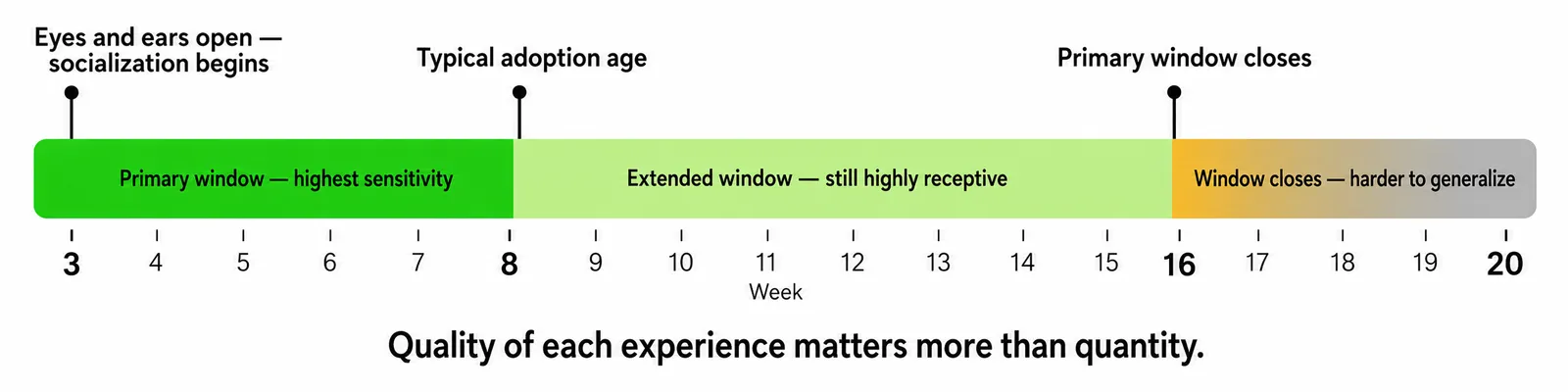
Before 16 weeks, the priority is not “everything.” It is the set of experiences your dog is most likely to live with for the rest of their life, introduced in calm, low-pressure ways. That usually means people, dogs, environments, handling, and everyday noises and routines. House training belongs in the same window, and a step-by-step house training routine gives the puppy one more predictable thing to rely on.
- Different kinds of people: children, older adults, men, women, people wearing hats or sunglasses, people with canes or wheelchairs, and people who move, talk, or gesture differently.
- Calm dogs and tightly managed puppy-to-puppy meetings, especially with dogs whose body language you already trust.
- Common sights, sounds, smells, surfaces, and places: traffic, doorbells, kitchen appliances, stairs, grass, gravel, sidewalks, elevators, rain, wind, and changes in weather.
- Handling and care routines: collar or harness feel, brushing, gentle restraint, nail care, ear and paw touches, muzzle awareness if needed, and vet-style handling.
- Car rides, crate time, leash pressure, being alone briefly, and low-level household noise such as vacuuming, clattering pans, and televisions.
The AKC recommends introducing puppies to new sights, sounds, and smells, making the experience positive, taking baby steps, and using puppy classes where appropriate AKC. That “baby steps” part is the bit people skip when they’re anxious about missing a critical window. Small wins matter more than dramatic outings.
Chewy and Best Friends Animal Society both emphasize that the sensitive period starts early, with Best Friends placing the primary window between 3 and 16 weeks Best Friends Animal Society. In practice, that means each day in this window should include some controlled exposure, but never at the cost of overwhelm.
How do you socialize a puppy safely if vaccines aren’t finished yet?
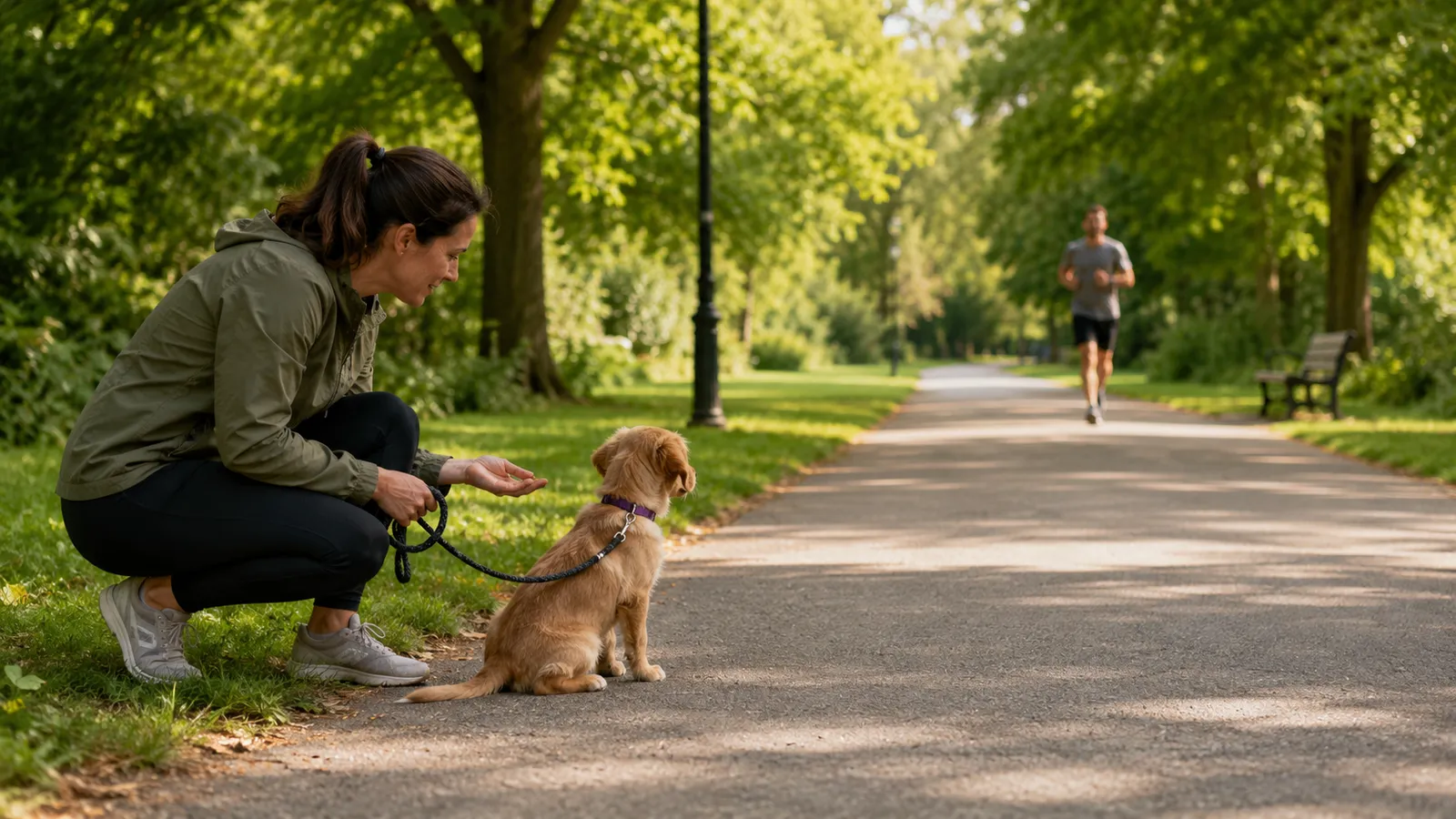
You socialize a not-fully-vaccinated puppy by controlling where they go, what they touch, and who they meet. That usually means starting in clean, familiar places and letting the puppy observe the world from a safe buffer instead of rushing them into direct contact.
- Choose low-risk environments first: your home, a clean driveway, your own yard, a quiet sidewalk, or a trusted friend’s yard where you know the dogs and the ground is sanitary.
- Use a carrier, stroller, or your arms when needed so the puppy can watch without walking across unknown surfaces.
- Stick to healthy, vaccinated, known dogs and skip dog parks, pet-store floors, and contact with visibly sick or unknown animals.
- Keep sessions short and end while the puppy is still comfortable, alert, and able to take food.
- Use distance, treats, and observation when direct interaction feels too intense or too risky.
- Treat the vaccination period as a training season, not a quarantine from life.
This is where a lot of well-meaning owners make the wrong trade-off. They hear “socialize early” and assume physical interaction is always the goal. It isn’t. A puppy watching bicycles from across a parking lot while eating chicken is often learning more than a puppy being shoved nose-to-nose with ten strangers.
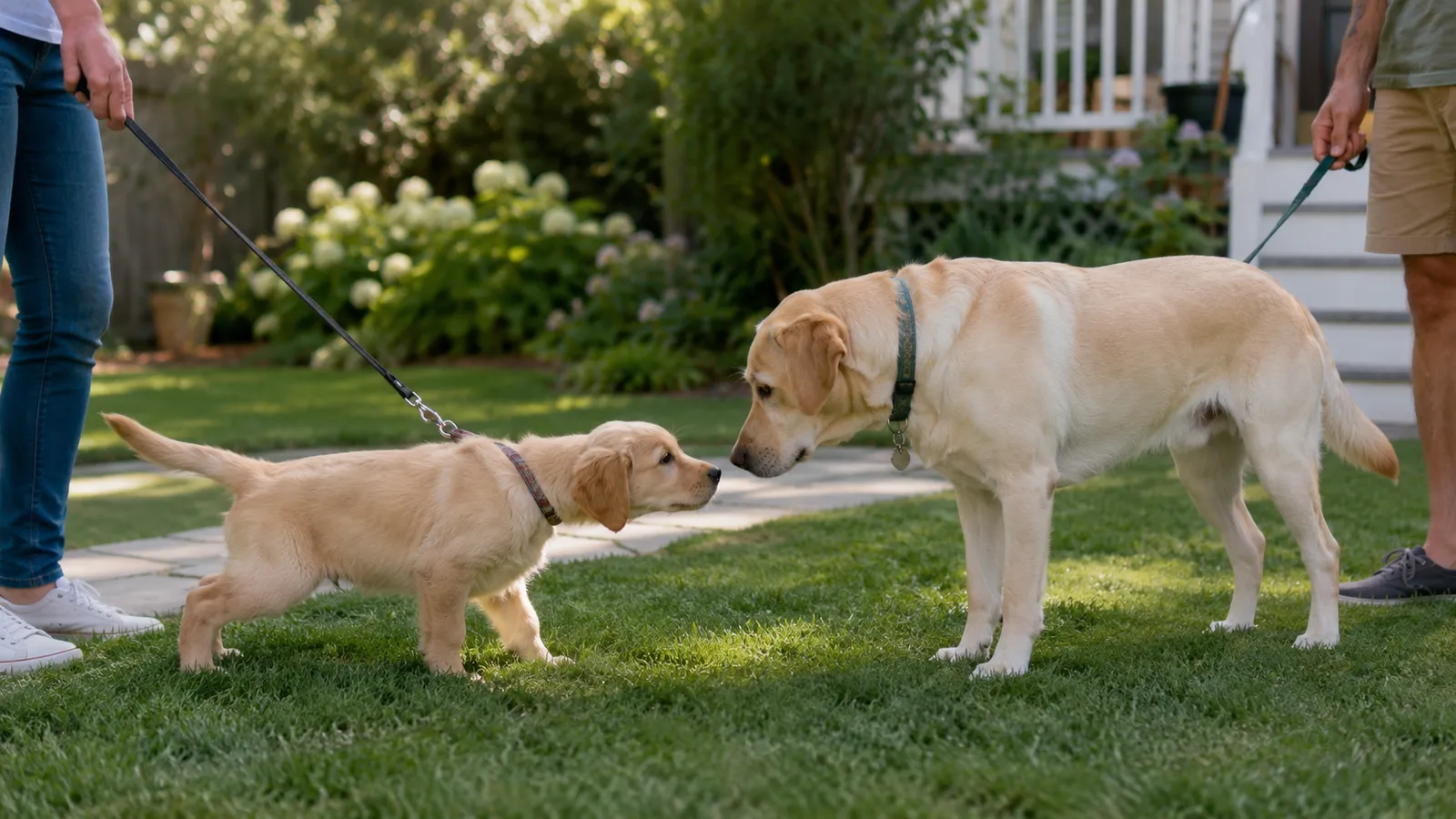
Leerburg’s guidance leans heavily on structure and handler control from the start, which fits the bigger point here: your puppy does not need access to everything, only access to enough things in a way they can handle Leerburg. Structure is what turns exposure into learning.
Puppy socialization methods: what helps confidence, and what backfires?
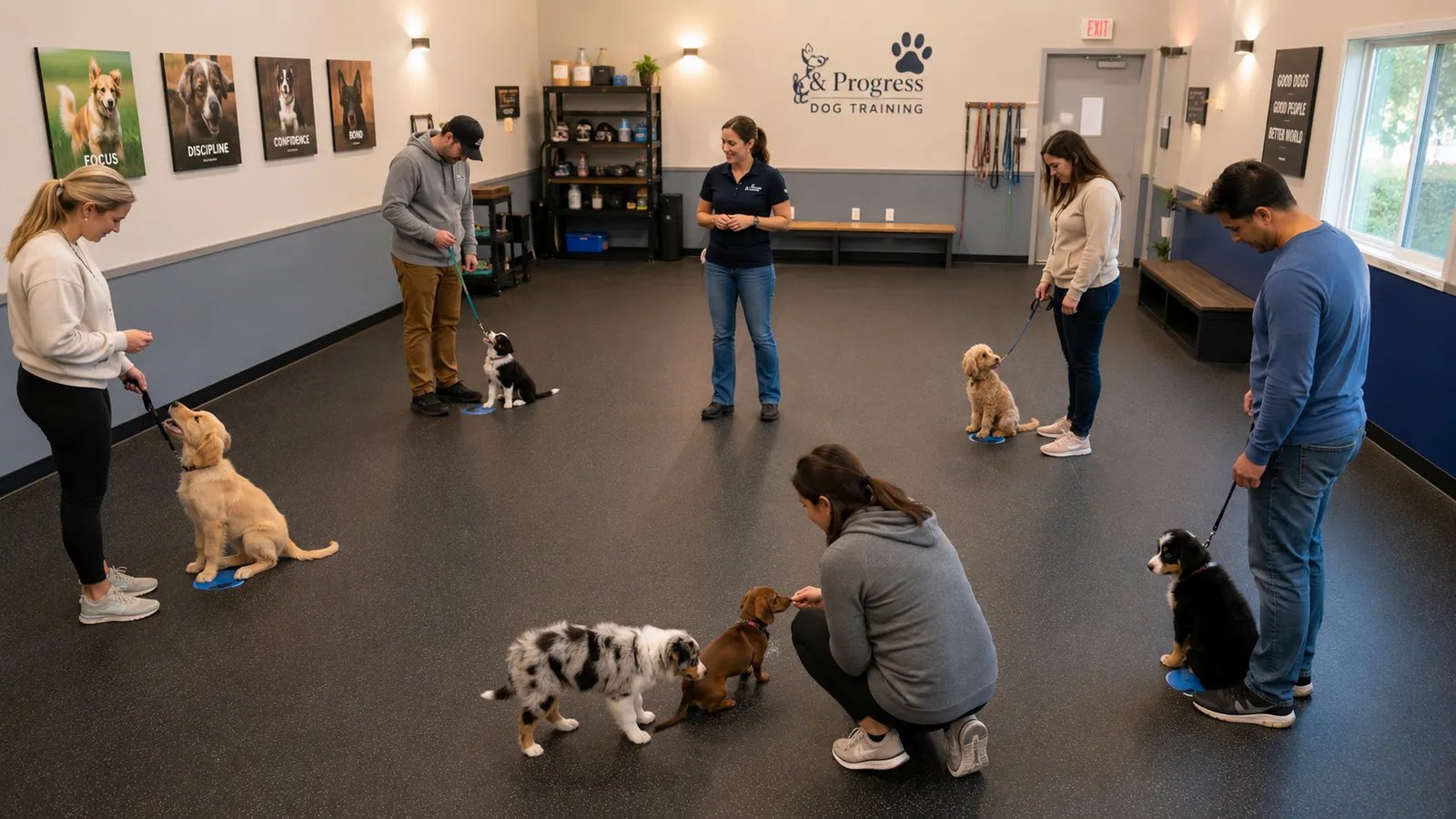
The best method is the one that gives the puppy information without tipping them into fear, frenzy, or shutdown. Puppy classes, carefully chosen one-on-one playdates, and home-based desensitization can all help, but they are not interchangeable.
| Method | Best for | Main strength | Main risk |
|---|---|---|---|
| Puppy classes | Puppies who need supervised learning around other dogs and people | Controlled exposure with a trainer who can shape the environment | Can overwhelm shy puppies if the class is too chaotic or poorly run |
| One-on-one playdates | Puppies who do well with a known, calm dog | Easier to read body language and adjust pace | Can turn into rough play or panic if the dogs are mismatched |
| Public outings | Puppies that can stay relaxed at a distance | Teaches real-world sights, sounds, and movement | Too much noise, traffic, and handling if you stay too long |
| Home-based desensitization | Sensitive or easily overstimulated puppies | Lowest risk, easiest to control intensity | Can become too narrow if you never generalize beyond the house |
Positive reinforcement is what makes any of these methods stick. The puppy notices something new, gets support, and then receives something they value when they respond calmly. That could be food, space, praise, or simply the chance to move away. The reward matters because it tells the puppy, “You’re safe here, and you handled that.”
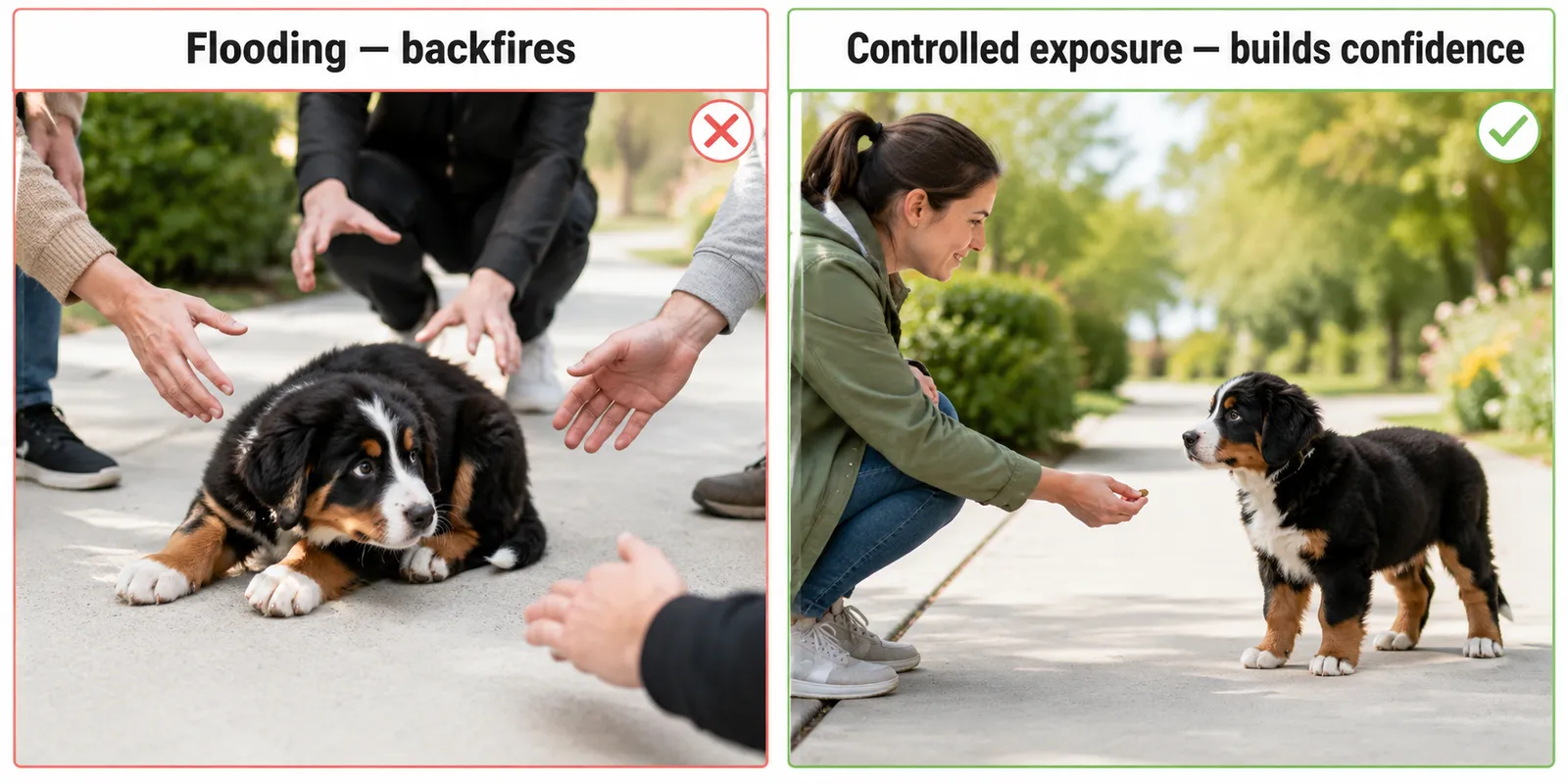
What backfires is flooding: too much, too soon, with no real escape hatch. Forced greetings are the classic version. Endless dog-dog play can also backfire, especially for puppies who get frantic and stop learning. A puppy who is too aroused to eat or check in with you is not building social confidence; they’re losing it.
Original framework: is this a good socialization moment?
A good socialization moment passes a simple test: the puppy stays calm enough to notice the world, recover from surprises, and take part by choice. I use a practical check I call the CDRR test: Calm, Distance, Recovery, Reward. It helps you decide whether to continue, simplify, or leave without guessing.
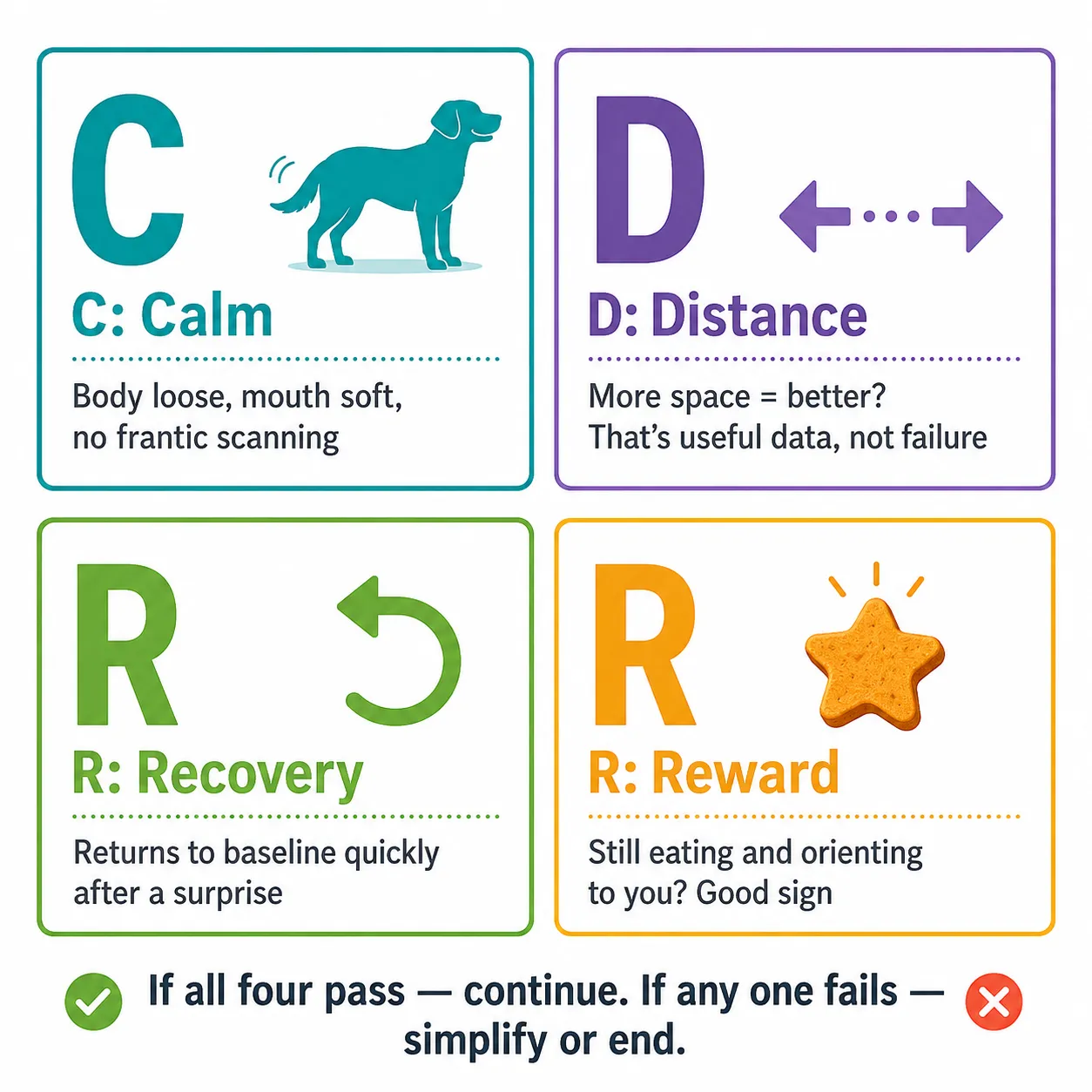
- Calm: The puppy’s body stays loose, their mouth is soft, and they can look around without frantic scanning or frantic pulling.
- Distance: You can increase space if needed. If distance makes the puppy better, that is useful information, not failure.
- Recovery: After a startling sound, a new person, or a passing dog, the puppy returns to baseline quickly instead of staying stuck.
- Reward: The puppy can still eat, orient to you, or choose to approach again. If they cannot, the moment is probably too much.
Use CDRR during walks, puppy classes, vet lobby practice, and people encounters. If your puppy notices the trigger, recovers, and re-engages, keep going at that level. If they freeze, refuse treats, lunge to escape, or start escalating, make the experience easier right away.
The most important part is what you do next. A puppy that needs more distance should get it. A puppy that needs a shorter session should be done. A puppy that cannot recover should not be “worked through it” just because you already got in the car.
When should I worry about fear, growling, or snapping?
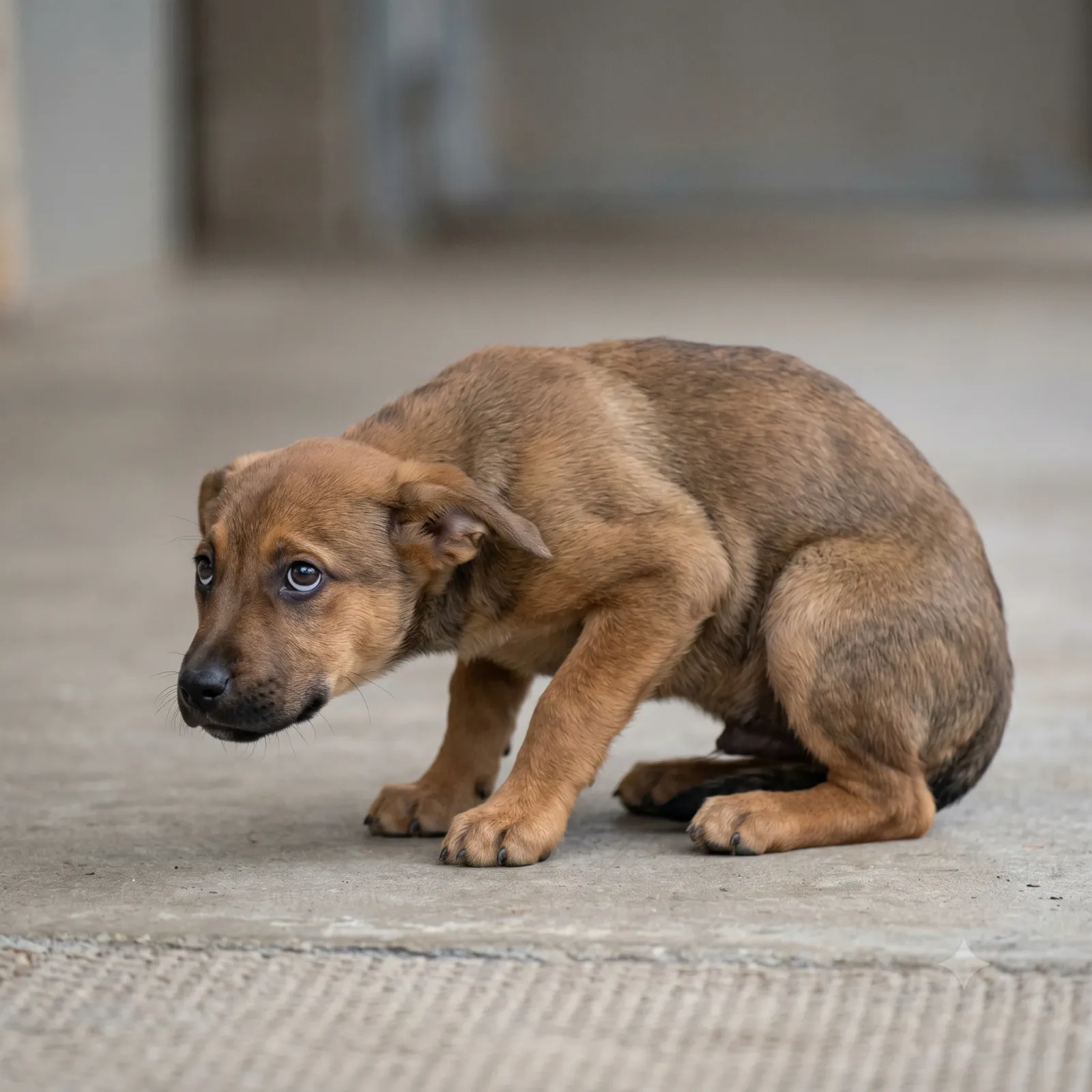
You should worry when fear shows up as a pattern, not as one brief cautious moment. Growling, snapping, and biting during socialization are communication. Best Friends Animal Society specifically notes that fearful behaviors like growling, snapping, or biting need a positive plan while the puppy is still young Best Friends Animal Society.
A single puppy backing away from a noisy cart is normal. A puppy who repeatedly freezes around strangers, cannot settle after mild experiences, refuses food, or escalates fast around handling is telling you the situation is too hard. That is not stubbornness. It’s information.
What worries me more than a growl is the owner who keeps pushing after the warning sign appears. If the puppy is saying “I need space” and the world keeps getting closer, the puppy may learn that warning does not work. That is how caution can harden into more serious fear.
When should I take my puppy to the vet or a trainer for socialization problems?
You should get help early if fear keeps repeating, intensifies, or shows up after very mild exposures. Persistent panic, repeated snapping, refusal to eat after outings, hiding that does not resolve, or obvious regression after a normal walk all deserve attention. The point is to intervene while the puppy is still teachable.
A vet should be involved if pain, illness, stomach upset, ear issues, or neurologic problems could be shaping behavior. A puppy who suddenly reacts badly to touch or becomes more sensitive overall may not be “just nervous.” Sometimes the behavior picture is the first clue that something physical is off.
For fear-based socialization issues, look for a force-free trainer or behavior professional who understands puppy development. Good support should lower pressure, not pile on more exposure. If a plan sounds like “just keep doing it until they get used to it,” that is not a plan I would trust for a sensitive puppy.
A lot of owners ask the internet for a shortcut, and that’s understandable. Reddit threads like r/puppy101 can be useful for sanity checks, but they should not replace a plan tailored to the puppy in front of you. When behavior is getting worse instead of better, the safest move is to act now rather than wait for the window to close.
The cleanest way to think about puppy socialization is this: choose experiences your puppy can handle, keep the dose small, reward calm interest, and back off the second learning turns into strain. If you do that consistently through the vaccination period, you are not missing out. You’re building the kind of confidence that actually lasts.
Common questions
What is the best age to start socializing a puppy?
Start as early as 3 to 4 weeks in breeder or foster care, then keep going through about 16 weeks. The key window is early, but the quality of the experience matters more than the number of new things.
Can I socialize my puppy before all vaccines are done?
Yes, as long as you control the risk. Safe observation from your arms, a stroller, or a clean yard is very different from letting a puppy roam a dog park or pet-store floor.
How many people and dogs should my puppy meet?
There is no magic number, but your puppy should meet a variety of calm people and a small number of known, healthy dogs. One good experience is worth more than ten rushed greetings.
Is puppy class worth it?
Yes, if the class is well run, requires proof of vaccination or has strong hygiene rules, and keeps play supervised. A good class can teach confidence and body awareness without chaos.
What if my puppy seems scared during socialization?
Slow down and create more distance. If your puppy cannot eat, freezes, hides, or starts growling or snapping, stop the session and reassess the setup rather than pushing through.
References
Sources consulted for this article:
- Puppy Socialization: The Ultimate Guide | Chewy
- How to Socialize a Puppy | Best Friends Animal Society
- How to Socialize Your New Puppy
- Puppy Socialization: Why, When, and How to Do It Right