
How to Choose a Puppy Food: What Vets Actually Look For
What are the best puppy food brands vet recommended? The names that come up most often are Hill’s Science Diet, Royal Canin, Purina Pro Plan, and Eukanuba, because each offers puppy formulas with clear life-stage labeling and size-specific options. The real answer is more practical: the best brand is the one that matches your puppy’s age, breed size, digestion, and growth stage without forcing guesswork at mealtime.
How to read this guide
- Vet-recommended puppy foods usually include Hill’s, Royal Canin, Purina Pro Plan, and Eukanuba.
- The best puppy food is the one that matches your puppy’s age, breed size, and digestion.
- Look for a growth or puppy AAFCO statement before anything else.
- Large-breed puppies need controlled growth; small-breed puppies often need smaller kibble and more calorie density.
- Ongoing vomiting, diarrhea, or poor appetite after a food change should prompt a vet call.
What do vets mean by the best puppy food brands vet recommended, really?
“Vet recommended” usually points to brands with consistent growth formulas, clear puppy or growth labeling, and enough variation to fit small-breed, large-breed, and sensitive-stomach puppies. It does not mean every recipe from that brand is right for every dog. The useful part is the structure behind the brand, not a promise that any single bag will suit your puppy.
That is why Hill’s Science Diet, Royal Canin, Purina Pro Plan, and Eukanuba show up so often in vet-facing lists and clinic conversations. They are repeatedly grouped with puppy-specific formulas and practical size-based choices, which matters more than branding when a puppy is growing fast. Sources like Maplewood Vet, Paumanok Veterinary Hospital, PetMD, and Aspen Animal Wellness point to that same cluster for a reason.
The catch is that “recommended” is only the starting point. A large-breed puppy, a toy breed puppy, and a puppy with a sensitive stomach do not need the same formula, even if the bag all says puppy. The question is not which brand sounds safest; it is which one fits the puppy in front of you.
How do you check whether a puppy food is actually a good fit for your dog?
A puppy food is a good fit only if the label says it is meant for growth and the formula matches your puppy’s size and digestion needs. Check the AAFCO statement, confirm the life stage, then look for small-breed, large-breed, or general puppy growth wording. If those three pieces do not line up, keep looking.
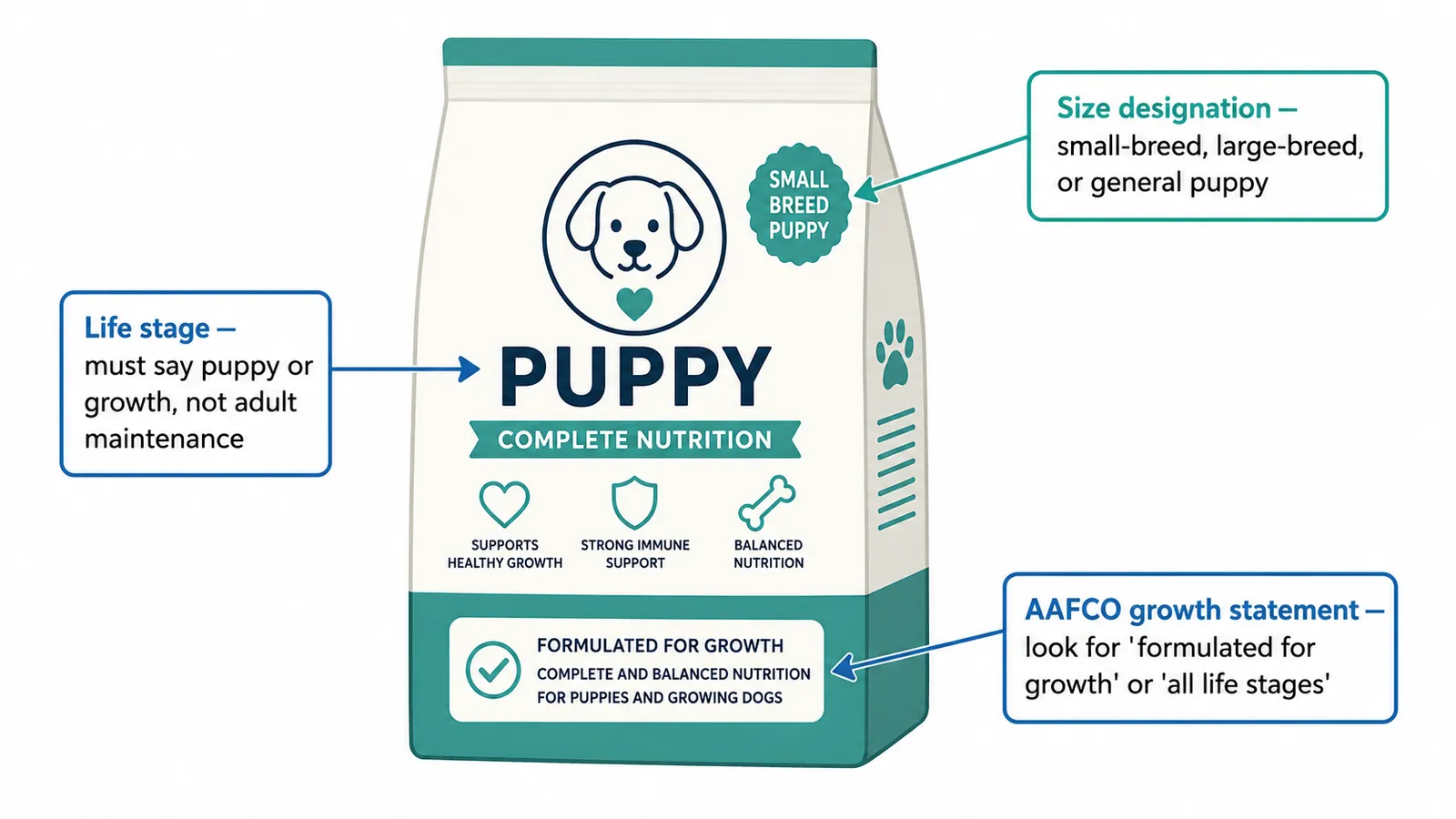
- Look for an AAFCO puppy or growth statement. That is the minimum check that the food is intended to support growth rather than adult maintenance.
- Confirm the life stage. A bag labeled for adult dogs is usually the wrong choice for a puppy, even if it sounds premium.
- Check for size-specific formulas. Small-breed puppies often do better with smaller kibble and more calorie-dense food; large-breed puppies need controlled growth support.
- Read the transition cues. If the brand is changed too often or too suddenly, even a decent food can cause loose stool that has nothing to do with the formula itself.
- Use the puppy, not the marketing, as the final test. Energy, stool quality, appetite, and steady growth matter more than a shiny package.
A simple order helps: age first, breed size second, digestion third, then budget and availability. That keeps you from buying a food that looks impressive but misses the basics. A formula can still be a strong brand choice and fail in your home if your puppy’s stool turns soft after the switch or if growth does not look steady over time.
Which vet-recommended puppy food brands fit different puppies best?
The best-known vet-recommended brands differ less in reputation than in how they handle specific puppy needs. Hill’s Science Diet is often the straightforward choice for owners who want plain growth nutrition and high digestibility. Royal Canin tends to be the more precise fit, especially for size-specific formulas. Purina Pro Plan is often the flexible all-around option. Eukanuba is frequently chosen for active or performance-leaning puppies.
| Brand | Life-stage clarity | Size-specific options | Digestive tolerance potential | Growth-focus precision | Best-fit puppy type | When to look elsewhere |
|---|---|---|---|---|---|---|
| Hill’s Science Diet | Very clear puppy labeling | Yes, depending on recipe | Often a good fit for sensitive digestion | Strong, steady growth focus | Puppies needing a dependable, no-drama starter food | If you want the widest breed-specific or niche formula range |
| Royal Canin | Very clear puppy and breed-specific labeling | Strong | Good when the right formula is matched to the puppy | Very precise | Toy, small, or breed-specific puppies; owners who want targeted kibble and formula design | If you prefer a simpler ingredient style or fewer tailored choices |
| Purina Pro Plan | Very clear puppy lines | Strong | Frequently chosen for broad digestibility and everyday use | Strong | Most first-time owners, active puppies, and households that want an easy-to-find option | If your puppy needs a highly specialized breed formula |
| Eukanuba | Clear puppy-focused options | Good | Often used for performance-minded puppies | Strong | Athletic puppies or owners looking for a growth formula with an active-dog angle | If your puppy needs the most extensive prescription-style or breed-specific range |
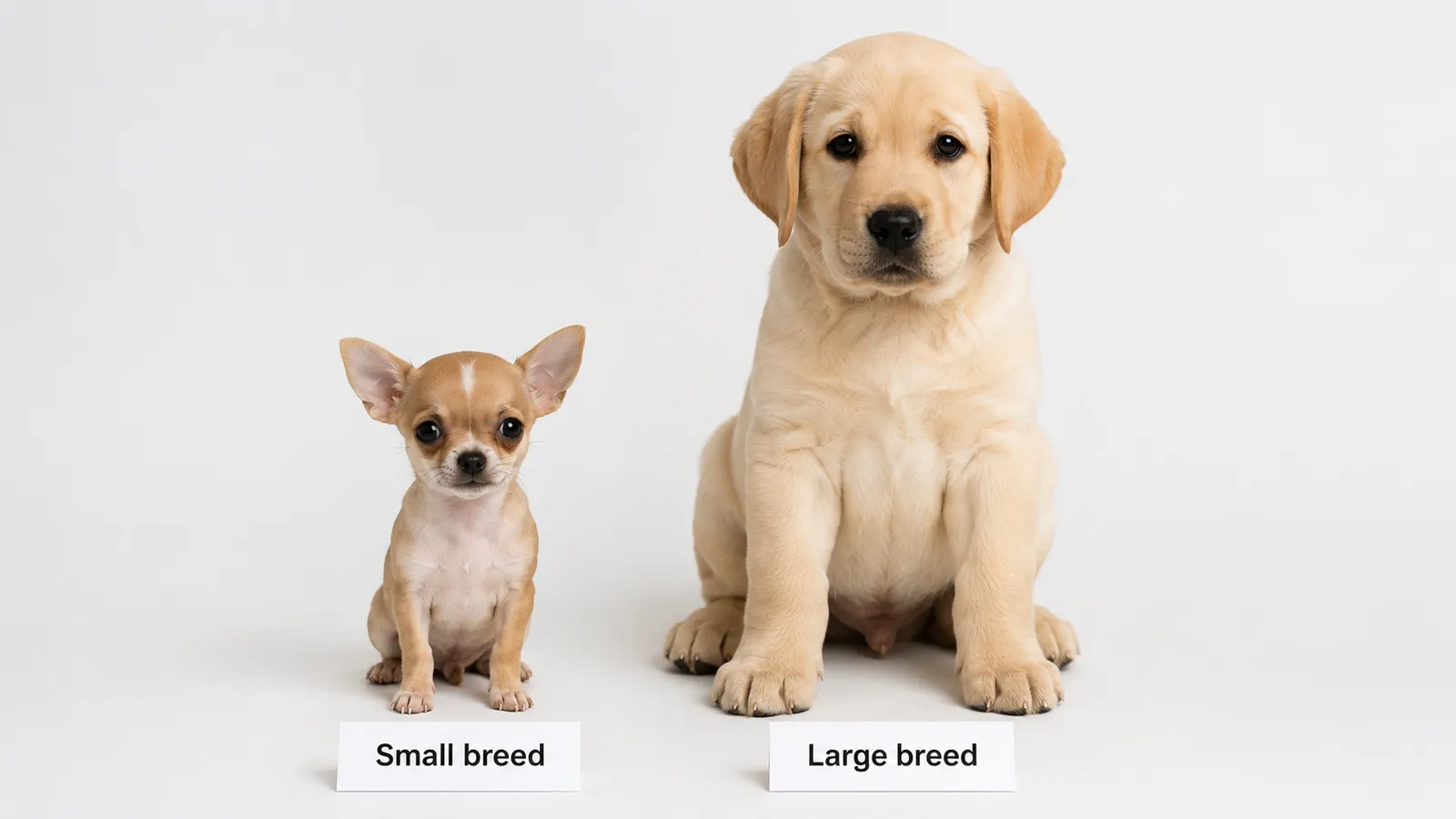
That comparison is a fit filter, not a ranking. A Chihuahua puppy may do better with a small-breed Royal Canin formula than with a broad all-puppy bag because kibble size and nutrient density matter. A Labrador puppy should not be put on a generic puppy formula if a large-breed option is available, because controlled growth matters more in larger dogs. A busy, food-motivated puppy may also suit Purina Pro Plan or Eukanuba better if the formula is easy to feed consistently.
What if my puppy has a sensitive stomach, fast growth, or a breed-size issue?
A puppy with soft stool after a food change does not automatically have a sensitive stomach, but repeated vomiting, ongoing diarrhea, or poor appetite is a different story. Mild stool changes can happen during a transition. Ongoing digestive upset, weight loss, or a puppy that seems flat and tired needs a vet conversation, because puppies can go downhill faster than adult dogs.
When size matters more than brand
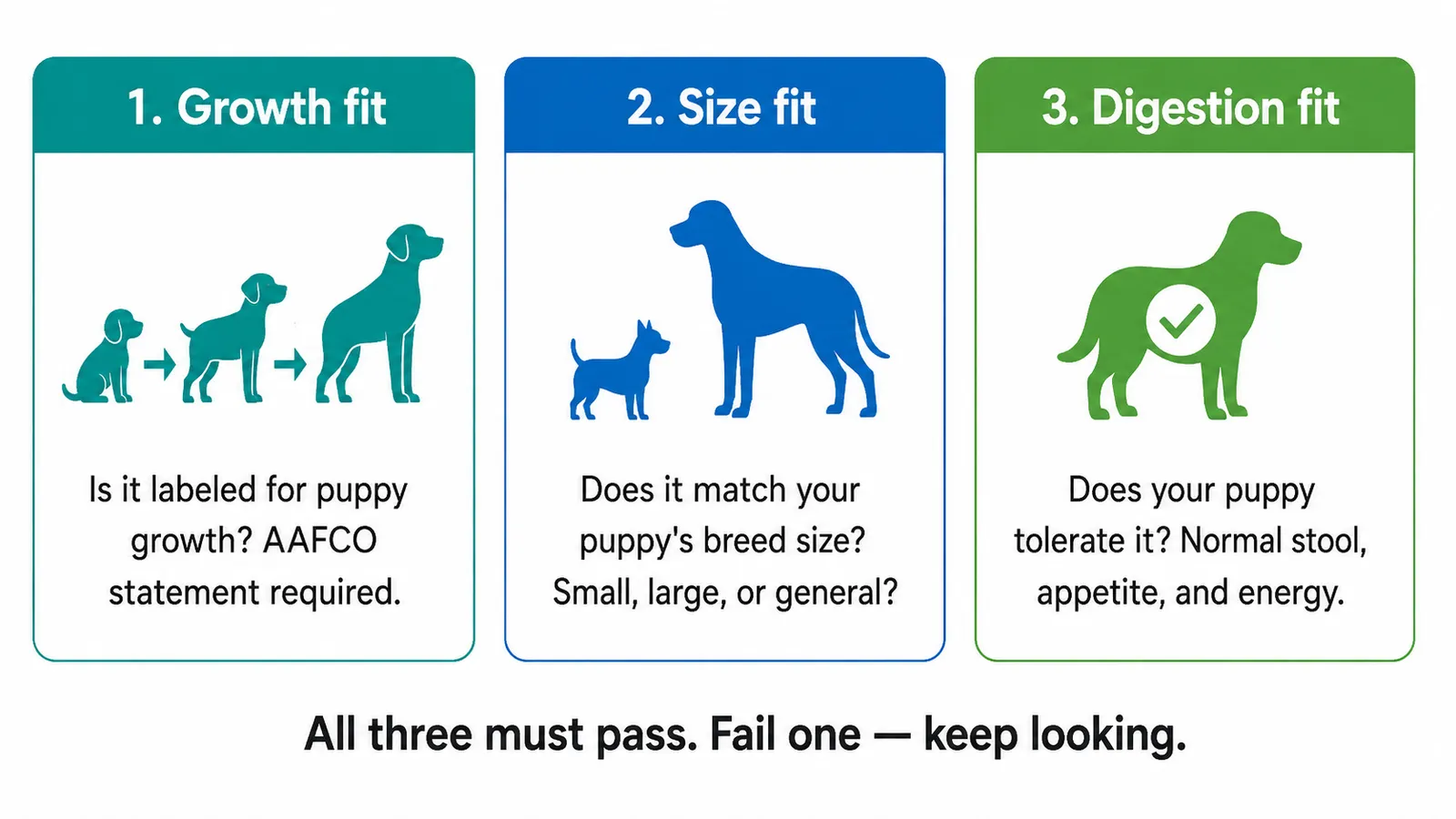
A decision framework helps here. The 3-Fit Test is simple: 1) growth fit, 2) body-size fit, 3) digestion fit. If a food passes all three, it stays on the short list. If it fails one, especially digestion or size, do not force it because the brand is popular.
For a small-breed puppy, the best choice is usually a small-breed puppy formula with smaller kibble and enough calorie density to make eating easier. Royal Canin often fits this brief well because it is built around more specific size targeting, but Hill’s Science Diet and Purina Pro Plan also have puppy formulas that may work if the label matches the dog’s size and growth stage. The wrong choice is a bulky large-breed or generic puppy formula that is awkward to chew or too broad for a tiny mouth.
When digestion matters more than variety
For a large-breed puppy, the main priority is controlled growth. That means looking for a large-breed puppy formula rather than a generic puppy food, because growing too quickly can add avoidable orthopedic stress. A standard all-puppy formula may be fine for a medium-breed dog, but it is a poor default for a Labrador, Golden Retriever, or Great Dane puppy unless the label specifically supports large-breed growth.
For a sensitive-stomach puppy, the smartest move is usually the simplest formula that still meets growth needs. Hill’s Science Diet often appeals to owners who want high digestibility, but the real issue is not the brand name; it is whether the formula is tolerated after a slower transition. If your puppy has loose stool, introduce the new food gradually and watch whether the pattern settles or keeps repeating.
What mistakes do owners make when buying puppy food?
- Choosing by buzzwords like natural, premium, or grain-free instead of checking whether the food is actually for puppy growth.
- Buying a food because another dog did well on it, without checking breed size or developmental stage.
- Switching foods too fast or too often, then mistaking transition upset for a bad brand.
- Ignoring stool quality, appetite, body condition, and energy after the switch.
- Overfeeding because the puppy seems hungry, especially in active or fast-growing breeds.
- Treating a strong reputation as a guarantee that every puppy will tolerate the food well.
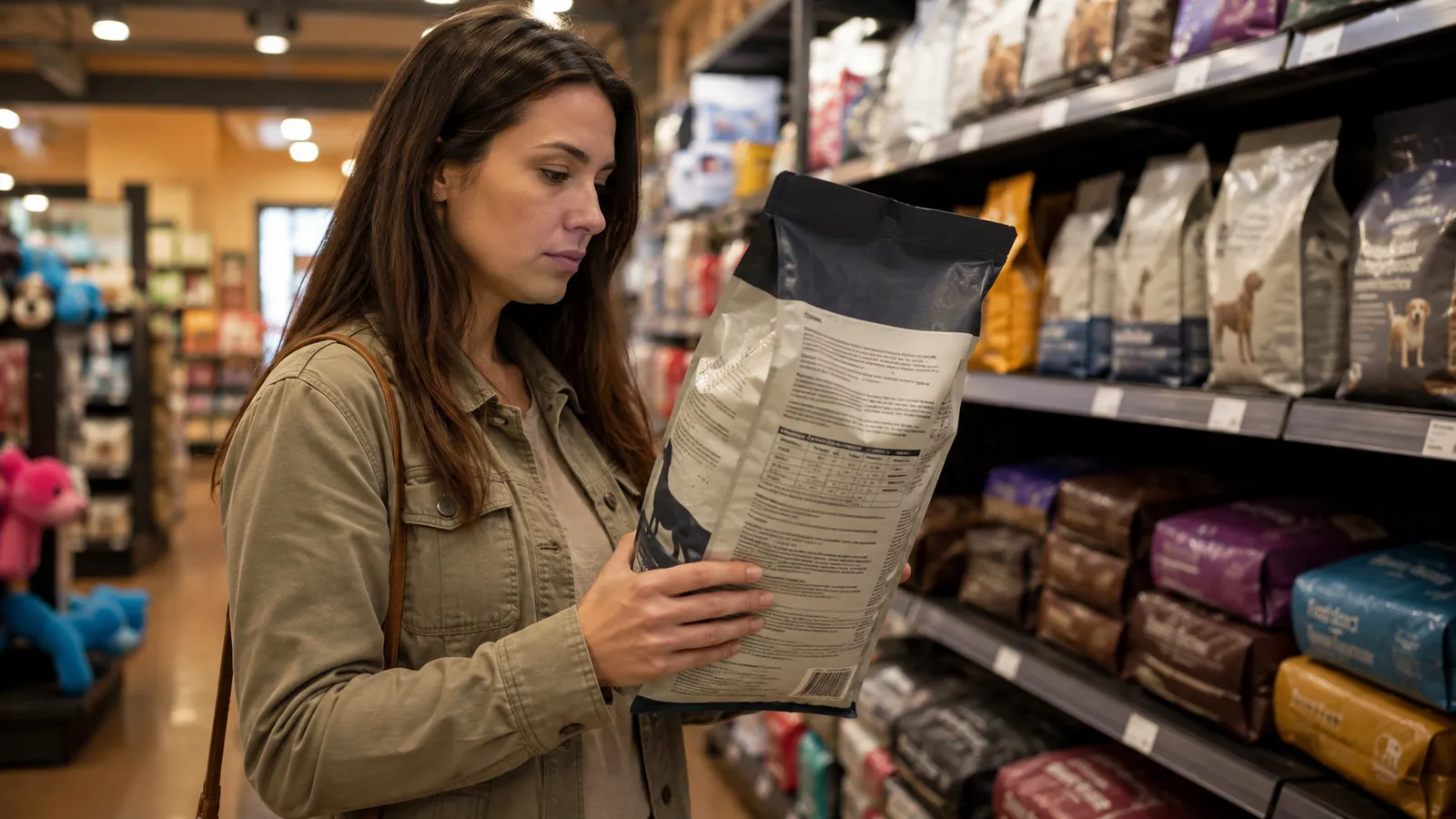
If your puppy has loose stool after a food change, ask whether this looks like a short transition issue or a pattern. One soft day after a new food is not the same as repeated vomiting or diarrhea over several meals. A puppy that is still bright, playful, and drinking normally may just need a slower transition. A puppy that is lethargic or refusing food should be seen sooner.
Vet-recommended brands vs what your puppy actually does well on: a practical comparison
When digestion is the issue, the simplest formula that matches growth needs is usually the smartest place to start. I would rather see an owner stay with one solid puppy food for a few weeks than bounce between brands because one bag looked more premium on the shelf. Consistency tells you more than shopping around does.
| Decision criterion | What to look for | What it means in practice | When to override brand reputation |
|---|---|---|---|
| Label clarity | AAFCO growth statement and puppy-specific wording | You know the food is meant for a growing dog, not an adult maintenance diet | If the bag is vague about life stage |
| Size fit | Small-breed or large-breed puppy designation | The food is built around chewing size and growth pace | If your puppy’s breed size has special growth needs |
| Digestion fit | Consistent stool, no repeated vomiting, normal appetite | The food is tolerating the puppy’s gut | If symptoms persist after a proper transition |
| Growth steadiness | Body condition, energy, and even development | The puppy is growing without looking underfed or overloaded | If the puppy is too thin, gaining too quickly, or acting unwell |
| Practical access | Availability, price, and whether you can keep feeding it consistently | The best food is the one you can actually keep in the bowl | If the ideal food is impossible to source reliably |
Here is a quick comparison of the main brands: Hill’s Science Diet, Royal Canin, Purina Pro Plan, and Eukanuba all have puppy-friendly options, but they fit different dogs best. Hill’s tends to be the safer “steady growth” choice, Royal Canin the most size-specific, Purina Pro Plan the most broadly usable, and Eukanuba the better fit for active puppies. The wrong fit usually shows up when the formula is too general for a large-breed puppy or too broad for a tiny or sensitive one.
When should you call the vet about a puppy food problem?
The short answer: sooner than most owners expect. Puppies have less physiological reserve than adult dogs, which means a digestive problem that an adult dog shrugs off in a day can become dehydration or a real setback in a young puppy relatively quickly.
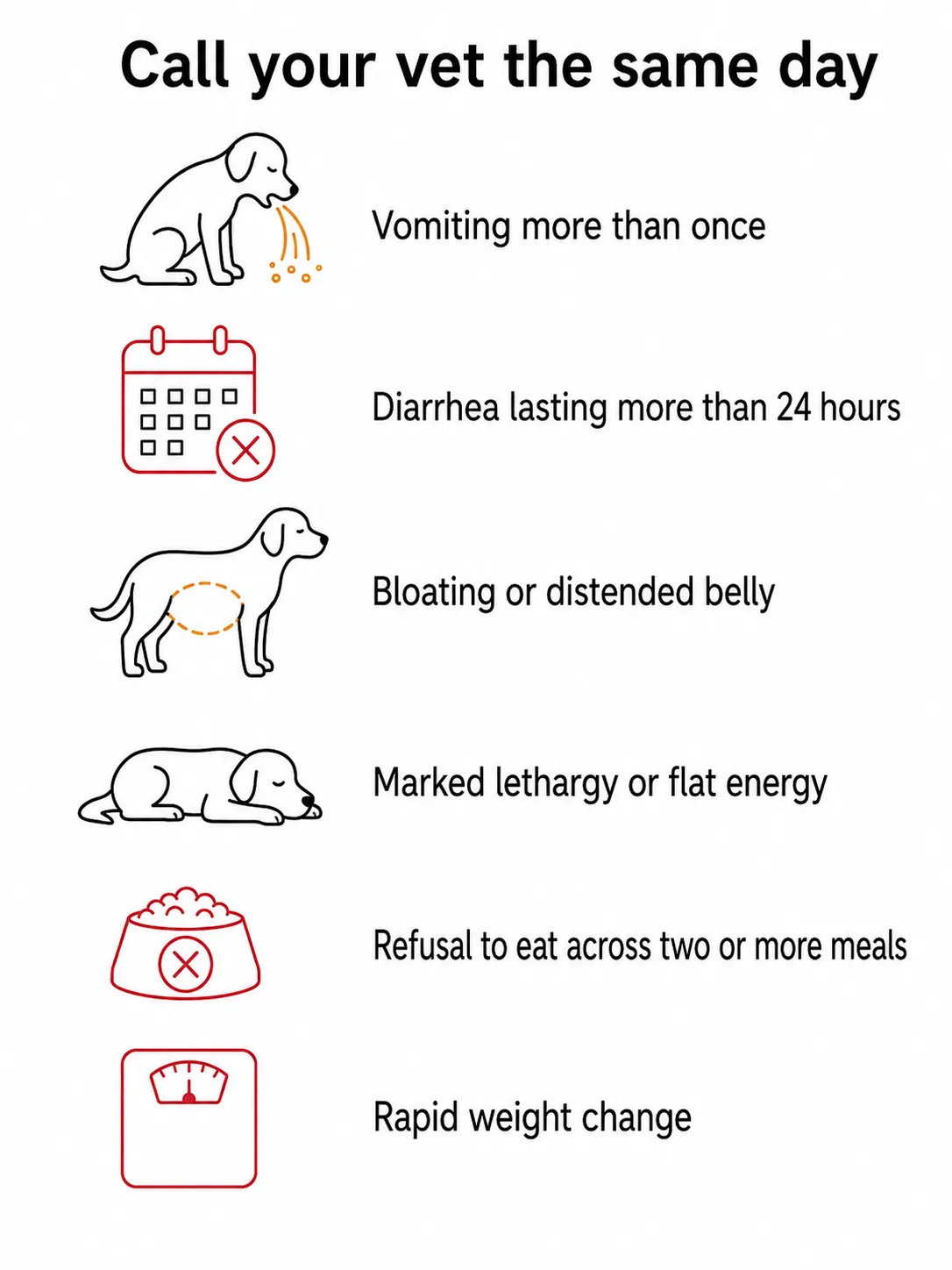
Call your vet the same day if you notice any of these:
- Vomiting that happens more than once, or that keeps returning across meals
- Diarrhea that persists beyond 24 hours or is watery rather than just soft
- Bloating or a visibly distended belly
- Marked lethargy, a puppy that is unusually flat, slow to respond, or not interested in normal activity
- Refusal to eat across two or more consecutive meals
- Any rapid change in weight, either loss or unusual gain
If the symptom is mild, one soft stool, slightly less enthusiasm at one meal, watching closely for 24 to 48 hours is reasonable, provided the puppy is otherwise bright, drinking normally, and not showing any of the signs above. The moment those conditions stop being true, stop waiting.
One thing worth keeping in mind: young puppies can have problems that look like food intolerance at first but are not. An infection, a parasite, or something the puppy ate outside can all produce symptoms that look identical to a bad food reaction. If the puppy seems genuinely unwell, not just adjusting to a new formula, let the vet rule out something more serious before you spend another week cycling through brands.
The most reliable signal is the puppy itself. A puppy that is bright, steady, and producing normal stool is telling you the food is working. A puppy that is scratching, vomiting, leaving food untouched, or losing condition is telling you something is wrong, regardless of what name is on the bag.
Questions owners ask
What is the best puppy food brand vet recommended most often?
The best buying decision balances brand credibility with your puppy’s real response after the switch. A food wins only if the label makes sense, the calories fit the body type, and the puppy’s stool, energy, and appetite stay steady. If two foods both meet the basics, choose the one that matches size and digestion more closely.
Is a vet recommended puppy food always better than other brands?
This is the part most top-10 lists skip. Brand reputation matters, but the puppy’s response matters more. A lesser-known formula that your puppy digests well and grows on steadily is a better choice than a famous one that leaves you dealing with endless tummy trouble.
Should I choose small-breed or large-breed puppy food?
You should call the vet the same day if your puppy has repeated vomiting, persistent diarrhea, bloating, marked lethargy, refuses food, or shows a rapid change in weight or energy. Puppies have less reserve than adult dogs, so waiting it out is riskier than it is with a healthy adult. If the puppy seems painful, weak, or dehydrated, do not keep testing the food for another day.
Can I feed my puppy adult dog food if it says complete and balanced?
A lot of owners try to troubleshoot puppy food as if they are solving a puzzle at home. Sometimes that works. But if the puppy is clearly unwell, the safer move is to let the vet rule out something more serious than a bad food match. That matters most in the first months of growth, when a small problem can become a big one quickly.
How do I know if a puppy food is causing stomach upset?
The final decision usually comes down to three things: whether the food is clearly labeled for puppy growth, whether it matches your puppy’s size and digestion, and whether you can feed it consistently without second-guessing yourself. Choose the formula that best fits those three criteria, and let your puppy’s stool, appetite, and energy tell you if you got it right.
Sources consulted
Sources consulted for this article:
- Best Puppy Food Brands Recommended by U.S. Vets for Growth
- Vet Recommended Puppy Food | Science-Backed - Chewy
- Top 5 Vet-Approved Puppy Foods for a Strong, Happy Start
- 7 Best Puppy Foods in 2026, Recommended by Vets | PetMD
- Best Puppy Food Brands Recommended by US Vets