
How to Brush Dog Teeth Step by Step: What Works, What Doesn’t, and When to Call the Vet
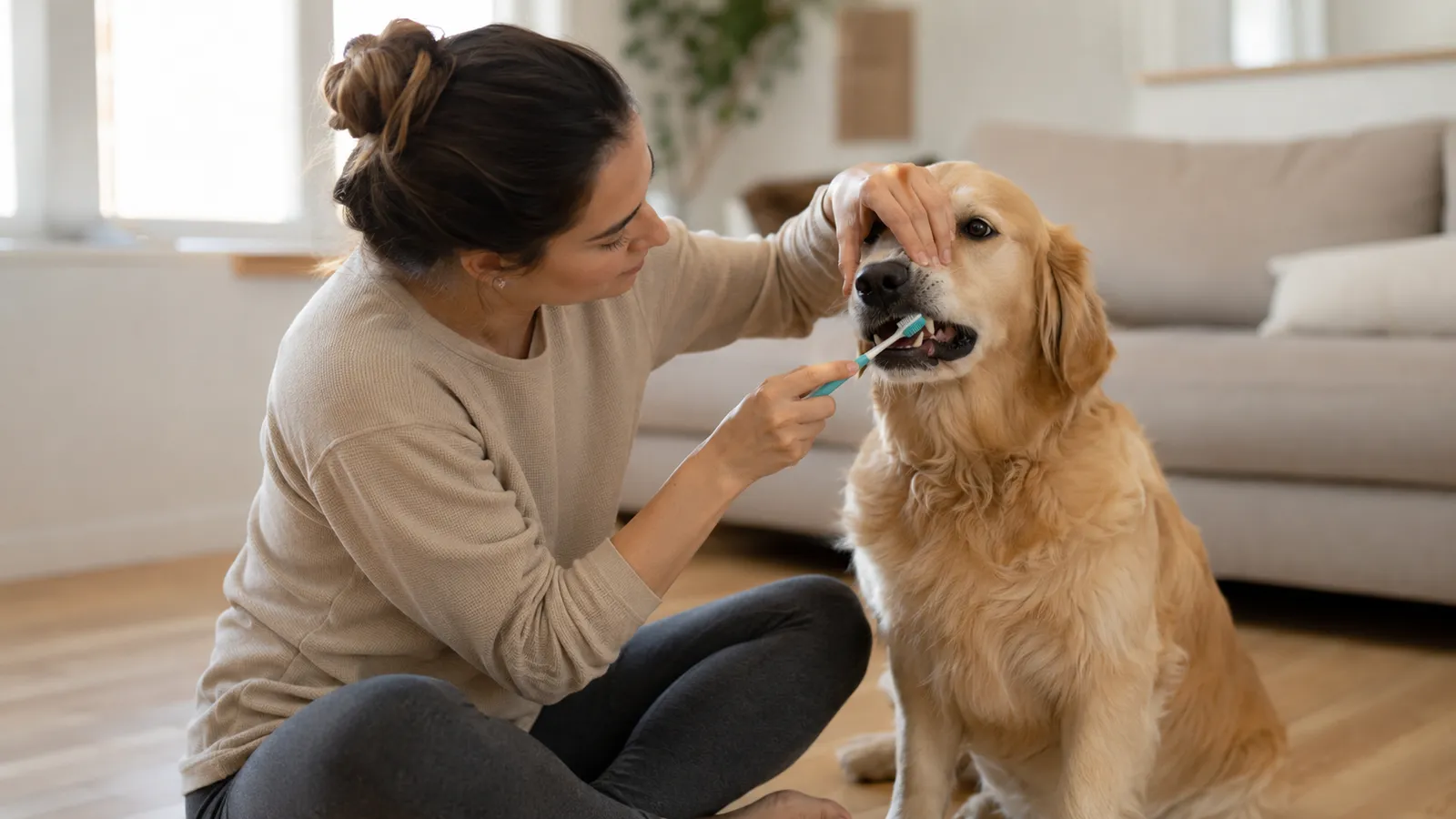
The right way to brush a dog's teeth is slowly, with dog-safe toothpaste, using short sessions your dog can actually tolerate, not sessions you have to force through. Start at the gumline on the outer surfaces only, use a soft brush or finger brush, and let your dog set the pace at first. That said, if you're noticing bleeding, swelling, a sudden change in eating habits, or breath that smells noticeably different from normal, don't brush, call your vet first. Those are signs of a problem brushing can't fix.
The essentials
- Daily brushing is the gold standard for dog dental health, but short and consistent beats long and occasional every time.
- Always use dog-specific toothpaste. Human toothpaste contains xylitol and fluoride, both of which are toxic to dogs.
- Focus on the outer surfaces of the teeth, the tongue naturally cleans the inside, so you don't need to fight for access.
- If your dog suddenly refuses brushing after previously tolerating it, that change is a symptom, not a behavior problem.
- Warning signs like bleeding gums, strong or new bad breath, drooling, or dropping food are reasons to call a vet, not brush harder.
How do you brush a dog's teeth step by step?
According to the VCA Animal Hospitals, the key to successful dog tooth brushing is conditioning your dog to accept mouth handling before any brush enters the picture. Rushing to the toothbrush skips the foundation and is the main reason owners give up after a few tries.
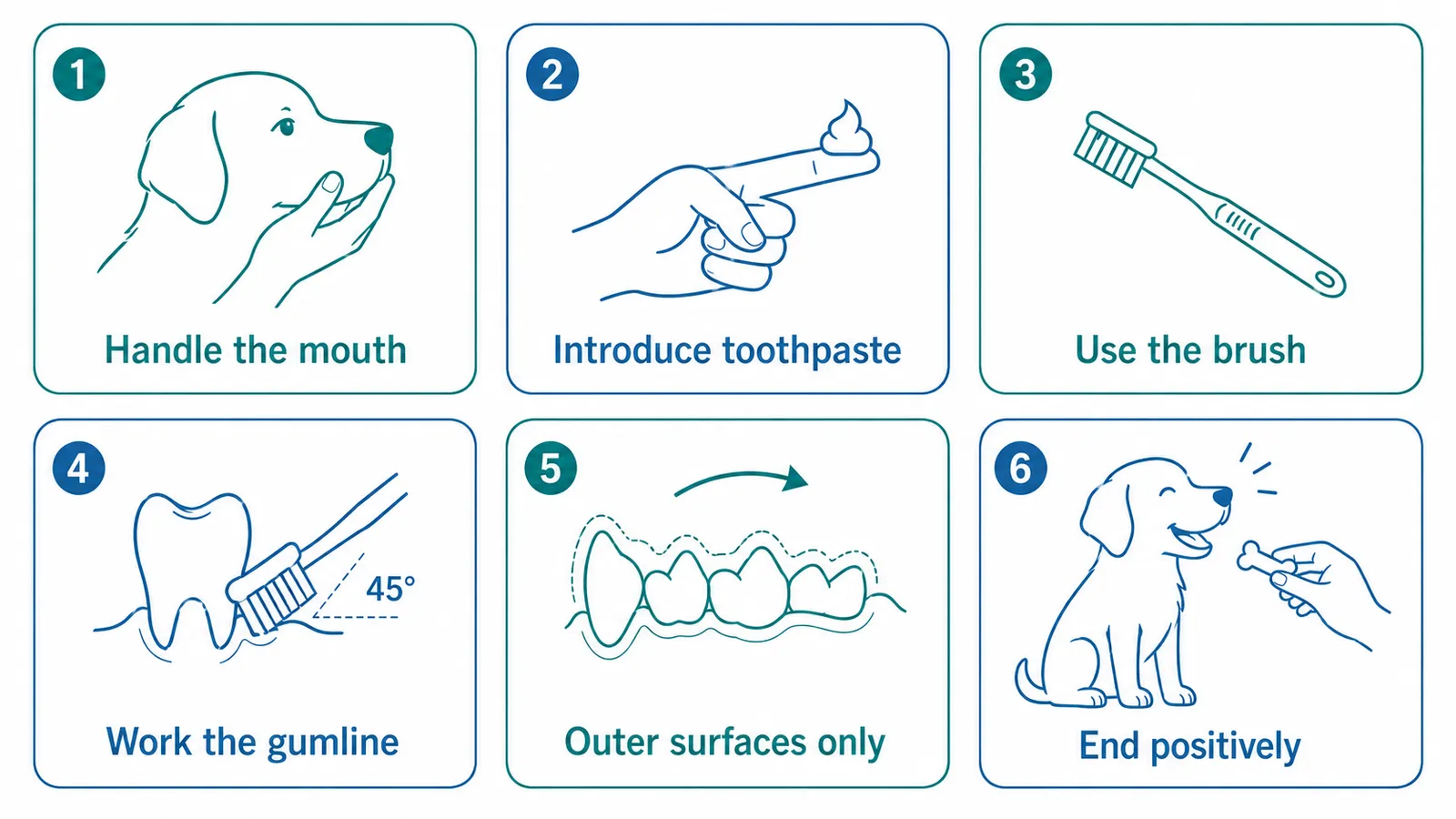
- Handle the mouth first. Before any brushing session, gently lift your dog's lip and touch the teeth and gums with your finger for a few seconds. Reward with calm praise or a treat. Do this daily for several days until your dog stops pulling away.
- Introduce the toothpaste on your finger. Put a small amount of dog toothpaste on your fingertip and let your dog lick it. This gets them used to the flavor and texture before the brush appears. Most dogs respond well to poultry or peanut butter-flavored options.
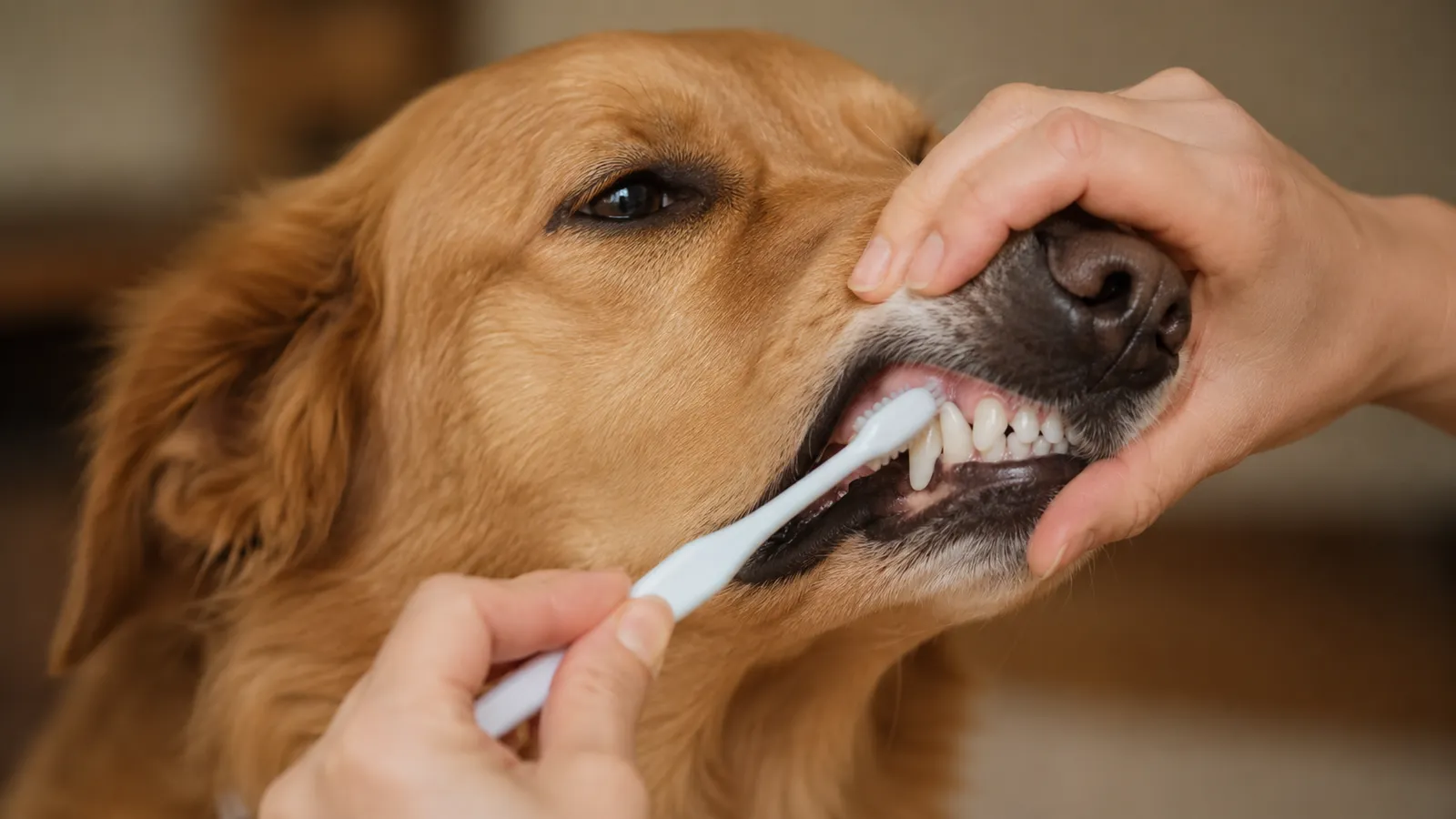
- Move to a finger brush or soft-bristled toothbrush. With a small amount of toothpaste on the brush, gently lift the lip on one side and brush the outer surfaces of two or three teeth in small circles. Thirty seconds is a win at this stage.
- Work along the gumline. Hold the brush at roughly a 45-degree angle to the gum so the bristles reach slightly below it. The gumline is where plaque builds up into tartar, and it's the area most owners miss. When Barnaby was about two, I realized I'd been brushing the flat surfaces only, once I actually got the angle right at the gumline, I could feel the difference.
- Stay on the outer surfaces. You do not need to brush the inner (tongue-facing) surfaces. According to Dogs Trust, the tongue does effective natural cleaning on the inner surfaces, and attempting to brush them turns a manageable session into a wrestling match.
- End on a positive note. Stop before your dog gets frustrated, even if you only brushed one side. A short calm session every day builds tolerance far faster than a thorough session that ends in stress.
What if my dog hates tooth brushing?
Resistance is normal, especially in the first few weeks. Most dogs simply aren't used to having their mouth handled, and the sensation is strange. That's different from pain, and knowing the difference matters.
Practical adjustments that actually help:
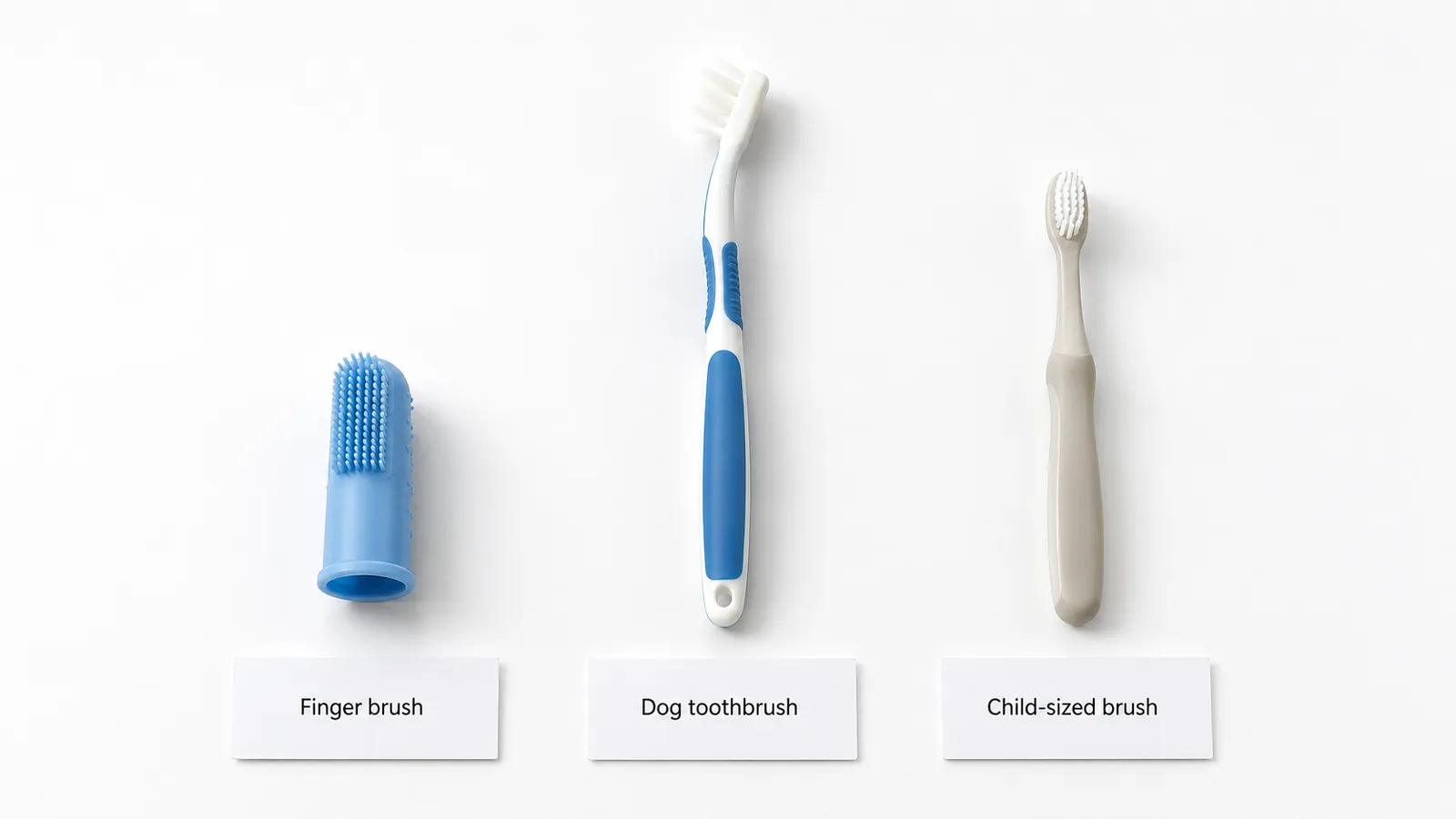
- Try a different brush type. Some dogs tolerate a finger brush better than a long-handled toothbrush. Others prefer a child-sized soft toothbrush because it's smaller and less intrusive.
- Change the timing. Brush when your dog is calm and slightly tired, after a walk, not right before one.
- Use better toothpaste. If your dog is spitting the paste out or turning away, try a different flavor. The flavor makes a real difference.
- Shorten the session. Two teeth done calmly is better than a full mouth done under protest.
- Go back a step. If the brush is causing resistance, go back to finger-only handling for a few more days before reintroducing it.
One boundary worth stating clearly: if your dog is not just resistant but actively distressed, snapping, yelping, pulling hard away from you, or showing any facial swelling, stop and look inside the mouth. Resistance that seems sudden or out of proportion to the session is often pain, not stubbornness. That's a vet visit, not a training problem.
What toothbrush and toothpaste should I use?
| Tool | Best for | Control | Comfort level | Notes |
|---|---|---|---|---|
| Soft-bristled dog toothbrush | Dogs already used to brushing | High | Moderate | Standard choice; most reach and coverage |
| Finger brush | First-time or nervous dogs | Lower | Often higher | More tactile connection; easier to gauge pressure |
| Child-sized soft toothbrush | Small breeds or tight spaces | High | Moderate | Good budget option; head is smaller than adult brushes |
On toothpaste: human toothpaste is not a substitute, even in small amounts. It contains xylitol (an artificial sweetener toxic to dogs) and fluoride, which is also harmful if swallowed. Dog-safe toothpastes are enzymatic, meaning they help break down plaque chemically between sessions. Look for options with the Veterinary Oral Health Council (VOHC) seal of acceptance, brands like Virbac C.E.T., Petsmile, and Arm & Hammer Advance White for Pets are commonly vet-recommended. Avoid any product with xylitol, sodium lauryl sulfate, or added fluoride.
How often should you brush your dog's teeth?
Daily brushing is what veterinary organizations recommend, and it's the standard cited by sources like Wirecutter's pet care coverage. But if you're starting from zero, daily isn't where you start, it's where you eventually land.
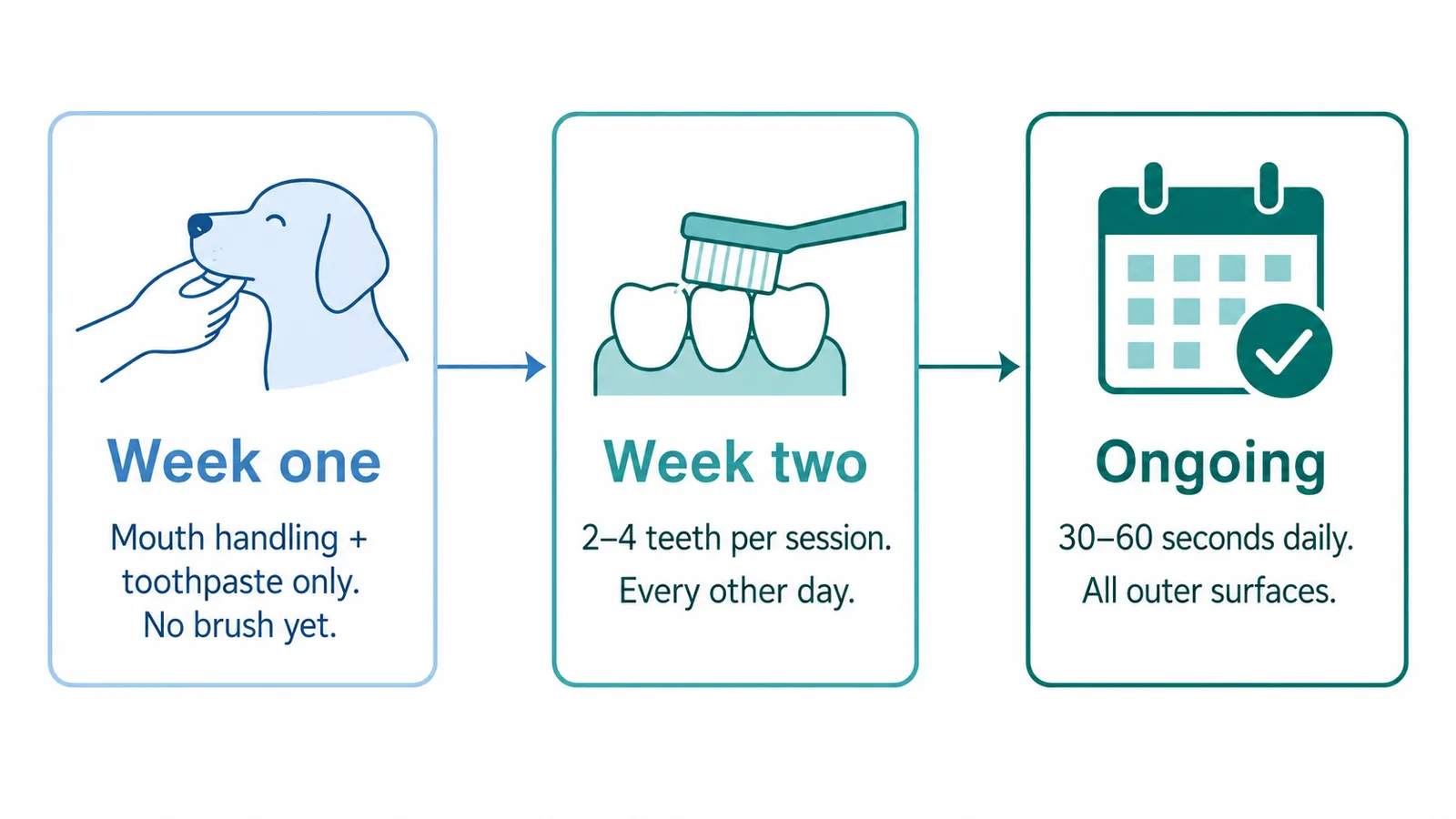
A realistic progression:
- Week one: Focus on mouth handling and toothpaste introduction only. No brush yet. Goal: your dog accepts having their lip lifted and teeth touched without pulling away.
- Week two: Introduce the brush on two to four teeth per session. Goal: one calm session every other day.
- Ongoing: Build toward daily sessions of 30-60 seconds, covering all outer surfaces. If a day gets missed, skip the guilt and brush tomorrow.
A calm 20-second session beats a forced three-minute battle every single time. The goal is a dog who doesn't dread it, because a dog who doesn't dread it is one you'll actually brush consistently.
When should you call the vet instead of brushing?
Some signs in the mouth are beyond what brushing can address, and brushing over them can cause pain or delay a diagnosis. Call your vet if you notice:
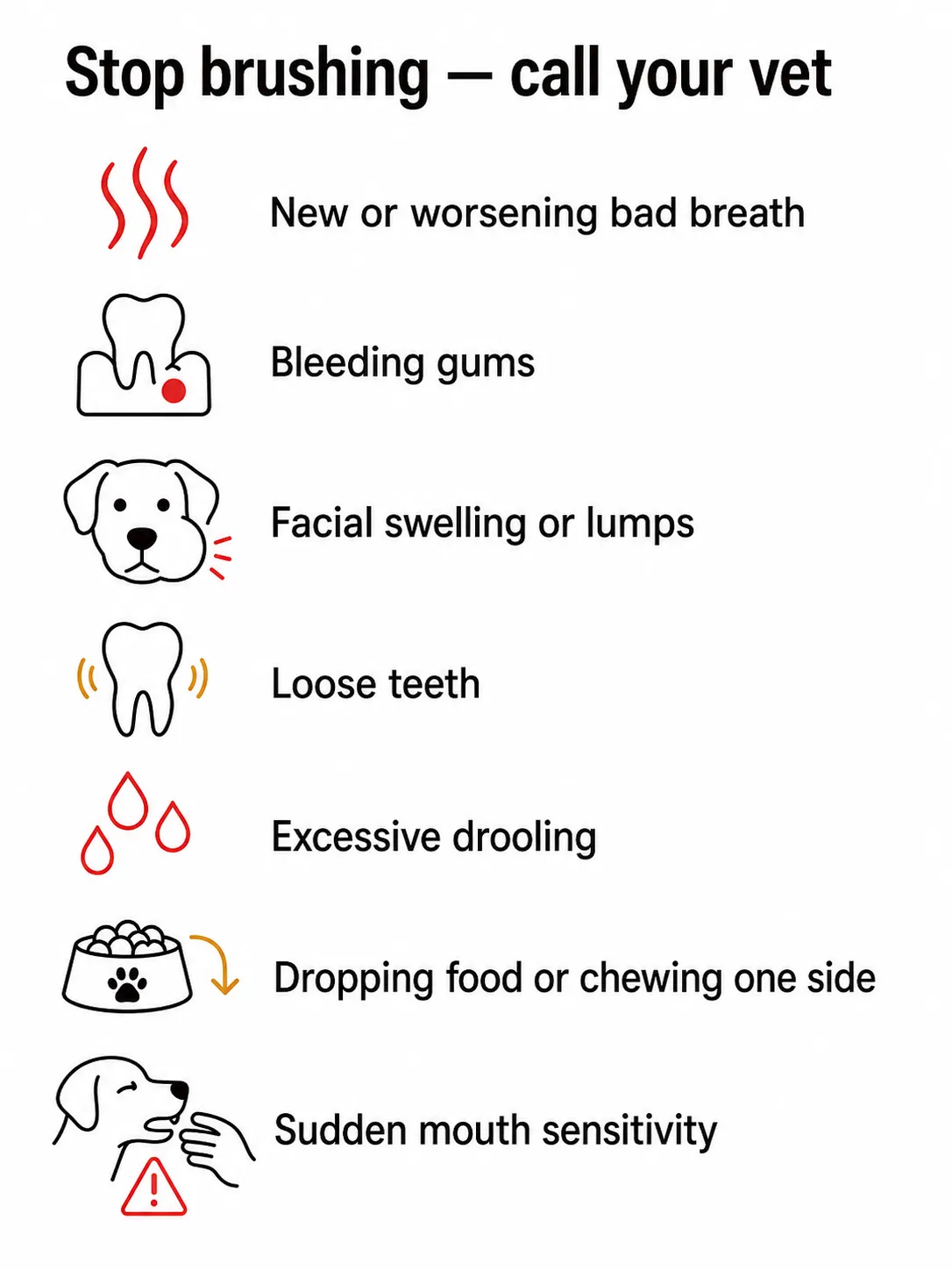
- New or suddenly worse bad breath, A gradual smell is normal; a sharp change can signal infection, periodontal disease, or a systemic health issue.
- Bleeding gums, Some light pink color after first brushing is possible, but actual bleeding, especially unprompted, is a warning sign.
- Facial swelling or lumps, Often associated with tooth root abscess or oral tumors.
- Loose teeth, In adult dogs, loose teeth are a dental emergency, not a normal aging sign.
- Drooling more than usual, Especially if paired with pawing at the mouth or reluctance to eat.
- Dropping food, chewing on one side, or avoiding hard chews, Classic signs of mouth pain from a cracked tooth, gum disease, or infection.
- Mouth sensitivity that appeared recently, If your dog flinches when you touch an area they were fine with last week, that's inflammation or pain, not mood.
The most important rule: if your dog previously tolerated brushing and suddenly doesn't, that behavioral change matters more than any long-standing dislike. Dogs don't change their behavior without a reason. When brushing suddenly becomes something your dog refuses, look for why before assuming it's resistance.
What works, what doesn't, quick reference table
| Situation | What to try | What not to do | Why it matters |
|---|---|---|---|
| Dog is new to brushing and calm | Start with mouth handling only, then toothpaste, then brush over 1-2 weeks | Don't rush to full mouth on the first session | Building tolerance takes repetition; rushing causes lasting aversion |
| Dog accepts touch but hates the brush | Try a finger brush first; change toothpaste flavor; shorten the session | Don't force the brush if the dog is actively pulling away | Forced sessions create lasting aversion and miss the real problem |
| Dog suddenly resists after previously cooperating | Stop brushing; inspect the mouth visually; call the vet | Don't assume it's behavioral and push through | Sudden resistance is almost always pain or sensitivity, not stubbornness |
| Persistent bad breath or bleeding gums | Schedule a vet dental check | Don't continue brushing over inflamed or bleeding tissue | These are symptoms of disease that need treatment, not hygiene |
Quick answers
How do I start brushing my dog's teeth if they've never had it before?
Start smaller than you think you need to. In the first session, don't use a brush at all, just lift the lip and touch the teeth and gums with your finger for a few seconds, then stop and reward. The next few sessions, add a small amount of dog toothpaste on your finger so they get used to the flavor. Only introduce the brush once your dog accepts the finger without pulling away. Your first brush session should cover one or two teeth, nothing more. First sessions are about building trust, not cleaning teeth.
Do I need to brush the inside of my dog's teeth too?
No. The outer (cheek-facing) surfaces are where plaque accumulates most, and those are the ones you need to reach. The tongue does a reasonable job naturally cleaning the inner surfaces. Trying to brush inside the mouth usually results in your dog resisting much harder, and a stressful session is less effective than a calm partial one.
Can I use human toothpaste on my dog?
No. Human toothpaste contains xylitol and fluoride, both of which are toxic to dogs. Xylitol in particular can cause a dangerous drop in blood sugar and liver damage. Always use a toothpaste designed specifically for dogs, enzymatic options with a VOHC seal are a reliable choice.
How often should I brush my dog's teeth?
Daily is the goal, but consistency matters more than hitting that number every single day. Several short, calm sessions per week is far better than one long session done under protest. If daily feels out of reach right now, start with every other day and build from there. Short and regular beats long and occasional.
When is bad breath in dogs a sign of a real problem?
When it's new, sudden, or noticeably different from your dog's usual smell, especially if it's paired with other symptoms. Bad breath alone, especially mild or gradual, is common and manageable. But if the smell becomes sharp or chemical-like, or it's combined with bleeding gums, drooling, dropping food, or your dog pawing at their mouth, that combination warrants a vet visit. Brushing more is not the answer at that point. Brushing only addresses part of it: the full range of causes behind bad breath runs from plaque to kidney disease.
This article is for educational purposes only. Emily Harper is not a veterinarian. Always consult a licensed veterinarian for concerns about your dog's dental health or any medical symptoms.
Sources consulted
- VCA Animal Hospitals, Brushing Teeth in Dogs
https://vcahospitals.com/know-your-pet/brushing-teeth-in-dogs - VCA Animal Hospitals, Successful Toothbrushing Training for Happy Dental Care
https://vcahospitals.com/know-your-pet/successful-toothbrushing-training-for-happy-dental-care - Dogs Trust, Dog Dental Hygiene and How to Clean Your Dog's Teeth
https://www.dogstrust.org.uk/dog-advice/health-wellbeing/at-home/dog-dental-hygiene - Cornell University College of Veterinary Medicine, Brushing Your Dog's Teeth
https://www.vet.cornell.edu/departments-centers-and-institutes/riney-canine-health-center/canine-health-information/brushing-your-dogs-teeth - Cornell University College of Veterinary Medicine, Dental Disease and Home Dental Care
https://www.vet.cornell.edu/departments-centers-and-institutes/riney-canine-health-center/canine-health-information/dental-disease-and-home-dental-care - Maplewood Veterinary Center, How to Brush Your Dog's Teeth: Step-by-Step Guide
https://www.maplewood.vet/how-to-brush-dog-teeth-guide/ - American Veterinary Dental College (AVDC), About & Position Statements
https://avdc.org/about/