
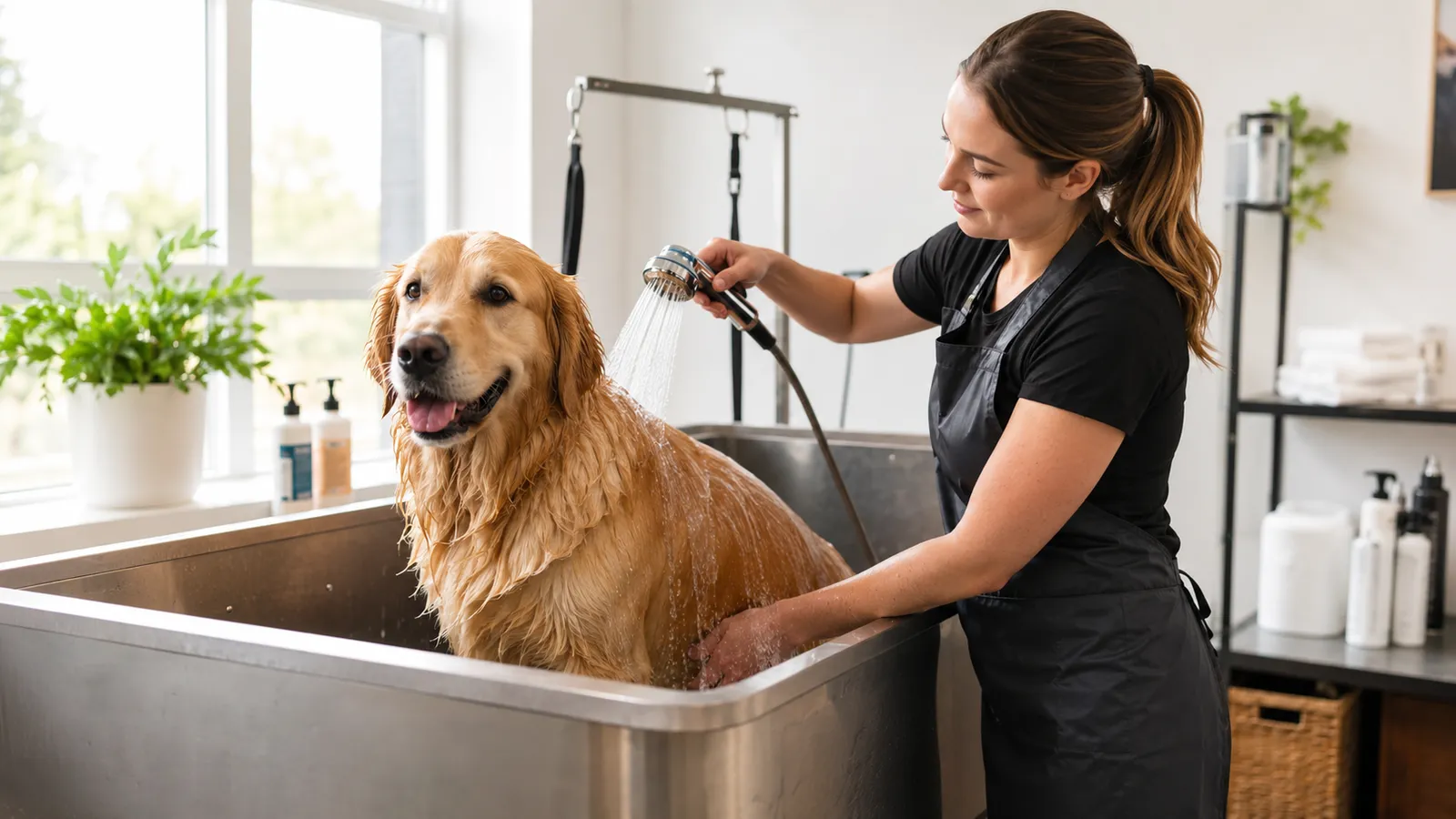
How Often Should You Bathe a Dog?A Breed-by-Breed, Coat-by-Coat Guide
For most healthy dogs, once a month is the right starting point, but coat type and lifestyle can halve or double that number almost immediately. Once you know your dog's coat category, you can usually arrive at a solid schedule within a few seconds. The harder question isn't really "how often?" it's "why does my dog smell again three days after a bath?" or "why is her skin flaking worse after I cleaned her?" Those are the questions that reveal whether the problem is frequency, product, technique, or something going on beneath the skin entirely.
This guide is built to get you the right answer for your specific dog, not a vague range you have to guess at.
KEY TAKEAWAYS
- Most healthy dogs do well with a bath every 4 weeks - but double-coated breeds like Huskies and German Shepherds can go 6-8 weeks, while hairless breeds like the Chinese Crested and Xoloitzcuintli need a bath weekly.
- Dog skin pH sits at roughly 6.2-7.4 (more neutral than human skin's ~5.5). Human shampoo is formulated for acidic skin, using it on a dog shifts their skin's pH, damages the protective acid mantle, and causes dryness, flaking, and opportunistic bacterial growth.
- Poodles, Bichons, and Doodles need baths every 3-4 weeks because curly coats trap debris close to the skin; shorthaired breeds like Beagles and Boxers can wait 6-8 weeks between full baths.
- If your dog scratches more in the 48 hours after a bath than in the 48 hours before, the shampoo, not the frequency, is the first variable to change.
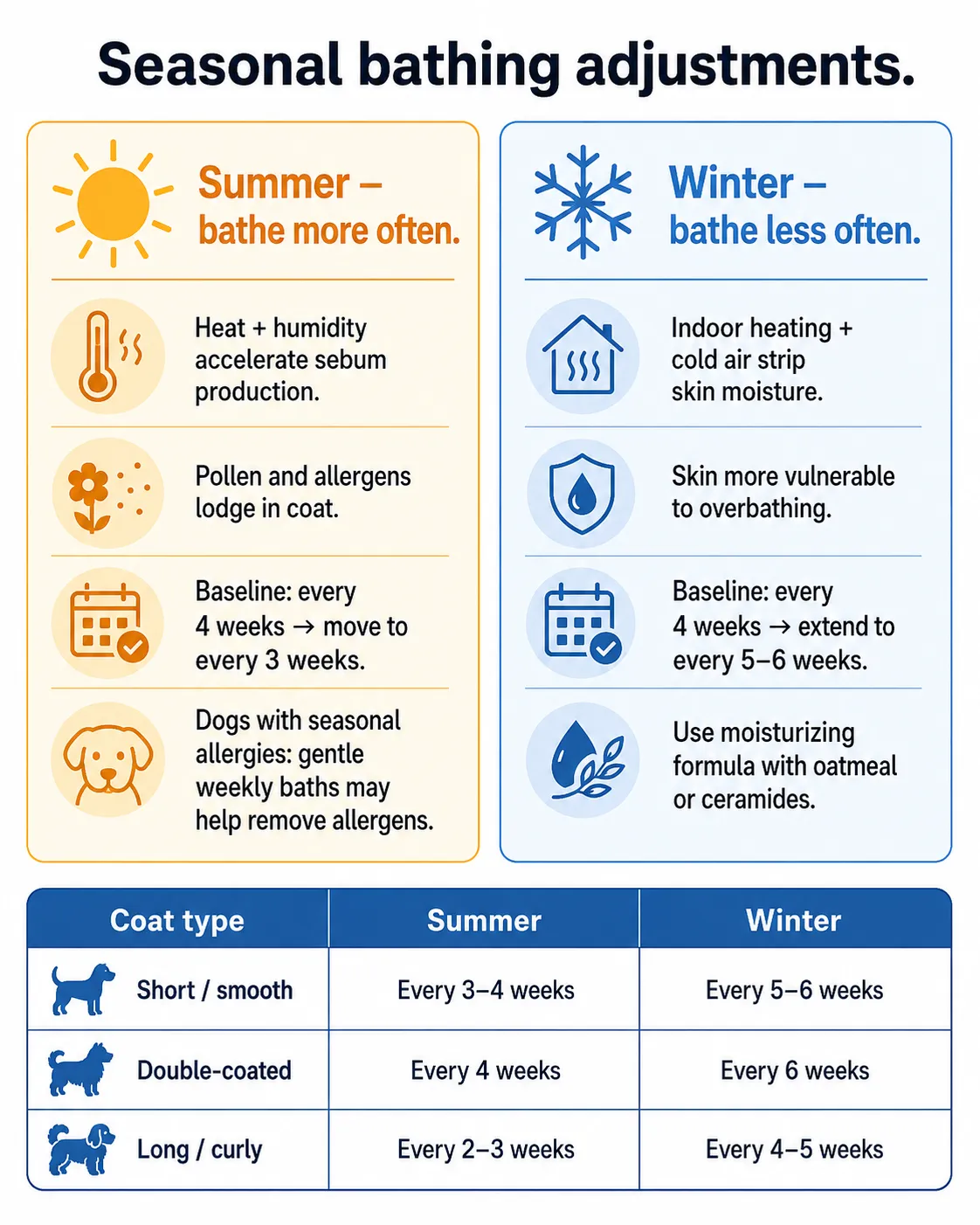
- Seasonal adjustments matter: in summer (heat, humidity, pollen), move your baseline schedule up by about a week; in winter (dry heat indoors, cold outdoor air), extend it by 1-2 weeks to avoid stripping skin moisture.
- A dog that smells "doggy" again within 3-5 days of bathing almost never needs more frequent baths, it usually has an underlying yeast or bacterial issue that bathing alone will never resolve.
How Bathing Frequency Actually Breaks Down by Coat Type and Breed
Most articles give you coat categories without breed names, which means if you own a Weimaraner, a Shih Tzu, or a Schnauzer, you're left guessing. The table below maps real breeds to each category, with what goes wrong on both ends of the spectrum.
| Coat Type | Typical Bath Range | Breed Examples | Overbathing Risks | Underbathing Risks | What Matters More Between Baths |
|---|---|---|---|---|---|
| Shorthaired / Smooth Coat | Every 6-8 weeks | Beagle, Boxer, Dalmatian, Weimaraner, Vizsla | Dry, flaky skin; disrupted skin microbiome; coat loses natural sheen | Odor buildup, skin grease accumulation, dull coat | Weekly wipe-downs; paw cleaning after walks |
| Double-Coated | Every 4-8 weeks (more in shedding season) | Husky, German Shepherd, Golden Retriever, Labrador, Bernese Mountain Dog | Strips coat oils that regulate temperature; reduces water-repellency; undercoat becomes dry and brittle | Trapped debris in undercoat; mat formation; skin irritation underneath | Regular deshedding brushing; blow-out 2-3× per month |
| Long Silky Coat | Every 3-4 weeks | Shih Tzu, Yorkshire Terrier, Afghan Hound, Maltese | Coat tangles more, not less; skin dryness and increased mat risk | Matting, skin fold infections, odor trapped in long coat | Daily brushing; detangling spray; professional trim every 6-8 weeks |
| Curly / Wavy Coat | Every 3-4 weeks | Poodle, Bichon Frisé, Labradoodle, Portuguese Water Dog, Goldendoodle | Coat frizzes and breaks; skin flaking; increased mat risk post-bath if not fully dried | Dirt and debris trapped deep in curls; musty smell; skin irritation | Conditioning shampoo; blow-dry fully; brush after drying, not before |
| Wire / Rough Coat | Every 6-8 weeks | Miniature Schnauzer, Wire Fox Terrier, Scottish Terrier, Border Terrier | Coat loses its harsh texture; skin dryness; natural water-resistance reduced | Accumulated dirt and debris weigh down coat; odor; increased skin bacteria | Hand-stripping or trimming to maintain texture; regular ear cleaning (Schnauzers prone to ear issues) |
| Hairless | Weekly | Chinese Crested, Xoloitzcuintli (Mexican Hairless), American Hairless Terrier | Skin over-drying; stripped sebum exposing skin to bacteria; acne formation | Sebum buildup on exposed skin; clogged pores; bacterial and fungal overgrowth | Moisturizing after every bath; sun protection; weekly skin inspection |
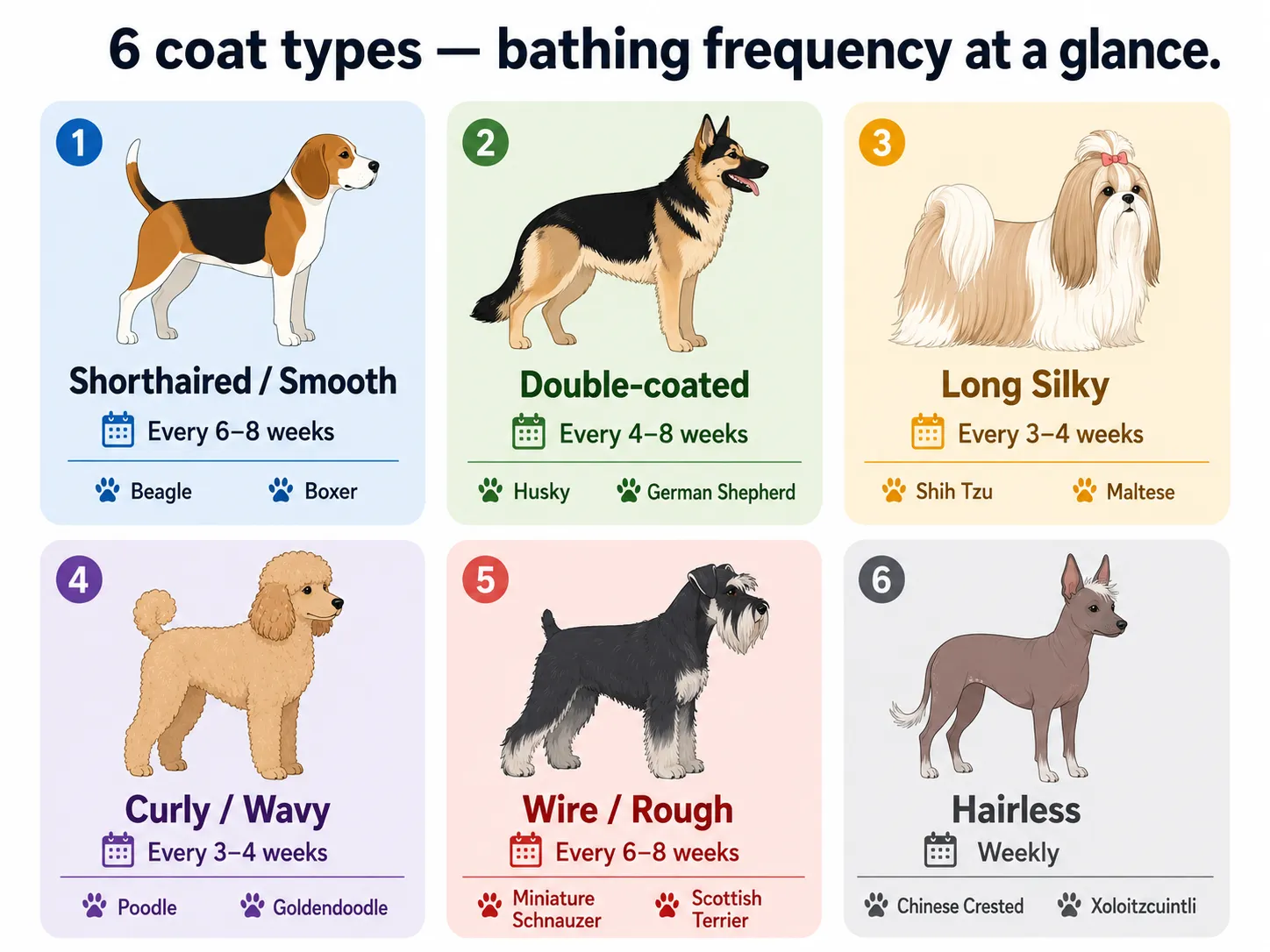
The double-coated misunderstanding. Double-coated breeds, your Huskies, Goldens, Shepherds, and Labs, are the most over-bathed category we see. The intuition makes sense: thick coat, lots of outdoor activity, strong odor after a muddy run. But that undercoat is a sophisticated thermoregulation system, and it runs on the natural oils produced by sebaceous glands throughout the skin. When you bathe too often, you strip those oils before they can distribute through the coat. The result is a coat that loses its natural water resistance, an undercoat that starts to mat from dryness rather than dirt, and a dog that paradoxically starts to smell worse sooner because the glands overproduce sebum in compensation. For these dogs, a regular deshedding brush session accomplishes more than an extra bath.
Why hairless dogs are the highest-frequency bathers despite having no coat. It's counterintuitive until you understand the mechanics. In a coated dog, fur acts as a physical buffer that absorbs sebum from the sebaceous glands and distributes it across the coat. In a hairless dog, there's no buffer, sebum accumulates directly on exposed skin, where it mixes with environmental debris and creates exactly the conditions that bacteria and yeast thrive in. This is also why hairless dogs are more sensitive to UV damage and why aftercare (moisturizer, sun protection) is as important as the bath itself. Weekly bathing with a gentle, pH-balanced formula keeps the sebum level manageable without stripping the minimal protective layer they have.
The override that applies to every breed: if your dog scratches noticeably more in the 48 hours after a bath than in the 48 hours before, coat type doesn't matter. Something about the bath itself, the shampoo, incomplete rinsing, trapped moisture, or a product that's wrong for the dog's skin chemistry, is causing irritation. The next section explains why this happens more often than most owners realize.
The Shampoo Question No One Talks About, pH, Skin Science, and Why Human Shampoo Is a Mistake
This is the section that changes most grooming routines, and it's almost entirely absent from competitor content.
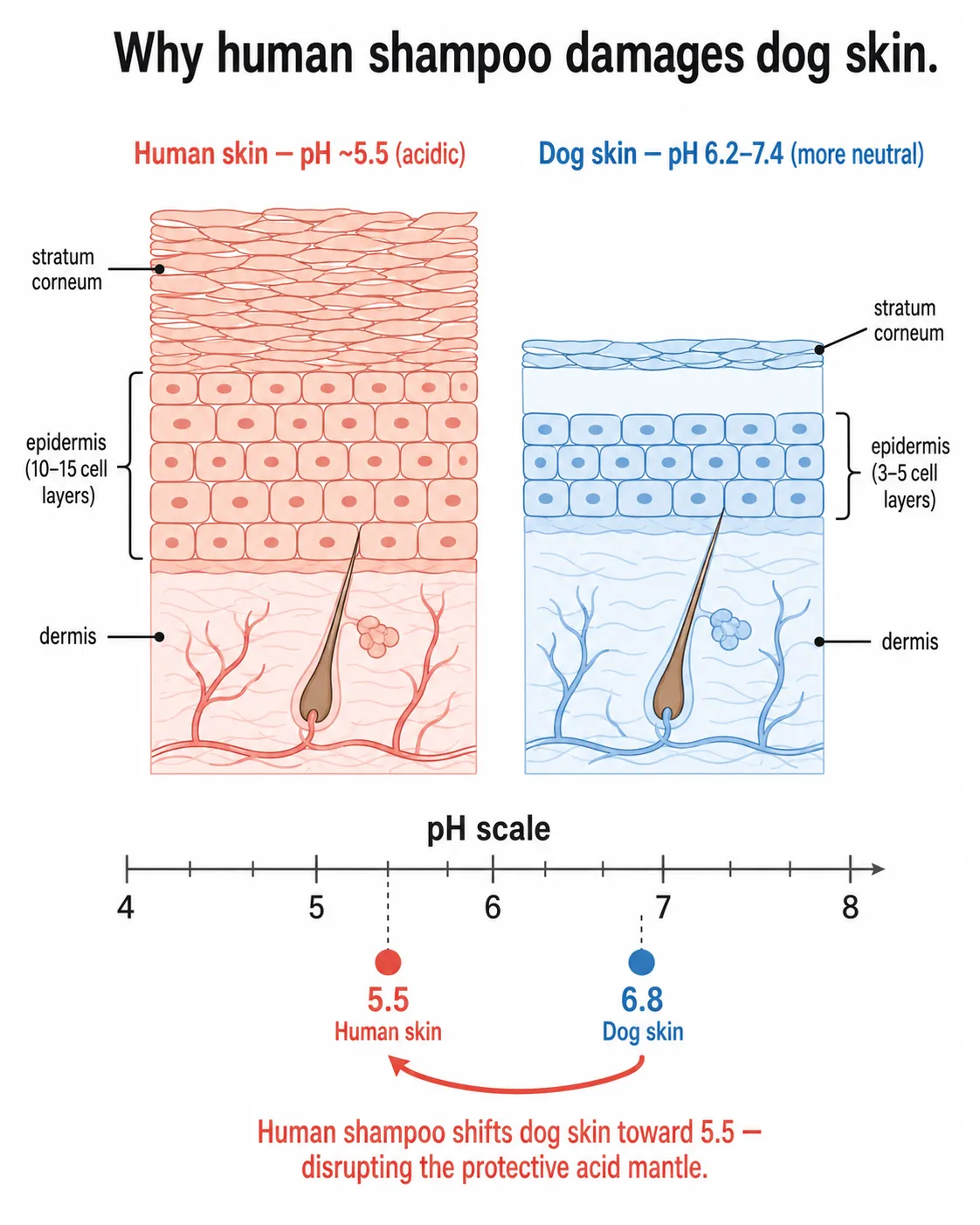
Dog skin sits at a pH of roughly 6.2-7.4, significantly more neutral than human skin, which sits around 5.5. That gap matters because human shampoos are formulated specifically for acidic skin. When you use a human product on a dog, you're not just picking the wrong brand, you're chemically disrupting the dog's skin barrier. The surfactants in human shampoo push the dog's skin toward an acidic pH it was never designed for, which damages the hydrolipid film that covers the stratum corneum (the outermost skin layer). That film, produced by sebaceous and apocrine glands, is what keeps moisture in, allergens out, and bacteria in check. When it's disrupted, you get: dryness, flaking, increased transepidermal water loss, and a significantly more hospitable environment for bacterial and fungal colonization.
The irritation owners blame on "bathing too often" is very frequently caused by the wrong shampoo rather than the frequency itself. This is especially true for baby shampoo, which has a pH of 7.0, calibrated to match human tear fluid, not canine skin. It still shifts a dog's skin pH in the wrong direction. Dog skin also has only 3-5 epidermal cell layers (versus 10-15 in humans), which means the barrier is thinner and irritating substances penetrate more easily.
4 Shampoo Categories, What Each One Does and When to Use It
| Shampoo Type | Active Ingredients | When to Use | Typical Frequency | Signal It's Needed |
|---|---|---|---|---|
| Standard moisturizing (everyday use) | Oatmeal, aloe vera, ceramides, coconut-derived cleansers; sulfate-free; no artificial fragrance | Healthy dogs with no skin conditions; routine maintenance baths; dogs with mildly sensitive skin | Per coat-type schedule (3-8 weeks) | Normal coat, no itching, no odor problems |
| Medicated: Chlorhexidine (antibacterial / antifungal) | Chlorhexidine gluconate 2-4%; often combined with miconazole or ketoconazole | Bacterial skin infections, hot spots, skin fold dermatitis (Bulldogs, Shar-Peis, Pugs), post-surgery cleaning; also used for yeast at lower concentrations | 1-2× per week (acute treatment); less often for maintenance | Hot spots, skin fold redness, recurrent bacterial infection |
| Medicated: Antifungal (ketoconazole / miconazole) | Ketoconazole 1-2% or miconazole nitrate 2%; disrupts fungal cell membrane | Malassezia yeast dermatitis (the most common yeast infection in dogs), ringworm, musty or "corn chip" odor that returns quickly after bathing, yeast ear infections | Every 3-5 days during active treatment (2-12 weeks per VCA protocol) | Musty smell returns within days; brown waxy ear debris; feet licked obsessively |
| Medicated: Benzoyl peroxide / salicylic acid (degreasing / antiseborrheic) | Benzoyl peroxide 2.5%; salicylic acid; selenium sulfide (for severe cases) | Seborrhea (greasy or flaky coat), pyoderma with oily component, demodicosis, dogs with heavy sebum buildup around collar or neck, follicular flushing in bacterial infection | 1-2× per week; leave on 5-10 min before rinsing | Greasy coat despite regular bathing; visible flakiness; strong odor from sebum oxidation |
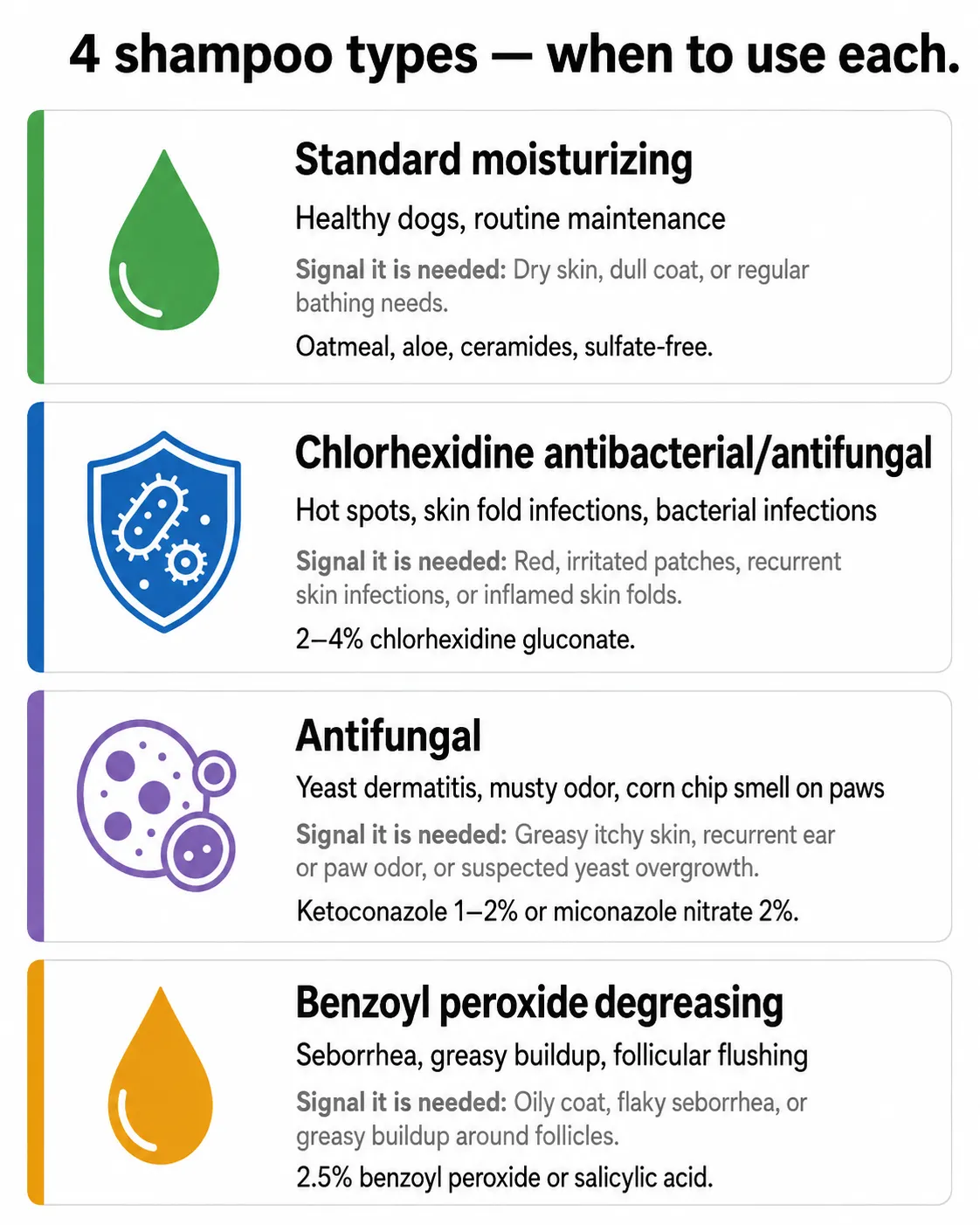
Important note on medicated shampoos: contact time is critical. A medicated shampoo lathered and rinsed in 60 seconds provides almost no therapeutic benefit, the active ingredients need 5-15 minutes of skin contact to work. This is where most at-home use fails. If a dog with a bacterial or yeast infection isn't improving after two weeks of medicated bathing, the most common culprits are incorrect contact time and rinsing too quickly, not the wrong product. If symptoms worsen or don't improve after 2 weeks of correct use, that's when a veterinary dermatology consult is warranted, because underlying allergies, hormonal issues, or resistant organisms may be driving the infection.
| ONE CLEAR RULE: If your dog scratches more in the 48 hours after a bath than in the 48 hours before, change the shampoo before you change the frequency. This pattern almost always points to a pH mismatch, a harsh surfactant, or an incomplete rinse, not bathing too often. |
Active Dogs, Muddy Dogs, and Seasonal Bathing, When the Calendar Doesn't Work
The fixed monthly schedule works well for indoor dogs with predictable routines. For dogs that swim, hike, and roll in things, and for dogs living through summer heat or dry winter air, the schedule needs to flex. Here's how.
After Swimming or Water Exposure
Chlorinated pool water, lake bacteria, and salt water all irritate skin and coat if left to dry without rinsing. The good news: a rinse with fresh water within a few hours of swimming, without shampoo, is enough to remove these residues without stripping skin oils. A full shampoo bath is only necessary if the dog was swimming in murky water, has a noticeable odor afterward, or has been swimming repeatedly over several days. Over-shampooing a dog that swims several times a week will cause the same dryness and irritation as over-bathing any other dog. Rinsing without shampoo is a legitimate and protective option.
Muddy and Outdoor Dogs
The rule professional groomers use: let mud dry completely, then brush it out. Most dirt particles release cleanly from coat fibers once dry. Wet mud pushed around with a towel is far harder to remove and embeds further into the coat. A dog that rolled in dry mud in a field and is otherwise clean underneath almost never needs a full bath, a good brushing followed by a spot-wipe handles it. A full bath is appropriate when: the mud is deeply embedded in an undercoat, the dog was rolling in something organic (animal waste, decomposed material, fetid water), the skin underneath feels greasy or irritated, or the dog is long- or curly-coated with mud matted into the coat itself.
Seasonal Variation in Bathing Frequency
Summer (heat + humidity): Higher ambient temperature accelerates sebum production. Increased outdoor activity means more contact with pollen, bacteria, and environmental allergens that lodge in the coat. Humidity creates the warm, moist conditions that bacteria and Malassezia yeast thrive in. For most dogs, summer means moving the bathing schedule forward by about a week. If the baseline is every 4 weeks, summer often calls for every 3 weeks. Dogs with seasonal allergies may benefit from more frequent baths, sometimes weekly with a gentle formula, to physically remove allergens from the coat.
Winter (dry heat indoors + cold outdoor air): Indoor heating strips moisture from the air, which in turn strips moisture from skin. Cold outdoor air has the same desiccating effect. This combination makes dog skin more susceptible to over-bathing damage in winter than at any other time of year. If the baseline is every 4 weeks, extending to every 5-6 weeks in winter is appropriate for most dogs. When you do bathe, using a moisturizing formula with oatmeal, aloe, or ceramides is more important than in summer. Brushing more frequently between winter baths distributes the residual sebum that would otherwise be washed away.
| Baseline | Summer Adjustment | Winter Adjustment | Note |
|---|---|---|---|
| Every 3-4 weeks (curly/long coats) | Every 2-3 weeks | Every 4-5 weeks | Use moisturizing conditioner in winter |
| Every 4 weeks (average) | Every 3 weeks | Every 5-6 weeks | Default for most dogs |
| Every 6-8 weeks (short/double coats) | Every 4-5 weeks | Every 8-10 weeks | Brushing replaces baths in winter; use deshedding tools |
Signs You're Bathing Too Often, Not Often Enough, or Using the Wrong Product
Rather than general advice, treat this section as a diagnostic tool. Identify the signal you're seeing in your dog, find the most likely cause, and adjust accordingly.
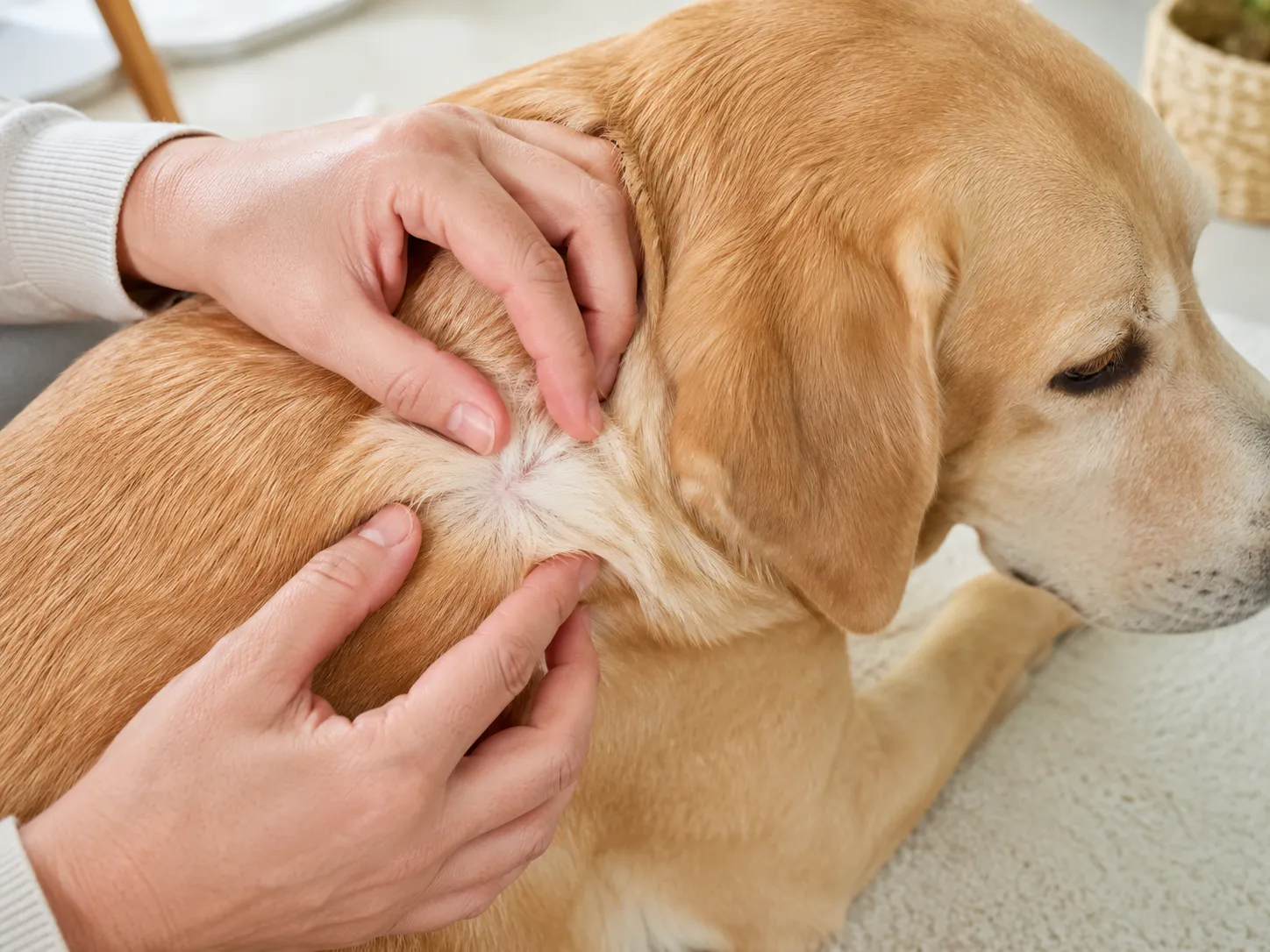
| Signal You Observe | Most Likely Cause | What to Change |
|---|---|---|
| Skin flakes / dandruff appear 2-3 days after bathing | Overbathing stripping sebum, or sulfate-heavy shampoo disrupting skin barrier | Extend interval by 1-2 weeks; switch to sulfate-free moisturizing shampoo; add post-bath conditioner |
| Dog smells "doggy" again within 3-5 days of bathing | Yeast or bacterial overgrowth on skin (not a frequency problem); possibly diet-related odor from skin; underbathing in high-activity dogs | Rule out yeast first: check paws, ears, and skin folds for brown residue or musty smell. If present, switch to antifungal shampoo. If absent, increase frequency slightly and assess |
| Dog scratches noticeably more after bathing than before | Shampoo pH mismatch, fragrance reaction, incomplete rinse leaving surfactant on skin | Change shampoo before changing frequency; switch to fragrance-free formula; extend rinse time by 2 min; check that no residue remains at coat base |
| Coat looks dull and dry between baths | Overbathing stripping coat oils; shampoo removing sebum before it distributes through coat | Extend bath interval; add post-bath conditioner or leave-in spray; increase brushing to distribute natural oils |
| Greasy buildup around collar / neck despite regular bathing | Underbathing (sebum accumulation); possible seborrhea (overactive sebaceous glands) | Bathe more frequently; try a mild degreasing shampoo. If greasy coat persists across the body, consult vet to rule out primary seborrhea |
| Dog develops hot spots after bathing | Trapped moisture under thick coat; incomplete drying of skin folds or undercoat | Dry more thoroughly, particularly in undercoat and skin folds; use forced-air dryer on double-coated breeds; check skin folds immediately after every bath |
| Persistent musty or yeasty smell despite regular bathing | Malassezia yeast overgrowth, a medical issue, not a grooming frequency issue | Switch to antifungal shampoo (ketoconazole or miconazole); leave on 10 min per VCA protocol; use every 3-5 days for 2-4 weeks. If smell returns within a week of stopping, consult vet, underlying allergy or immune issue is likely driving recurrence |
Field note: "The most common mistake we see is owners bathing more frequently to fix a smell problem, when the smell is actually caused by a yeast or bacterial issue that bathing alone will never resolve. More frequent baths without the right product don't fix the underlying biology; they just irritate the skin further and create conditions where the yeast or bacteria can spread. If your dog reliably smells bad within a week of bathing, you're dealing with a skin condition, not a cleanliness problem."
A Practical Bathing Schedule You Can Actually Follow, 4 Tracks
Most dogs belong in one of four tracks. Find yours, then note the trigger conditions that would move your dog to a different track.
| Track | Frequency | Breed Examples | Recommended Shampoo Type | Between-Bath Care | Trigger to Change Track |
|---|---|---|---|---|---|
| 1, Low Maintenance | Every 6-8 weeks | Beagle, Boxer, Dalmatian, Weimaraner, Basset Hound, most shorthaired breeds | Gentle moisturizing, sulfate-free; oatmeal or aloe-based | Weekly paw wipe; monthly ear check | Dog starts spending significant time outdoors; any skin flaking or odor within 4 weeks |
| 2, Active / Outdoor | Every 2-4 weeks (rinse without shampoo between full baths as needed) | Labrador, Golden Retriever, Vizsla, Border Collie, German Shepherd, Irish Setter | Gentle moisturizing for full baths; plain water or diluted formula for rinse-only sessions | Post-swim freshwater rinse; paw cleaning after every walk; deshedding brush 2-3×/week | Dog becomes primarily indoor; skin shows dryness or irritation from current frequency |
| 3, Coat Maintenance | Every 3-4 weeks | Poodle, Bichon Frisé, Shih Tzu, Yorkshire Terrier, Maltese, Goldendoodle, Labradoodle | Moisturizing + detangling formula; follow with conditioner on long/curly coats | Daily brushing; detangling spray; professional trim every 6-8 weeks | Skin condition develops; veterinary shampoo prescribed; seasonal frequency change needed |
| 4, Skin Sensitive / Medicated | Every 1-2 weeks (as directed by vet) | Any breed with allergies, atopic dermatitis, recurrent yeast or bacterial infections, seborrhea, Bulldogs, West Highland White Terriers, and Cocker Spaniels are especially prone | Prescribed medicated shampoo: chlorhexidine (bacterial), antifungal (yeast), or benzoyl peroxide (seborrhea); follow with moisturizing conditioner to offset drying effect | Consistent skin fold cleaning; weekly ear inspection; keep skin dry between baths | Skin condition resolves and vet clears return to maintenance frequency |
Between-Bath Care That Actually Replaces Baths
The owner who manages between-bath care well typically needs to bathe their dog 30-50% less often than the owner who relies on baths alone. This section shifts the question from "how often to bathe" to "how to need fewer baths."
1. Brushing by Coat Type
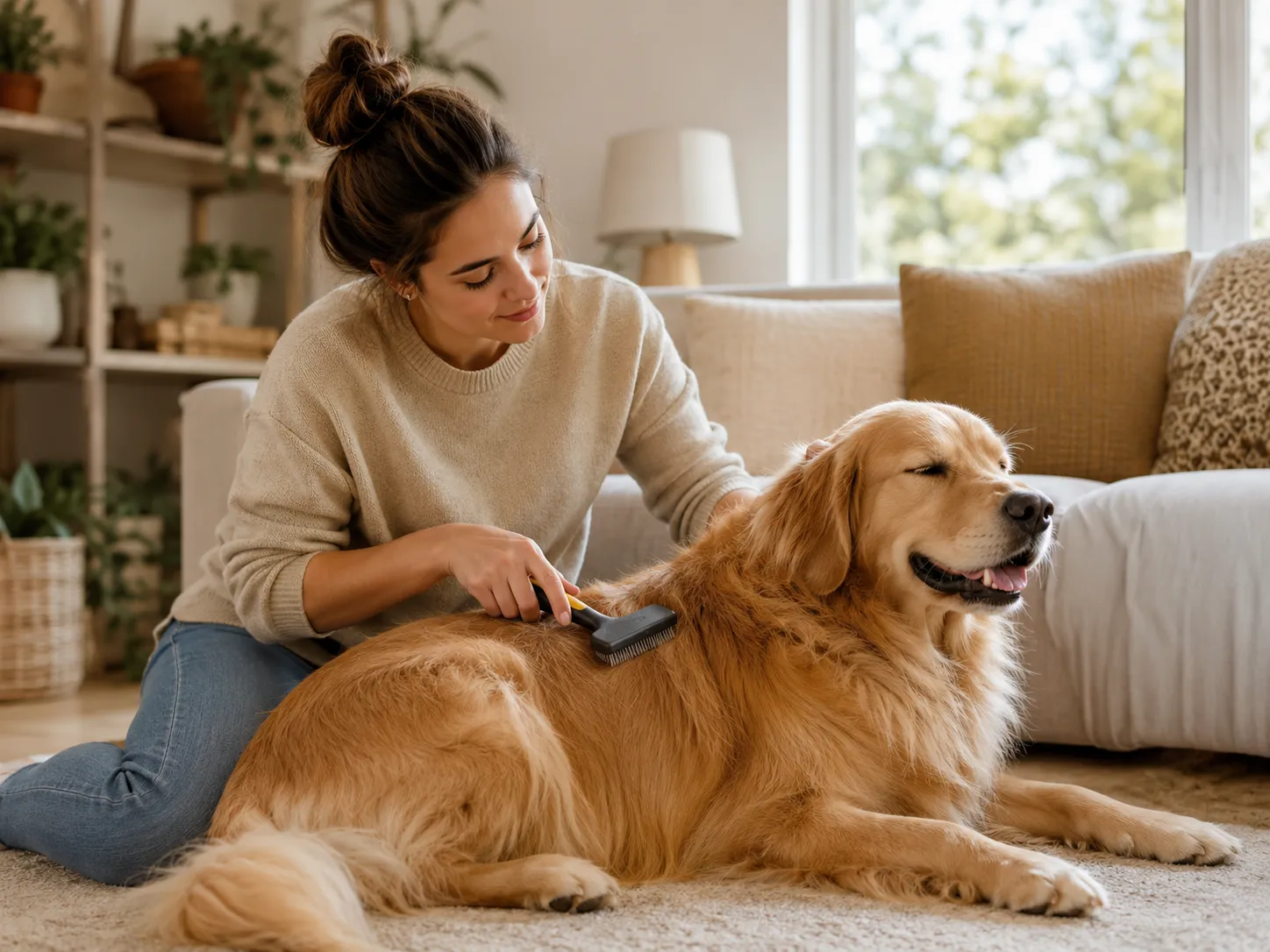
Brushing loosens surface debris before it embeds, distributes sebum from the skin through the coat (the natural conditioning mechanism the coat was designed to use), and removes loose hair before it traps dirt. For shorthaired dogs, a weekly once-over with a rubber curry brush is sufficient. Double-coated breeds need a deshedding undercoat rake 2-3 times per week year-round and daily during shedding season. Long silky coats need daily brushing to prevent mats; curly coats need brushing after every bath once fully dry (brushing a wet curly coat causes breakage and mat formation). The right brush for each coat type matters as much as frequency.
2. Dry Shampoo for Dogs
Dry shampoo is useful for absorbing surface sebum and mild odor between baths, particularly for shorthaired and double-coated dogs. It is not appropriate as a substitute for medicated bathing in dogs with skin conditions, and it should not be used on hairless breeds (where it can clog pores) or on inflamed skin. For healthy dogs, a dog-formulated dry shampoo used once between baths is generally safe. Products not specifically formulated for dogs should be avoided, cornstarch-based human products can feed Malassezia yeast with the right moisture conditions.
3. Paw Cleaning After Every Walk
Paws carry the largest concentration of outdoor contaminants into the coat, mud, pollen, road salt, pesticides, and bacteria. A quick wipe with a damp cloth after every walk prevents these from migrating up the legs and into the main coat. Dogs that go untreated in this respect typically need more frequent full baths by a factor of 30-50%. Dogs with allergies benefit especially from post-walk paw cleaning, since pollen trapped between the toes is a primary allergen source that triggers whole-body itching.
4. Ear and Skin Fold Cleaning, Separate from Bathing
Dogs with floppy ears (Cocker Spaniels, Basset Hounds, Golden Retrievers) and dogs with skin folds (Bulldogs, Pugs, Shar-Peis) need these areas cleaned on a schedule that has nothing to do with bathing frequency. Ear canals in floppy-eared dogs should be inspected and cleaned weekly, regardless of when the last bath was, the warm, low-airflow environment in these ears creates ideal fungal and bacterial growth conditions year-round. Skin folds need to be wiped dry and checked at least twice weekly; they stay moist from body heat alone and are the most common site for fold dermatitis even in dogs that are bathed regularly.
5. The Sniff Test
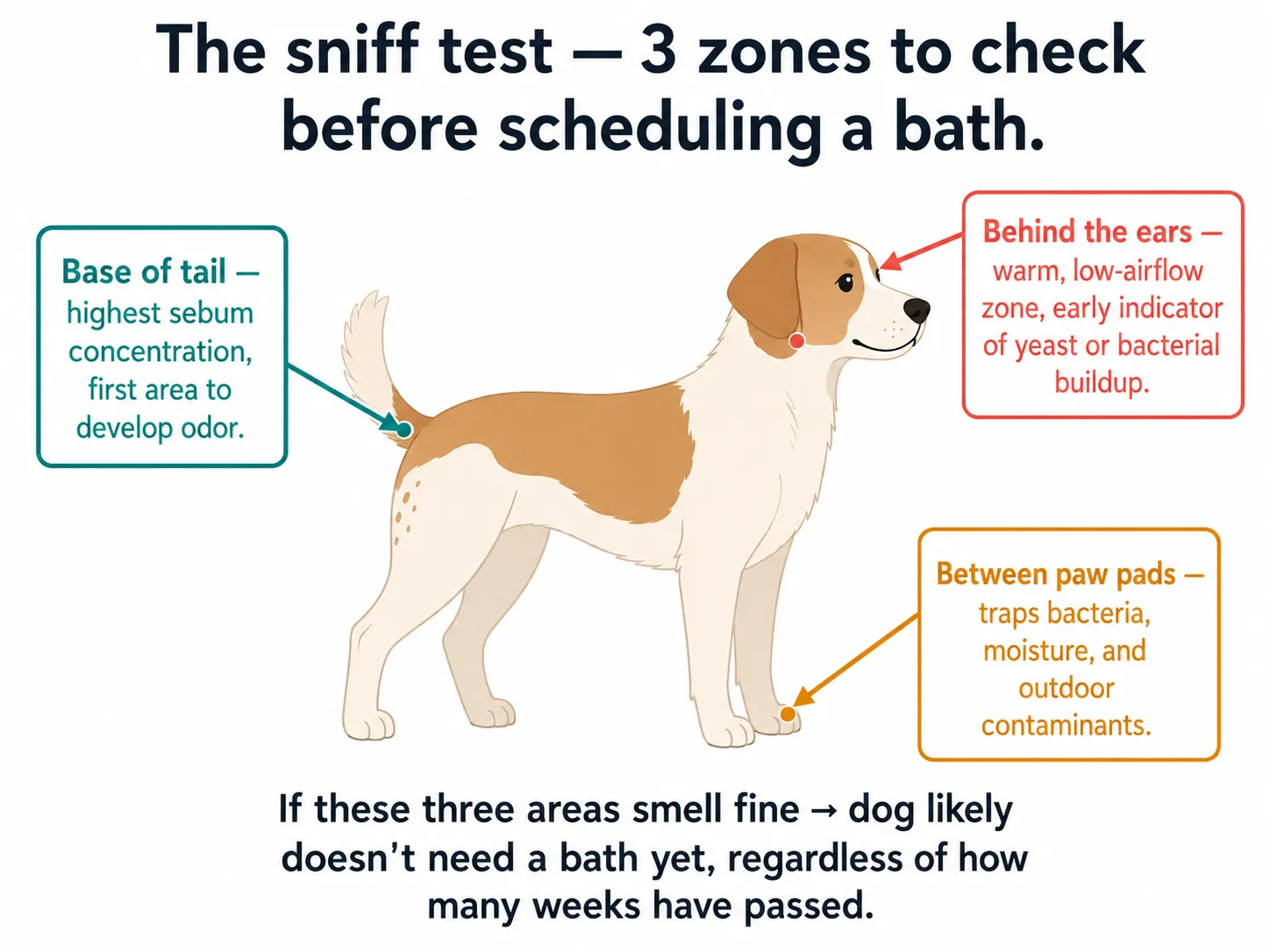
Before scheduling a bath, do a targeted odor check: sniff at the base of the tail, between the paw pads, and behind the ears. These are the three highest-sebum, highest-bacteria zones on a dog's body. If these areas smell fine and the rest of the coat looks and feels normal, the dog does not need a bath yet, regardless of how many weeks have passed. If one of these zones is the only problem area, a targeted spot-clean handles it better than a full bath, which subjects the entire skin surface to shampoo exposure unnecessarily.
Questions owners ask
How often should you bathe a dog with a normal coat?
Once every 4 weeks is the right starting point for a healthy dog with a moderate coat and average outdoor activity. That's not a ceiling, if your dog is an active outdoor dog or develops odor before four weeks, bathe more often. And it's not a floor, if your dog is primarily indoors, low-activity, and shorthaired, every 6-8 weeks may be perfectly sufficient. The monthly baseline is calibrated to the time it takes for sebum production to shift from "healthy oil coating" to "odor-causing accumulation" in the average dog. Every dog's sebaceous activity is slightly different, so the real answer is: start at 4 weeks and adjust based on what you smell and see before the next scheduled bath.
Can you bathe a dog once a week?
For most dogs, no, weekly bathing with regular shampoo strips the skin barrier faster than sebaceous glands can replenish it, leading to dry, flaky, itchy skin within a few weeks. There are exceptions: hairless breeds like the Chinese Crested and Xoloitzcuintli genuinely need weekly bathing because their exposed skin accumulates sebum and debris without fur to distribute it. Dogs with active skin infections or allergies may also be on a prescribed weekly medicated bathing protocol, but this is specific to the product and condition. If you're bathing a healthy coated dog weekly for odor or appearance reasons, the more productive question is why the dog smells or looks dirty within a week, which usually points to a skin condition or a wrong shampoo, both of which more baths will make worse.
Do shorthaired dogs need fewer baths than longhaired dogs?
Generally, yes, but not for the reason most people assume. Shorthaired dogs don't stay cleaner; they're just easier to clean without shampooing because debris and surface oil don't trap as deeply in a short single coat as in a long or curly coat. A Beagle or Dalmatian can go 6-8 weeks between full baths partly because a brush and a wipe-down handles most between-bath maintenance effectively. A Shih Tzu or Maltese, by contrast, traps debris in long silky coat that brushing can't fully address, regular bathing is necessary to clean the coat at the follicle level. The important caveat: if a shorthaired dog has an oily coat (like a Basset Hound) or a skin condition, they may need baths more frequently than a longhaired dog with healthy dry skin. Coat length alone doesn't determine frequency.
Should I bathe my dog if they smell but look clean?
Yes, but first do the sniff test described in the between-bath section. Sniff the base of the tail, between the paw pads, and behind the ears. If the smell is concentrated in one of these zones, a targeted spot-clean is more efficient than a full bath. If the odor is general (the whole dog smells), a bath is appropriate, but also ask yourself whether this smell is returning quickly after baths. A dog that smells noticeably bad within a week of a bath almost always has a yeast or bacterial overgrowth, a condition that regular bathing will not resolve and may worsen by irritating the skin. If the pattern repeats, a change in shampoo (to an antifungal or antibacterial formula) will address the problem where a frequency increase cannot.
Is it bad to bathe a dog with itchy or sensitive skin?
Bathing a dog with sensitive or itchy skin is not inherently bad, in fact, for dogs with environmental allergies, regular bathing with a gentle formula physically removes allergens from the coat and can significantly reduce itching. The key variable is the product. Dogs with sensitive or atopic skin have a compromised stratum corneum, the outermost skin barrier layer, with reduced ceramide levels and increased transepidermal water loss. Standard shampoos with synthetic fragrances, sulfates, or harsh surfactants make this worse. For sensitive-skin dogs, a ceramide-containing or oatmeal-based hypoallergenic formula is appropriate. If the dog was recently diagnosed with a skin condition, the veterinarian may prescribe a specific medicated shampoo and frequency as part of treatment, following that protocol is more important than any general guideline.
What's the best shampoo to use for regular dog baths?
For a healthy dog with no skin conditions, the best everyday shampoo is one that's pH-balanced for dogs (6.2-7.4 range), sulfate-free, fragrance-free or lightly scented with natural botanicals, and contains moisturizing agents like colloidal oatmeal, aloe vera, or ceramides. As discussed in the pH science section, dog skin is significantly more neutral than human skin, a shampoo formulated for human acidic skin shifts a dog's skin chemistry toward a pH it wasn't designed for, weakening the protective acid mantle and inviting bacterial and fungal colonization. Look for products that state "pH-balanced for dogs" explicitly on the label. For coat-specific needs: long and curly coats benefit from a shampoo-and-conditioner combination; double coats do well with a moisturizing formula that won't leave residue in the undercoat; oily coats benefit from a gentle degreasing formula. When in doubt, a veterinary dermatology brand like Douxo, Dechra, or Veterinary Formula offers formulas designed with these specific pH and barrier-support criteria in mind.
Sources
The following sources informed the research and veterinary claims in this article:
- VCA Animal Hospitals, Coat and Skin Appearance in the Healthy Dog https://vcahospitals.com/know-your-pet/coat-and-skin-appearance-in-the-healthy-dog
- VCA Animal Hospitals, Yeast Dermatitis in Dogs https://vcahospitals.com/know-your-pet/yeast-dermatitis-in-dogs
- PetMD, How Often Should You Bathe Your Dog? https://www.petmd.com/dog/general-health/how-often-should-you-bathe-your-dog
- PetMD, Can You Use Human Shampoos on Dogs? https://www.petmd.com/dog/general-health/can-you-use-human-shampoos-on-dogs
- American Kennel Club (AKC), How Often Should You Wash Your Dog? https://www.akc.org/expert-advice/health/how-often-should-you-wash-your-dog/
- dvm360, Shampoo Therapy: Making Sense of All the Choices https://www.dvm360.com/view/shampoo-therapy-making-sense-all-choices-proceedings
- Merck Veterinary Manual, Seborrhea in Animals https://www.merckvetmanual.com/integumentary-system/seborrhea/seborrhea-in-animals
- Veterinary Practice, Considering the Epidermal Barrier https://www.veterinary-practice.com/article/considering-the-epidermal-barrier
- WSAVA 2004 / VIN, Shampoo Therapy in Veterinary Dermatology https://www.vin.com/apputil/content/defaultadv1.aspx?id=3852175&pid=11181
- Tauro Pro Line, The Science Behind Natural Pet Shampoos / pH Balance https://www.tauroproline.com/the-science-behind-natural-pet-shampoos
- GoodRx, Chlorhexidine for Dogs https://www.goodrx.com/pet-health/dog/chlorhexidine-for-dogs
- Veterian Key, Fixing the Skin Barrier: Past, Present and Future, Man and Dog Compared https://veteriankey.com/fixing-the-skin-barrier-past-present-and-future-man-and-dog-compared/