
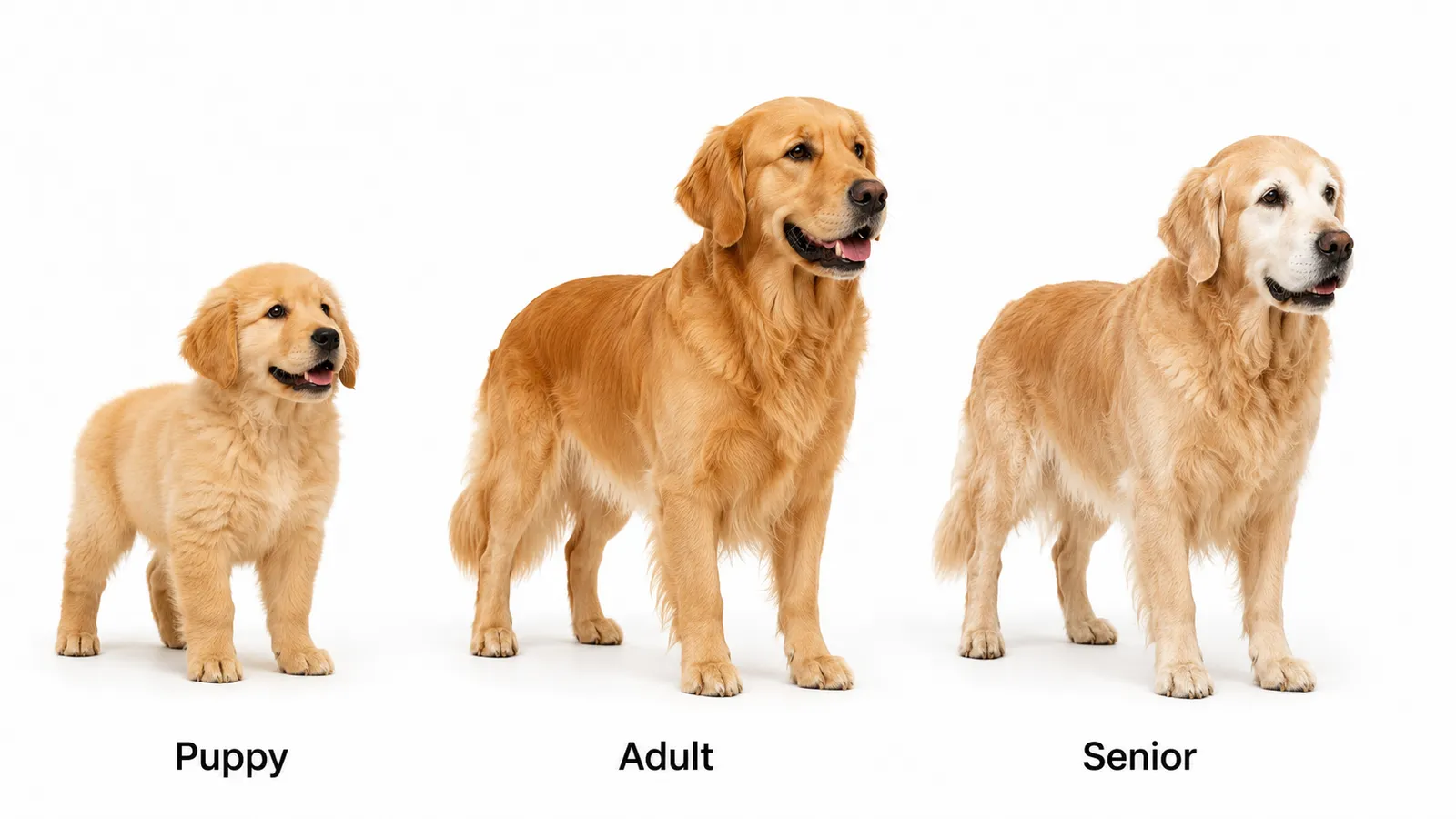
Golden Retriever Lifespan Health Problems by Age: Signs, Risks, and Vet Red Flags
A Golden Retriever’s lifespan is usually shaped less by one “average” number and more by how early joint disease, cancer, weight gain, and age-related decline show up. If your dog is slowing down, stiff after rest, losing interest in food, or developing new lumps, ignoring those changes can shorten both comfort and time.
- A Golden Retriever’s lifespan is shaped more by health risks than by a single average number.
- Joint disease, cancer, and obesity are the biggest lifespan threats in the breed.
- Warning signs change with age, so a puppy, adult, and senior need different levels of attention.
- New lumps, limping, appetite loss, and sudden behavior changes are vet-worthy red flags.
- Good weight control, regular vet checks, and early treatment can improve comfort and may extend lifespan.
Goldens can age very differently. Some stay active well into their senior years; others run into mobility trouble or serious illness earlier than expected. The breed pattern matters, which is why it helps to watch for stage-of-life changes instead of comparing your dog to a friend’s healthy nine-year-old Golden. The same logic applies across breeds, though the risks differ: French Bulldogs face airway-driven risks instead.
What is the typical Golden Retriever lifespan, and what usually shortens it?
A Golden Retriever’s life expectancy is best understood as a range, not a promise, because breed risk varies so much from dog to dog. Veterinary breed guides from places like Allison Animal Care, Amor Hospital, and Plantation Midtown Animal Hospital all point to the same broad reality: Goldens are more likely than many breeds to face problems that affect longevity, especially joint disease, cancer, and chronic decline with age.
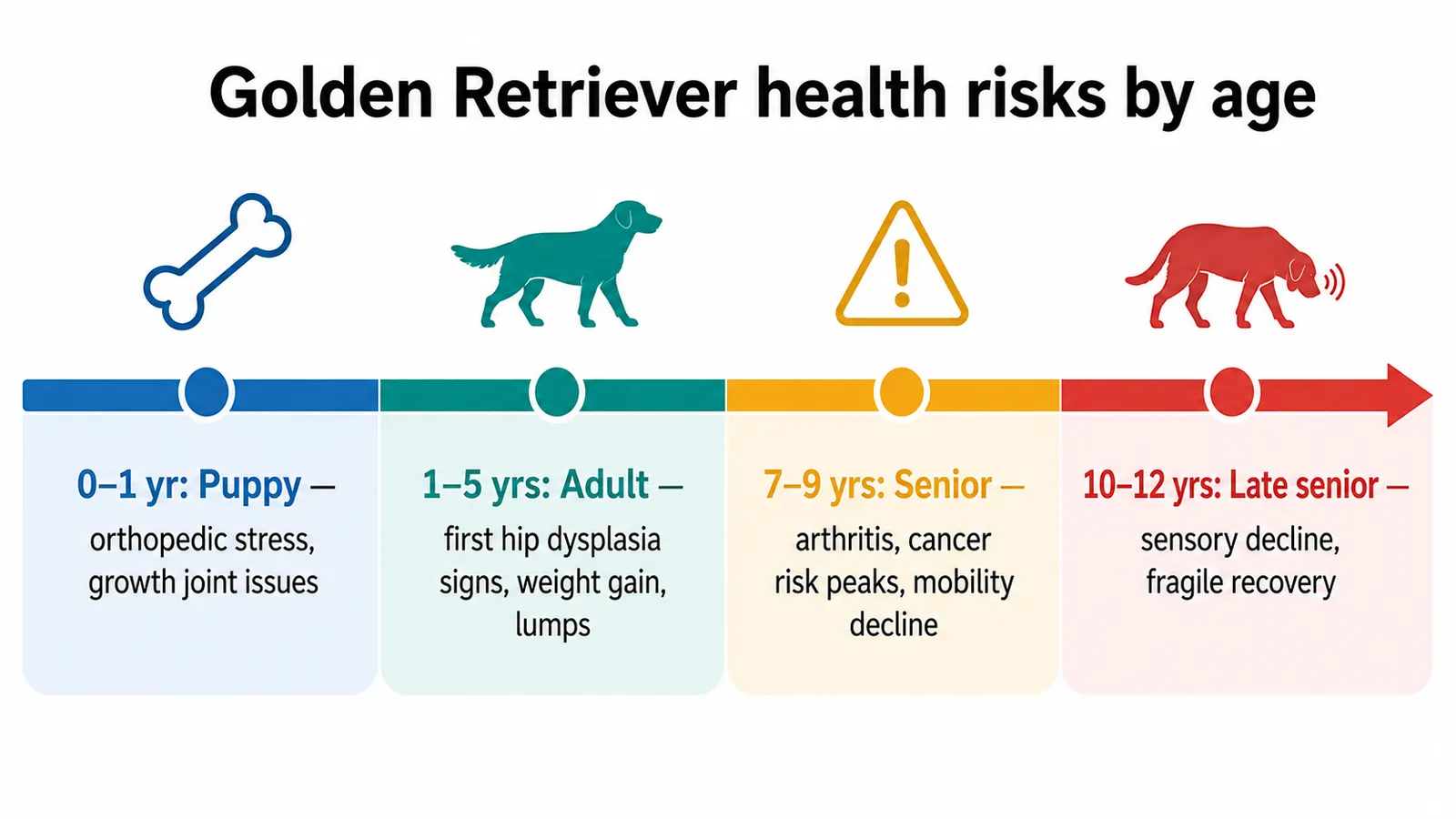
The biggest lifespan-shortening factors usually aren’t mysterious. Hip dysplasia and other orthopedic issues can make daily movement harder, which often leads to less exercise, weight gain, and more pain. Cancer is another major concern in the breed, and it can change everything quickly because it may start quietly before you notice a lump, unexplained weight loss, or a dog that just seems off. A comparable breed-level pattern shows up in German Shepherd health problems and lifespan, where hip and elbow dysplasia dominate the list.
Obesity matters more than people sometimes realize. Extra weight puts constant stress on hips, elbows, knees, and the spine, and that stress builds over years. Add normal aging on top of that, and a Golden who looked fine at five can become much less comfortable at nine or ten if the warning signs were brushed aside.
The hard truth is that some Goldens age gracefully and others do not, even in loving homes. That doesn’t mean you failed. It means the breed carries a real health burden, and the goal is to catch change early enough to preserve comfort and function for as long as possible.
Which golden retriever lifespan health problems show up most often?
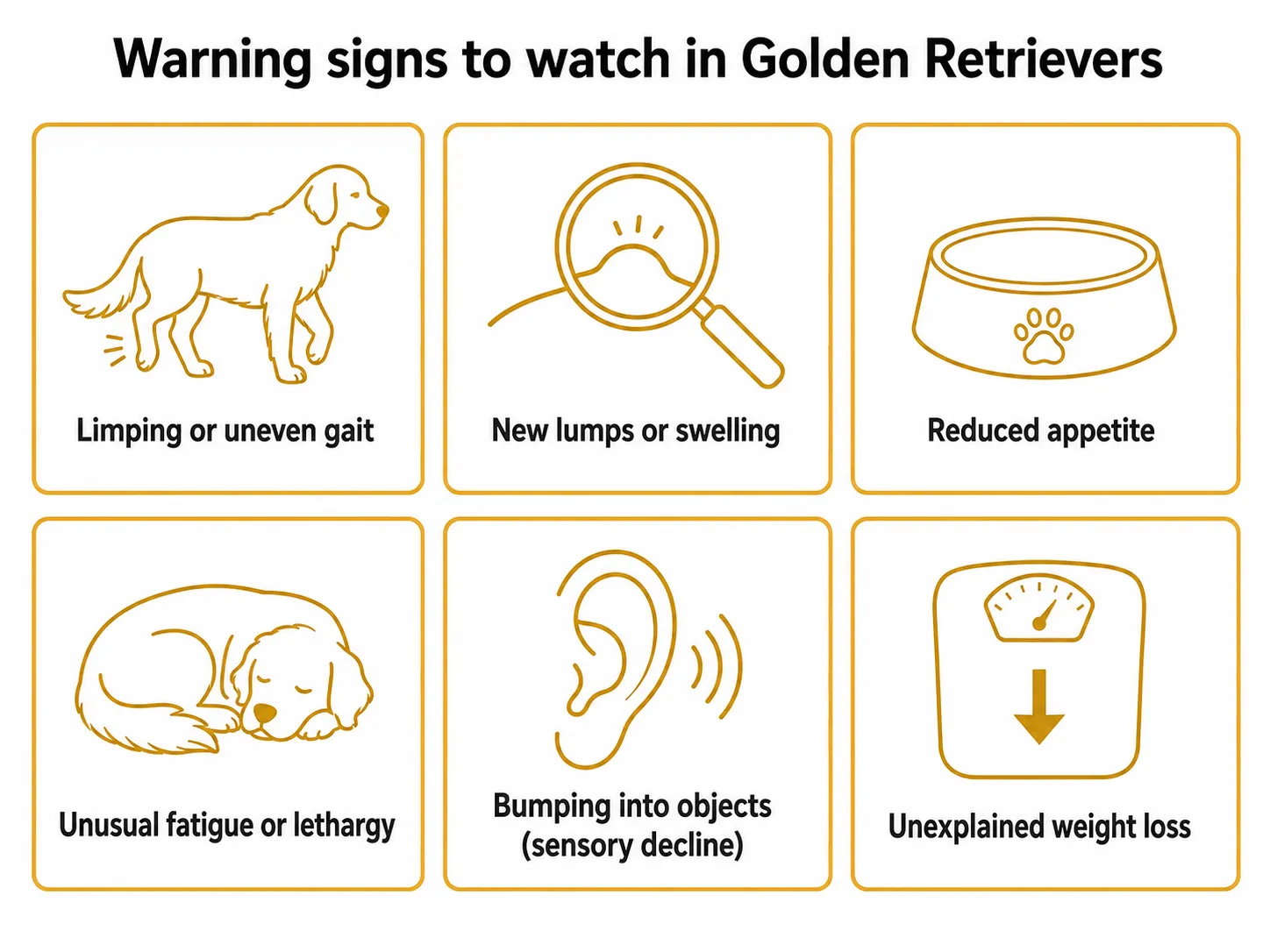
- Hip dysplasia often shows up as stiffness after rest, a bunny-hopping gait, reluctance to jump into the car, or trouble getting up from the floor. Some dogs seem fine on a short walk and then move like they’re rusty the next morning.
- Arthritis and other joint problems usually become more obvious with age. Owners often notice slower walks, lagging behind on stairs, licking at sore joints, or a dog that chooses the couch over the yard.
- Cancer can appear as a new lump, swelling that doesn’t go away, sudden weight loss, reduced appetite, lethargy, or a dog who seems painful without an obvious injury. Because some cancers progress quietly, “she’s just getting older” is a risky assumption.
- Sensory decline, including reduced hearing or vision, may show up as bumping into furniture, startling more easily, not responding to familiar cues, or seeming disoriented in rooms they know well.
- Quiet warning signs are the ones owners dismiss most often: sleeping more than usual, hesitation before stairs, standing up carefully, or needing encouragement to keep moving. Those changes can be normal aging, but they can also be early evidence that something is starting to hurt or fail.
How do Golden Retriever health problems change with age?
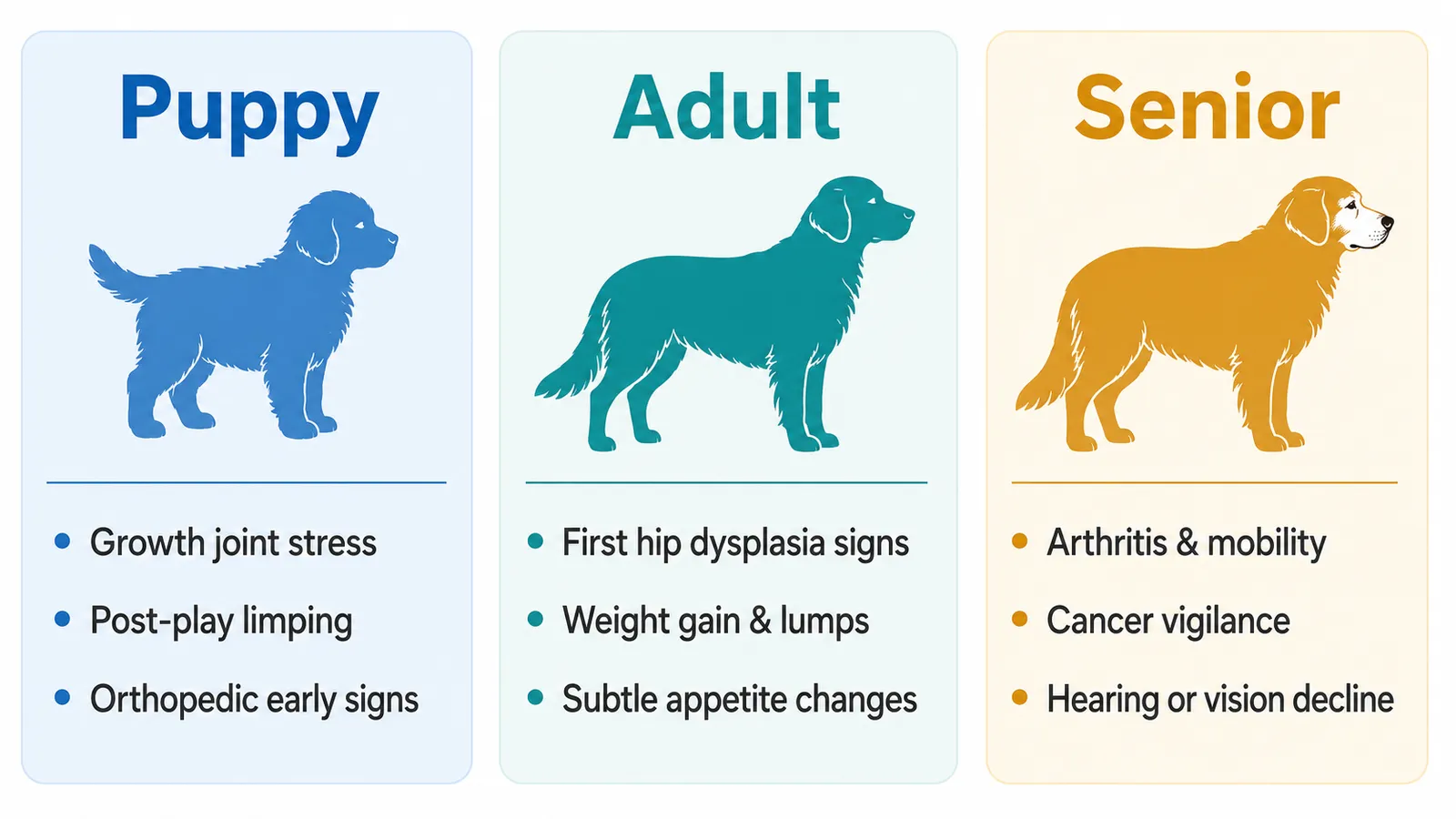
Golden Retriever health issues by age tend to cluster in different ways: puppies show developmental or orthopedic clues, adults often reveal the first chronic patterns, and seniors are more likely to need close monitoring for mobility, weight, and internal disease. A dog does not have to look obviously sick to be in trouble, which is why the stage matters as much as the symptom.
| Life stage | What you’re most likely to see | What to watch at home | How often to check in with the vet |
|---|---|---|---|
| Puppy | Growth-related joint stress, early orthopedic signs, digestive upset from diet changes | Limping after play, uneven sitting, reluctance to climb, poor body condition | Routine puppy visits and follow-up if movement looks off |
| Adult | First signs of hip dysplasia, allergies, weight gain, developing lumps, ear issues | Stiffness after naps, fewer zoomies, scratching, new masses, subtle appetite changes | Regular wellness care; sooner if symptoms repeat |
| Senior | Arthritis, reduced mobility, hearing or vision decline, cancer, more fragile recovery | Trouble rising, slower pace, bumping into things, sleeping more, weight loss, lower appetite | Twice per year vet check-ups, or more often if change is noticeable |
Puppy problems deserve attention because early movement issues can shape the rest of a dog’s life. If a young Golden seems reluctant to use one leg, sits awkwardly, or tires far earlier than littermates, that is not something to “wait out” for months. The earlier a vet sees the pattern, the more options you usually have for protecting long-term mobility.
In adult Goldens, the danger is often the slow drift. A dog that takes longer to stand, skips the stairs, or stops greeting you at the door with the same enthusiasm may be compensating for pain or fatigue. Seniors need the most vigilance, and Walkin' Pets specifically recommends senior-specific diets, reducing joint impact, twice-yearly vet visits, and supports like orthopedic beds or dog wheelchairs when mobility becomes limited.
Which signs mean I should call the vet now?
You should call the vet now if your Golden has a sudden limp, obvious pain, collapse, repeated vomiting, stops eating, or shows a rapid drop in energy. Those signs are more concerning than ordinary stiffness because they can point to injury, internal illness, or a condition that is moving quickly.
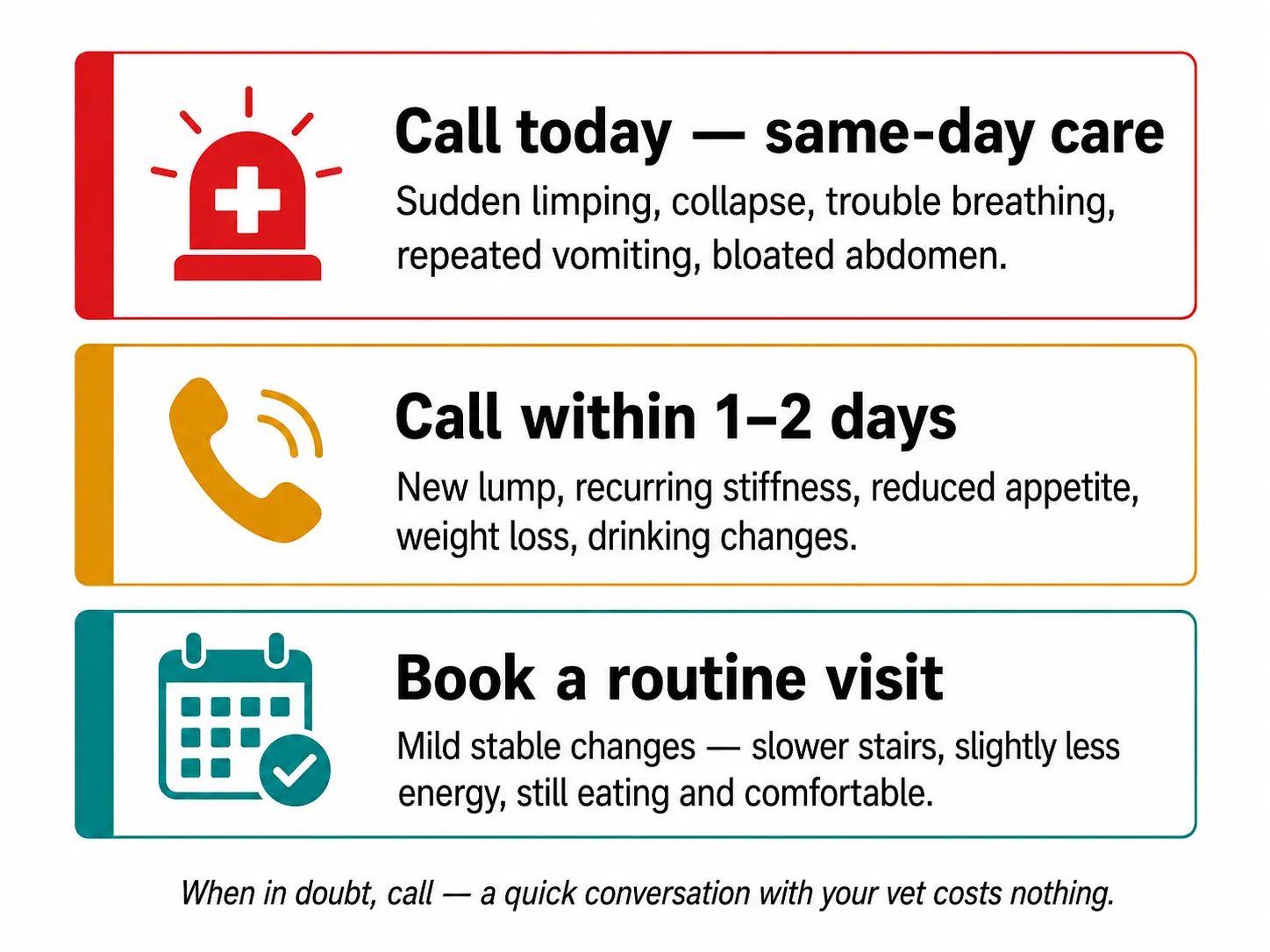
- Same-day care: sudden or severe limping, a limb that won’t bear weight, collapse, trouble breathing, repeated vomiting, bloated abdomen, or a dog crying out when touched.
- Soon, within a day or two: a new lump, recurring stiffness, reduced appetite, noticeable weight loss, drinking much more or less than usual, or a change in bathroom habits that doesn’t resolve.
- Routine appointment: mild aging changes that are stable, such as slower stairs or needing a little more time to rise, as long as your dog is still eating, moving, and comfortable overall.
- Err on the side of earlier assessment if your Golden is a senior or already has hip dysplasia, arthritis, or a cancer history, because changes can snowball faster in dogs with known risk.
What can owners do to protect a Golden Retriever's health and lifespan?
The most effective protection is boring in the best way: keep your Golden lean, keep them moving, and keep screening on schedule. Weight control reduces stress on joints and makes it easier to spot real decline, because a dog with a healthy body condition is much easier to assess than one carrying extra pounds.
Joint-friendly exercise usually means steady walks, controlled play, and avoiding the kind of repeated jumping that punishes hips and elbows. If your dog is starting to slow down, small home changes matter too: orthopedic beds can help sore joints recover overnight, ramps can replace hard jumps, and senior-specific diets may be useful when your vet wants more support for aging bodies. The trade-off is simple: good care can improve comfort and sometimes buy time, but it cannot erase breed predisposition.
Golden Retriever vet checkups should become more frequent as the years pass, especially once your dog is clearly in senior territory. That matters because problems like arthritis, oral pain, heart changes, and cancer often look mild at home long before they become obvious in the exam room.
A practical risk-check framework for Golden Retriever owners
The easiest way to judge risk at home is to track five observable areas: mobility, appetite, energy, comfort, and daily function. I think of this as a quick filter, not a diagnosis. If one area slips for a day, you watch; if two or more change together, you book the vet; if the change is sudden or severe, you call right away.
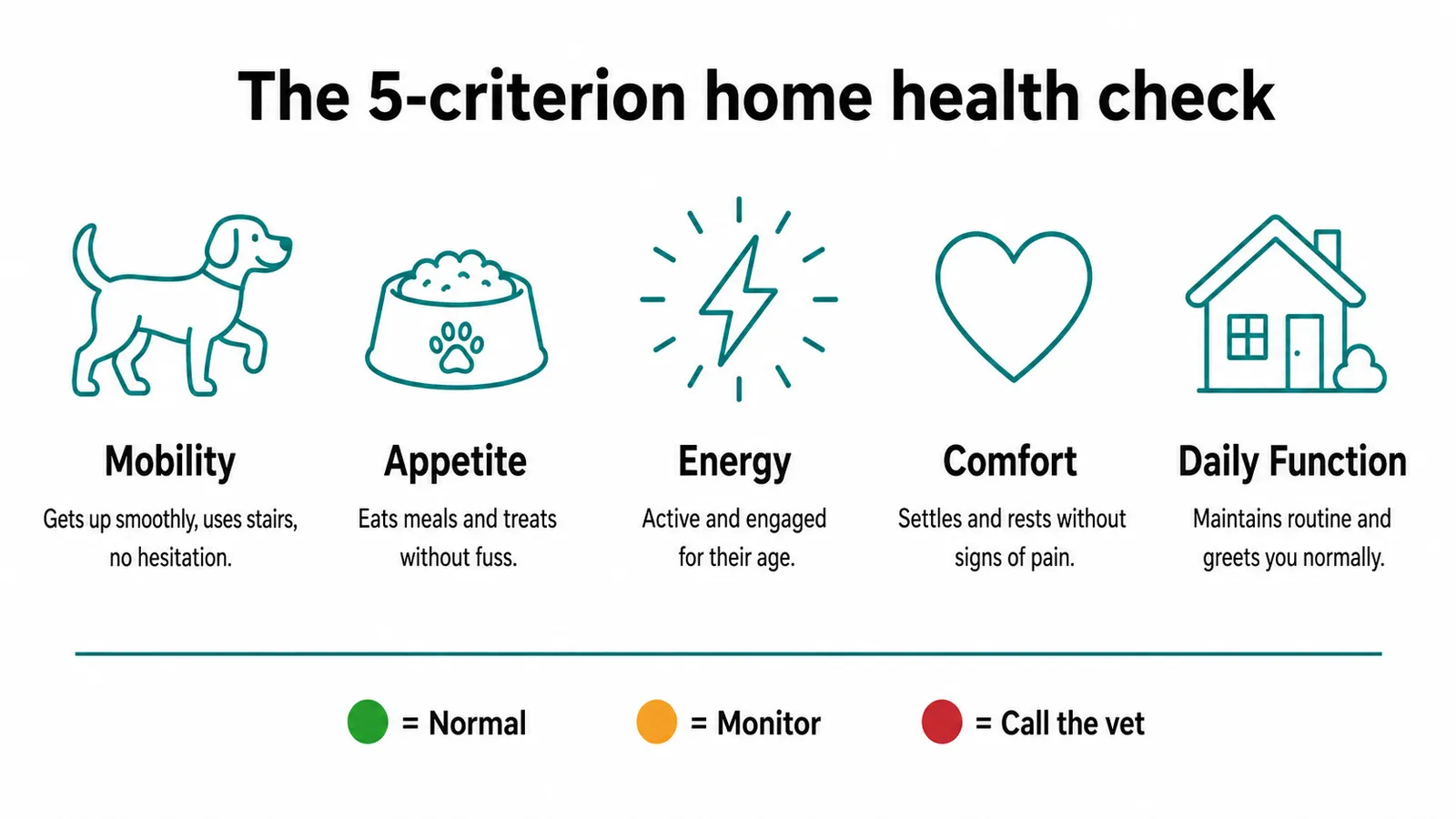
| Criterion | Normal | Monitor | Vet now |
|---|---|---|---|
| Mobility | Gets up smoothly, walks evenly, uses stairs or jumps as usual | Stiff after sleep, slower on walks, occasional hesitation | Sudden limp, won’t bear weight, obvious pain, collapse |
| Appetite | Eats normal meals and treats without fuss | Slightly pickier for a meal or two, but still interested | Stops eating, refuses food, or appetite drops with other symptoms |
| Energy | Acts like their usual self for age | Sleeping more, shorter play bursts, mild slowdown | Marked lethargy, weakness, rapid decline, or hard-to-wake behavior |
| Comfort | Settles, rests, and moves without signs of pain | Licks joints, shifts often, pants more than usual at rest | Whining, trembling, hiding, yelping, or pain when touched |
| Daily function | Maintains routine, greets you, follows familiar patterns | Needs more encouragement for stairs, walks, or rising | Can’t keep up with routine, gets lost in familiar spaces, or has a sudden functional drop |
This framework is useful because it focuses on change, not perfection. A Golden who is still eating and happy but a little slower may simply need monitoring, while the same dog with a slower gait plus poor appetite and visible discomfort deserves a vet call. That pattern-based thinking is exactly what helps owners avoid both panic and dangerous delay.
When should I see a vet for Golden Retriever lifespan health problems?
You should book a same-day or urgent visit for sudden limping, collapse, repeated vomiting, trouble breathing, a painful abdomen, or a dramatic drop in appetite or energy. Book a prompt appointment within a day or two for new lumps, ongoing stiffness, recurring lameness, weight loss, or behavior changes that keep repeating rather than fading.
Routine monitoring is reasonable only when the change is mild, stable, and your Golden still feels like themselves. Even then, older dogs and dogs with known mobility issues are usually better off being seen sooner rather than later, because what looks like ordinary aging can be the first visible sign of something treatable.
If you are sitting there debating whether a change is “enough” to call, that’s usually your cue to make the call. A quick vet conversation often brings clarity fast, and with Goldens, clarity is worth more than hoping tomorrow looks better.

Common questions about Goldens
What is the average lifespan of a Golden Retriever?
Most Golden Retrievers live around 10 to 12 years, but that range can shift with genetics, weight, cancer risk, and overall care. Some dogs live longer, especially when health problems are caught early.
What health problems are Golden Retrievers most prone to?
Golden Retrievers are especially prone to joint disease, cancer, obesity-related strain, and age-related mobility decline. Skin issues and ear infections can also become recurring problems in some dogs.
At what age is a Golden Retriever considered senior?
Many vets consider a Golden Retriever senior around 7 years old, though some start showing senior changes a little earlier or later. The number matters less than the signs of slowing down, stiffness, or new medical issues.
When should I worry about my Golden Retriever limping?
Worry if the limp lasts more than a day, gets worse, happens suddenly, or comes with swelling, pain, or reluctance to bear weight. A persistent limp should be checked by a vet.
Can good care extend a Golden Retriever’s lifespan?
Yes. Keeping a healthy weight, feeding appropriately, exercising safely, and catching problems early can improve comfort and may help extend a Golden Retriever’s lifespan.
Where this information comes from
Sources consulted for this article:
- 10 Common Golden Retriever Health Issues Owners Must Know
- Breed Info, Allison Animal Care
- 5 Common Health Issues for Golden Retrievers: Prevention & Treatment | Plantation Midtown Animal Hospital
- Golden Retriever Lifespan: How Long Do Retrievers Live? (Life Expectan, Walkin' Pets