

French Bulldog Breathing Problems: What’s Normal, What’s BOAS, and When to Call the Vet
French Bulldog breathing problems often come back to brachycephaly, but noisy breathing isn’t the same as dangerous breathing. A Frenchie that snores, snorts, or pants loudly may still be within the breed’s normal range, while a dog that has to work to inhale, won’t settle after exercise, or shows blue or pale gums needs a vet right away.
Normal noise versus real trouble
- Noisy breathing can be normal in French Bulldogs, but effortful breathing is not.
- BOAS is a real airway disorder, not just a loud snore.
- A dog that struggles to inhale, recovers slowly, or has blue or pale gums needs urgent veterinary help.
- Heat, excitement, obesity, and collars can make breathing strain worse fast.
- The OFA Respiratory Function Grading Scheme helps assess function, but it does not replace a vet exam.
What do French Bulldog breathing problems actually mean?
French Bulldog breathing problems usually come down to one thing: the dog’s short skull leaves too little room for the soft tissues in the airway. Put simply, the nose and throat are crowded, so air doesn’t move as freely as it should. That’s why a French Bulldog can sound noisy even when it seems content, and also why some dogs develop Brachycephalic Obstructive Airway Syndrome, or BOAS, which can become a serious health issue.
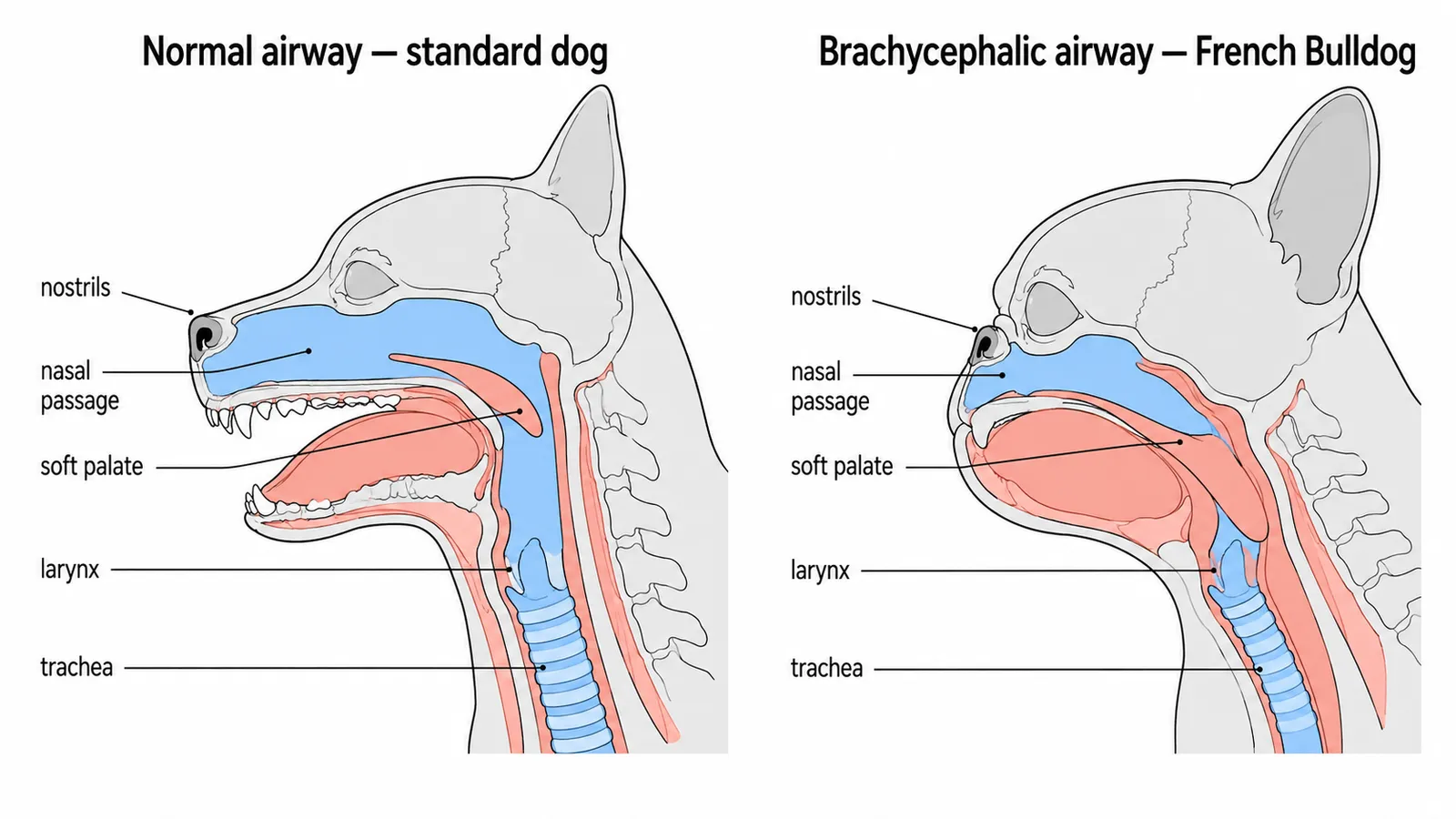
The sounds owners notice most are snorting, snoring, heavy panting, and the occasional gagging or reverse-sneezing-like burst. These can happen during sleep, after excitement, or on warm days. The real question is whether the dog is just noisy or actually struggling. If breathing effort increases, the gums look blue or pale, the dog collapses, or it can’t recover after rest, that’s no longer just a quirky breed trait.
UFAW describes the French Bulldog’s short-nosed shape as one that can cause chronic discomfort and respiratory distress, which is why the same breed noise that seems harmless one day can become a warning sign the next if the pattern changes. UFAW
How can you tell normal Frenchie noises from BOAS?
A useful way to judge French Bulldog breathing problems is to compare noise, effort, recovery time, and trigger sensitivity. A dog can be loud and still be coping. But if a dog needs time to recover from a short walk, pants at rest, or gets worse with mild heat, the airway is under strain.
| What you notice | More likely normal breed noise | More concerning for BOAS | What it means in practice |
|---|---|---|---|
| Sleeping sounds | Snoring or snuffling that comes and goes | Loud snoring with pauses, gasping, or restless sleep | Sleep noise alone is common; disrupted sleep suggests reduced airway flow |
| After a short walk | Panting that settles fairly quickly | Panting that lingers, looks effortful, or appears after very little exercise | Recovery time is one of the clearest clues |
| At rest indoors | Quiet between bursts of noise | Panting while lying down or during calm periods | Panting without obvious exertion deserves attention |
| Triggers | Excitement, heat, or a neck collar causing brief noise | Mild activity, normal room temperature, or no clear trigger causing distress | Less trigger needed usually means more severe obstruction |
| Body language | Relaxed, normal appetite and energy | Panic, wide-eyed posture, reluctance to move, or collapse | Effort matters more than sound volume |
If you want a home check that’s more reliable than guessing from one noisy evening, use this simple test: the quieter the trigger, the shorter the recovery, and the greater the effort, the more likely the breathing issue is more than normal Frenchie snuffling. That’s the difference between a dog that makes noise and a dog that’s working to breathe.
Heat, humidity, obesity, overexcitement, collars, and exercise all make the problem worse. A French Bulldog can look fine on a cool sofa and then tip into distress during a short summer walk, which is exactly why context matters so much.
The 4-part home-observation framework
Use these four checks together, not one at a time. I call it the Noise-Effort-Recovery-Trigger check, because that’s what separates a normal Frenchie soundtrack from a pattern that needs veterinary attention.
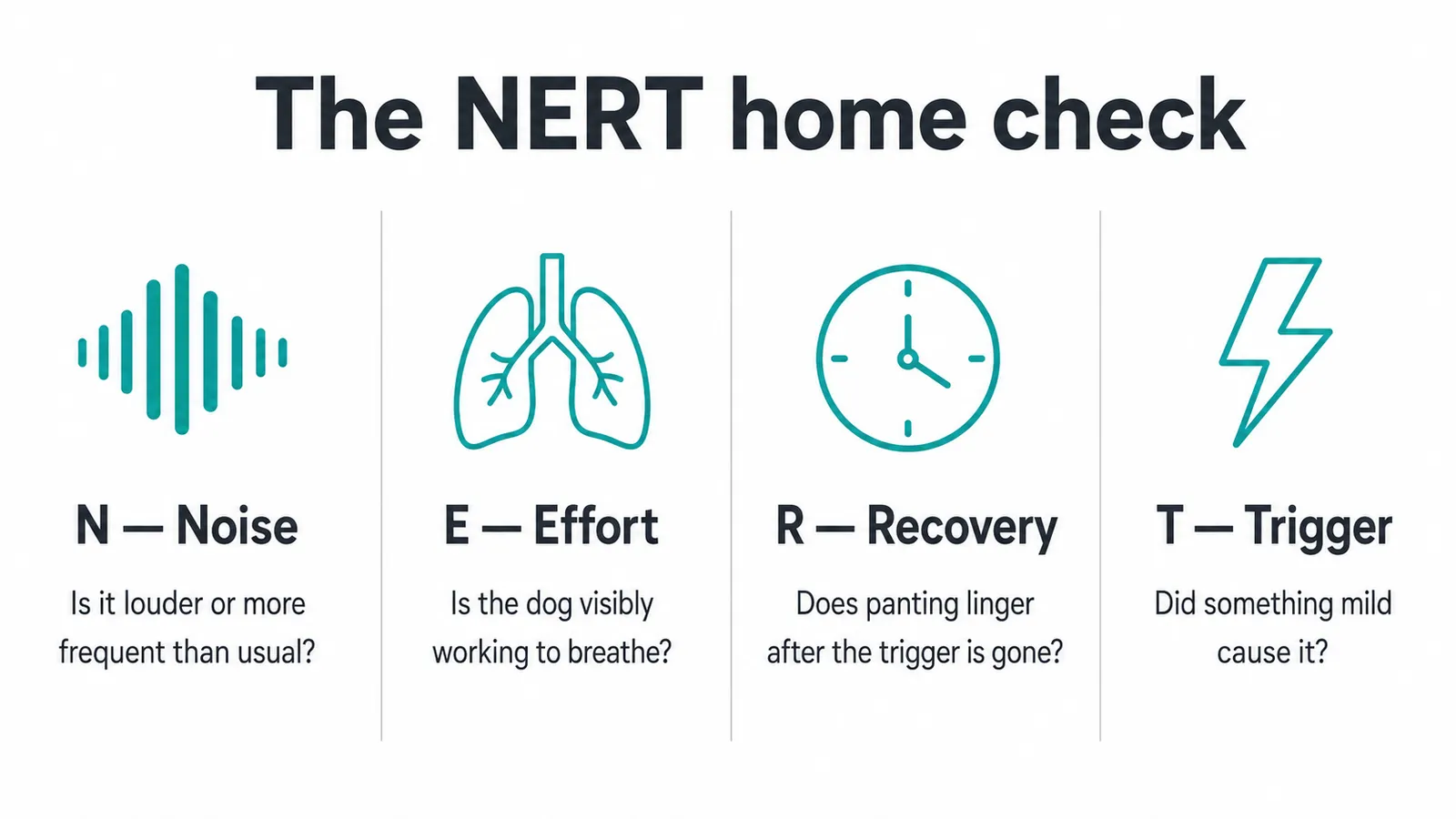
- Noise: Is the sound intermittent and familiar, or louder and more frequent than usual?
- Effort: Does the dog look like it is pushing air in, flaring the chest, or using its belly to breathe?
- Recovery: Does it settle within minutes, or does panting linger after the excitement is over?
- Trigger: Did heat, play, a walk, or a collar clearly set it off, or did it happen with little provocation?
What is the OFA Respiratory Function Grading Scheme, and why does it matter?
The Orthopedic Foundation for Animals uses the Respiratory Function Grading Scheme, or RFGS, to turn a vague “my Frenchie sounds bad” concern into a more structured breathing assessment. That matters because BOAS isn’t something owners should have to judge by ear alone, and a grading system gives veterinarians and breeders a shared way to talk about function rather than just appearance.
Sage Compassion for Animals explains that BOAS happens when the skull is shortened but the soft tissues inside, including the tongue, soft palate, and nasal structures, are still too large for the space available. The RFGS helps organize how much that anatomy affects everyday breathing, which is useful when deciding whether to monitor, investigate further, or talk about surgery. Sage Compassion for Animals
The important limitation is that a grade is not a full diagnosis. A good grade can support a conversation about health and breeding decisions, but it doesn’t replace a physical exam, and it can’t tell you everything about the nostrils, soft palate, larynx, or whether your dog is compensating well on the day of the exam. That’s why a structured score helps, but one noisy afternoon isn’t enough to make the whole decision.
Welleby Veterinary Hospital notes that a physical exam for French Bulldogs should include listening to breathing and checking the airway and nostrils, which is a good reminder that the dog in front of you matters more than the breed label. Welleby Veterinary Hospital
What should I do first if my French Bulldog is breathing badly?
The first job is to reduce demand on the airway quickly. Move the dog to a cool, quiet place, stop all activity, and remove any pressure around the neck. If breathing doesn’t calm down fast, or if the gums change color, treat it as urgent instead of waiting to see if it “passes.”
- Move your French Bulldog indoors or into shade and keep the room cool.
- Stop play, walking, and any excitement right away.
- Check the gums: healthy gums should be pink, not blue, gray, or pale.
- Watch the breathing effort, not just the noise. If the chest and belly are visibly working hard, that is a red flag.
- If the dog collapses, keeps retching, or cannot settle after rest, call an emergency vet immediately.
- For transport, keep stimulation low and avoid overheating the car or carrier.
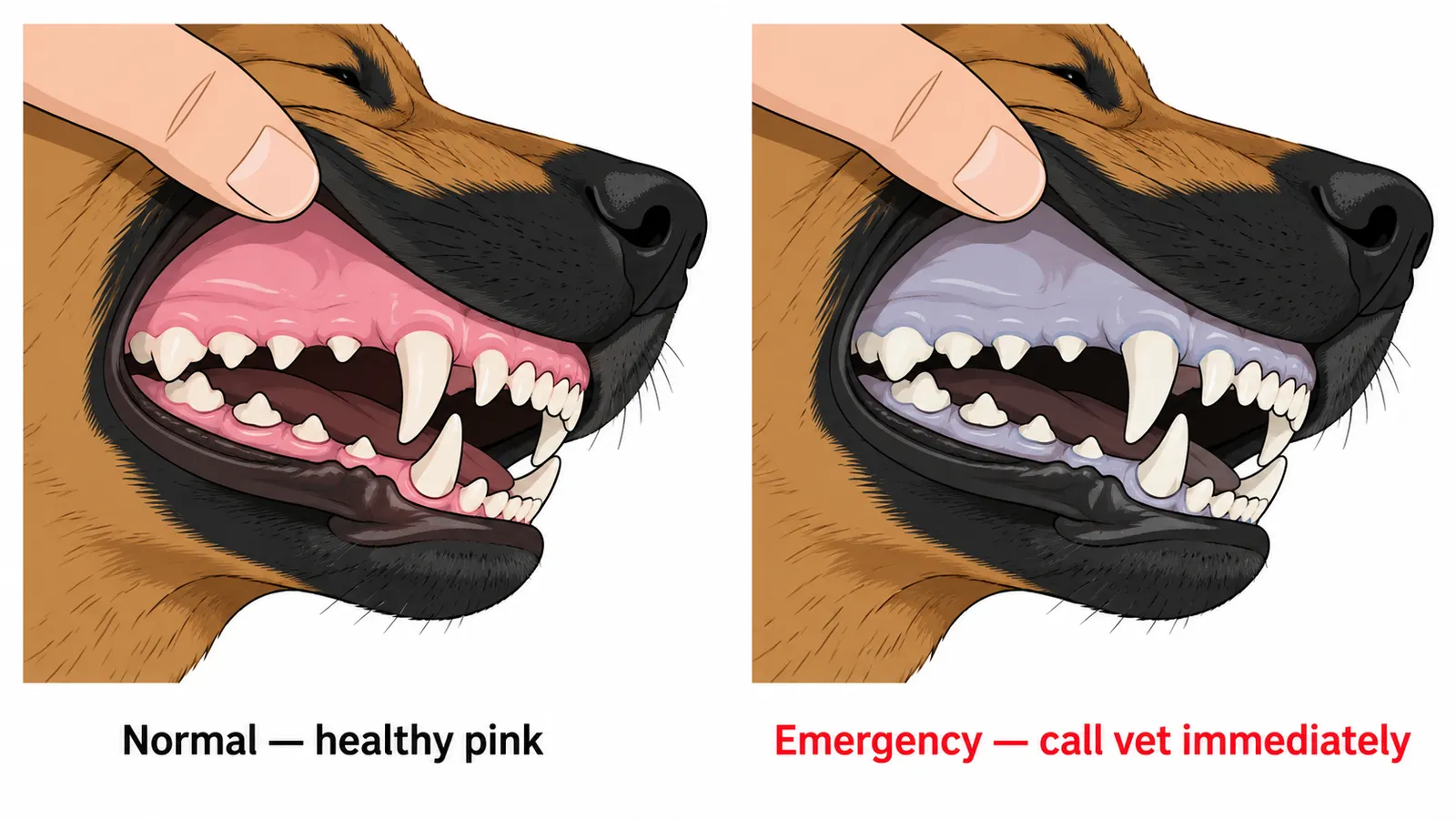
At the first veterinary visit, the exam shouldn’t stop at “yes, Frenchies are noisy.” The vet should check weight, nostrils, soft palate, and overall BOAS severity, because those details change the treatment plan. If the breathing problem is new or getting worse, that’s reason enough to book sooner rather than wait for the next routine checkup.
Which treatment options are used for French Bulldog breathing problems?
Treatment depends on whether the goal is to reduce strain or actually widen the airway. Conservative management can lower the day-to-day workload on a compromised airway, while surgery can improve the anatomy itself when BOAS is serious enough to justify it.
| Option | Best for | What it can improve | Trade-offs or limits |
|---|---|---|---|
| Weight management | French Bulldogs carrying extra body fat or tiring easily | Reduces breathing load and exercise strain | Takes time, and it will not fix anatomic obstruction on its own |
| Heat control and exercise changes | Dogs that worsen in humidity, on walks, or when overexcited | Lowers the chance of breathing flare-ups | Helps with triggers, not the underlying airway shape |
| Harness instead of collar | Any French Bulldog with airway sensitivity | Avoids pressure on the neck | Small change, but it will not solve BOAS by itself |
| Surgical correction | Dogs with confirmed BOAS or significant functional limitation | Can improve airflow by addressing narrowed nostrils and soft tissue obstruction | Needs a surgical consultation; some noise or management needs may remain |
| Veterinary evaluation and grading | Dogs with changing symptoms, poor recovery, or unclear severity | Clarifies whether the issue is mild, moderate, or severe | Assessment does not treat the problem on its own |
The practical mistake owners often make is trying lifestyle changes after the airway is already failing badly. Those changes still matter, but if your dog pants at rest, struggles after minimal activity, or looks distressed in normal weather, conservative care alone may be too little. On the other hand, surgery isn’t a shortcut around every management issue; even after a helpful procedure, weight control, heat avoidance, and sensible exercise usually still matter.
When should I take my dog to the vet for French Bulldog breathing problems?
You should book a vet visit soon if the noise is getting worse, snoring now happens while your French Bulldog is awake, exercise tolerance is dropping, or gagging is becoming more frequent. You should seek urgent help today if you see blue or pale gums, collapse, severe distress, repeated vomiting or retching, or heat-related collapse.
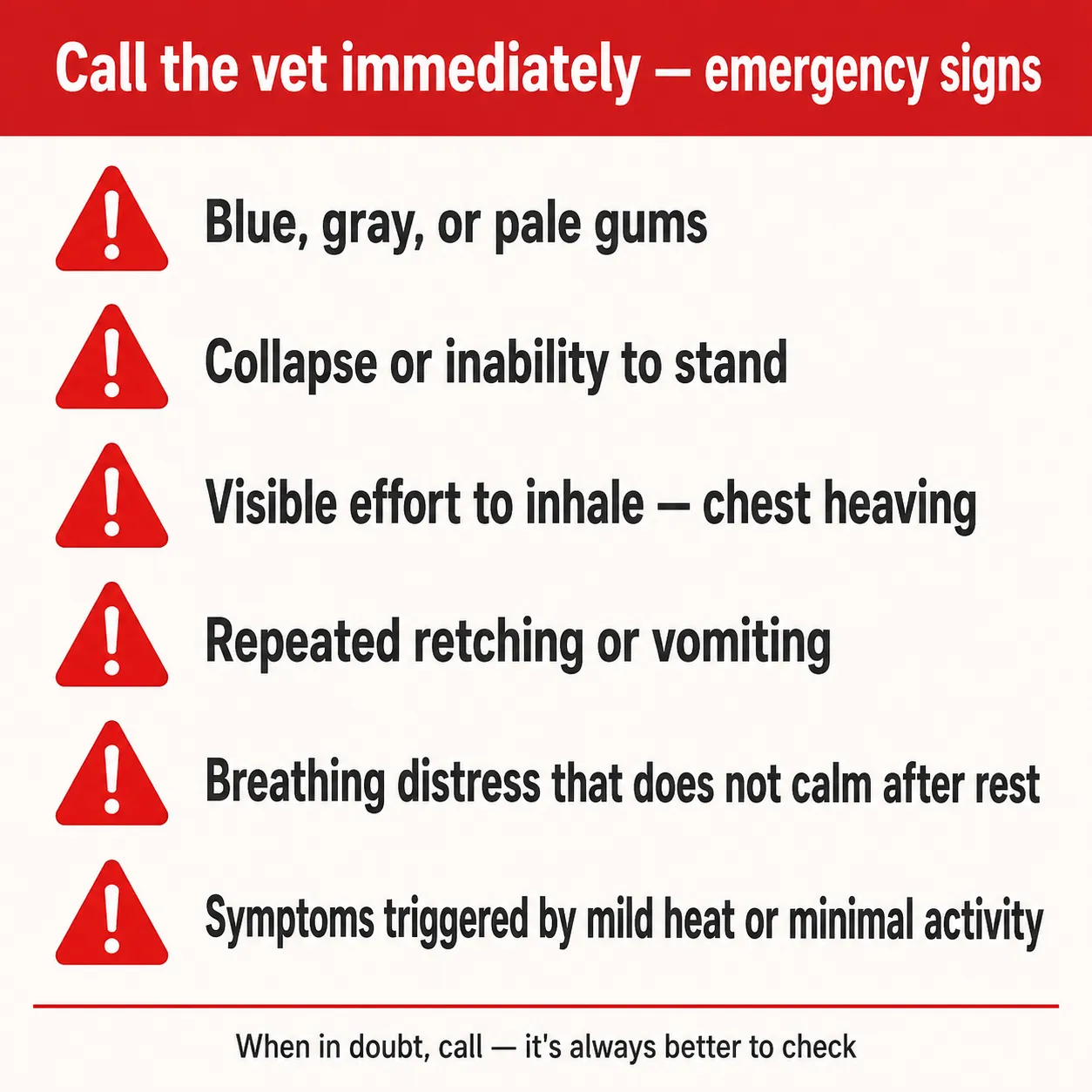
- Vet soon: noisy breathing is worsening, recovery is slower than before, or panting happens after ordinary activity.
- Vet soon: the dog no longer seems comfortable on short walks or seems to need frequent stops.
- Urgent today: gums are blue, gray, or pale.
- Urgent today: collapse, severe effort to inhale, or repeated retching/vomiting.
- Urgent today: symptoms worsened in heat or after exercise and do not settle quickly.
- Act even if the dog looks normal between episodes, because BOAS can be intermittent before it becomes obvious.
This is where the “just a noisy breed” mindset causes trouble. French Bulldogs are prone to brachycephalic airway problems, but changing symptoms are the clue that the issue has moved beyond normal breed sound. If your gut says something is off, that instinct is worth following.
How do I reduce breathing strain at home without making things worse?
The safest home changes are the ones that lower airway load without creating new problems. A harness instead of a neck collar, a lean body condition, and short calm outings can all reduce strain on a French Bulldog that’s already working harder to breathe.
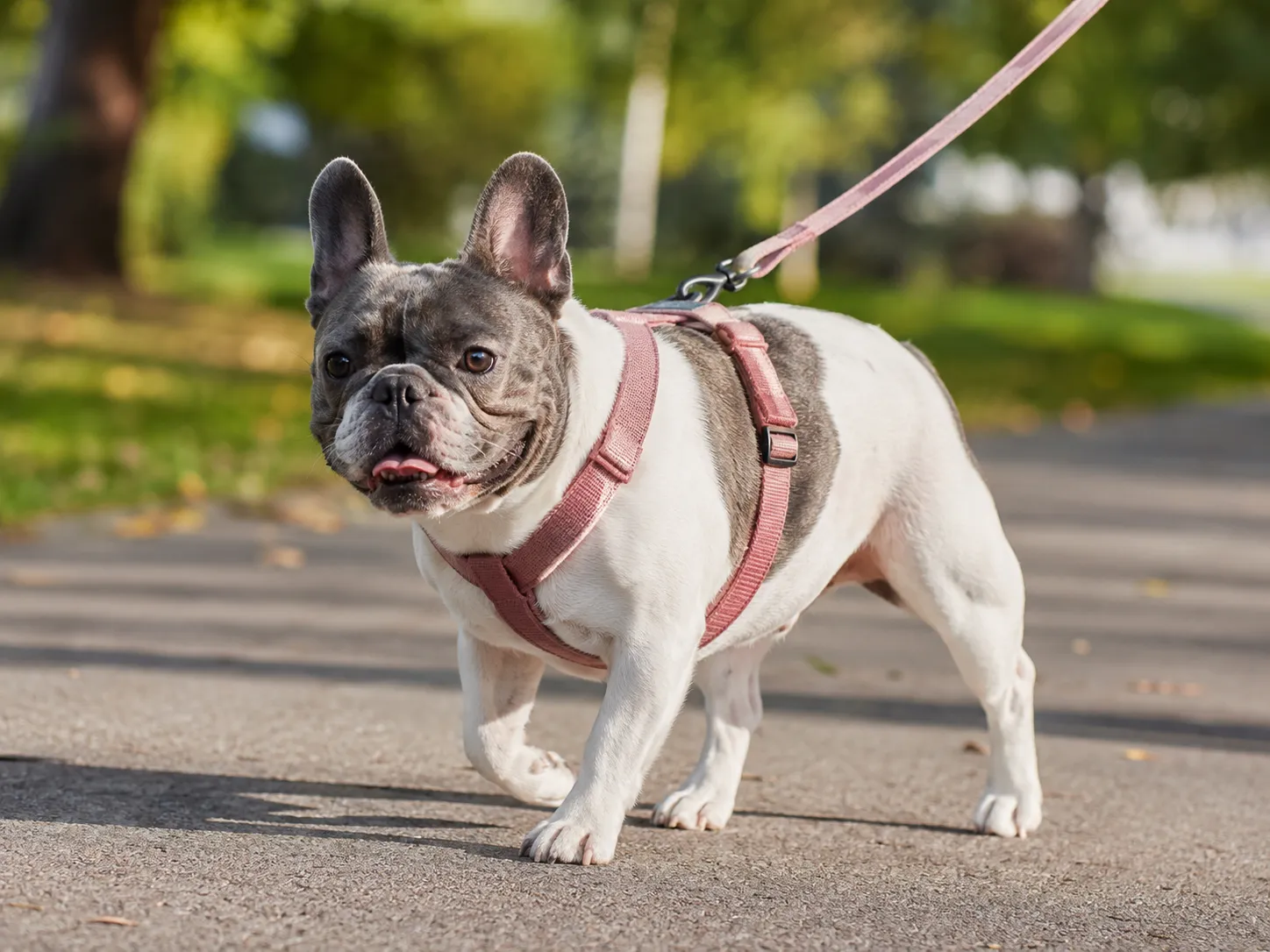
- Use a harness instead of a collar to avoid pressure on the neck.
- Keep your dog lean; extra weight narrows the margin for safe breathing.
- Skip hot, humid, or highly stimulating walks.
- Choose short, calm outings with rest breaks instead of pushing through noisy panting.
- Watch for early signs of fatigue and stop before the dog escalates into distress.
The trade-off is simple: pushing for more exercise can expose a breathing problem faster than the airway can handle, but avoiding all movement isn’t the goal either. What you want is controlled activity that doesn’t leave the dog gasping, panicked, or slow to recover.
If you’re unsure whether your French Bulldog’s breathing is normal, start with the pattern, not the panic. Noise alone can be part of the breed; effort, poor recovery, and trigger sensitivity are what move the concern into BOAS territory and justify a veterinary conversation.
Questions Frenchie owners ask
Do French Bulldogs always have breathing problems?
No. Many French Bulldogs are noisy without being in distress, but the breed is at higher risk for BOAS and other airway issues. The key is whether breathing is comfortable or visibly effortful.
Is snoring normal for a French Bulldog?
Yes, mild snoring can be normal in French Bulldogs because of their short airway anatomy. It becomes a concern if the snoring is new, much louder than usual, or happens with labored breathing.
Can French Bulldog breathing problems get worse with age?
Yes. As French Bulldogs age, airway stress can become more noticeable, especially if weight gain, heat intolerance, or inflammation are added. A dog that seemed “just noisy” as a puppy can become more restricted later.
Does surgery cure BOAS in French Bulldogs?
No, surgery can improve airflow and reduce symptoms, but it does not make the airway completely normal. Many dogs still need lifelong management of triggers like heat, weight, and overexcitement.
When is French Bulldog breathing an emergency?
It’s an emergency if your dog is using obvious effort to breathe, has blue or pale gums, collapses, can’t settle after rest, or seems unable to get enough air. That needs urgent veterinary care right away.
References
Sources consulted for this article:
- French Bulldog Breathing Problems: Understanding BOAS & the OFA Grading Scheme, Sage Compassion for Animals
- Why Do French Bulldogs Snort and Breathe Heavily?
- French Bulldog - Brachycephalic Airway Obstruction Syndrome ...
- 5 Common Frenchie Health Issues & How to Treat and Prevent Them | Welleby Veterinary Hospital