
Dog Vomiting Yellow Bile in the Morning: What It Means and When to Worry
Yellow vomit in the morning usually means your dog has brought up bile, often because the stomach was empty overnight. If it happens once and your dog eats, drinks, and acts normal afterward, the cause may be a short empty-stomach episode or bilious vomiting syndrome (BVS). If it keeps happening, or comes with lethargy, diarrhea, pain, or blood, treat it as a vet problem, not just a messy breakfast.
What yellow vomit usually means
- A single episode of yellow vomit in the morning can happen when a dog’s stomach has been empty overnight.
- Repeated morning vomiting, or vomiting with lethargy, pain, diarrhea, or blood, is more concerning.
- Yellow vomit is a clue, not a diagnosis. BVS is one possibility, but not the only one.
- A small bedtime snack may help some dogs, but don’t stack multiple home fixes at once.
- If your dog seems unwell, won’t keep water down, or keeps vomiting for more than a day, call a vet.
What does dog vomiting yellow bile in the morning usually mean?
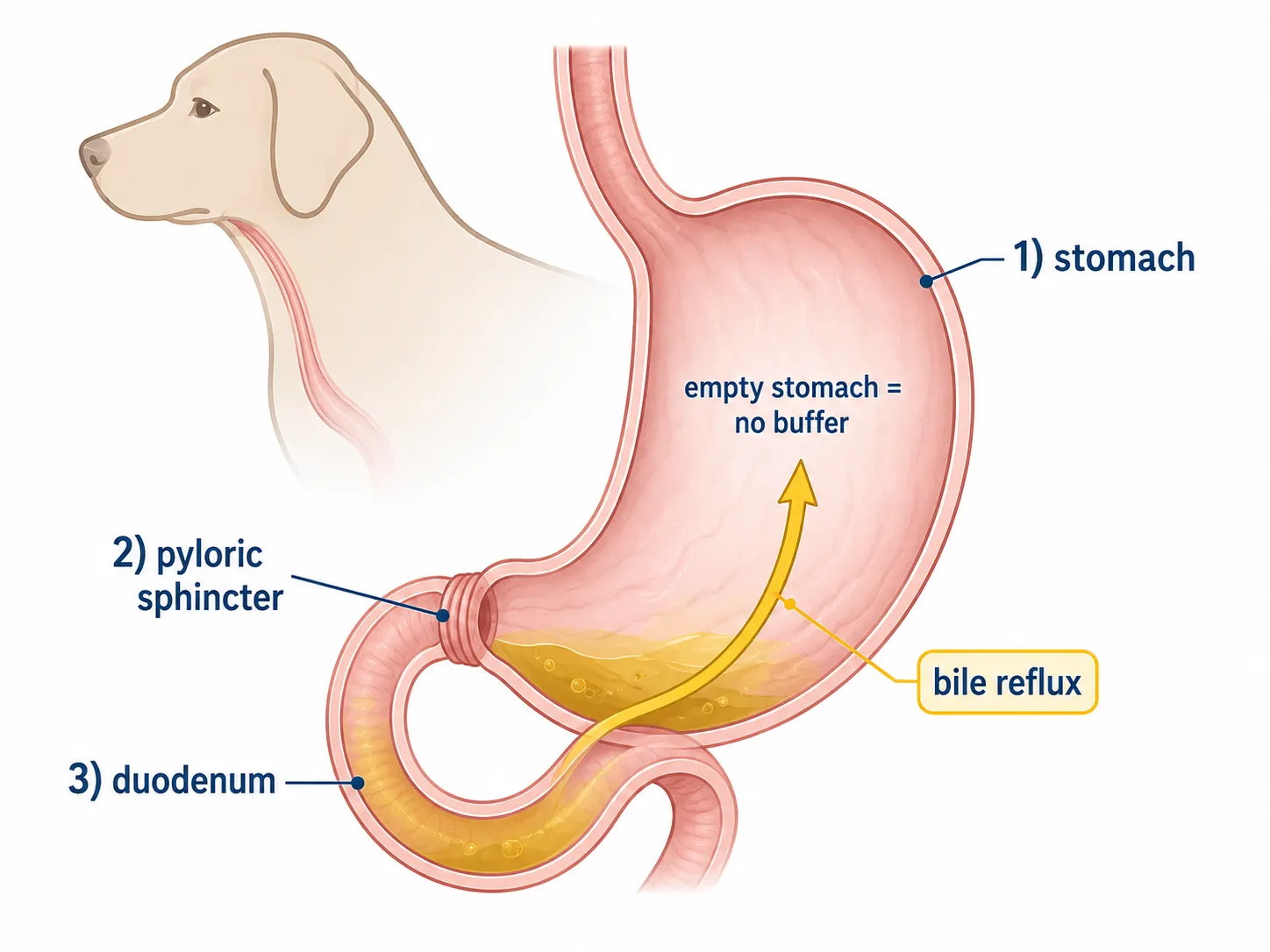
Dog vomiting yellow bile in the morning usually means bile, or bile-stained foam, has come back up from the upper digestive tract after several hours without food. Bile normally helps with digestion, but when a dog’s stomach is empty, that yellow fluid can irritate the stomach lining and trigger nausea or vomiting. PetMD and Elwood Vet both point to this overnight empty-stomach pattern as one of the most common explanations.
The timing matters here. Overnight fasting gives bile time to pool and, in some dogs, reflux into the stomach through the pyloric sphincter from the duodenum. That can set off early-morning vomiting before breakfast, especially in dogs that otherwise seem bright, hungry, and ready to eat once the episode passes.
That pattern is often called bilious vomiting syndrome, or BVS. It can be frustrating because the dog may look completely normal five minutes later. Still, repeated morning vomiting should not be written off as harmless just because the dog perks up afterward.
Is dog vomiting yellow bile in the morning always bilious vomiting syndrome?
| Pattern | Timing | How often it tends to happen | Appetite after vomiting | Stool changes | Red flags |
|---|---|---|---|---|---|
| Bilious vomiting syndrome (BVS) | Usually early morning, often after an overnight fast | Recurrent, often on and off over days or weeks | Usually normal; many dogs eat breakfast eagerly | Usually none | If episodes become frequent or the dog stops acting normal, it needs a vet call |
| Empty-stomach vomiting | After long gaps without food, often before first meal | May happen occasionally or repeatedly if meals are too far apart | Often normal once the stomach settles | Usually none | If it keeps happening despite feeding changes, do not assume it is benign |
| Acid reflux | Often overnight or on waking, sometimes with lip licking or swallowing | Can be repeated, especially if the dog has a sensitive stomach | May be finicky or uncomfortable around food | Usually none | Pain, gagging, or refusal to eat makes it more concerning |
| Dietary indiscretion | Any time after trash, table scraps, grass, or a sudden diet change | Can be a one-off or a cluster over a day | Variable; some dogs still want food | May include soft stool or diarrhea | Vomiting plus diarrhea, belly pain, or lethargy needs veterinary attention |
| More serious gastrointestinal disease | Any time of day, not just mornings | Often repeated and may worsen | Often reduced appetite or refusal to eat | Diarrhea, black stool, or mucus may appear | Blood, dehydration, abdominal pain, or repeated vomiting are red flags |
Morning yellow vomit is not always BVS. Cherry Creek Veterinary Hospital notes that bile can leak into the stomach and react with stomach acid, which is why some dogs vomit yellow foam instead of clear liquid. Warrick Vet also points out that yellow bile can show up with simple empty-stomach nausea, but it can also signal gastrointestinal disease.
The practical difference is the whole pattern, not the color alone. A dog who vomits once at 6 a.m., eats breakfast, and stays lively is in a different category from a dog who vomits yellow fluid three mornings in a row, skips food, and seems tucked up or quiet. That second pattern deserves a vet conversation even if the vomit still looks like bile.
What signs mean the vomiting could be more serious?
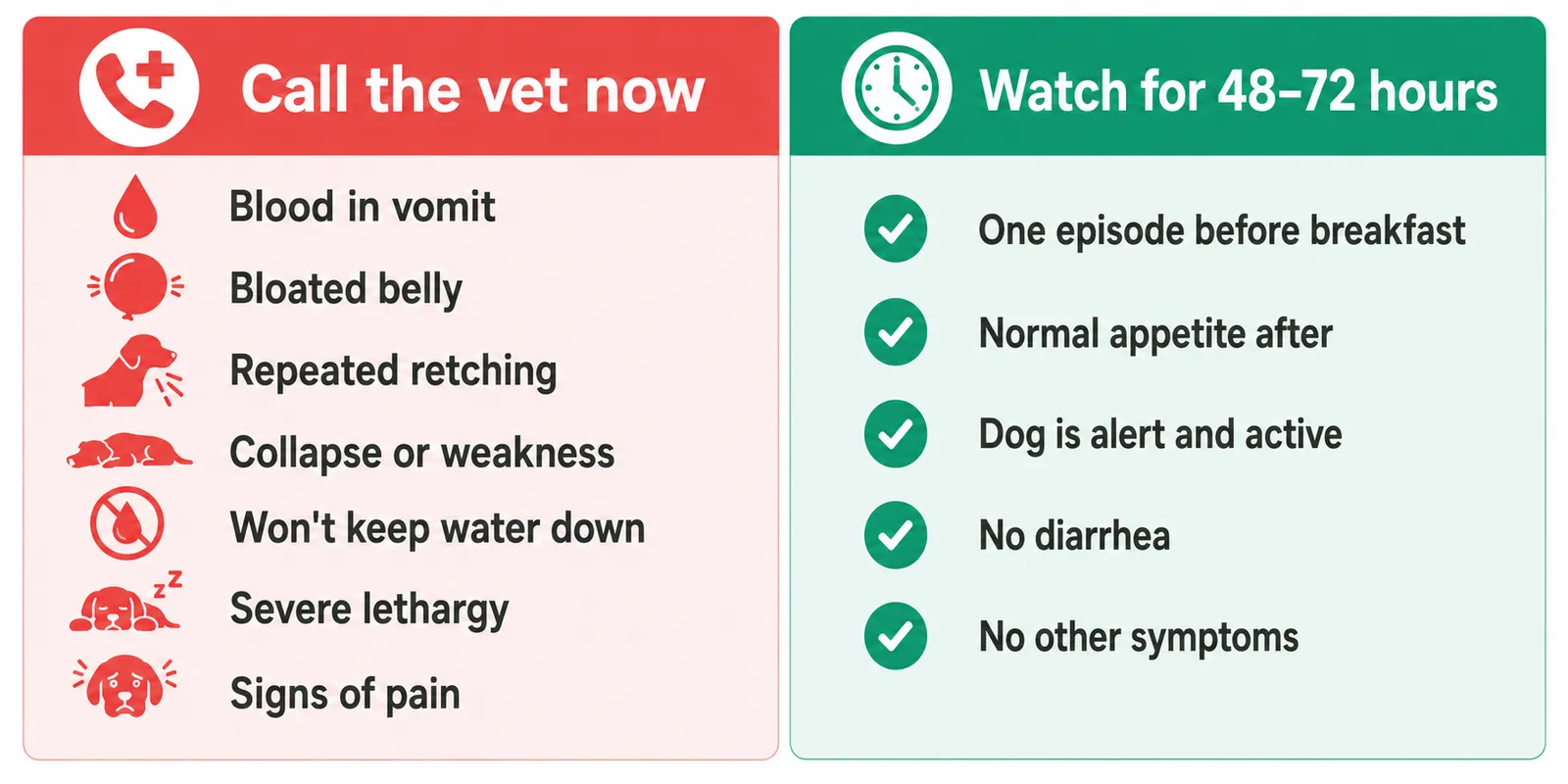
- Repeated vomiting in one day, or yellow vomiting on several mornings in a row.
- Lethargy, weakness, or a dog that seems quiet, withdrawn, or “off.”
- Diarrhea, especially if it starts at the same time as vomiting.
- Abdominal pain, a tense belly, hunching, or refusing to be touched around the abdomen.
- Refusal to eat or drink, or keeping water down only briefly.
- Signs of dehydration such as dry gums, tacky saliva, or sunken eyes.
- Blood in the vomit, coffee-ground material, or black stool.
- A swollen or bloated belly, repeated retching, or a dog trying to vomit with little coming up.
Puppies, senior dogs, and dogs with chronic disease need a lower threshold for help because they dehydrate faster and can go downhill more quickly. A single episode in a robust adult dog is one thing; the same episode in a toy breed puppy or a dog with diabetes, kidney disease, or a history of pancreatitis is more serious.
Great South Veterinary Specialists stresses that yellow vomit can range from a minor upset to something more concerning. That’s the part owners sometimes miss: the color is a clue, not a diagnosis.
What can you do at home before the vet visit?

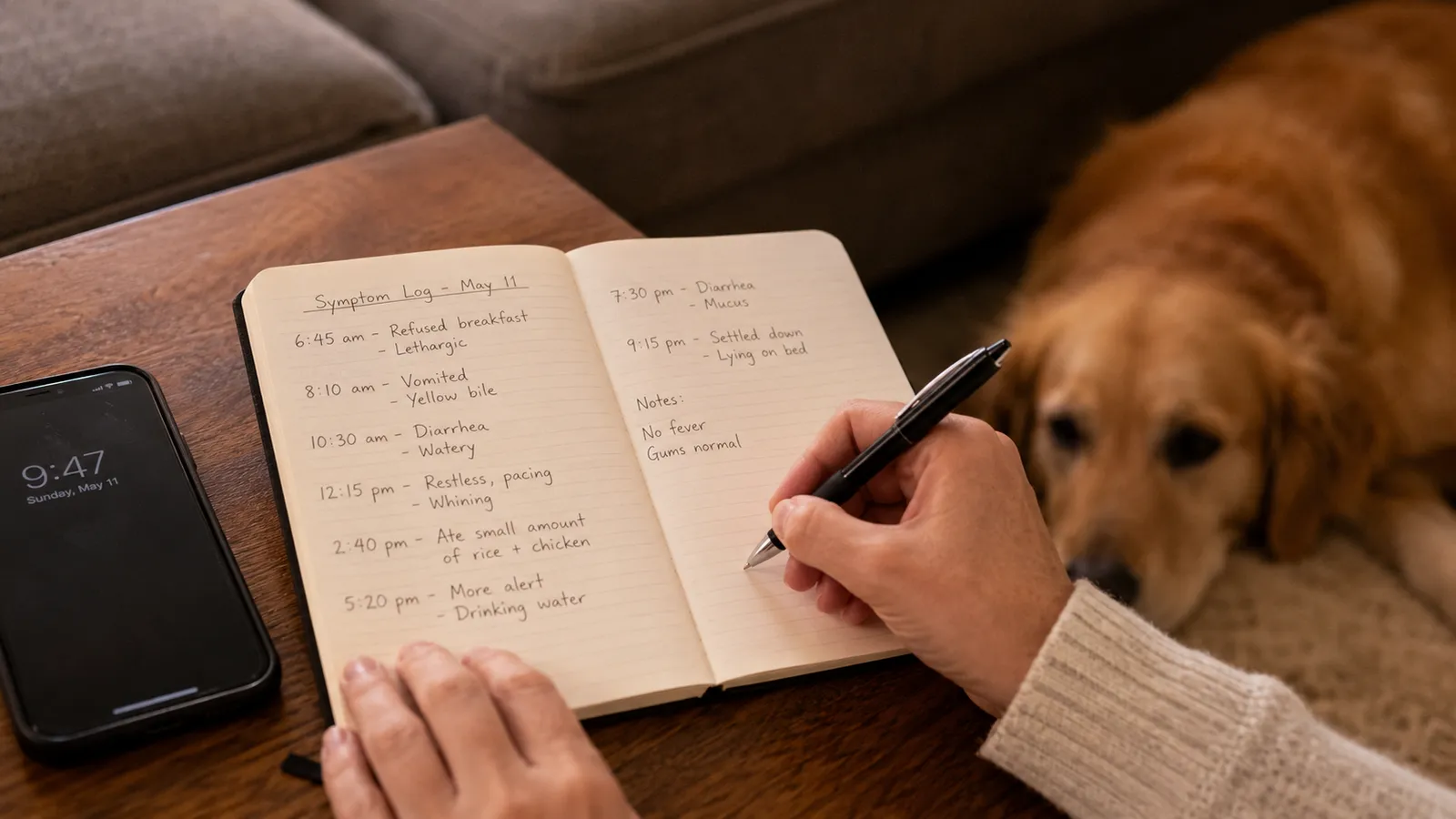
- Track the pattern for 48 to 72 hours. Write down the time of vomiting, what your dog ate the day before, treats, medications, stool quality, and whether there was grass, trash, or a diet change.
- If your vet has not told you otherwise, try a smaller overnight gap between meals. For some dogs, a small bedtime snack can reduce morning bile vomiting by keeping the stomach from staying empty too long.
- Keep water available and watch whether your dog drinks normally. Small, frequent sips are more useful than forcing a large drink after vomiting.
- Do not give human antacids, Pepto-Bismol, ibuprofen, or random fasting “to rest the stomach” unless your vet has specifically told you to.
- Skip rich food, table scraps, and new treats while you are watching the pattern. The goal is to see the real trend, not blur it with extra variables.
The mistake I see owners make most often is trying three fixes at once. They add a snack, switch food, and stop feeding for a while, and then the pattern becomes impossible to interpret. If you’re trying to understand whether dog vomiting yellow bile in the morning is a one-off or a real pattern, simplicity helps.
When should I take my dog to the vet for yellow bile vomiting?
Take your dog to urgent care or call your vet right away if the vomiting is repeated, there is blood, the belly looks bloated, your dog seems painful, or your dog cannot keep water down. Those signs move this out of the “wait and watch” category. If the vomiting is happening every morning, even if your dog seems normal between episodes, book a veterinary appointment rather than hoping it disappears on its own.
A recurrent morning pattern can still be BVS, but it can also overlap with acid reflux, food intolerance, parasites, pancreatitis, or other gastrointestinal disease. The more often it happens, the less comfortable you should feel dismissing it. That is especially true if the dog’s appetite, energy, stool, or weight has changed at the same time.
In a routine visit, the vet will usually base next steps on the story you give: how often it happens, when meals are fed, whether there was access to trash or toxins, whether medications were started recently, and whether your dog has lost weight or changed stool. The answer is rarely “it’s yellow, so it must be bile and nothing else.”
How do vets think about morning bile vomiting?

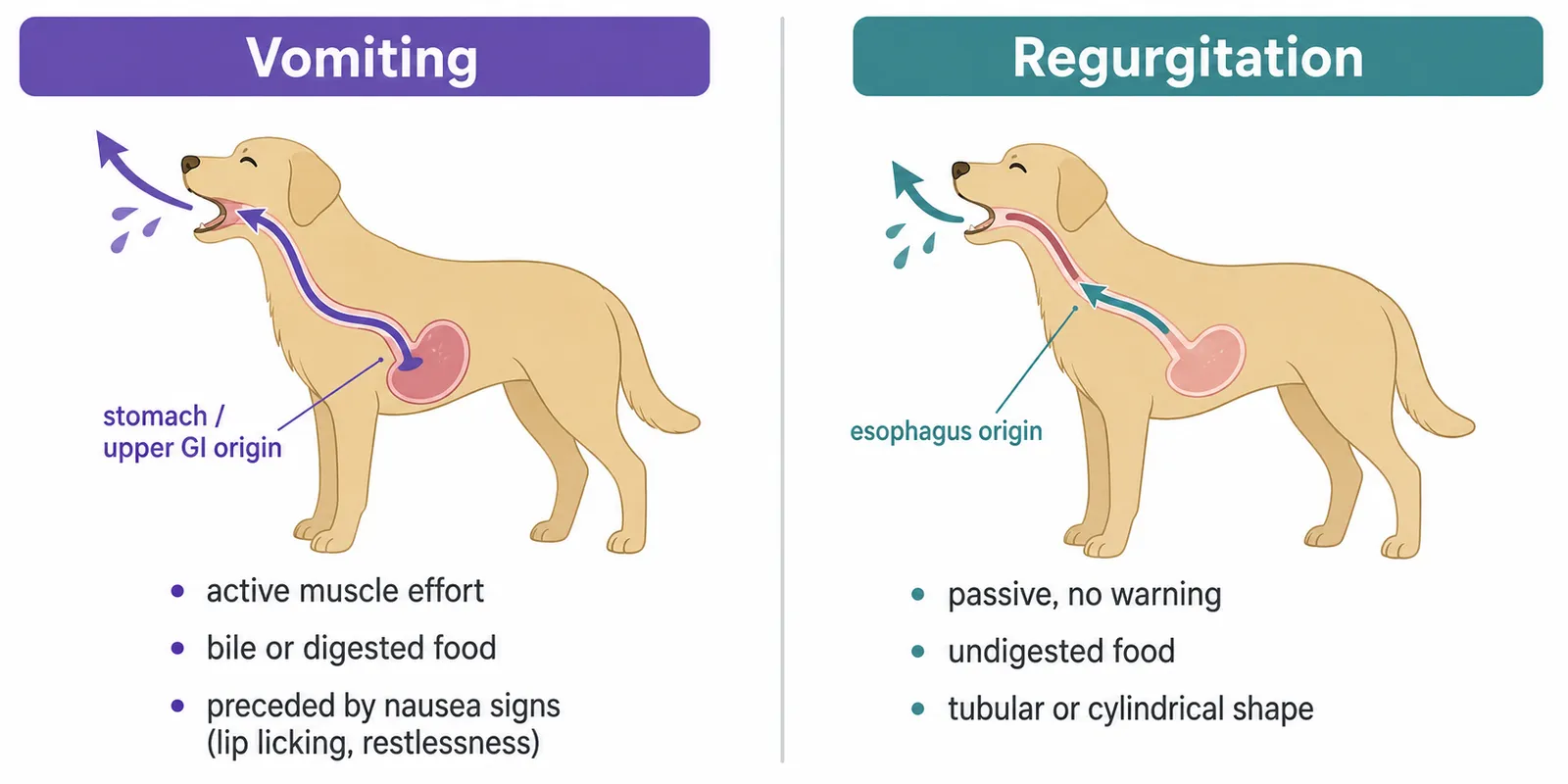
Vets usually start with the pattern, because the color of the vomit matters less than the context around it. They will ask about feeding schedule, diet changes, scavenging, parasite prevention, medications, weight loss, diarrhea, and whether the vomiting is truly vomiting or more like regurgitation. That distinction matters because regurgitation points higher up the digestive tract than true vomiting.
From there, the workup may be simple or more involved. A physical exam, fecal testing, bloodwork, and sometimes imaging are common next steps when the pattern, exam, or other symptoms justify them. If the dog is bright, eating, and only having an occasional early-morning episode, the vet may begin with a feeding adjustment before moving to bigger tests.
Treatment depends on what the pattern suggests. A dog with likely BVS may need a meal-timing change, while a dog with abdominal pain, diarrhea, or repeated vomiting may need a very different plan. That is why the yellow color alone should never be treated as the whole story.
How do I tell what kind of morning vomiting this is?
The fastest way to judge dog vomiting yellow bile in the morning is to compare timing, frequency, appetite, energy, and stool together. A single yellow vomit after a long fast often points toward an empty-stomach pattern. Repeated episodes, poorer appetite, or any sign of pain shift the picture toward veterinary care.
| What you notice | Sounds more like | Why it fits | What to do |
|---|---|---|---|
| One yellow vomit before breakfast, then normal behavior and a good appetite | Likely empty-stomach vomiting or BVS | The stomach was empty overnight, and the dog quickly returns to normal | Monitor, note the pattern, and consider a vet visit if it repeats |
| Yellow vomit on several mornings in a week, but dog still eats and acts normal | Possible BVS, reflux, or feeding schedule issue | The timing is consistent, but the repetition means it deserves attention | Call your vet if it keeps happening or if feeding changes do not help |
| Yellow vomit plus lip licking, swallowing, or signs of discomfort | Possible acid reflux or upper GI irritation | Those extra signs point beyond a simple empty-stomach episode | Book a veterinary appointment soon |
| Yellow vomit plus diarrhea, lethargy, or refusing food | Potential gastrointestinal disease | The vomiting is now part of a broader illness pattern | Contact your vet the same day |
| Yellow vomit with a bloated belly, repeated retching, or blood | Urgent problem | These are red-flag signs that can indicate obstruction or severe GI disease | Seek urgent veterinary care |
The point of this framework is simple: the same yellow vomit can mean different things depending on what happens around it. If your dog is bright and hungry afterward, the problem may be relatively manageable. If your dog is quieter than usual, skips meals, or has any red-flag sign, that is a different level of concern.
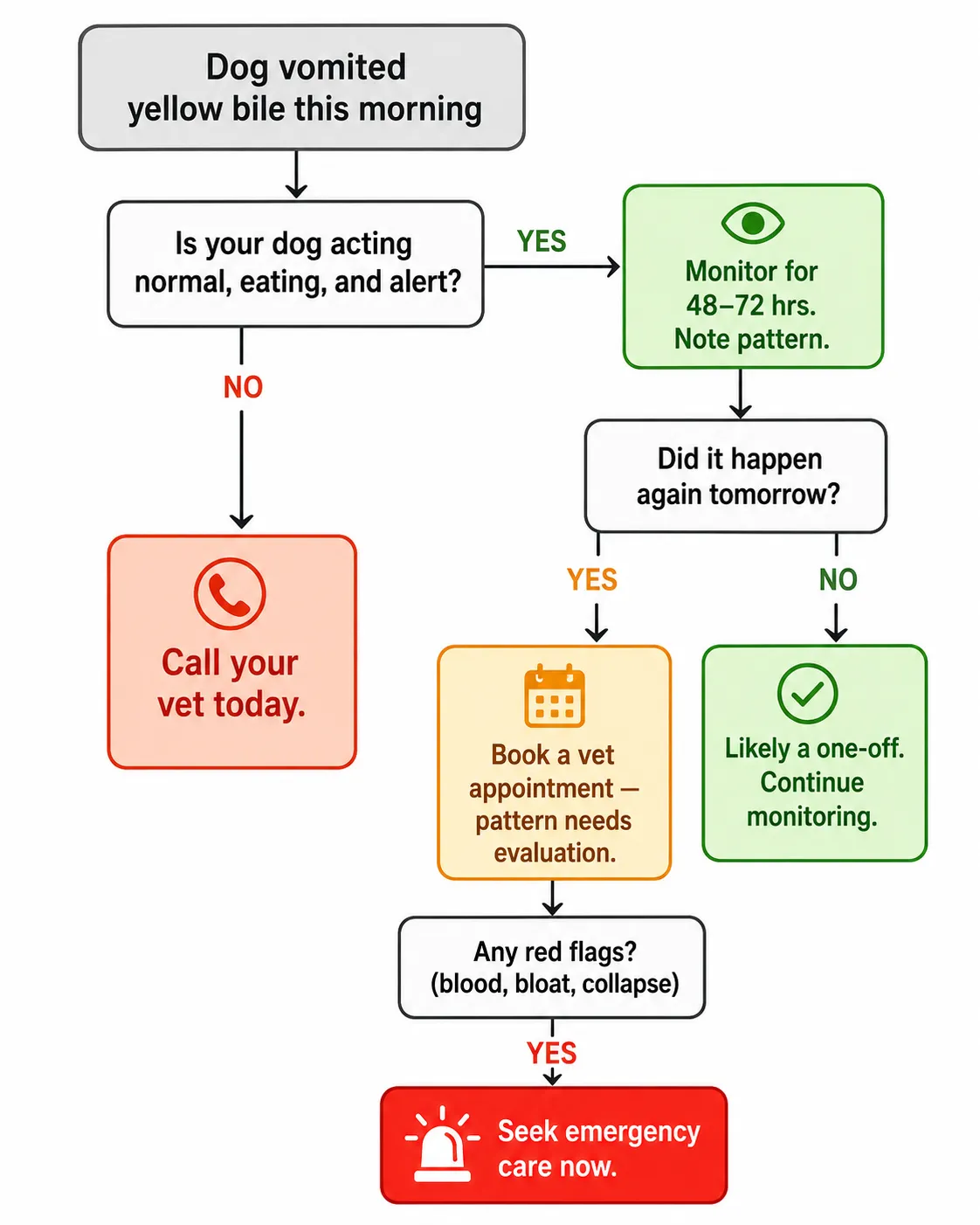
A good rule of thumb is to treat the pattern, not just the puddle. Morning yellow vomit that appears once is information. Morning yellow vomit that repeats is a conversation with your vet.
So, what should you do now?
If your dog vomits yellow bile in the morning, the most likely explanation is that the stomach stayed empty long enough for bile to irritate it. That can happen with a simple empty-stomach episode or with bilious vomiting syndrome, which is often a recurring early-morning pattern. It can also happen with acid reflux or more serious gastrointestinal disease, so the rest of the symptoms matter just as much as the color.
The safest response is calm, not casual. Watch the pattern, adjust meal timing only if it makes sense for your dog, and involve your vet early if the vomiting repeats or anything else looks off. Dogs give us clues one at a time, and yellow vomit is one of the clearest ones.
Next steps
- If it was a one-off and your dog is normal now, write down the time and watch for another episode over the next 48 to 72 hours.
- If it happens again tomorrow morning, call your vet and describe the pattern, not just the color.
- If your dog has diarrhea, pain, lethargy, a swollen belly, or blood, seek urgent care today.
- If your dog is a puppy, senior, or has another health condition, lower your threshold and call sooner rather than later.
Common questions
Why is my dog vomiting yellow bile in the morning but acting normal afterward?
That pattern often points to an empty-stomach episode or bilious vomiting syndrome, especially if your dog eats and acts normal afterward. It can still become a concern if it starts happening repeatedly.
Is yellow vomit always bile?
No. Yellow vomit is often bile-stained fluid or foam, but color alone cannot confirm the cause. The timing, frequency, and your dog’s overall condition matter more.
Can I feed my dog a late-night snack to stop morning bile vomiting?
Yes, sometimes a small bedtime snack helps by preventing the stomach from staying empty all night. If the vomiting continues, your vet should help you figure out whether something else is going on.
When is morning yellow vomiting an emergency?
It’s an emergency if your dog is weak, bloated, in pain, collapsing, vomiting repeatedly, or bringing up blood. Repeated unproductive retching also needs urgent care.
Should I fast my dog if she vomits yellow in the morning?
Not unless your vet tells you to. In many dogs, a long fast can make the problem worse, and prolonged vomiting means your dog may need an exam rather than more waiting.
Sources consulted
Sources consulted for this article:
- Bilious vomiting syndrome, Elwood vet
- Dog Throwing Up Yellow: What Does It Mean?
- Why is My Dog Throwing Up Yellow Foam? | Cherry Creek Veterinary Hospital
- Why Is My Dog Throwing Up Yellow? Is It an Emergency? | PetMD
- Dog Throwing Up Yellow: Urgent Symptoms & What to Do Now