

Dog Skin Allergies Symptoms and Treatment: Signs, Look-Alikes, and the Right Next Step
Itchy skin, red patches, hair loss, sores, and hot spots are the classic signs of dog skin allergies, and treatment usually depends on what’s driving the itch in the first place. A dog with a flea allergy, environmental allergies, or a food allergy can look very similar on the outside, but the next step changes a lot once you look at where the itching is, whether the skin is broken, and how quickly it’s getting worse.
Start here
- Persistent itching, licking, redness, hair loss, and hot spots are the most common dog skin allergy signs.
- Location matters: paws, belly, armpits, ears, and face can help separate allergies from look-alikes.
- Treatment depends on the trigger and may include flea control, anti-itch medication, infection treatment, or a strict food trial.
- Home care can reduce damage, but raw skin, odor, swelling, or rapid worsening means it’s time for a vet.
What are the most common dog skin allergies symptoms and treatment options?
The most common signs are persistent scratching, licking, chewing, redness, flaking, hair loss, sores, and hot spots. That pattern matters because dog skin allergies symptoms and treatment usually come down to managing a trigger and calming inflammation, not finding a one-time cure. Bluegrass Veterinary Hospital notes that these cases can worsen quickly when left alone, which is exactly why early recognition helps.
The main trigger groups are fleas, environmental allergies, and food allergies. Flea allergy is a reaction to flea bites, environmental allergies are often linked to pollen, grass, dust, or mold, and food allergy is less common than many people think, but absolutely real. The frustrating part is that a dog can also develop a secondary bacterial or yeast infection on top of the allergy, and then the skin looks louder, smells worse, and feels more painful than the trigger alone would explain.
Treatment depends on the pattern. Some dogs need strict flea control, some need anti-itch medication or allergy management, and some need infection treatment first because the skin barrier has already broken down. The practical goal is straightforward: figure out whether you’re dealing with a trigger, damage, or both.
How do I tell if it’s allergies or something else?
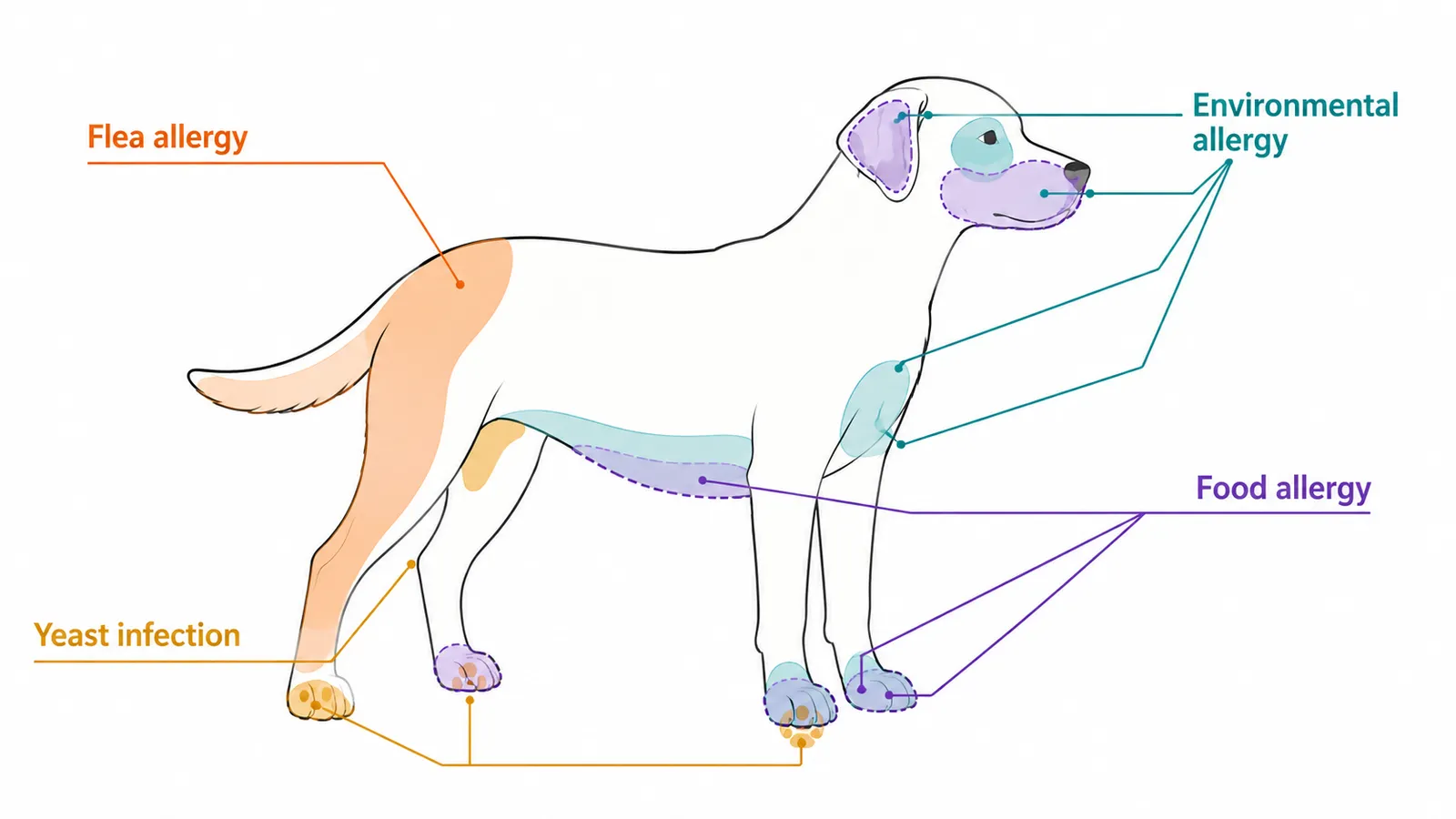
| Likely cause | Where it often shows up | Common pattern clues | What usually points you there |
|---|---|---|---|
| Environmental allergies | Paws, belly, armpits, face, ears | Seasonal flare-ups, repeat episodes, licking after grass or pollen exposure | Itch that comes and goes with outdoor exposure |
| Food allergy | Face, ears, paws, belly; sometimes widespread | Chronic itch with no clear season, repeated ear trouble, sometimes soft stool or vomiting | Symptoms that keep returning despite good flea control |
| Fleas / flea allergy | Base of tail, rump, back legs, sometimes belly | Sudden itch, biting at the rear end, flea dirt may be hard to spot | A dog can react strongly even if you never see many fleas |
| Yeast infection | Paws, ears, groin, skin folds | Greasy skin, odor, dark wax, repeated licking | The smell and greasy feel are often stronger clues than the itch alone |
| Bacterial infection | Anywhere the skin is broken | Pimples, crusts, oozing, redness, pain | Sores or hot spots that worsen after scratching |
| Dry skin | Back, flanks, whole coat | Flaking without much redness or odor | Dry weather, overbathing, dull coat |
| Contact irritation | Belly, paws, chest, muzzle | Starts soon after a new shampoo, cleaner, lawn product, or groom | The timing is the biggest clue |
Location is one of the fastest ways to narrow the list. Paws, belly, armpits, ears, face, and the rump are the spots I’d watch most closely because they help separate environmental allergies from fleas, yeast infection, and contact irritation. Cedar Mill Veterinary Hospital and Countryside Veterinary Hospital both flag itchy paws, rubbing, licking, and redness as common allergy signs, but those same behaviors can show up with several look-alikes, so location is a clue, not a diagnosis.
Pattern matters just as much as location. A seasonal flare after spring walks points differently than year-round itching with greasy ears, and a sudden rash after a new grooming product points differently again. Scooting, chewing, and obsessive licking can happen with more than one problem, a dog that is also limping or favoring one leg while scratching may be dealing with pain on top of skin irritation, not allergies alone. These behaviors are symptoms to investigate, not proof of any single cause. Ears are a common flashpoint in allergic dogs, which is why recurring ear infections often show up alongside skin signs.
What symptoms mean my dog’s skin issue is more than simple itching?
- Open sores, bleeding, raw hot spots, or crusting that was not there yesterday.
- A strong odor, especially if the skin also looks greasy or damp.
- Swelling, pain, or a dog that flinches when a spot is touched.
- Hair loss spreading around a red or moist patch.
- Constant licking of one area that never seems to settle down.
- Lethargy, fever, facial swelling, or acting generally unwell.
- Rapid worsening after grooming, a new cleaner, or a new food or supplement.
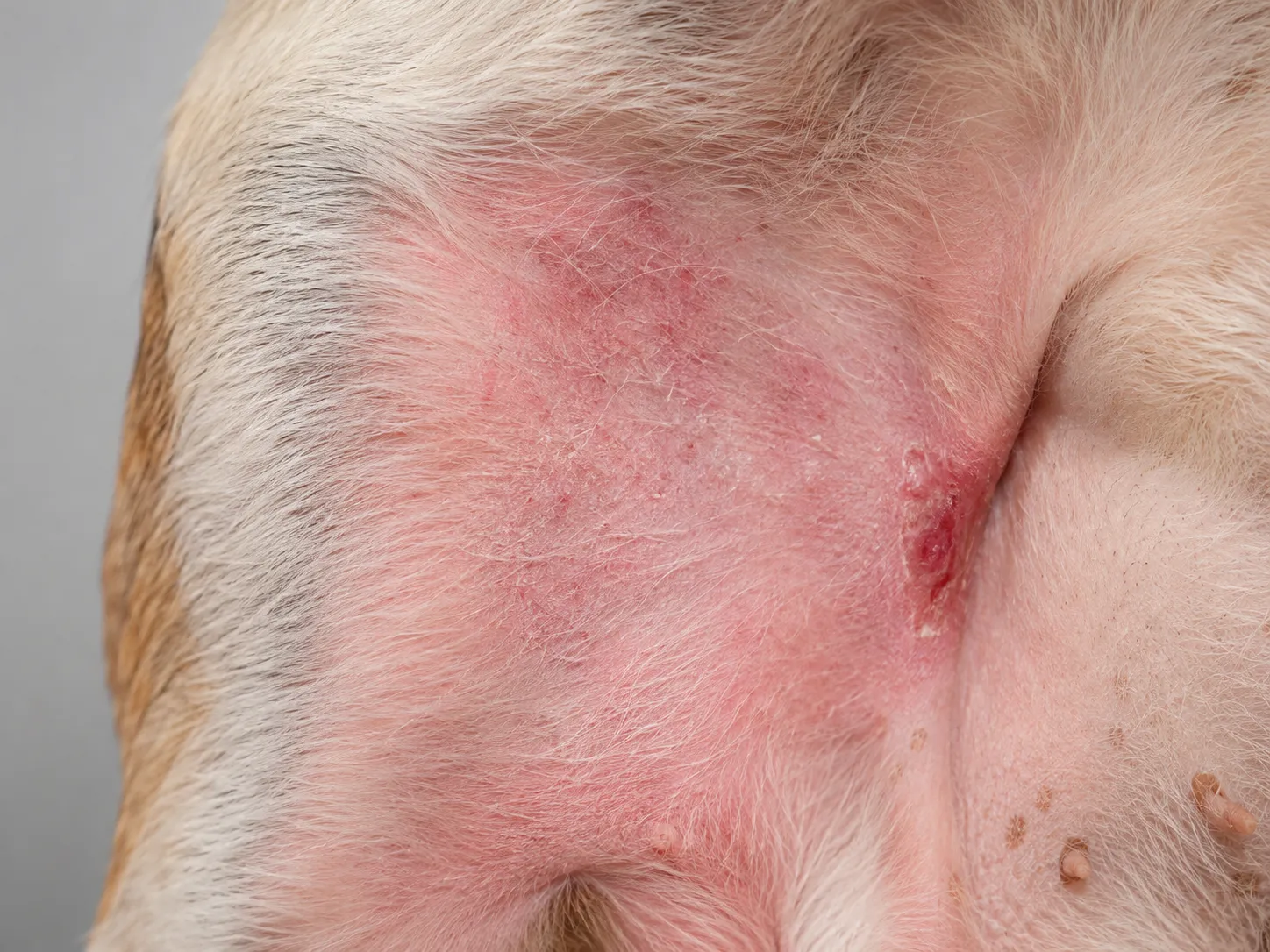
These signs matter because they suggest the skin barrier is failing, infection may already be present, or the problem is moving faster than simple itch. A hot spot can start as one irritated area and turn into a painful, wet, self-made wound in a day or two if the dog keeps licking it. That’s the point where waiting for the next convenient appointment stops being the smart plan.
What does treatment usually include for dog skin allergies?
Treatment is usually layered. Vets commonly use anti-itch medication to break the scratch cycle, parasite control if fleas are even a possibility, and antibiotics or antifungals when bacterial or yeast infection has joined the picture. Bluegrass Veterinary Hospital and Modesto Veterinary Hospital both describe allergy care this way because a dog with inflamed, infected skin usually needs more than one tool to feel better.
Topical care can help, but timing and skin condition matter. Medicated shampoos and soothing baths can reduce debris, yeast, and surface irritation, while an oatmeal bath may calm mild itch on intact skin; Pure Paws Vet specifically mentions oatmeal as a soothing option for irritated skin. If the skin is raw, oozing, or deeply infected, though, bathing without vet guidance can make the dog miserable and do very little.
Food trials sit in their own lane because they only work when they’re strict. A true elimination diet means no extras, no flavored chews, no accidental treats, and enough time for the body to settle so you can tell whether the food is part of the problem. The main mistake owners make is trying one food for a few days, seeing no miracle, and assuming food allergy is off the table. It usually takes a lot more discipline than that.
Which home care steps can help while you’re waiting for the vet?
- Stop the licking and chewing if you can. A cone or recovery collar is often the simplest way to keep a hot spot from getting worse overnight.
- Use gentle bathing only if the skin is intact. A vet-approved oatmeal bath or mild cleanse may soothe itchy skin, but skip bathing raw, open, or clearly infected areas unless your vet tells you otherwise.
- Wash bedding and vacuum. That helps reduce flea exposure, pollen, and irritants that can keep the cycle going.
- Write down what changed. New shampoo, a recent grooming visit, a different lawn, a new treat, or a missed flea dose can matter more than they seem.
- Avoid human medicines, steroid creams, essential oils, and random supplements unless your vet specifically told you to use them.
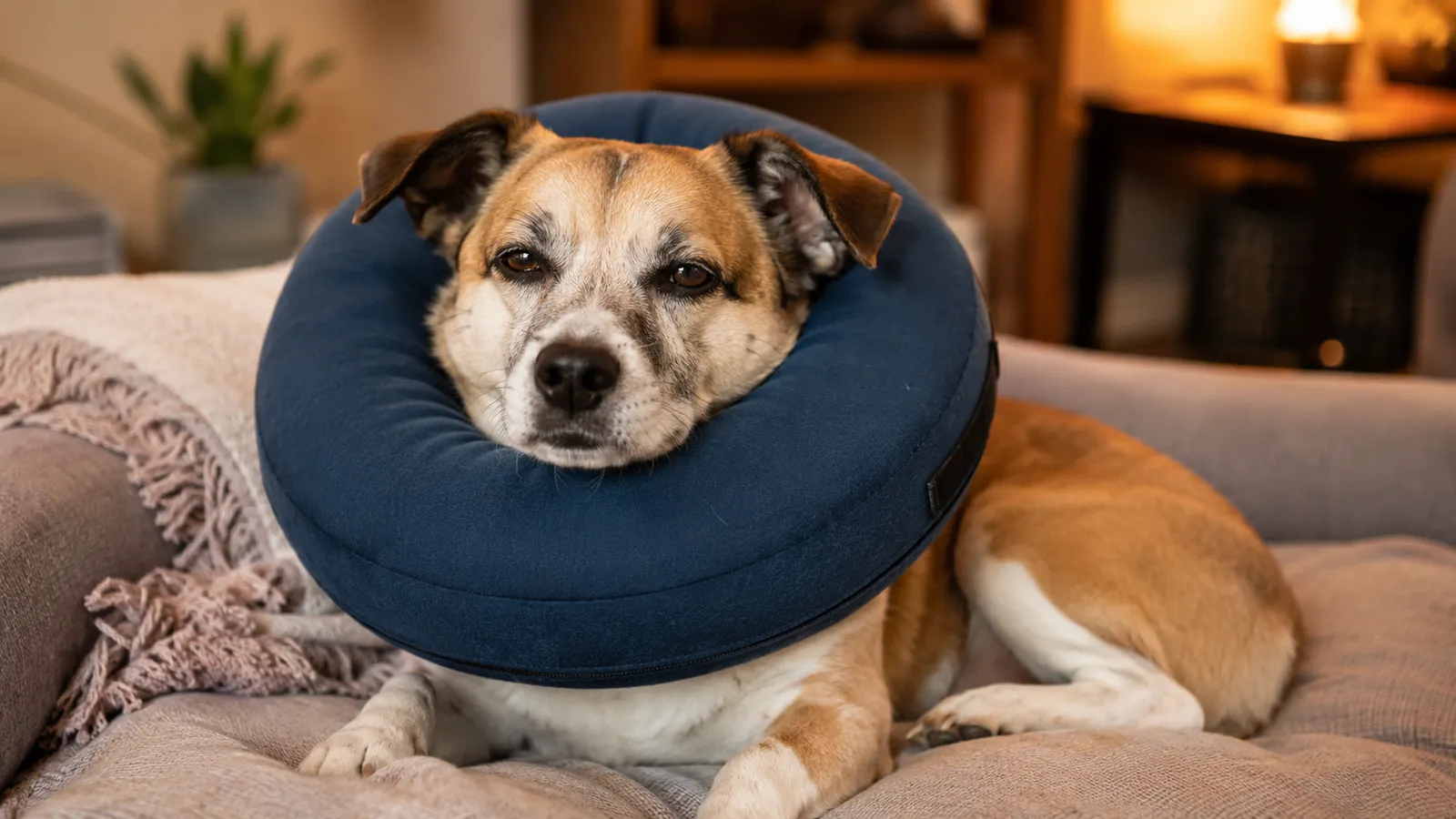
This is the part where owners often try to do too much. A quick bath can help one dog and inflame another, especially if the skin is already broken. The safer goal tonight is simple: reduce friction, reduce exposure, and collect useful information for the vet visit.
Which treatment works best for fleas, food allergies, and environmental allergies?
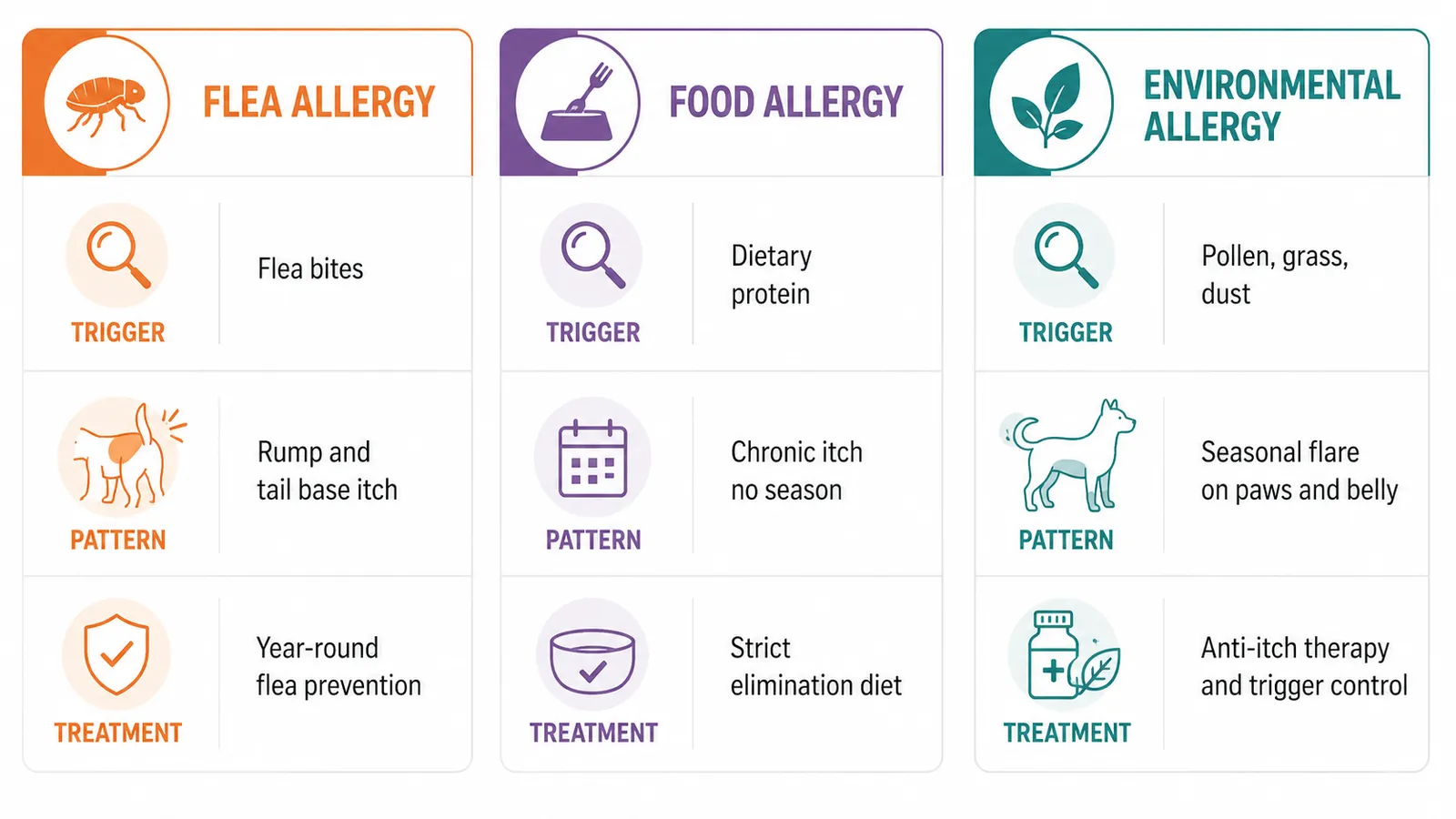
| Allergy type | Main trigger | Typical pattern | First-line management |
|---|---|---|---|
| Flea allergy | Flea bites | Itch is often intense around the rump, tail base, and back legs; even a few bites can set off a big reaction | Year-round flea prevention for every pet in the home, plus itch relief if the skin is inflamed |
| Food allergy | A protein or ingredient in the diet | Often chronic, sometimes with ear and paw involvement, and not tied to season | A strict elimination diet followed by vet-guided reintroduction |
| Environmental allergies | Pollen, grass, dust, mold, and similar triggers | Often seasonal or flare-based, commonly paws, belly, face, and ears | Trigger control when possible, anti-itch therapy, and longer-term allergy management |
Flea control is non-negotiable because you may never see the flea that started the problem. A dog with flea allergy can react to a surprisingly small amount of flea saliva, which is why a “but I only saw one flea” story doesn’t rule it out. If there are other pets in the house, the whole household usually has to be considered.
Food allergy workups are slower and more exacting than people expect. The point isn’t to guess the culprit from a symptom list; it’s to remove variables and see what happens. Environmental allergies are even more likely to need ongoing management, because you can’t realistically keep a dog away from every blade of grass, dust particle, or pollen spike.
How do I decide what to do next, and when should I see a vet?
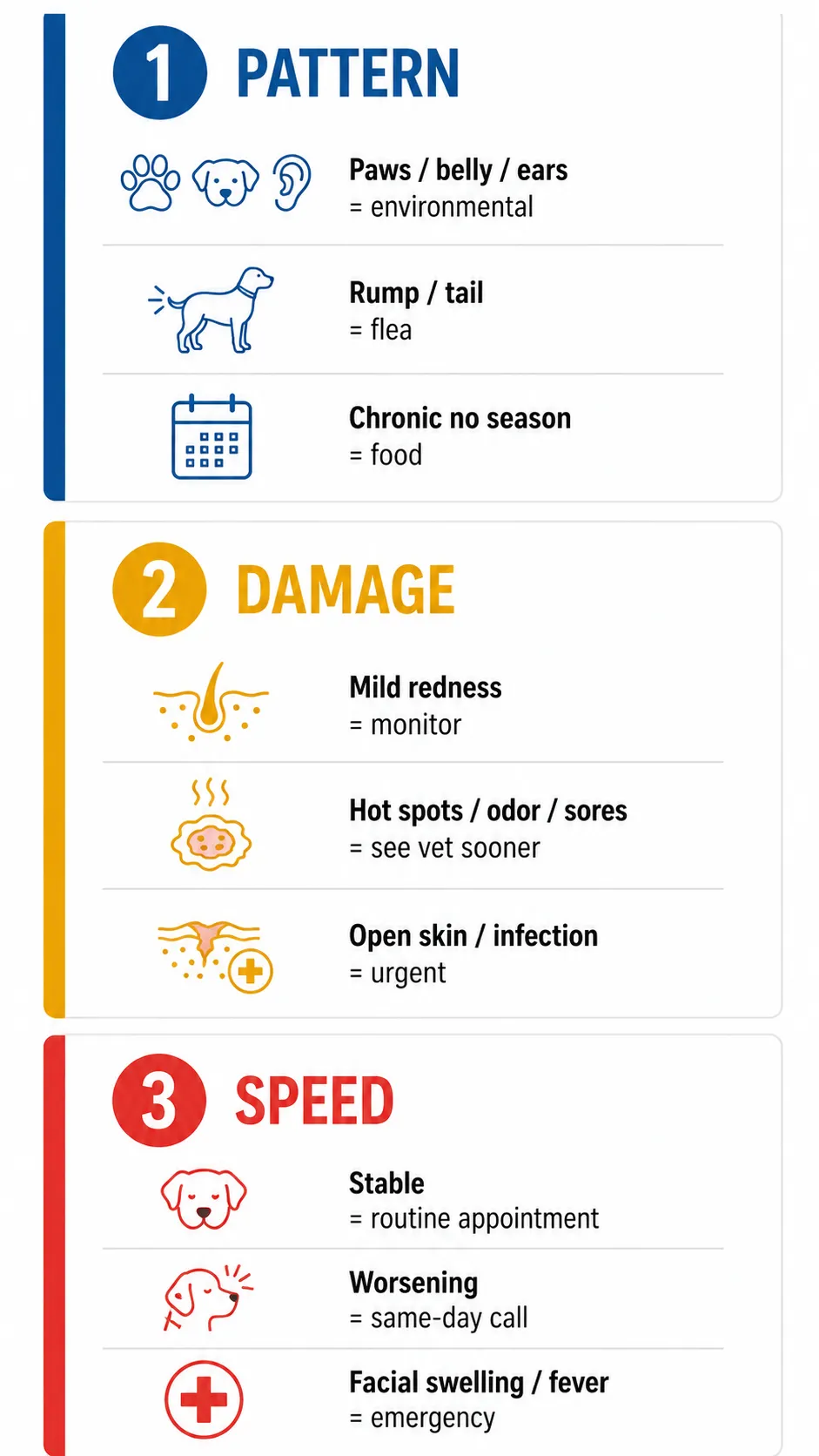
Use a simple Skin Itch Triage: Pattern, Damage, Speed. Pattern tells you whether the itch is mostly on paws, ears, belly, the rear end, or everywhere; Damage tells you whether the skin is just pink or already sore, smelly, crusted, or open; Speed tells you whether this is stable, slowly worsening, or changing fast. That three-part check usually points you toward home monitoring, a routine vet visit, or same-day care.
Pattern
If the itching is mostly on the paws, belly, armpits, face, or ears, environmental allergies move higher on the list. If the rump and tail base are the worst areas, flea allergy deserves more attention. If the itch is widespread and keeps coming back without a seasonal pattern, food allergy or an ongoing environmental trigger becomes more likely.
Damage
If you only see mild redness and a little flaking, you may be dealing with a routine veterinary problem rather than an emergency. If there are hot spots, odor, sores, swelling, or hair loss around broken skin, the case is more likely to include infection and should be seen sooner. That’s the hidden complication so many owners miss: the allergy may be real, but the infection is what makes the dog look and feel much worse.
Speed
Stable symptoms without open skin can often wait for a routine appointment. Worsening itch, fast-spreading redness, or repeated self-trauma needs a quicker plan. Same-day care makes sense if there is facial swelling, fever, lethargy, a very painful hot spot, or nonstop licking that is creating a wound in real time.
What you bring to the appointment matters more than most people expect. Bring photos from the first day you noticed the problem, a short timeline, the exact flea prevention product and date of the last dose, any diet changes, and every shampoo, wipe, spray, or supplement you’ve already tried. Clinics like City Pets Animal Care and Pure Paws Vet often emphasize pattern recognition for a reason: a clean timeline saves time and cuts down on guesswork.
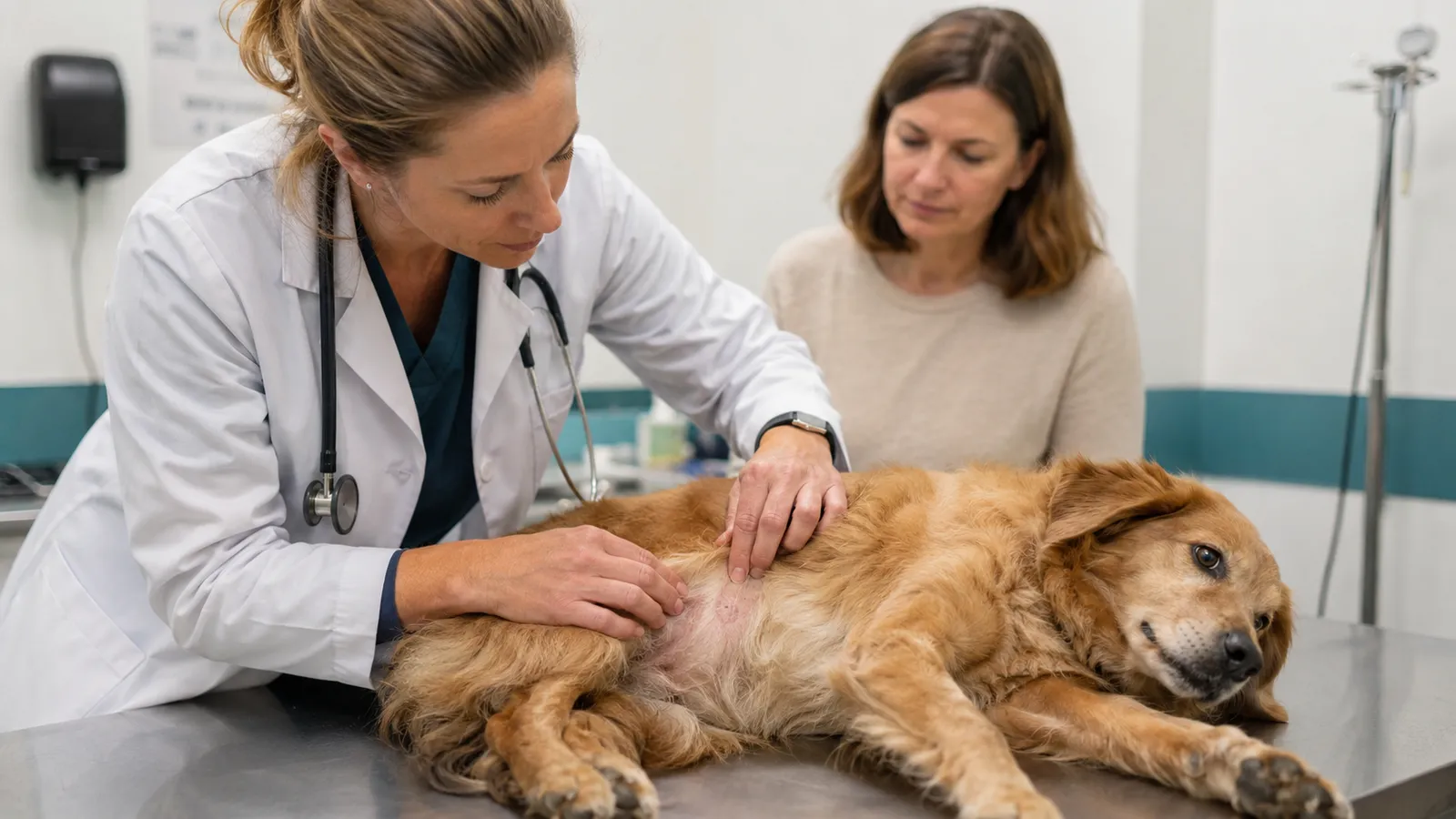
If you’re torn between waiting and calling, let the skin itself decide. Intact, mildly itchy skin can usually wait long enough for a proper visit, but broken, smelly, fast-moving, or painful skin should move you up the schedule. The sooner you catch the difference between a plain allergy flare and an allergy complicated by infection, the faster your dog usually gets comfortable again.
The next decision is whether the pattern fits fleas, environmental allergies, or a food allergy, because that decides the treatment lane. The second is whether the skin is merely irritated or already damaged, because that decides how urgent the visit should be. The third is whether you can safely monitor for a day or two with a cone, clean bedding, and no new products, or whether the speed of change says it’s time to call the vet now.
Common questions
What are the first signs of dog skin allergies?
The earliest signs are usually persistent scratching, licking, chewing, and red or irritated skin, especially on the paws, belly, ears, or face. You may also notice flaking, mild hair loss, or small patches that look sore after your dog has been at them repeatedly.
Can dog skin allergies go away on their own?
Usually, no. The itch often keeps cycling until the trigger is managed and any secondary infection is treated, so it’s better to address it early rather than wait for it to settle by itself.
Are hot spots always caused by allergies?
No. Allergies are a common trigger, but hot spots can also start from fleas, pain, moisture, grooming irritation, or a small wound that the dog keeps licking. A hot spot is a skin reaction, not a diagnosis.
What is the most common treatment for dog skin allergies?
There isn’t one single most common treatment, because it depends on the cause. Vets often combine flea control, anti-itch medication, and treatment for any bacterial or yeast infection, then add longer-term allergy management if needed.
When should I take my dog to the vet for itchy skin?
See a vet if the itching is persistent, getting worse, or causing hair loss, sores, odor, swelling, or pain. Go sooner if your dog seems unwell, the skin is raw or bleeding, or a hot spot is spreading quickly.
Sources
- AKC, Dog Skin Allergies: What to Know
- PetMD, Dog Skin Allergies: Causes, Symptoms, and Treatment
- VCA Animal Hospitals, Allergies in Dogs
- VCA Animal Hospitals, Flea Allergy Dermatitis in Dogs
- VCA Animal Hospitals, Food Allergies in Dogs
- VCA Animal Hospitals, Inhalant Allergies (Atopy) in Dogs
- VCA Animal Hospitals, Hot Spots in Dogs
- VCA Animal Hospitals, Staphylococcal Dermatitis and Hypersensitivity in Dogs