Dog Not Eating but Drinking Water: What It Means and When to Call the Vet
A dog that’s drinking water but refusing food is usually telling you one of two things: “I feel off,” or “something is interfering with appetite.” If the drinking stays normal, the common causes are nausea, pain, stress, mouth pain, or a food problem. If the dog is drinking more or less than usual, the concern is higher and problems such as kidney disease, diabetes, toxin exposure, infection, or another systemic illness move up the list.
- A normal drinking pattern with skipped food often points to nausea, pain, stress, or mouth trouble.
- More or less drinking than usual makes the situation more urgent and can signal a systemic problem.
- Repeated vomiting, bloating, weakness, or toxin exposure means same-day vet care.
- Short appetite loss can be watched briefly only if your dog is bright, drinking normally, and otherwise acting normal.
⚕️ Medical disclaimer: This article is for educational and informational purposes only. Emily Harper is not a veterinarian. The content on Froqel is reviewed against trusted veterinary sources but does not constitute veterinary advice, diagnosis, or treatment. If your dog is refusing food, drinking abnormally, vomiting, or showing signs of weakness or pain, contact a licensed veterinarian promptly. For suspected toxin exposure, collapse, or any rapidly worsening symptom, go to your nearest emergency animal hospital without delay.
What does it mean when a dog is not eating but drinking water?
This pattern usually means appetite is suppressed while thirst is still working, which can happen with nausea, a mild infection, dental pain, stress, or medication side effects. A dog can drink and still be quite unwell. Drinking does not rule out fever, gastrointestinal upset, dental disease, kidney trouble, or toxin exposure, and there is a real difference between one skipped meal and refusing food for most of a day.
What owners often miss is that “not eating” can look very different from one dog to the next. A dog who sniffs the bowl and walks away once is not the same as a dog who refuses every meal, including treats they usually love. The Merck Veterinary Manual notes that anorexia in dogs can come from problems anywhere in the body, not just the stomach, which is why the drinking pattern is such a useful triage clue Merck Veterinary Manual.
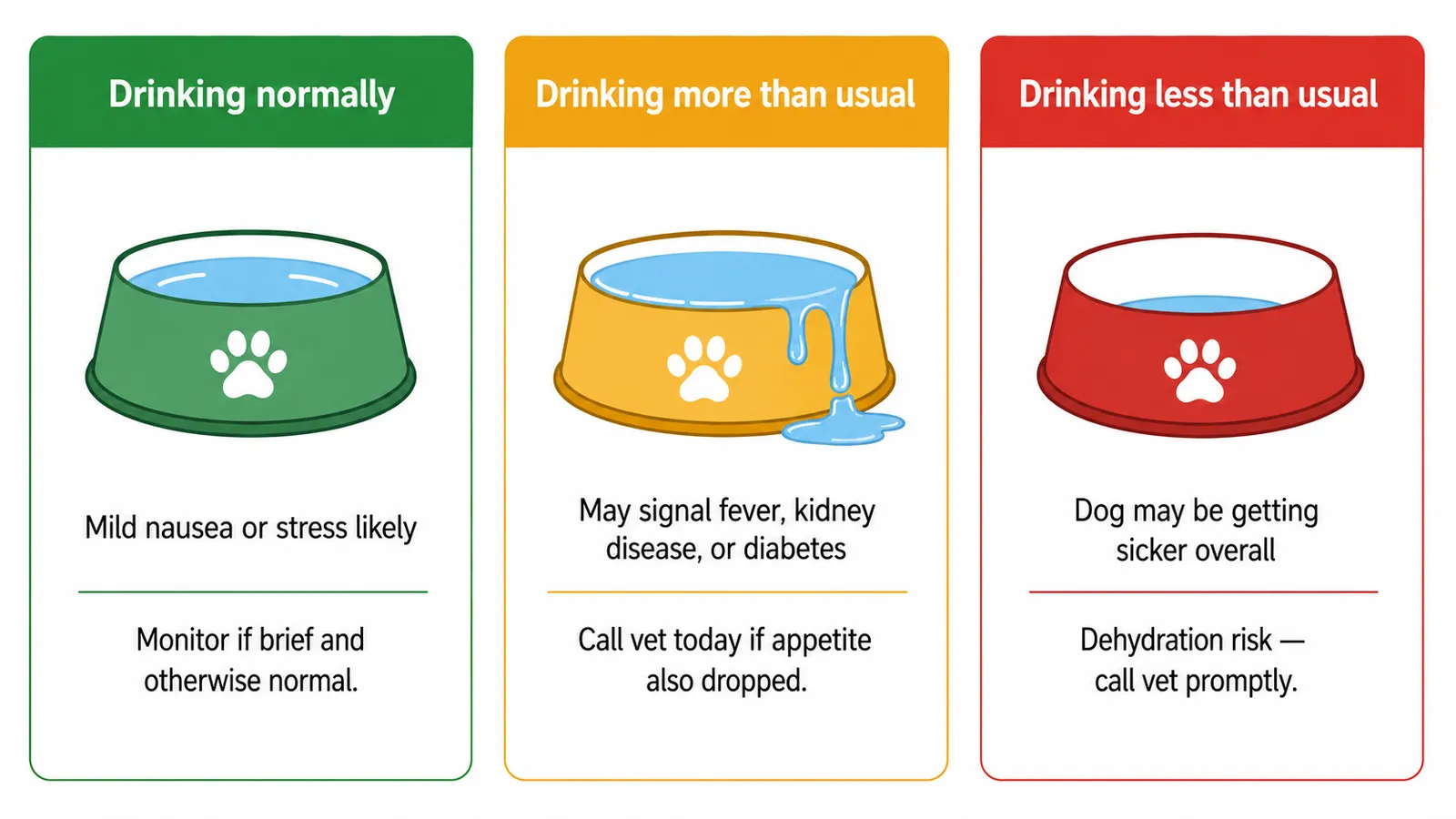
Here’s the practical distinction. Normal drinking with a short appetite dip often points to something temporary, like mild nausea, stress, a food change, or sore teeth. Drinking more than usual can suggest fever, pain, diabetes, kidney disease, Cushing’s disease, or medication effects. Drinking less than usual is more concerning, because a dog may be getting sicker overall and may slide into dehydration before the appetite issue is obvious.
Is dog not eating but drinking water ever an emergency?
- Yes, if the dog is vomiting repeatedly, has diarrhea that is severe or bloody, has a bloated belly, or is retching without bringing anything up.
- Yes, if there is collapse, extreme lethargy, trouble breathing, pale gums, or obvious weakness.
- Yes, if you suspect toxin exposure, including human medication, xylitol, rodent bait, lilies, mushrooms, grapes/raisins, or spoiled food.
- Yes, if the dog cannot keep water down, or vomits after every drink.
- Call the vet today if the dog is a puppy, a senior, a toy breed, or has diabetes, kidney disease, or Addison’s disease, because these dogs have less margin for error.
- Treat a sudden appetite loss as urgent when it comes with pain, a tense abdomen, repeated gagging, or a clear change in behavior.
- Watch closely only when the dog is bright, drinking normally, has no vomiting or diarrhea, and the appetite loss is brief and isolated.
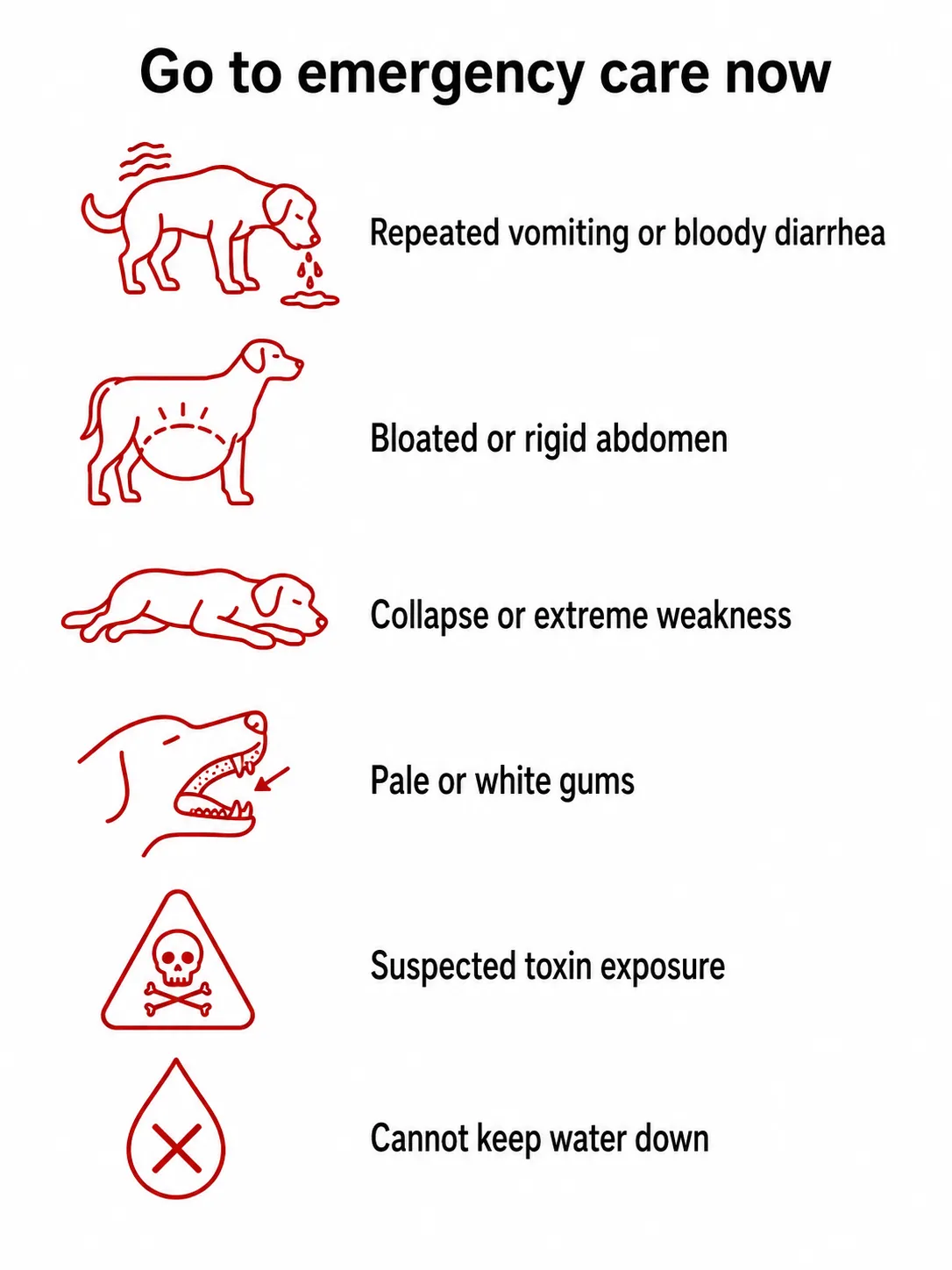
A dog drinking water can still have a dangerous obstruction, toxin exposure, or systemic illness. Water intake is reassuring only in a narrow sense: it shows the dog is still able and willing to drink. It does not mean the problem is harmless, and it does not buy time if your dog is vomiting, painful, weak, or bloated.
The American Kennel Club and VCA Animal Hospitals both advise prompt veterinary attention when appetite loss comes with vomiting, lethargy, pain, diarrhea, or a change in drinking AKC: What to Do If Your Dog Won’t Eat, VCA: Anorexia in Dogs. PetMD says the same basic thing: the appetite change matters much more when it is paired with other signs PetMD: Why Is My Dog Not Eating?.
What should I check at home before I call the vet?
- Note when your dog last ate a normal meal, whether this started suddenly or gradually, and whether they are drinking normally, more than usual, or less than usual.
- Check for vomiting, loose stool, constipation, straining, coughing, or a change in urination. These details help separate nausea from pain or systemic disease.
- Look at the mouth if your dog will allow it. Broken teeth, red gums, a foreign object, foul breath, drooling, or pawing at the face can point to dental pain or something stuck.
- Think through recent access to garbage, human food, bones, medications, chocolate, xylitol, grapes/raisins, toxic plants, or spoiled leftovers.
- Review recent stressors: boarding, travel, fireworks, visitors, a new pet, a move, grooming, or a major change in routine.
- Write down the food brand, treats, supplements, and any prescription or over-the-counter medication before you call. A clean timeline helps the vet decide whether this is watchful waiting, same-day care, or urgent assessment.
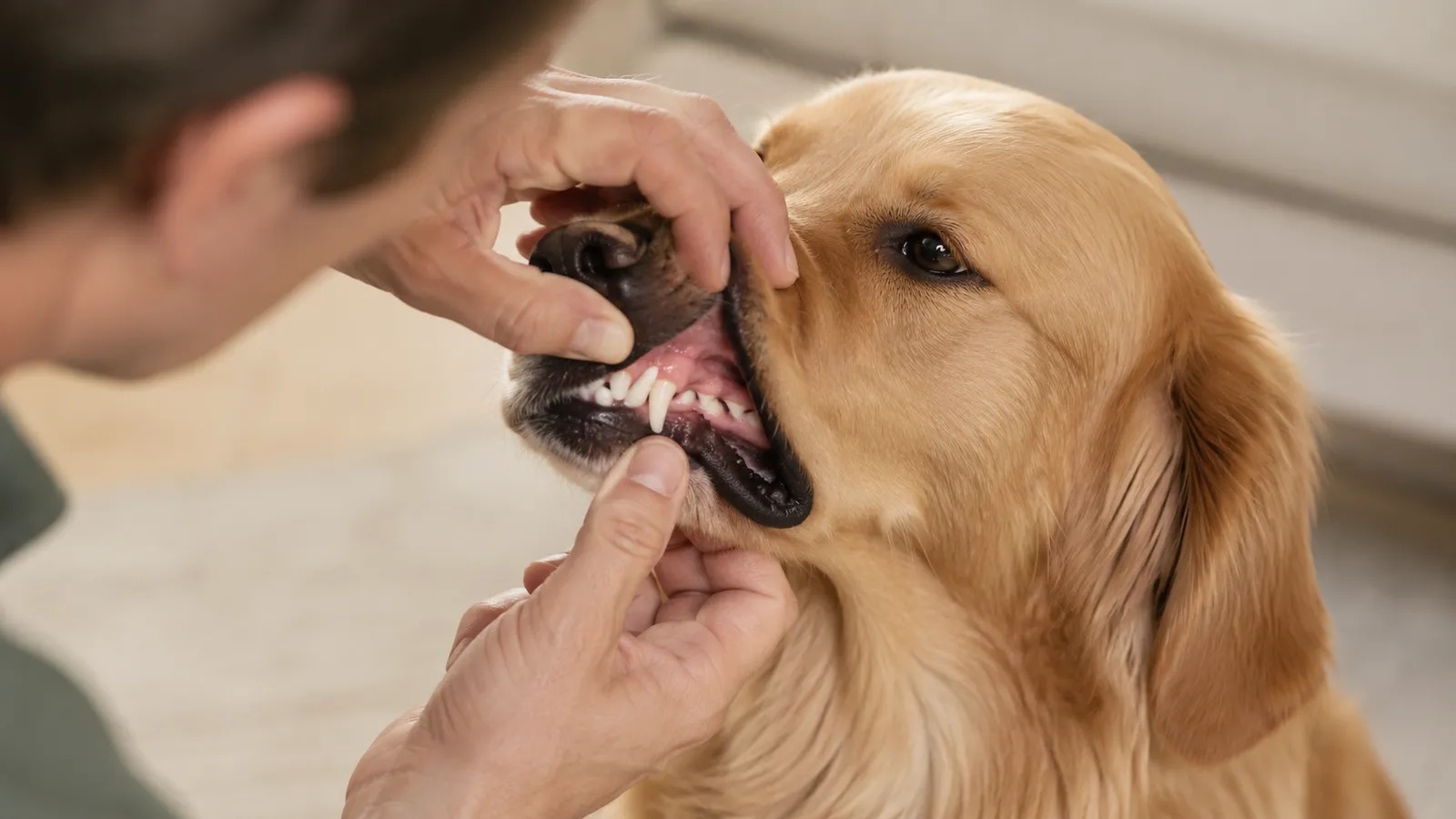
If your dog is otherwise acting normal, this history still matters if the problem lasts longer than a short skipped meal. It matters even more because owners often focus on the food bowl when the real clue is somewhere else: the mouth, the belly, or a recent exposure. A dog with a cracked tooth, a sore gum, or something stuck between the teeth may still drink because swallowing water hurts less than chewing.
Why would a dog drink water but refuse food?
| Possible cause | Typical clues | How urgent it tends to be | What owners often miss |
|---|---|---|---|
| Nausea or stomach upset | Lip licking, grass eating, drooling, turning away from food | Can range from monitor to same-day call | The dog may still drink normally |
| Dental pain or mouth injury | Chewing on one side, drooling, bad breath, dropping kibble | Same-day if pain is obvious or eating stops | A dog may still take water because swallowing is less uncomfortable |
| Pain elsewhere in the body | Hunched posture, reluctance to move, trembling, restlessness | Same-day, sooner if severe | Appetite often drops before the owner sees the painful area |
| Infection or fever | Lethargy, warm ears, hiding, reduced interest in food | Same-day if the dog seems unwell | Drinking may increase with fever |
| Kidney or endocrine disease | Increased thirst, more urination, weight loss, vomiting | Prompt vet visit | The drinking pattern matters as much as the appetite loss |
| Medication side effect | Started after a new drug, especially antibiotics, anti-inflammatories, or some behavior meds | Call the prescribing vet | Owners may assume the medication is working normally |
| Stress or routine disruption | Moving, boarding, new pets, fireworks, travel | Usually monitor if mild and brief | Stress can look harmless while still suppressing appetite |
| Toxin exposure | Sudden illness, vomiting, weakness, odd behavior, tremors | Urgent | Water intake does not make toxins safe |
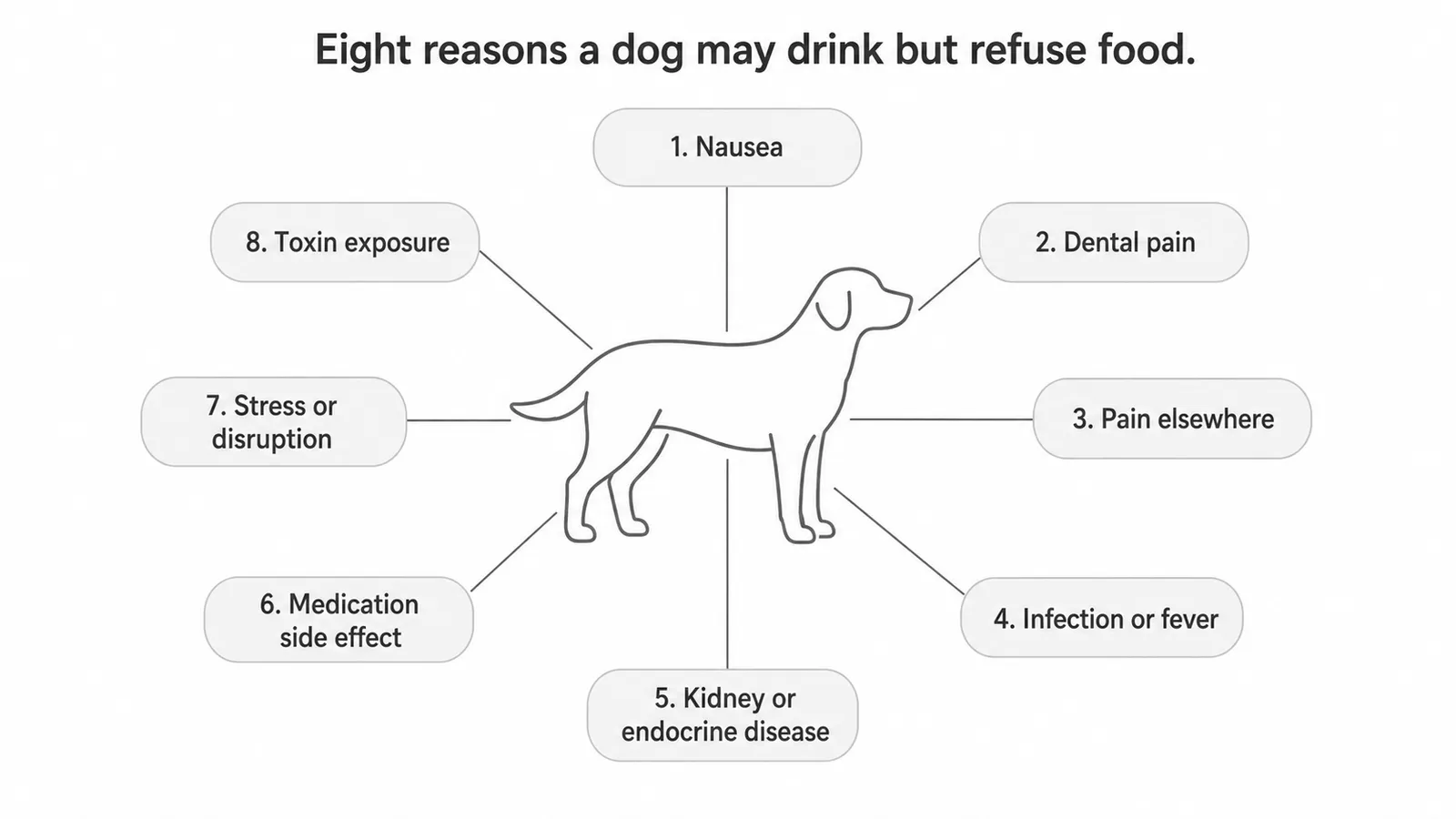
This table is meant to narrow the field, not diagnose your dog at home. Use it as a triage guide: normal drinking with a brief appetite dip often points to a short-lived problem; drinking more than usual raises suspicion for fever, kidney trouble, endocrine disease, or medication effects; drinking less than usual pushes the situation toward more urgent care because the dog may be getting sicker overall or losing the ability to stay hydrated.
What can I do safely at home for the next 12-24 hours?
- Offer fresh water and keep it available. Do not force large amounts, and do not restrict water unless your vet tells you to.
- If your dog is bright, not vomiting, and has no red flags, offer a small amount of familiar food later. A bland-food trial can be reasonable for a short-lived stomach upset, but skip this step if the dog seems painful or unwell.
- Do not give human painkillers. Ibuprofen, naproxen, and acetaminophen can be dangerous for dogs.
- Avoid random supplements, repeated food switches, or “just one more” treat to tempt appetite. Constant changes make it harder to see whether the problem is improving.
- Keep the environment quiet and low-stress. A dog with mild nausea may eat later if the pressure is off.
- Watch for changes in energy, drinking pattern, urination, vomiting, and stool. If the appetite does not return quickly, stop home management and call the vet.
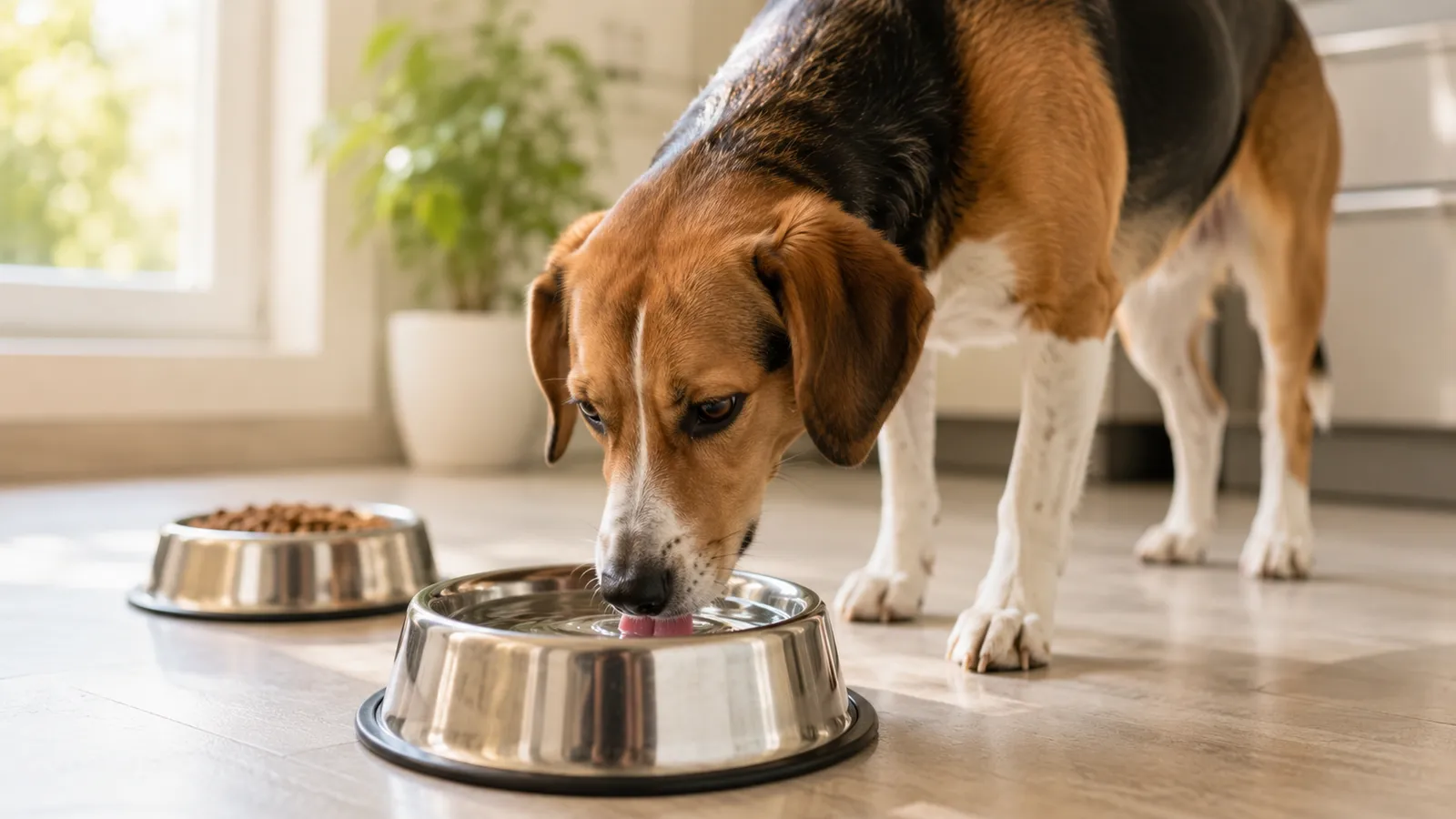
A bland-food trial only makes sense when the dog otherwise looks okay. If your dog is dull, vomiting, pacing, hiding, or seems painful, a food trial can waste time. The Royal Veterinary College and AAHA both stress that appetite changes matter more when they come with systemic signs or in higher-risk dogs RVC: Loss of Appetite in Dogs, AAHA: Your Dog Won’t Eat.
How long can a dog go without eating before I worry?
The honest answer is: it depends on the dog in front of you. A healthy adult who skips one meal but is bright, drinking normally, and acting like themselves can often be watched for a short time. A puppy, a toy breed, or a dog with diabetes, kidney disease, liver disease, or another chronic condition should not get the same leeway, because the downside of waiting is much higher.
One missed meal can happen after mild stomach upset, stress, a food change, or even a day of pickiness. But once the refusal lasts past a day, or the dog starts vomiting, acting lethargic, showing pain, having diarrhea, or drinking differently, the picture changes. Prolonged poor intake can lead to weakness and dehydration even if the dog is still sipping water. That is why the combination matters more than any single symptom.
Small dogs and puppies are especially vulnerable because they have less reserve. A dog that seems only a little “off” at 8 p.m. can look much worse by morning if vomiting or diarrhea starts. If your gut says this is not the usual skipped-meal behavior, trust that feeling and call.
A simple triage checklist for dog not eating but drinking water
| Criterion | Monitor at home | Call the vet today | Go to urgent care now |
|---|---|---|---|
| Appetite duration | Skipped one meal, otherwise normal | Refusing food for more than 24 hours, or repeated partial meals | Sudden refusal plus rapid decline, or any inability to keep water down |
| Drinking pattern | Drinking normally | Drinking much more or much less than usual | Not drinking, vomiting after drinking, or signs of dehydration |
| Energy level | Bright, interactive, wants to move around | Quiet, withdrawn, or clearly less interested in normal activities | Collapse, extreme lethargy, weakness, tremors, or trouble standing |
| GI signs | No vomiting, normal stool | Mild vomiting, soft stool, constipation, or straining | Repeated vomiting, diarrhea with blood, bloated abdomen, or retching |
| Pain signs | No obvious pain | Lip licking, drooling, face pawing, stiffness, hunched posture | Severe abdominal pain, crying out, rigid belly, trouble breathing |
| Risk factors | Healthy adult with no known exposures | Puppy, senior, toy breed, or chronic disease | Known or suspected toxin exposure, obstruction risk, or serious underlying illness |
Use the highest-risk box that fits, not the most comforting one. If your dog has one sign from the urgent-care column, treat the case as urgent even if water drinking continues. If the situation falls between columns, call the vet today rather than waiting for the pattern to prove itself. That is especially true for dogs with diabetes, kidney disease, liver disease, or recent surgery, because appetite loss in those dogs can become serious faster than it looks.
The clearest way to think about this symptom is as a pattern, not a single problem. Normal drinking with brief appetite loss often points to nausea, pain, or stress. Increased drinking or reduced drinking moves you toward more serious causes, and chronic illness or recent anesthesia changes the risk again. The checklist above helps you decide where your dog sits over the next 12 to 24 hours, which is often the difference between sensible monitoring and dangerous delay.
If you are still torn after checking the pattern, choose the safer path and call your vet. A short phone call with a timeline, the drinking pattern, any recent surgery or anesthesia, and the red-flag checklist is often enough to tell you whether your dog can be watched at home or needs to be seen today.
Questions owners ask
Should I worry if my dog is drinking water but not eating?
Yes, especially if it lasts more than one meal or comes with vomiting, lethargy, pain, diarrhea, or any change in drinking. A brief missed meal can be minor, but the pattern can also point to something more serious, including nausea, dental pain, infection, kidney disease, diabetes, or toxin exposure.
How long can a dog go without eating but still drinking?
A healthy adult dog may sometimes skip food for a short period, but you should not wait long if the refusal continues beyond 24 hours. Puppies, seniors, toy breeds, and dogs with medical conditions such as diabetes, kidney disease, or liver disease need faster veterinary attention, and dogs recovering from anesthesia or taking medications that affect appetite should be checked sooner if they will not eat.
Can nausea make a dog drink but not eat?
Yes. Nausea is a common reason a dog may still want water but avoid food, treats, or even favorite snacks. Mouth pain can do the same thing, which is why a dog that drinks normally but turns away from kibble deserves a closer look at the teeth, gums, and face.
When should I call the vet for my dog not eating but drinking water?
Call the vet the same day if the appetite loss lasts more than a short meal or if your dog has vomiting, diarrhea, belly pain, weakness, or abnormal drinking. Call immediately for collapse, toxin exposure, trouble breathing, a swollen abdomen, repeated retching, or a dog that cannot keep water down. Recent anesthesia, diabetes, kidney disease, liver disease, or suspected poisoning lowers the threshold even more.
What if my dog is not eating but drinking and acting normal?
If it has only been a short time and your dog is otherwise normal, you can monitor closely at home for the next 12 to 24 hours. Offer fresh water, keep notes on how much your dog drinks, and watch for vomiting, diarrhea, hiding, drooling, or changes in urination. If the refusal persists, the drinking changes, or anything else shifts, contact your vet.
Where this information comes from
- Merck Veterinary Manual, Introduction to Digestive Disorders of Dogs
- VCA Animal Hospitals, Anorexia in Dogs
- AKC, Why Won't My Dog Eat?
- AKC, Should I Call My Vet? Know When to Ask a Vet's Opinion
- PetMD, Why Is My Dog Not Eating? Causes and What To Do
- AAHA, Help! Is This a Pet Emergency?
- ASPCA Animal Poison Control Center
- Veterinary Partner (VIN), Anorexia, or Lack of Appetite, in Dogs and Cats