
Dog Nail Trimming: How Short Is Too Short? A Safe, Practical Guide
Dog nail trimming is too short when you hit the quick, cause bleeding, or leave the nail so close to the sensitive tissue that your dog flinches, pulls away, or walks oddly afterward. The safe target is not a fixed millimeter measurement; it is a nail short enough to function normally without exposing or bruising the quick.
Where the line actually is
- The true limit is the quick, not a fixed millimeter length.
- Short enough for comfort means no hard clicking, snagging, or toe strain.
- Black nails can still be trimmed safely using tiny cuts and close inspection.
- If you hit the quick, stop the bleed, keep the dog calm, and watch for ongoing pain or swelling.
- A bad trim can shake trust, so rebuild it with short, low-pressure sessions.
What actually counts as "too short" when trimming a dog's nails?
The real cutoff is the quick, not a fixed millimeter measurement. If the nail bleeds or your dog reacts like it hurts, that trim was too short for that nail on that dog. That is why the same trim can look fine on one paw and be too much on another.
A practical trim aims for function first. You want nails short enough that they do not click hard on a tile floor, snag on rugs, or push the toes into an awkward spread, but not so short that the quick is exposed or irritated. In veterinary and grooming guidance, the goal is usually functional length, not a cosmetic finish.
The number of factors that affect safe length is bigger than most owners expect. Nail thickness, age, how overgrown the nails were, and whether the dog has been trimmed regularly all change where the quick sits. A puppy or a dog with long-neglected nails may need several smaller trims before the quick pulls back to a safer place.
That is also why cosmetic neatness can be misleading. A nail can look clean and uniform and still be too short if it has been cut into sensitive tissue. On the other hand, a nail that still looks a little longer may be perfectly safe if the dog is comfortable and the claw no longer hits the floor aggressively.
How can you tell where the quick starts?
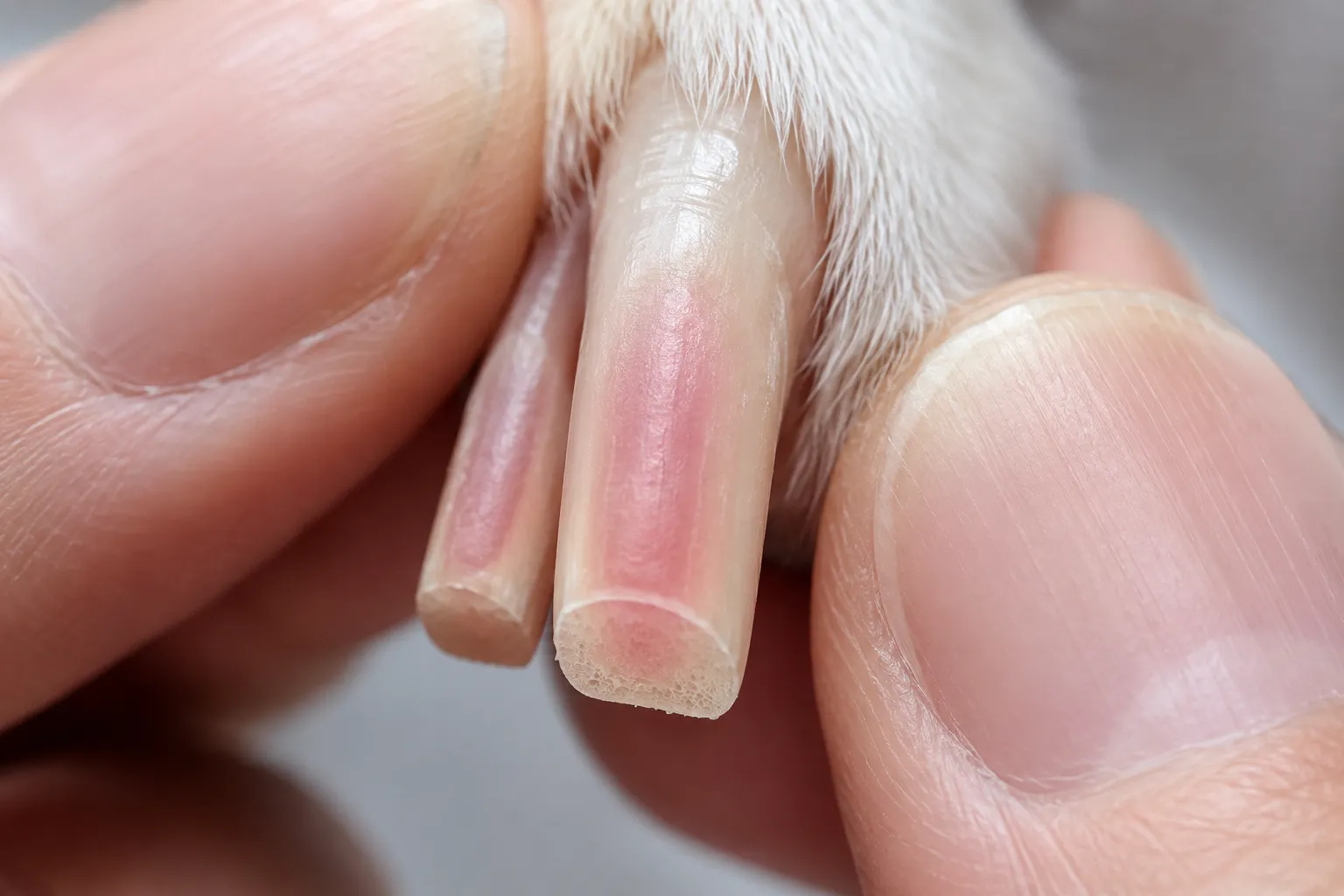
On light-colored nails, the quick usually gets easier to read as you get closer: the center looks darker, the cut surface shifts from dry and chalky to softer and more live-looking, and the nail stops looking like a solid piece of horn. The key is to stop when the texture and color change, not when the nail starts to look perfectly symmetrical.
Black nails are harder because the quick is hidden. In that situation, certainty drops and tiny cuts become the safer method. A common mistake is trying to make every claw match the same length instead of respecting where the tissue actually changes on each nail.
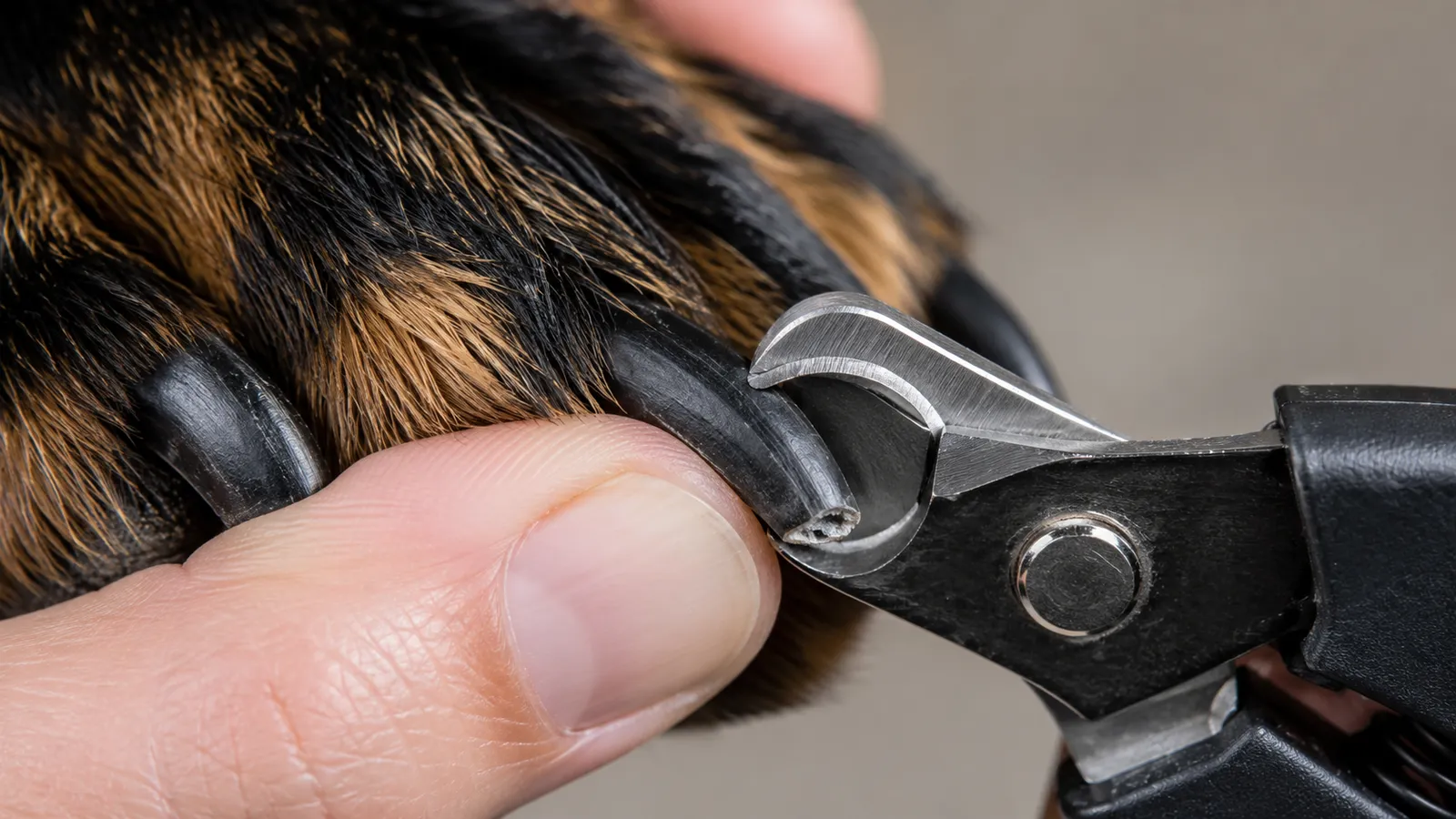
One useful rule is simple: if the freshly cut surface starts to look moist, gray, pinkish, or visually different from the previous slice, stop. That shift is often the closest thing you get to a warning sign on a dark nail. A veterinary-style approach is to trim in very small increments rather than chasing a fixed number on every claw.
What is the safest way to trim dog nails at home?
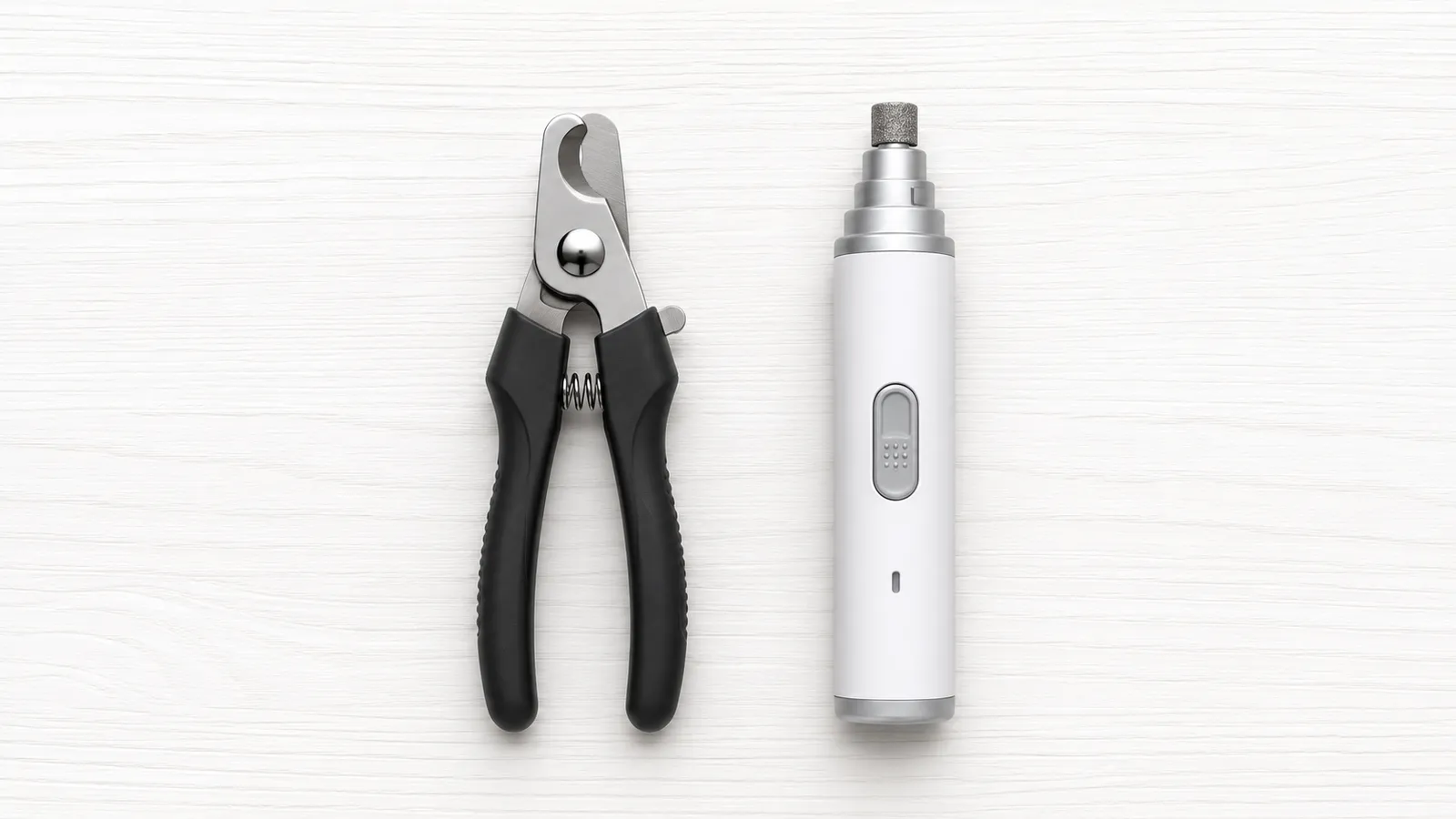
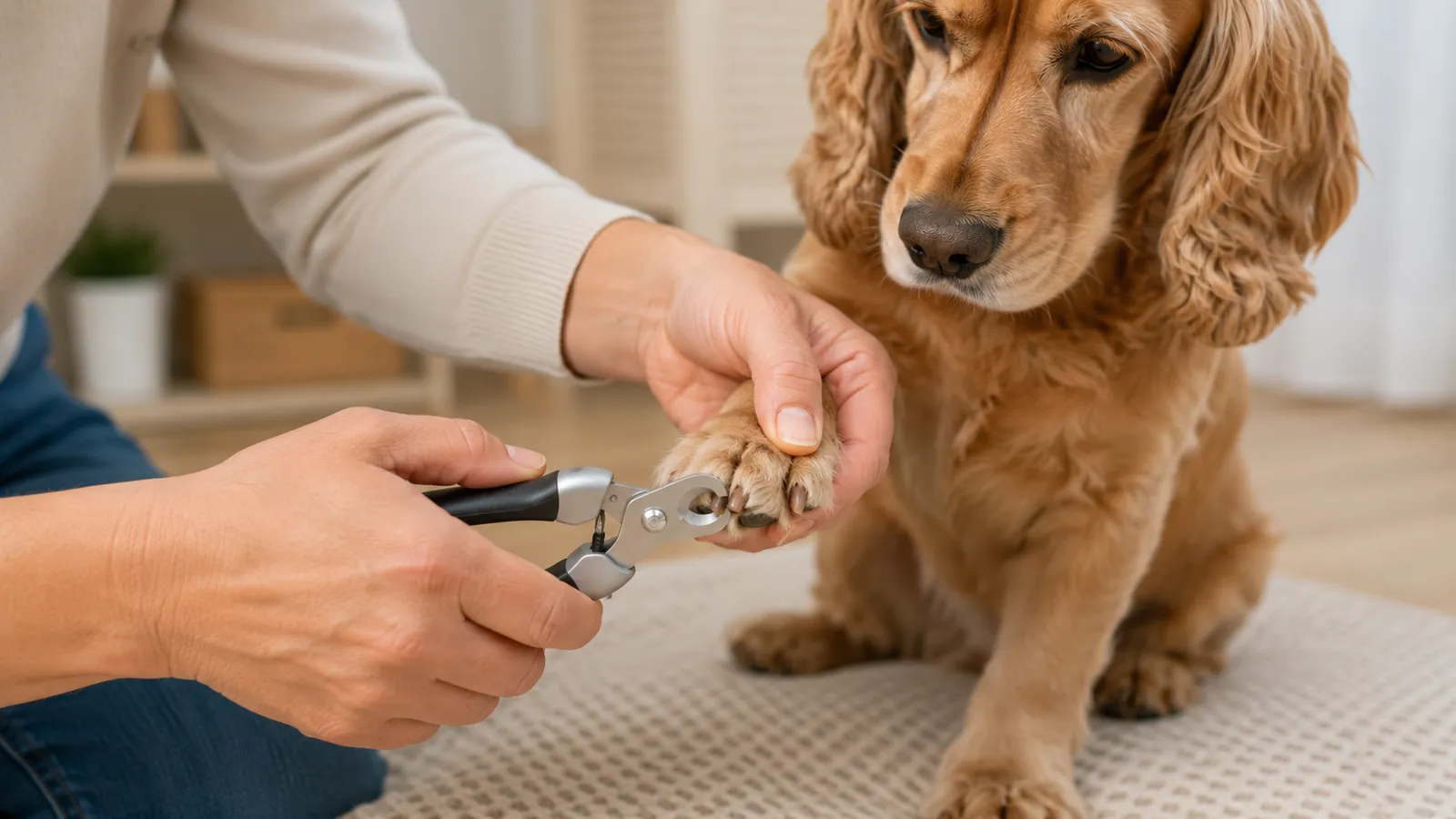
The safest home trim is slow, well-lit, and boring. Set up bright light, a firm grip, a sharp clipper or grinder, and styptic powder before you touch the paw, because once the dog starts pulling away, rushed decisions are usually what lead to a nick.
- Hold the paw steady and take off a tiny slice from the tip, not a big chunk from the center.
- Pause after each cut and inspect the edge for color, moisture, and shape.
- Use the nail’s angle as your guide so you are trimming the hooked tip rather than driving straight into the middle.
- Switch to a file or grinder when you mainly need to smooth sharp edges.
- Stop early if the dog gets tense; a partial trim is safer than forcing a perfect one.
Tiny increments matter more on long or curved nails. Once a nail has grown out, the quick often grows with it, which means your first goal is not make it short, but move it gradually toward a safer length. That is why overgrown nails usually need more than one session.
A grinder can be especially useful as a finishing tool because it lets you shape the edge without taking much length all at once. That matters if your dog is nervous or if the nail is already close to the quick. A file is slower, but for many dogs it feels less startling than a clipper snap.
How short should dog nails be for comfort, not just appearance?
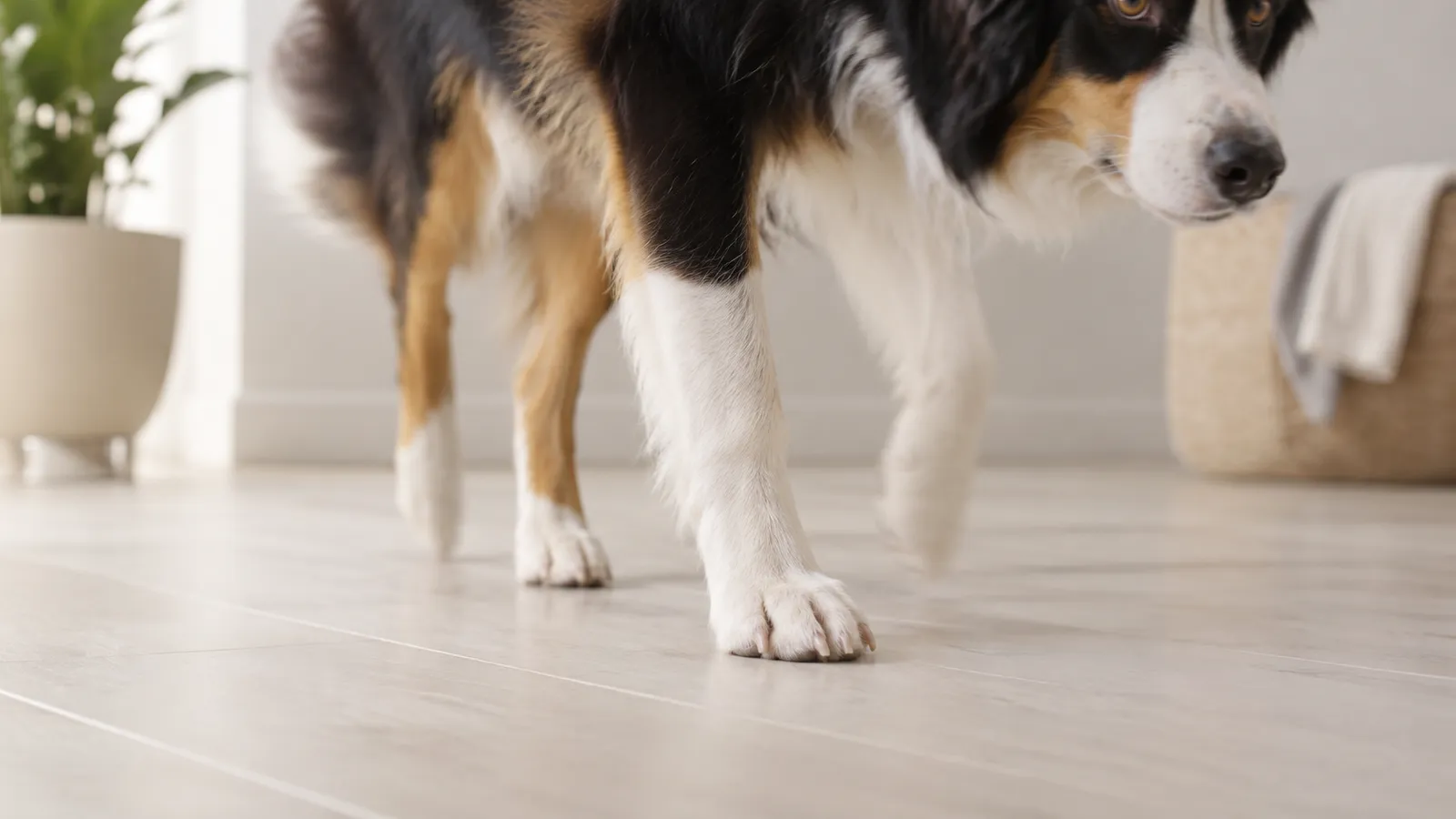
For comfort, dog nails should be short enough that they do not click hard on a hard surface, snag on carpets, or force the toes to splay in a strained way. The most useful goal is functional length, not a sleek cosmetic finish that looks neat but leaves the dog tender.
A tile floor is a simple reality check. If you can hear the nails tapping clearly, the trim probably still has room to improve, but you do not fix that by chasing dramatic shortness in one session. A better rule is to use the sound test as a function check, then stop before you reach the quick.
That matters even more for dogs with nails that have been left long for months. If the quick is already extended, the only safe path is gradual shortening. Trying to fix everything in one appointment is how owners end up with a bleeding nail, a frightened dog, and a future trim that suddenly feels like a wrestling match.
There is also a structural side to this. Long nails change how the foot meets the ground, and breed-club and veterinary guidance consistently treat nail length as a paw-function issue, not just a grooming issue. The goal is a nail that supports normal paw posture while still protecting the quick.
What should I do if I cut my dog’s nail too short?
Short-Safe-Too Short check: three criteria buckets for home trimming decisions. First, test function on a hard surface like tile floor. Second, judge quick proximity from what you can see, not what you hope. Third, listen for dog comfort: no bleeding, no flinching, no limping. If the nail is borderline but stable, stop and plan a smaller trim next time. If bleeding or clear pain shows up, move into first aid and vet territory.
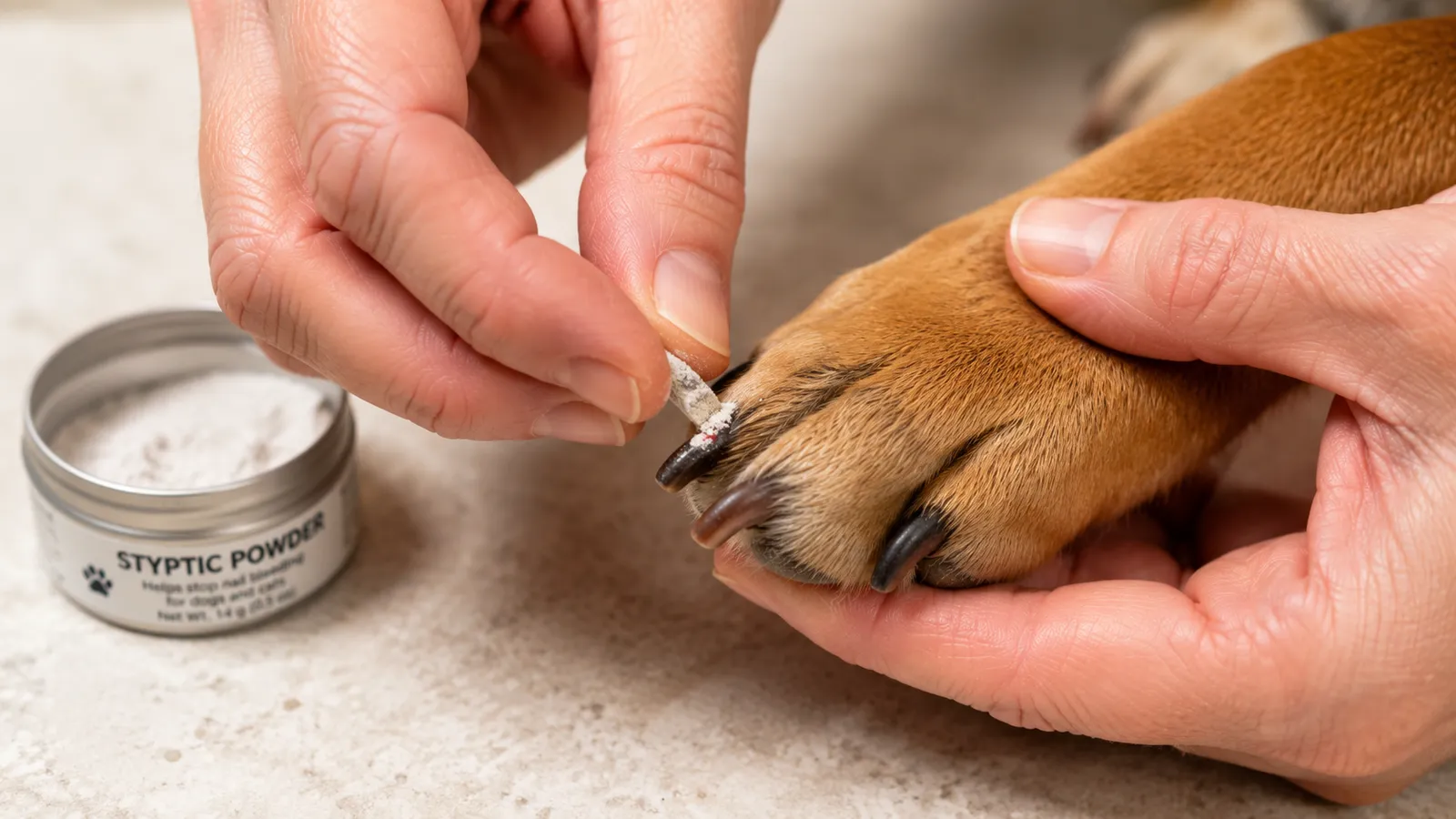
- Apply gentle, steady pressure with clean gauze or a cloth.
- Use styptic powder if you have it; if not, keep pressure on the nail while the clot forms.
- Keep your dog calm and quiet for a while so the paw is not knocked against hard surfaces.
- Watch for renewed bleeding once your dog starts moving again.
- Do not keep trimming the same nail that day just to “even it out.”
If a nail bleeds, you cut it too short for that dog. The first job is to stop the bleeding, keep the paw still, and resist the urge to keep checking every few seconds, because repeated peeking can restart the flow and make the whole situation worse. Veterinary first-aid guidance treats direct pressure and careful observation as the starting point.
A small nick is often manageable at home, but pain changes the equation. If your dog keeps licking the paw, will not bear weight normally, or seems clearly uncomfortable after the bleeding stops, the nail may be more than just superficially short. A torn or split nail can behave very differently from a neat accidental nick.
How do I know when to stop and call the vet?
- Call the vet if bleeding does not slow after basic first aid.
- Seek help if the nail is split, torn, hanging, or the quick is visibly exposed.
- Get advice if your dog is limping, swollen, warm at the paw, or unwilling to let you touch the foot.
- Call sooner if your dog panics hard, snaps, or fights every nail trim after a previous bad experience.
- Consider professional help if repeated home attempts keep ending in fear rather than progress.
Bleeding is the clearest sign, but so is a sudden flinch, pulling away, or limping right after the trim. If the nail looks moist or pinkish where you cut, you likely got very close to the quick. The important distinction is this: mild sensitivity can pass, but persistent pain, swelling, heat, or ongoing limping needs attention.
This is where the emotional side matters as much as the wound itself. Woodland Vet Hospital notes that some dogs become so anxious after being trimmed too short in the past that sedation may be the kinder route for future care Woodland Vet Hospital. If nail care has turned into a fight, forcing more practice at home usually makes the problem stickier.
What is a practical way to decide if a nail is short enough, safe enough, or too short?
| Category | What you see or feel | What it means | Best next step |
|---|---|---|---|
| Ideal functional length | Little or no clicking on tile floor, smooth edge, dog walks normally | Short enough for comfort without stressing the quick | Stop or lightly file sharp edges |
| Borderline short | Still a little clicky, quick seems close, no bleeding or pain | Safe for now, but there is not much room left | Leave it alone and shorten gradually next time |
| Too short | Bleeding, tenderness, flinching, licking, limp, or exposed quick | You have gone past the safe point for that nail | Apply first aid and call the vet if pain or bleeding continues |
A clinic, groomer, or behavior-based desensitization plan is often a better fit for the dog who has learned to dread the clipper. That is especially true if the paw is already painful, because you are no longer just trimming nails; you are managing a painful association too.
This framework is useful because it separates appearance from function. A nail does not need to look perfect to be safe, and a neat-looking nail is not automatically safe if the dog is sore. The three buckets give you a way to make a call in the moment instead of spiraling over whether you should take off just one more bit.
How do you rebuild trust after a painful nail trim?

Short-Safe-Too Short check summary: Safe means no bleeding, no flinch, no limp, and no hard floor clicking. Borderline means the nail is still a little long but the dog is comfortable, so stop and trim again later. Too short means bleeding or obvious pain, which calls for first aid and vet help.
A dog that has been cut too short once can remember it, and that memory often shows up as stiff body language before the clippers even come out. The fix is not speed. It is resetting the whole routine so the dog learns that paw handling does not automatically lead to pain.
That usually means shorter sessions, no forcing, and ending while the dog is still calm. Touch the paw, treat, and stop. Pick up the paw, treat, and stop. Let the dog hear the clipper from a distance without trimming anything, then end the session while the experience is still neutral or positive.
When this approach is not enough: if the nails are severely overgrown, the quick may already be too long for a safe one-session correction. If your dog is severely anxious or panicked, home trimming can make the fear worse. If a nail is split, torn, or still bleeding, the issue is no longer a routine trim and needs vet-level judgment.
Questions owners ask
How short should dog nails be?
Short enough that they do not click hard on a hard floor, snag on rugs, or force the toes to splay in a strained way, but not so short that you reach the quick. The safest target is functional length and comfort, not a perfectly polished look. If the nail is quiet on tile and your dog walks normally, you are in the right range.
How do I know if I cut my dog's nail too short?
Bleeding is the clearest sign, but so is a sudden flinch, pulling away, or limping right after the trim. If the freshly cut surface looks moist, pinkish, or visually different from the previous slice, you likely got very close to the quick. Mild sensitivity can pass on its own, but persistent pain, swelling, heat in the paw, or ongoing limping needs veterinary attention.
Can I safely trim black dog nails at home?
Yes, but only with very small incremental cuts and close attention to the cut surface. On black nails the quick is hidden, so there is no reliable visual preview. The safest method is to remove thin slivers and stop as soon as the texture changes, when the center starts to look gray, moist, or softer than the previous slice, that is your warning sign. Never try to match every nail to the same length in one pass.
Can dog nails be cut too short even if they look neat?
Yes. A nail can look clean and uniform and still be too short if it has been cut into or close to the sensitive tissue. Appearance is not a reliable safety check, comfort is. If your dog flinches, licks the paw, or walks oddly after a neat-looking trim, the nail was still too short for that dog. The three-bucket framework in this guide (ideal, borderline, too short) is a more reliable way to judge than visual symmetry alone.
What should I do immediately if I cut the quick?
Apply gentle, steady pressure with clean gauze or a cloth. If you have styptic powder, press a small amount directly onto the nail tip, it helps the clot form faster. Keep your dog calm and still for a few minutes so the paw is not knocked against hard surfaces before the bleeding stops. Do not keep trimming the same nail that session to "even it out," and avoid repeatedly lifting the paw to check, since that can restart the flow. If bleeding does not slow within a few minutes or your dog seems to be in significant pain, call your vet.
My dog hates nail trims after one bad experience. What should I do?
A dog that has been cut too short once can remember it, and that memory often shows up as stiff body language before the clippers even come out. The fix is not speed, it is rebuilding the association from scratch. Start with short, low-pressure sessions: touch the paw, treat, stop. Pick up the paw, treat, stop. Let the dog hear the clipper without trimming anything. End every session while the experience is still calm or positive. If the nails are severely overgrown, the quick may already be extended and a single-session correction is not safe, a vet or professional groomer with desensitization experience is a better fit than forcing more home attempts.
Where this information comes from
Sources consulted for this article:
- AKC, How to Trim Your Dog's Nails at Home
- Cutting Your Dog's Nails . . . How Important Is it Really? | Susan Garrett's Dog Training Blog
- Why can't my dog's nails be trimmed as short as I would like? | Woodland Vet Hospital