
Dog Hip Dysplasia Symptoms and Treatment Options: Early Signs, Vet Decisions, and What to Do Next
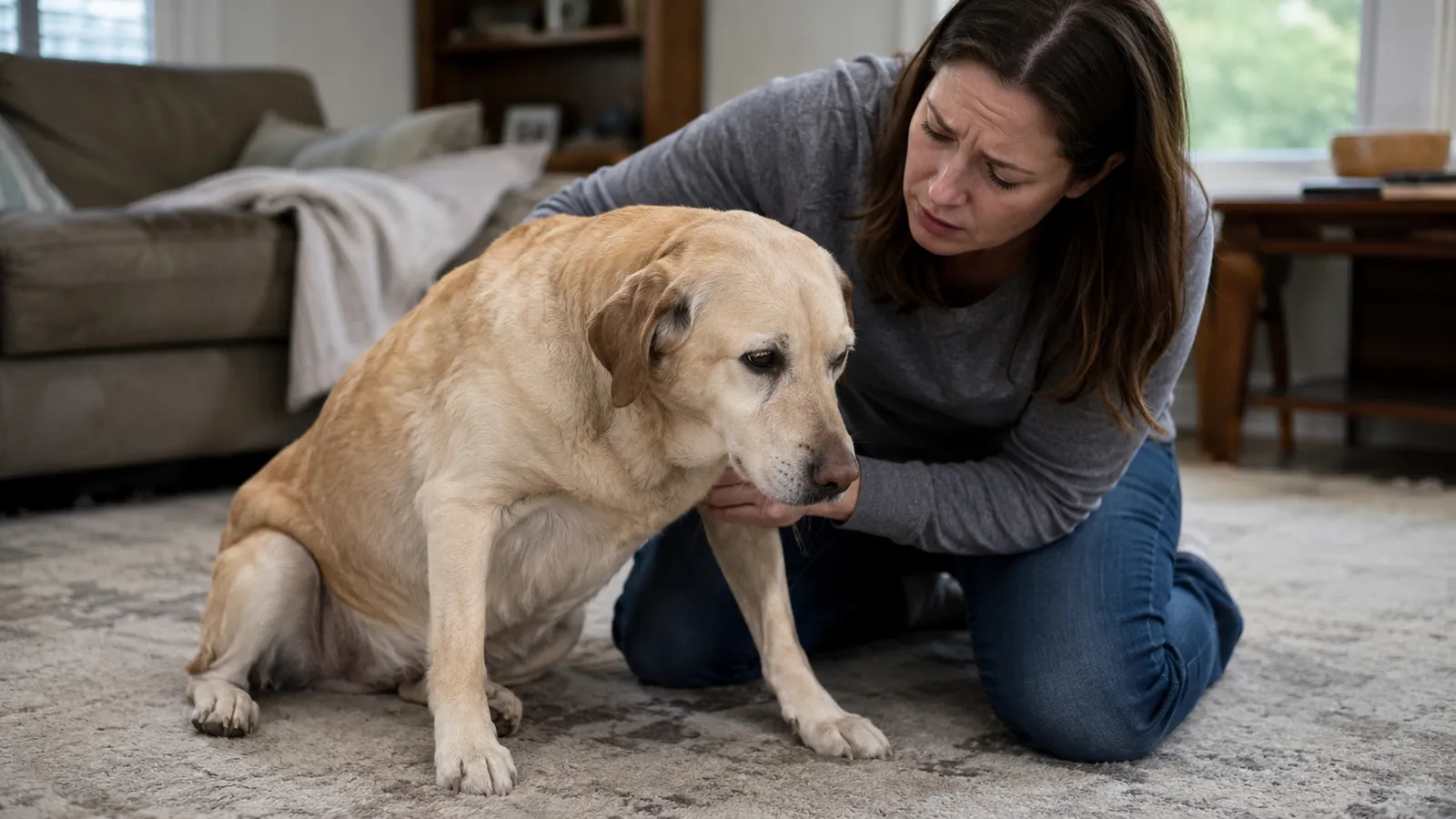
Dog hip dysplasia symptoms treatment options really come down to one key question: is your dog in the early instability stage, or already in the arthritis stage? That timing changes the whole picture. A young dog with lax hips may need a very different plan from an older dog with osteoarthritis, pain, and that stiff morning shuffle.
What to watch for
- Hip dysplasia often starts as hind-end stiffness, bunny hopping, or trouble rising before a clear limp appears.
- Treatment depends heavily on timing: early joint laxity and later osteoarthritis are managed very differently.
- Vets weigh age, pain, X-rays, body condition, and response to care before recommending surgery.
- Weight control, activity changes, and pain relief can help, but they do not correct a loose hip joint.
- Early diagnosis gives more options and can change long-term mobility outcomes.
What are the most common signs of hip dysplasia in dogs?
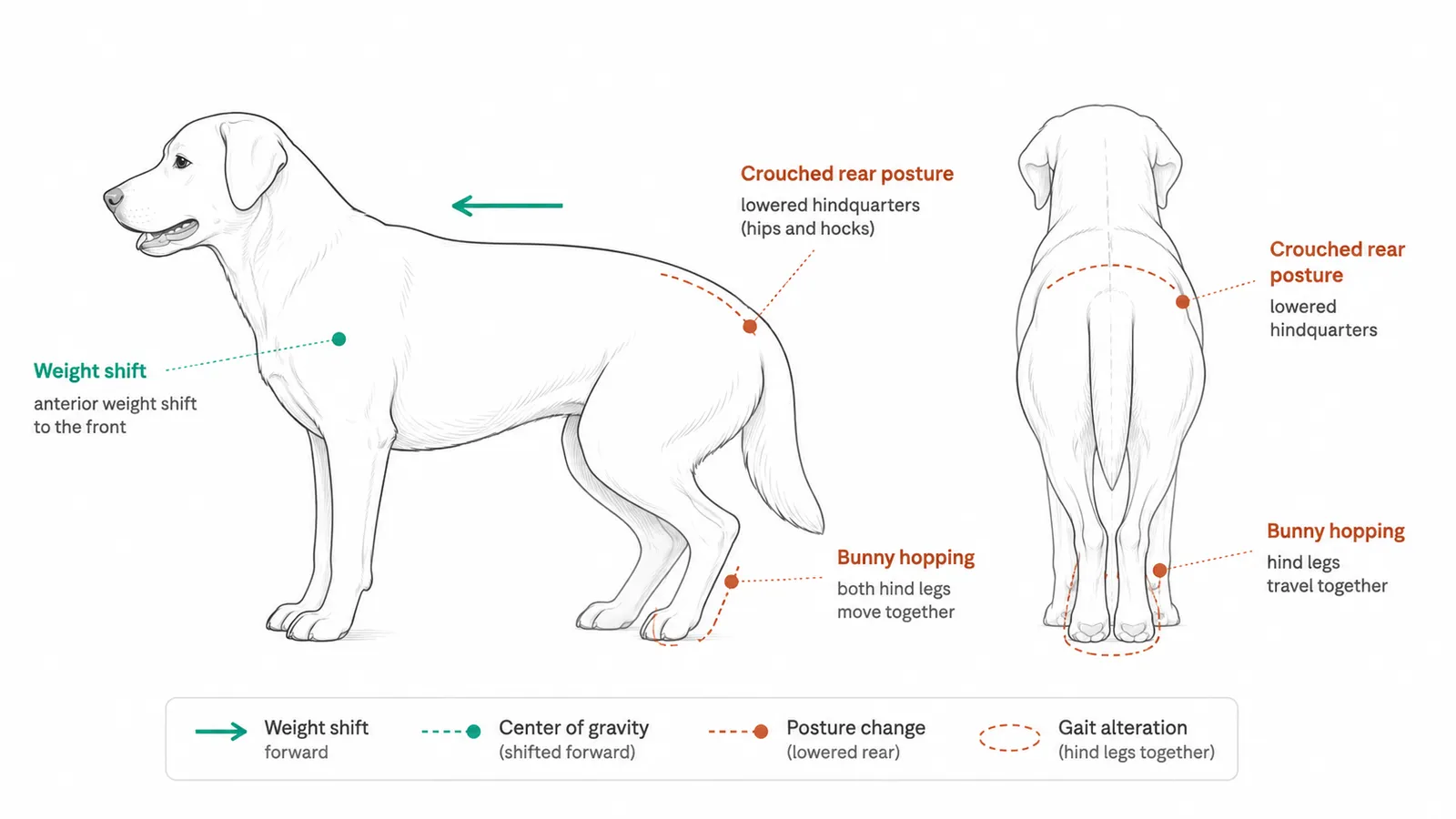
The classic hip dysplasia pattern starts in the hind end and often gets worse with activity or after rest. You might see bunny hopping, trouble standing up, stiffness after naps, hesitation before jumping into the car, pain on stairs, or a dog who just doesn’t want to play the way they used to.
Cornell University College of Veterinary Medicine notes that some dogs show very little early on, while others start showing signs at just a few months old or later in life as arthritis develops Cornell University College of Veterinary Medicine. That matters because a puppy moving oddly may have joint laxity before obvious osteoarthritis appears, while an older dog may already be dealing with pain from the wear and tear that follows.
The movement pattern is the real clue. Hip dysplasia usually affects the back end, so owners often notice both rear legs moving together, weight shifting, or hesitation more than a true one-sided limp. It can look like back pain, a front-leg limp, or just slowing down, which is why watching how the dog gets up, sits, jumps, and climbs stairs often tells you more than one isolated step.
Bridger Veterinary Specialists & Emergency lists the classic complaints as reluctance to jump into the car, pain when rising, and reduced activity or play, especially in puppies Bridger Veterinary Specialists & Emergency. Those signs are easy to write off as clumsiness or laziness, but if they keep happening, they’re worth a closer look.
Early signs in puppies and young dogs
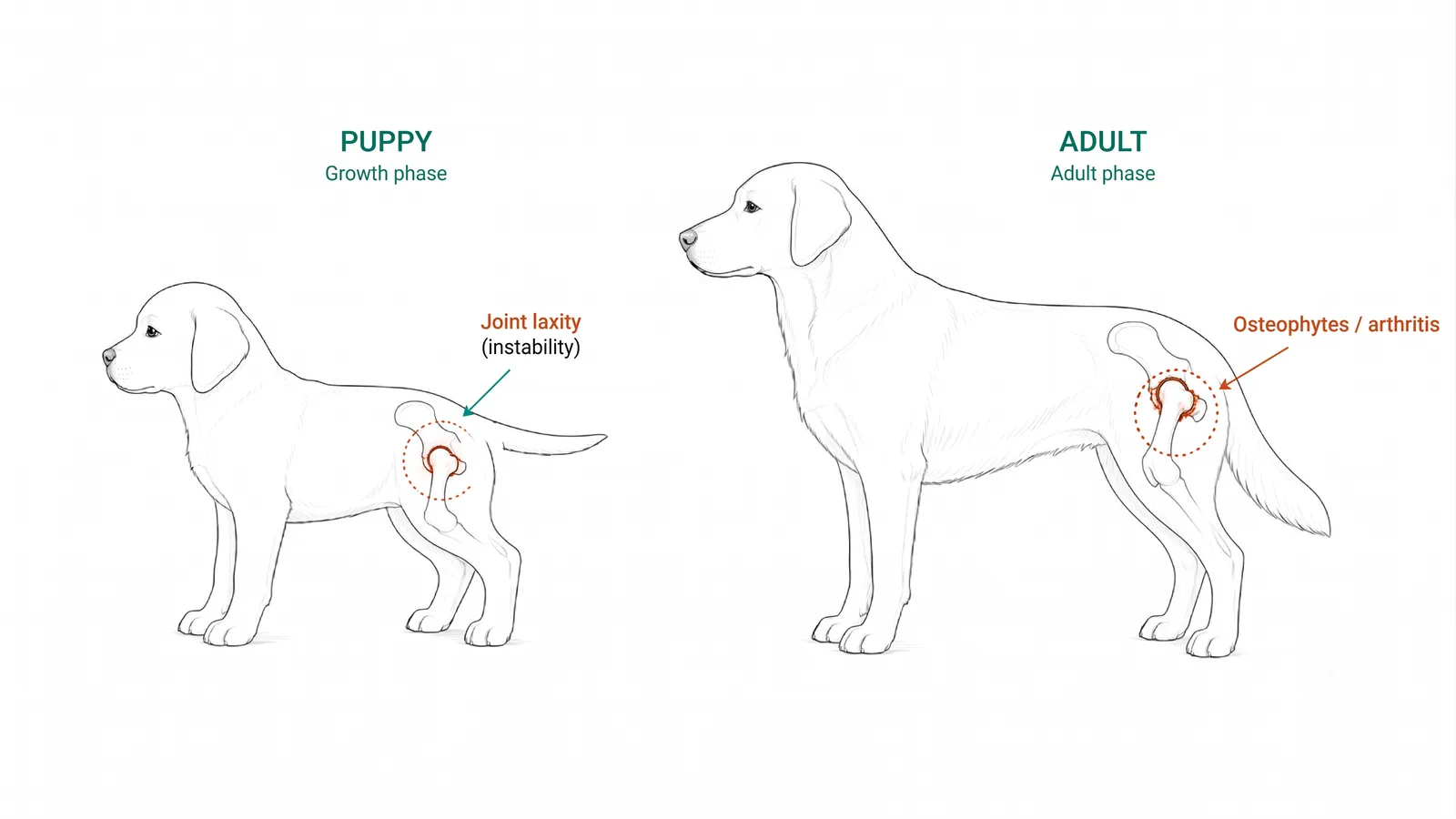
In younger dogs, the earliest signs usually come from instability rather than years of arthritis. You may notice loose, awkward movement, bunny hopping on runs, or a puppy who tires faster than littermates and resists rough play.
VIN’s WSAVA2004 material describes coxofemoral instability as the key event in hip dysplasia, with dogs aged 5 to 9 months sometimes showing radiographic changes before secondary damage becomes obvious VIN. In plain English, the joint can be loose before the damage is dramatic enough for an owner to think, arthritis.
Signs more typical of arthritis-stage disease
Once osteoarthritis (OA) shows up, the signs usually shift from awkward movement to pain and stiffness. The dog may rise slowly, hesitate after lying down, and seem worse after exercise or on cold mornings.
That stage often brings a more obvious drop in mobility: fewer zoomies, less jumping on furniture, and less interest in long walks. You may also notice changes that seem unrelated at first, because chronic pain can make a dog grumpier, quieter, or less willing to be handled around the hindquarters.
Which dog hip dysplasia symptoms treatment options are worth considering first?
The first treatment choice is usually the one that fits the stage of disease, not the one that sounds most aggressive or most natural. Conservative care can help at almost any stage, but it cannot correct structural looseness; surgery may be the better option before arthritis becomes advanced, while later-stage disease often needs symptom control and support for function.
| Option | Main goal | Best use | What it does not do | Stage notes |
|---|---|---|---|---|
| Weight management | Reduce stress on painful hips and improve ease of movement | Almost any stage, especially overweight dogs | Does not stabilize a loose joint on its own | Supportive at all stages |
| Activity modification | Reduce pain flares and strain | While symptoms are being assessed and during rehab | Does not correct the underlying anatomy | Useful at all stages |
| Physical therapy / rehab | Improve strength, muscle support, and comfort | Early instability, recovery, and ongoing arthritis care | Does not rebuild the hip socket | Works as support before and after arthritis |
| Pain relief and anti-inflammatory medication | Lower pain and inflammation | When pain is limiting function | Does not stop joint laxity or reverse OA | Often important once pain is present |
| Joint supplements | Support general joint health | As an add-on, not a stand-alone fix | Do not correct instability or severe OA | Supportive only |
| Surgery | Improve mechanics or reduce pain depending on procedure | When timing and anatomy make it appropriate | Not every procedure is right once severe arthritis is established | Most stage-specific option |
That is the part many symptom-only articles leave out. A supplement may be reasonable alongside rehab, but it should never be mistaken for a fix for coxofemoral instability. On the other hand, if a young dog has loose hips before advanced OA, surgery can sometimes offer a better long-term result than years of trying to manage pain alone.
How do vets decide between conservative care and surgery?
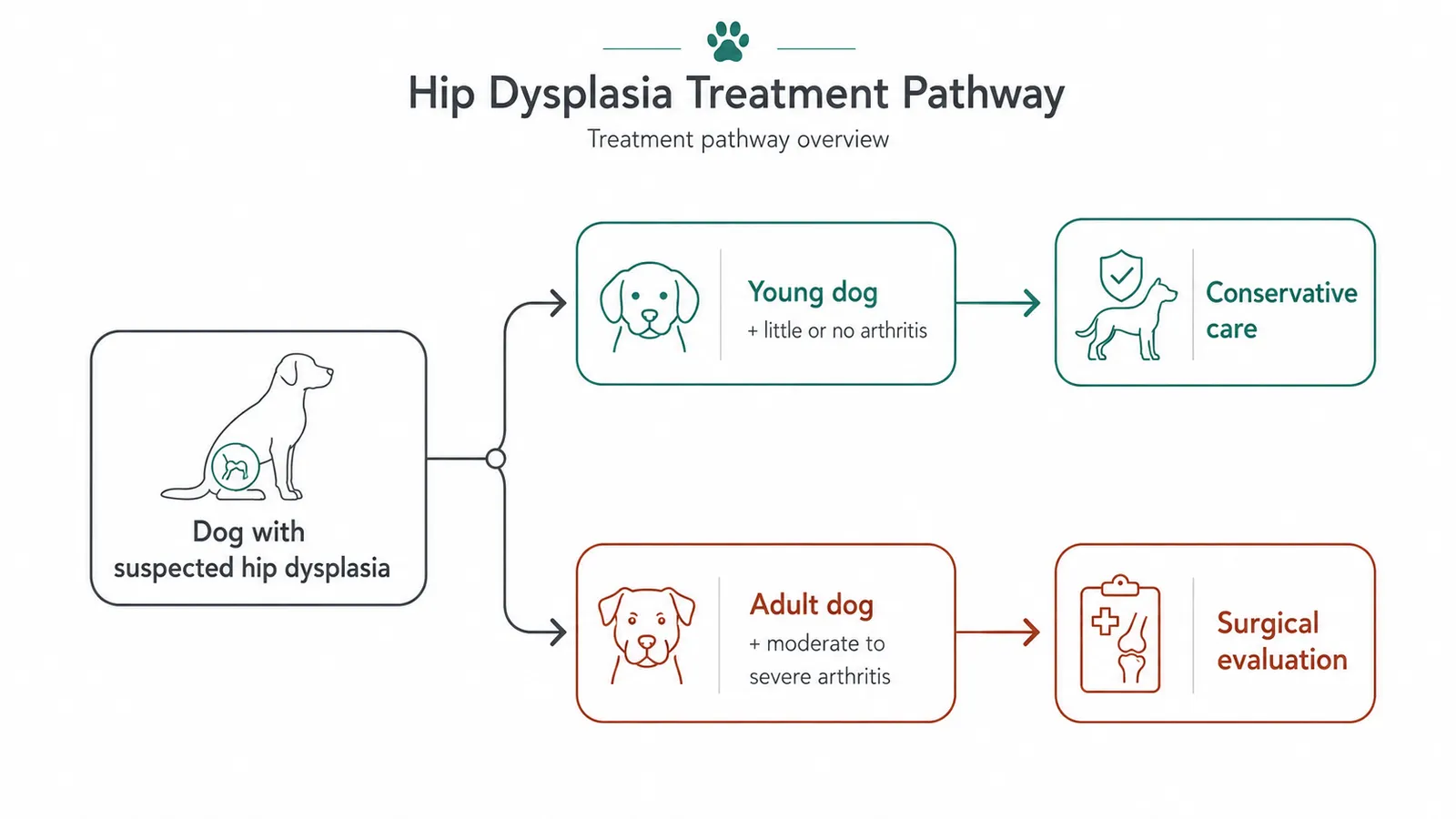
Vets usually decide by looking at the dog’s age, pain level, body condition, X-ray findings, and response to conservative care. If the hips are loose but arthritis is still limited, timing matters more, because some surgical options work best before the joint has been damaged for a long time.
VIN’s WSAVA2004 guidance emphasizes that maintaining joint congruity in the early stages of instability is important, and Vetster also notes that surgical intervention before arthritis sets in can be the cornerstone of treatment Vetster. Once OA is established, the conversation changes. Surgery may still help, but the procedure options and the expected payoff can shift.
What surgery is usually discussed first?
In younger dogs with early disease, vets may talk about procedures meant to improve hip mechanics before severe arthritis develops. In dogs with more established arthritis, the discussion may shift toward pain-focused procedures that aim to improve comfort rather than rebuild a normal joint.
Bridger Veterinary Specialists & Emergency explains the anatomy simply: as the joint develops laxity, the femoral head and the acetabular cup stop fitting together properly, and arthritis follows Bridger Veterinary Specialists & Emergency. That’s why the same dog can be a good surgical candidate at one stage and a poor candidate for the same operation later.
What pushes the decision toward waiting?
A dog with mild symptoms, manageable pain, and minimal X-ray change may be a good candidate to start with conservative management. If weight loss, controlled exercise, rehab, and medication keep the dog comfortable and functional, a vet may reasonably keep surgery in reserve.
The catch is that doing okay for now is not the same as fixing the problem. If symptoms keep coming back, if the dog can’t stay comfortable without medication, or if the hips are clearly unstable in a young dog, waiting may narrow the best options later.
What can you do at home while you wait for the vet appointment?
The safest home plan is to reduce strain, keep the dog lean, and jot down useful observations for the vet. You are not trying to treat the dysplasia at home. You are trying to prevent a flare, avoid an injury, and make the exam more useful.
- Limit jumping, stairs, rough play, and long fetch sessions until your vet has examined the dog.
- Keep exercise calm and predictable. Short, controlled leash walks are safer than intense bursts of play.
- Do not make sudden changes in exercise or food that could leave the dog sore, stressed, or harder to evaluate.
- Keep the dog lean. Extra body weight makes every painful step more expensive for the hips.
- Track what you see: which leg seems affected, whether stiffness is worse after rest, and whether the pattern is getting better or worse.
That last part matters more than most people realize. A dog who is stiff after naps and then loosens up points to a different pattern than a dog who gets worse steadily through the day. The more concrete your notes are, the easier it is for a vet to tell hip dysplasia apart from a back problem or another orthopedic issue.
When should I take my dog to the vet for hip dysplasia symptoms?

Sudden inability to bear weight, severe pain, crying out, collapse, or a dog that will not get up needs urgent veterinary attention. Those signs can mean something more than hip dysplasia alone, and they should not be watched at home.
- Urgent: sudden inability to bear weight, obvious severe pain, crying out, collapse, or refusal to get up.
- Prompt visit: repeated bunny hopping, trouble rising, skipping stairs, reduced activity, or stiffness that keeps worsening.
- Prompt visit in puppies: suspicious hind-end changes should not be watched for months, because early evaluation can matter more than owners expect.
Puppies need extra attention because early instability can be there before the dog looks seriously ill. If a young dog is moving oddly, avoiding play, or showing repeated rear-end stiffness, that is enough reason to book an exam sooner rather than later.
What do early diagnosis and long-term management actually change?
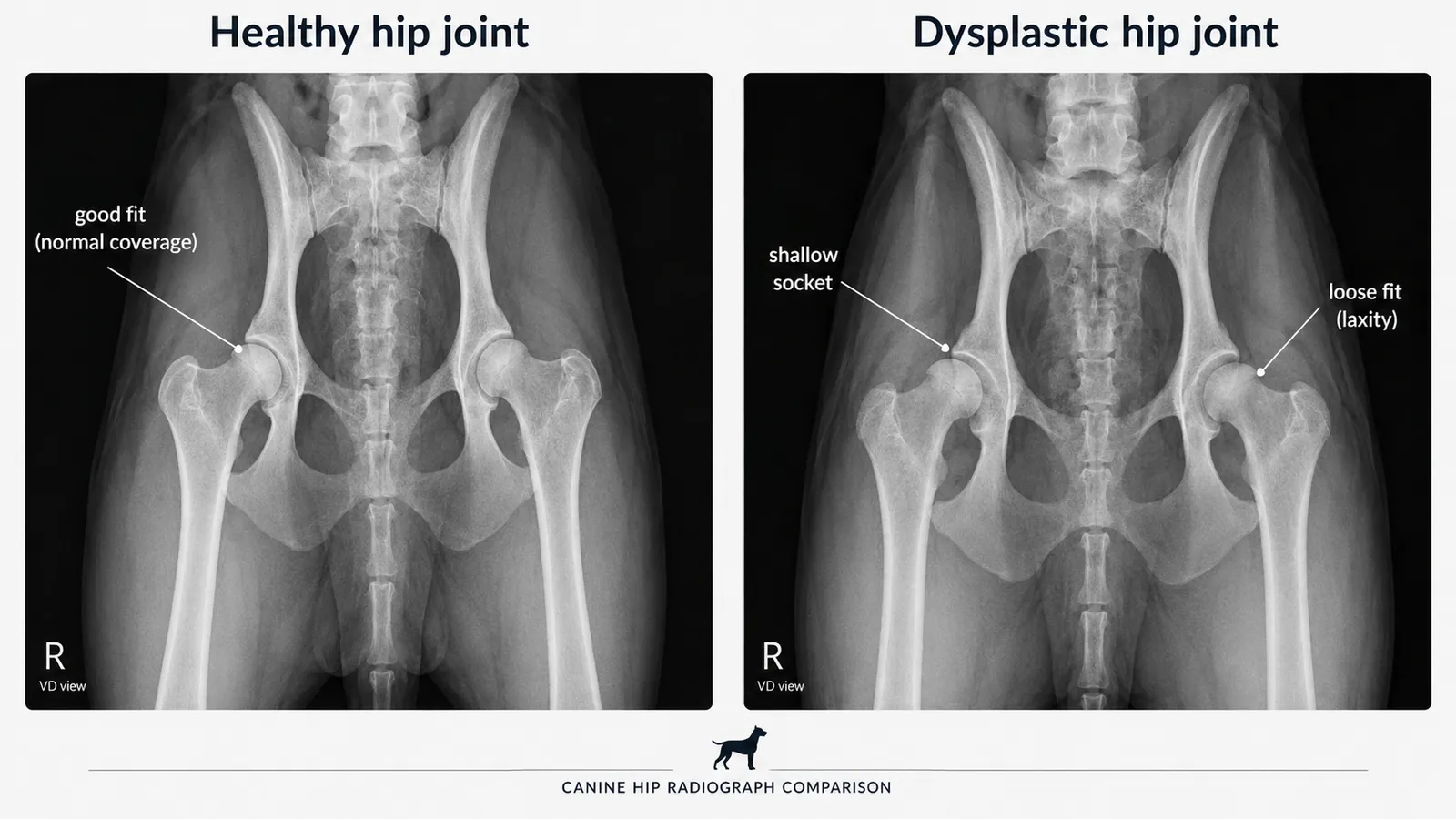
Early diagnosis gives you more room to choose well. It can affect whether weight control alone is enough for now, whether rehab should start early, and whether your dog is still in the window for a surgery that works best before severe arthritis takes over.
That timing is the real trade-off. Waiting can feel easier today because the dog may still have good days, but it can also mean less flexibility later if the joint becomes more arthritic and painful. Cornell University College of Veterinary Medicine notes that the amount of arthritis present shapes when signs appear and how obvious they become Cornell University College of Veterinary Medicine.
For owners, the practical takeaway is simple: don’t only ask, “Is this hip dysplasia?” Ask, “What stage might this be, and what options are still on the table if we act now?” That question helps you and your vet decide whether the next step should be conservative care, pain control, rehab, or a surgical conversation.
Hip Dysplasia Timing Test
This quick framework helps separate early instability from arthritis-stage disease. It is not a diagnosis, but it can help you understand which dog hip dysplasia symptoms treatment options usually come first.
- Age/stage: Is your dog a puppy or young adult with loose, awkward movement, or an older dog with stiffness and slower rising? Early instability pushes the conversation toward mechanics and timing. Later-stage OA pushes it toward comfort and function.
- Pain level: Is the problem mild and intermittent, or is your dog clearly guarding the hips, resisting stairs, or struggling to get comfortable? Higher pain usually means medication and vet assessment move up the list.
- Mobility loss: Can your dog still jump, climb, and play with only mild hesitation, or are they dropping activities they used to handle easily? Bigger loss of function makes treatment more urgent.
- Arthritis burden: Has a vet already seen X-ray evidence of OA, bony remodeling, or reduced joint congruity? More arthritis usually means conservative care becomes supportive rather than corrective.
If age and instability are the main issues, surgery may deserve an earlier conversation. If pain and arthritis are doing most of the damage, the plan usually shifts toward weight control, rehab, and medication, with surgery considered only if the dog is still a good candidate for that specific procedure.
A practical next step is simple: write down what you have noticed, book the exam, and ask your vet which stage your dog seems to be in. That one conversation can save you a lot of guessing, and for a dog with hip dysplasia, guessing is usually the expensive part.
What to do next
- Book a veterinary exam if the symptoms are repeated, worsening, or affecting your dog’s ability to rise, jump, or climb stairs.
- Bring a short symptom log, including when stiffness is worst and whether both hind legs seem involved.
- Ask your vet whether the pattern looks like early instability, arthritis-stage disease, back pain, or something else.
- Discuss conservative care, rehab, medication, and surgery in the context of your dog’s age and X-ray findings, not as one-size-fits-all choices.
- Keep activity controlled and your dog lean while you wait, so the next decision is based on a calmer, clearer picture.
Questions owners ask
Can a dog have hip dysplasia without limping?
Yes. Some dogs show stiffness, bunny hopping, or trouble rising before they ever develop a true limp. Others compensate so well that the signs look more like slowing down than obvious lameness.
Is hip dysplasia in dogs painful?
Yes, it can be painful, especially once arthritis and inflammation develop. Some dogs hide the pain well, so changes in movement or mood may be the first clue.
Can weight loss help dog hip dysplasia symptoms?
Yes. Reducing extra body weight lowers strain on painful hips and often improves mobility, but it does not fix the joint itself.
When is surgery considered for dog hip dysplasia?
Surgery is usually considered when pain, looseness, or mobility problems are significant, or when a young dog may benefit from intervention before arthritis advances. Your vet will base that decision on age, X-rays, and response to conservative care.
Is hip dysplasia the same as arthritis?
No. Hip dysplasia is the structural problem of a loose or poorly formed hip joint, while arthritis is the wear-and-tear inflammation that can develop afterward. A dog can have one without the other, especially early on.
Sources consulted
Sources consulted for this article:
- Canine Hip Dysplasia Treatment and Surgery | Bridger Veterinary Specialists & Emergency
- Hip Dysplasia in Dogs | Causes, Prevention and Treatment
- Hip Dysplasia in Dogs: Natural Remedies | AKC Pet Insurance
- Canine hip dysplasia (CHD) | Cornell University College of Veterinary Medicine
- What can be done for dogs with hip dysplasia? - Vetster
- Management of Hip Dysplasia - WSAVA2004 - VIN