
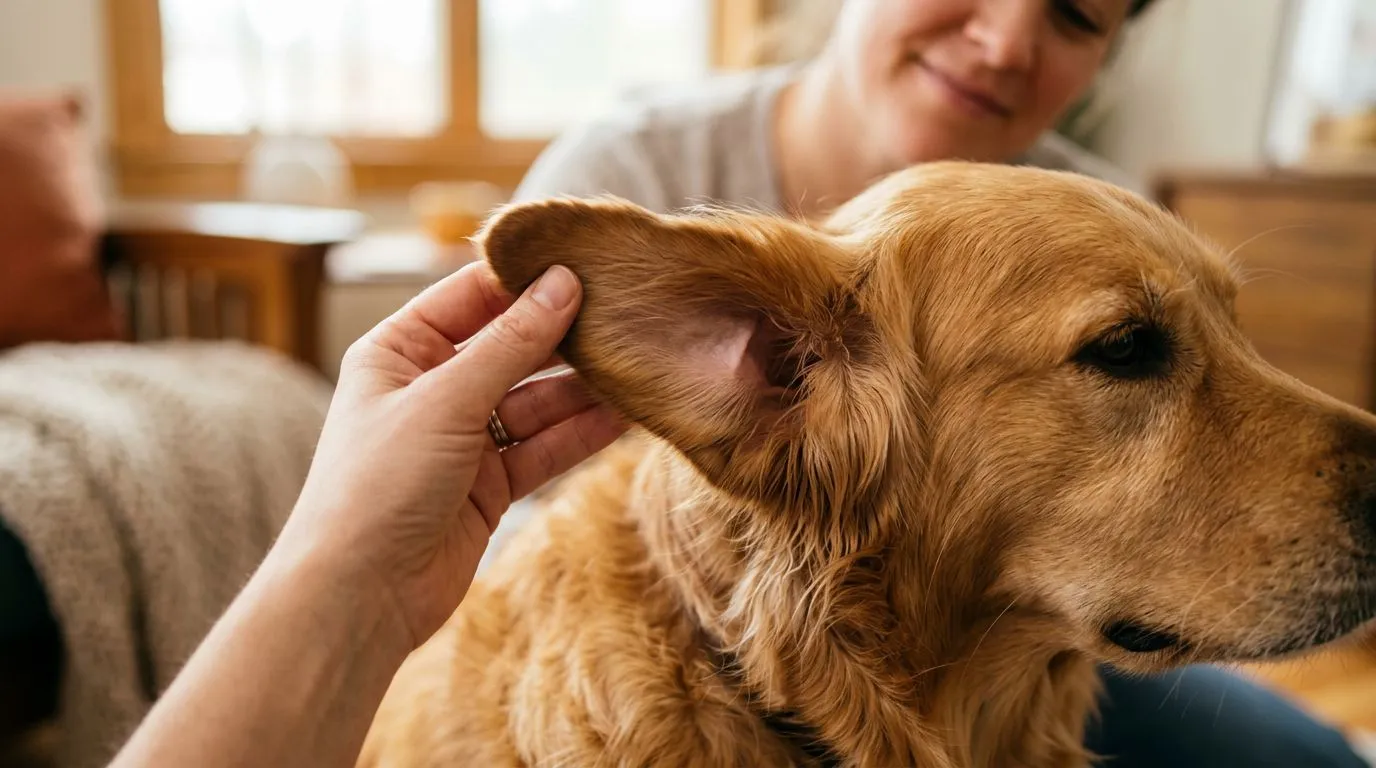
Dog Ear Infections: Symptoms, Causes, and Treatment
Is your dog constantly shaking their head, scratching at their ears, or smelling a bit like sweet yeast? If so, you're likely dealing with an ear infection. To get this sorted out, you'll need a quick trip to the vet. They have to pinpoint the exact microbe causing the trouble so they can prescribe the right medicated drops.
Editorial note: This article is written from the perspective of a dog owner and is intended for educational purposes only, it is not veterinary advice, diagnosis, or treatment. Ear infections can progress rapidly and cause permanent hearing loss or neurological damage if untreated. If your dog is showing signs of pain, head tilt, loss of balance, or discharge, consult a licensed veterinarian promptly. For emergencies, contact your nearest animal hospital immediately.
- The unique L-shape of a dog's ear canal naturally traps moisture and debris, making them highly susceptible to yeast and bacterial overgrowth.
- Frequent head shaking, scratching at the ears, and a strong, sweet, or sour odor are the most common early warning signs of an issue.
- Underlying environmental or food allergies are often the true root causes behind chronic, recurring ear inflammation in dogs.
- Never administer ear drops without a vet's exam, as putting medication into an ear with a ruptured eardrum can lead to permanent hearing loss.
Understanding the L-Shape: Why Dog Ears Are Vulnerable
Blame anatomy for this one. Your dog’s ears are practically built to trap moisture, debris, and heat. Unlike our ear canals, which run straight and horizontally to the eardrum, a dog’s canal takes a sharp plunge downward before bending horizontally. This L-shape creates a literal dead end where gravity can't help with drainage.
Since water and gunk slide down easily but get stuck at that bottom bend, the ear turns into an incubator. It's warm, dark, and damp-a perfect breeding ground for microbes. The team at Shatto Veterinary Center in Los Angeles, California, sees this all the time, especially in water-loving pups and breeds with floppy ears.
The Most Common Dog Ear Infection Symptoms and Warning Signs
Catching an ear infection early prevents a mild itch from turning into a deeply painful ordeal. Dogs can't tell us where it hurts. Instead, they show us through repetitive habits, trying desperately to ease the throbbing pressure and itch deep inside. Watching for sudden shifts in their daily routine is your best line of defense.
- Persistent head shaking or vigorous head tilting as if trying to dislodge something
- Frequent scratching, pawing, or rubbing the affected ear against carpet and furniture
- A distinct sweet, sour, or yeasty odor rising from the ear opening
- Redness, swelling, and warmth radiating from the inner ear flap
- Dark brown, black, or yellowish discharge coating the canal opening
As PetMD points out, how intense these symptoms are tells you a lot about the inflammation inside. An occasional head shake might just be a random itch. But if your dog is scratching non-stop until their ear flap is raw, you're looking at a clear sign of an active infection.
The Three Types of Canine Ear Infections
Vets group ear infections based on how deep they've traveled down the canal. This is a crucial distinction. Leave an outer ear infection alone, and it will eventually creep deeper, risking a ruptured eardrum and permanent damage.
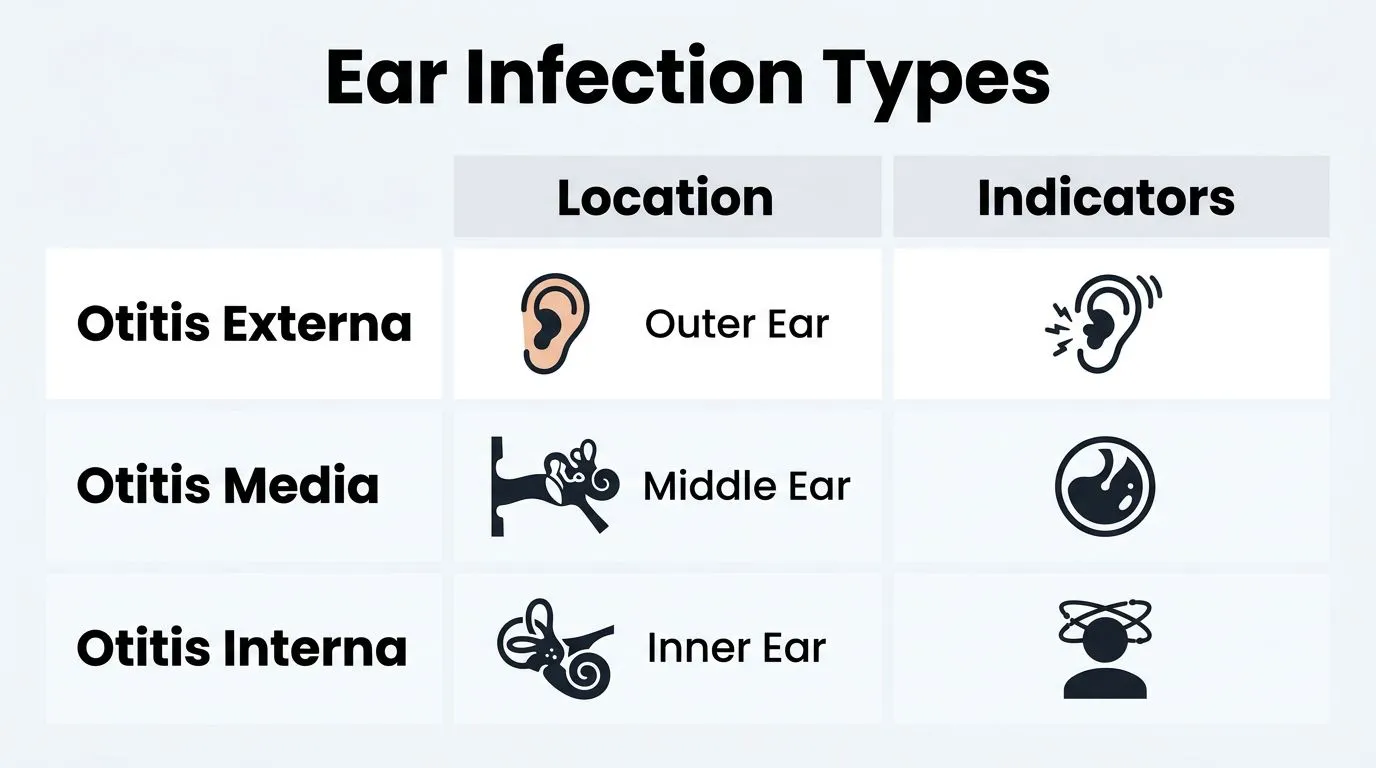
| Type | Anatomical Location | Common Indicators | Potential Complications |
|---|---|---|---|
| Otitis Externa | Outer ear canal, from the opening down to the eardrum | Redness, itching, mild discharge, yeasty odor | Easily treated but can become chronic if ignored |
| Otitis Media | Middle ear cavity, located directly behind the tympanic membrane | Mouth pain when chewing, head tilt, thick discharge | Ruptured eardrum, long-term hearing impairment |
| Otitis Interna | Inner ear, housing the balance and hearing organs | Loss of balance, rapid eye movement, facial drooping | Permanent deafness, severe neurological deficits |
What Actually Causes Ear Infections in Dogs?
Yeast and bacteria aren't outside invaders; they actually live in your dog's ears all the time. Normally, a healthy immune system and a clean ear canal keep them quiet. But if moisture builds up or immunity takes a hit, these opportunistic bugs seize the chance and multiply out of control.
Primary Triggers and Microenvironment Alterations
Allergies-both environmental and food-related, are usually the real culprits behind ear inflammation. An allergic reaction weakens the skin barrier and triggers excess wax, giving yeast and bacteria a feast. Other times, physical objects like grass awns or sharp foxtails get trapped during walks, sparking a sudden, painful infection.
Where you live matters, too. The veterinary team at Advanced Veterinary Medical Center in Milpitas, California, notes that high humidity, seasonal allergies, and local plants like foxtails create the perfect setup for stubborn, recurring ear issues.
Which Breeds Are Most Prone to Ear Issues?
Any dog can get an ear infection, but genetics and physical traits put some breeds at much higher risk. Knowing if your dog belongs to a high-risk group helps you know when to be extra vigilant with regular ear checks.
- Floppy-eared breeds like Cocker Spaniels and Basset Hounds, whose heavy ear flaps trap moisture and restrict airflow
- Hairy-canaled breeds such as Poodles and Schnauzers, where dense inner-ear hair captures wax and debris
- Allergy-prone breeds including Golden Retrievers and French Bulldogs, which experience chronic secondary skin inflammation
How Vets Diagnose and Treat Dog Ear Infections
You really need a professional diagnosis here. Using the wrong medication can cause intense pain or even permanent hearing loss. Before putting any drops in that ear, a vet must look inside to see which bug is multiplying and ensure the eardrum isn't ruptured.
- Otoscopic Examination: The veterinarian uses a specialized light tool to view the entire depth of the vertical and horizontal canal, checking the health of the tympanic membrane.
- Ear Cytology: The vet collects a sample of discharge using a cotton swab, spreads it on a slide, stains it, and analyzes it under a microscope to identify yeast, cocci bacteria, or rod-shaped bacteria.
- Professional Flushing: The clinical team gently cleanses the ear canal to remove thick wax and discharge barriers, ensuring topical medications can directly touch the inflamed skin.
- Targeted Prescription Treatment: The vet prescribes custom topical drops containing specific combinations of antifungal, antibacterial, and steroid ingredients based on the cytology findings.
At-Home Care: The Right Way to Clean and Prevent Ear Infections
At-home care is all about keeping things clean and dry without using harsh chemicals. Never reach for household staples like rubbing alcohol or hydrogen peroxide. They strip away the ear's natural protective barrier and cause agonizing pain on raw, inflamed tissue.
To clean the ears safely, squirt a vet-approved solution directly into the canal until it's full. Massage the base of the ear for thirty seconds to loosen up deep-seated wax. Next, let your dog shake their head to bring the gunk up, then gently wipe the outer canal with a cotton round.
Drying your dog's ears after swims, baths, or rainy walks is your best defense against yeast and bacteria. Controlling moisture is especially important if you bathe your dog frequently, see our guide on how often you should bathe your dog for timing recommendations that protect the ears too. Vet-approved drying flushes after every wash are key to breaking the cycle of chronic infections.
The Symptom Progression Guide: Safe Monitoring vs. Veterinary Urgency
It can be tough to decide whether to handle a mild ear issue at home or head straight to the clinic. This handy guide will help you figure out exactly when a simple wax buildup has crossed the line into a real vet emergency.
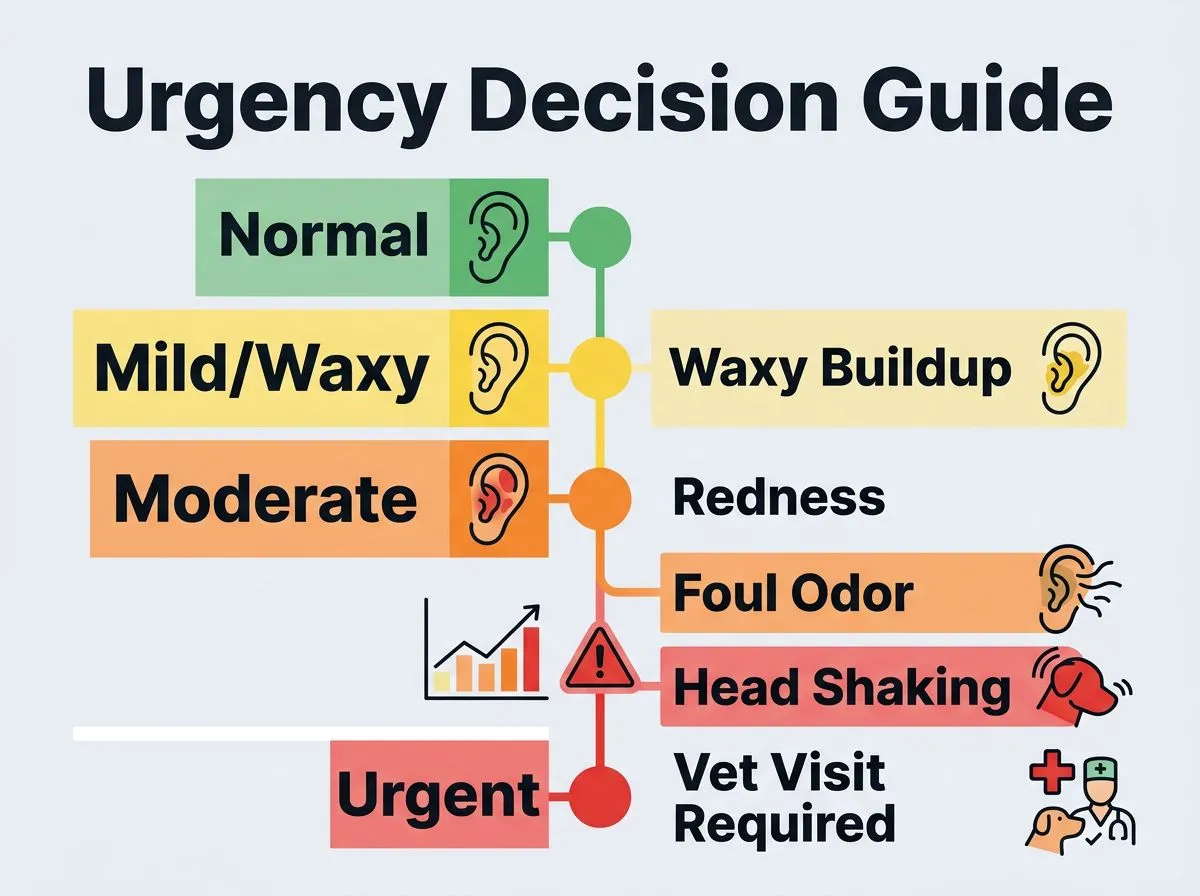
| Symptom Severity | Clinical Indicators | Risk Evaluation | Required Action |
|---|---|---|---|
| Mild / Waxy | Light tan wax, no foul odor, occasional scratching, no redness or swelling | Low risk; localized wax buildup | Clean with a vet-approved flush at home; monitor closely for 24 hours. |
| Moderate Infection | Redness, distinct yeasty smell, constant head shaking, yellow discharge, sensitivity to touch | Moderate risk; active outer ear infection | Schedule a standard veterinary visit within 48 hours for cytology and targeted drops. |
| Urgent / Severe | Swollen shut canal, extreme pain when touched, head tilt, loss of balance, rapid eye movements | Critical risk; potential middle or inner ear involvement | Seek immediate emergency veterinary care to protect hearing and neurological health. |
If you spot any of these urgent warning signs, don't wait for a routine appointment. A sudden head tilt, loss of balance, or pain when opening the mouth mean the infection has reached the deep inner structures and needs immediate care. These neurological signs can overlap with other conditions, if you're unsure what you're seeing, our article on why your dog is shaking can help you identify the difference.
Your Immediate Ear Care Checklist
- Inspect your dog's ears weekly for any redness, swelling, or unusual yeasty smells.
- Schedule an appointment with your veterinarian immediately if you observe dark discharge or persistent scratching.
- Use only veterinarian-approved ear cleaning flushes and avoid putting cotton swabs down into the ear canal.
- Dry your dog's ears completely with a towel and a gentle drying flush after every bath or swim.
Questions owners ask
Can I use hydrogen peroxide to clean my dog's ear infection?
No, you should never use hydrogen peroxide, rubbing alcohol, or vinegar in your dog's ears. These harsh substances cause extreme pain, irritation, and swelling on already raw, inflamed tissue. More importantly, if your dog has a ruptured eardrum, introducing these liquids can lead to permanent hearing loss or severe neurological damage. For a full list of household substances that are unsafe for dogs, see our complete guide to substances toxic to dogs.
How can I tell the difference between yeast and bacterial ear infections in dogs?
Yeast infections usually produce a distinct sweet, musty, or beer-like odor alongside a dark brown or black waxy discharge. In contrast, bacterial infections often smell foul or putrid and yield yellow or greenish discharge. Because symptoms overlap, only a veterinary cytology test under a microscope can confirm the exact microbe to ensure correct treatment.
Will a dog ear infection go away on its own?
No, canine ear infections will not resolve without targeted medical treatment. Because of the unique L-shape of your dog's ear canal, gravity cannot drain trapped fluid, meaning bacteria or yeast will continue to multiply. Left untreated, the infection will eventually spread deeper, risking a ruptured eardrum and permanent hearing damage.
Can I prevent my dog from getting ear infections?
You can significantly reduce the risk, though you can't eliminate it entirely, especially for breeds that are anatomically predisposed. The most effective habits are cleaning the ears with a vet-approved flush every one to two weeks (not more often, as over-cleaning strips the ear's natural protective barrier), drying the ears completely after every bath or swim, and doing a quick visual check weekly for redness, odor, or dark discharge. For allergy-prone dogs, working with your vet to identify and manage the underlying trigger, whether food or environmental, is the single most impactful thing you can do, since allergies are the root cause of most chronic, recurring ear infections.
For more plain-language answers to common dog health questions, visit our dog health guide.
Sources and further reading
Sources consulted for this article:
- 8 Signs of Ear Infections in Dogs: What To Look For | PetMD
- Dog Ear Infection: Causes, Symptoms & Treatment
- How To Spot and Treat Ear Infections in Dogs
- Dog Ear Infections: Prevention, Treatment & Care
- Dog Ear Infection: Recognizing the Urgent Signs | Bay Area Pet Hospital
- How to Know If Your Dog Has an Ear Infection, Los Angeles Vets