
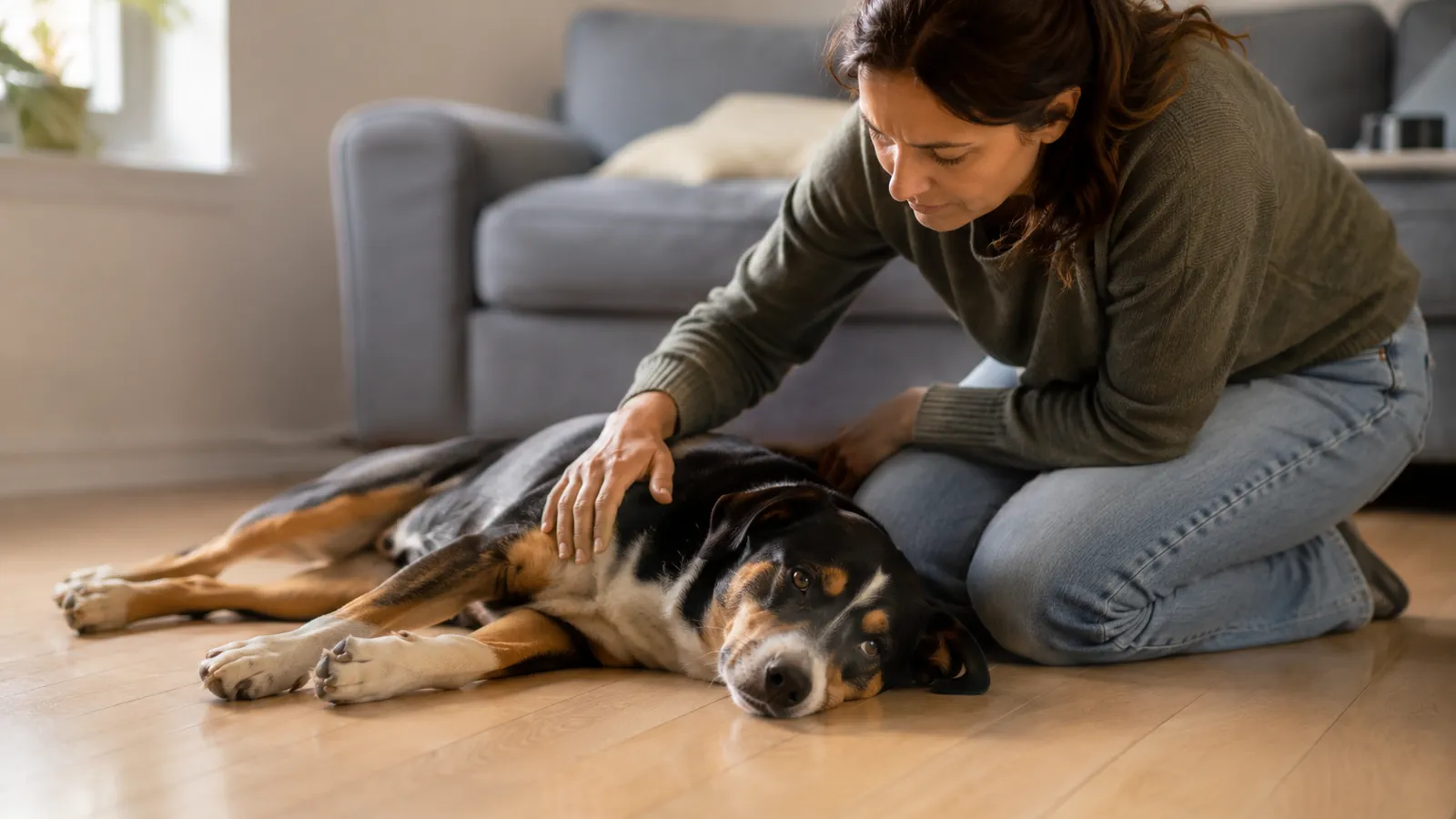
Dog Diarrhea When to Worry: What’s Normal, What’s Not, and What to Do Next
Dog diarrhea is stool that’s looser, more frequent, or more watery than your dog’s usual pattern, and it becomes worrying fast when it comes with blood, vomiting, pain, dehydration, unusual tiredness, a risky exposure, or in a puppy, senior dog, or dog with a chronic illness.
- One loose stool is often mild, but repeated watery diarrhea needs closer attention.
- Blood, vomiting, pain, dehydration, or low energy raise the risk fast.
- Puppies, seniors, and dogs with chronic illness should be seen sooner.
- A simple home checklist can help you judge whether to watch or call the vet.
- When in doubt, worsening diarrhea is safer to treat as urgent.
A single soft stool after scavenging or a sudden food switch can be a short-lived stomach upset. Repeated watery diarrhea over several hours, especially when your dog seems off, is a different situation and deserves a closer look.
The real question isn’t just “does my dog have diarrhea?” It’s “what else is going on, how often is it happening, and how quickly is my dog slipping from normal into not quite right?” That’s what helps you decide whether to watch, call the vet today, or go urgently.
When does dog diarrhea cross from normal to worrying?
Dog diarrhea when to worry means the stool issue has stopped looking like a brief upset and may be part of something bigger. One messy bowel movement matters less than the pattern: frequency, volume, duration, blood, vomiting, thirst, appetite, and energy all shift the level of concern.
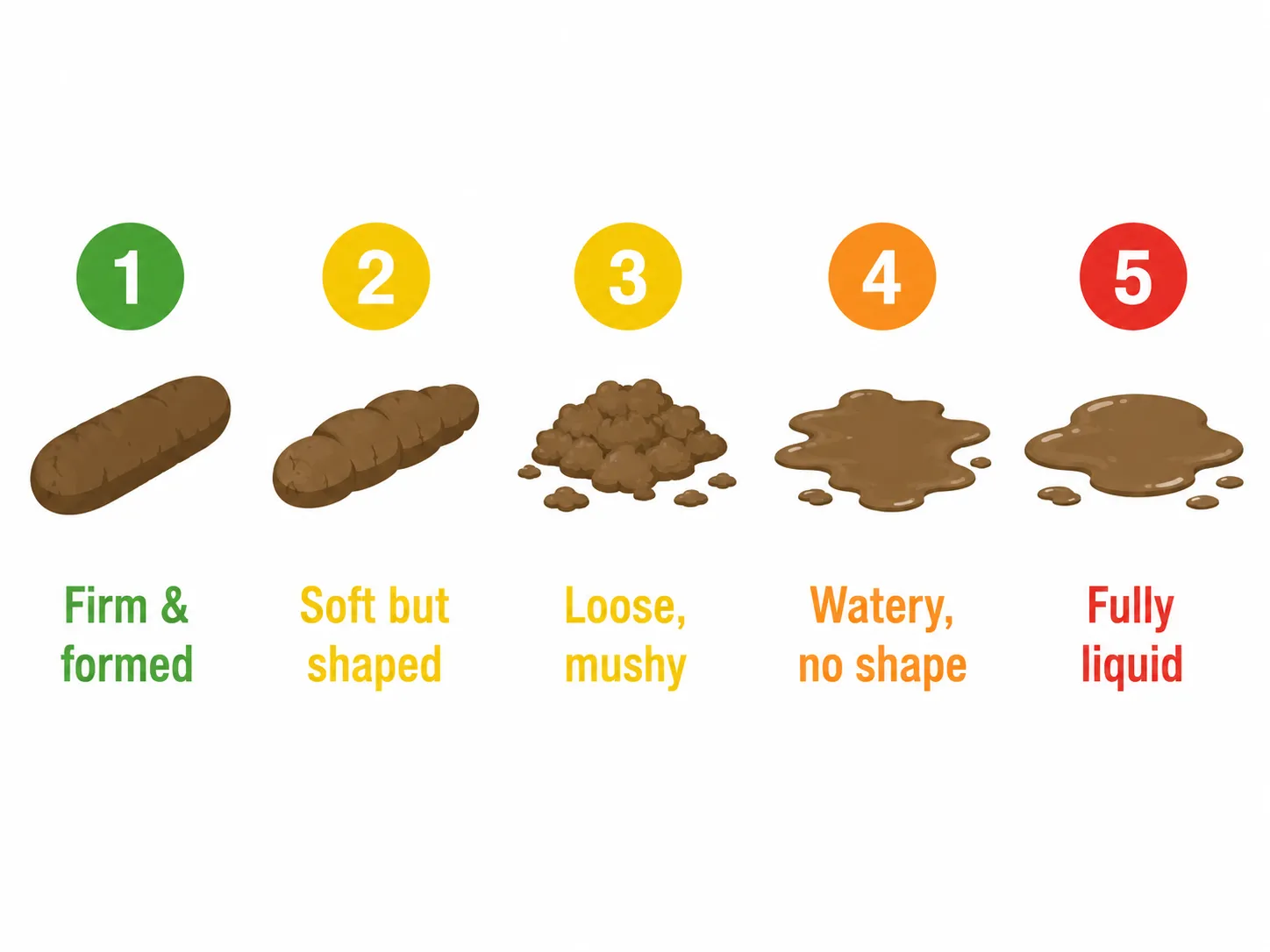
A dog can have one loose stool after a sudden diet change and still be okay. But a dog having watery diarrhea four times in six hours, even while wagging and following you around, may be heading toward dehydration or dealing with something more serious.
That’s where a lot of owners get caught. “Bright but diarrheic” sounds comforting, but being bright doesn’t cancel out blood loss, toxin exposure, a foreign body, or a gut problem that’s getting worse fast. The stool may be the first clue; the rest of the body tells you how urgent it is.
Sources like the AKC, VCA Animal Hospitals, and the Merck Veterinary Manual all come back to the same practical point: diarrhea is common, but the signs around it decide whether this is a watch-and-wait issue or a vet problem.
Which symptoms mean your dog needs a vet today?
- Blood in the stool, including bright red blood or black, tarry stool.
- Diarrhea with vomiting, marked lethargy, abdominal pain, or refusal to drink.
- A puppy with diarrhea, an older dog, or a dog with diabetes, kidney disease, Addison’s disease, or other chronic illness.
- Possible toxin exposure, a foreign body, or contact with a contagious illness.
- Diarrhea that is frequent enough to raise dehydration risk even if the dog still looks alert.
Blood changes the picture quickly. Bright red blood can point to the lower bowel, while black, tarry stool can mean digested blood from higher up in the digestive tract. The AKC and Merck Veterinary Manual both treat this as a reason for prompt veterinary attention, especially if it comes with weakness or vomiting.
Puppies and older dogs have less room for error. A puppy can dehydrate fast, and senior dogs or dogs with diabetes, kidney disease, or Addison's disease can tip into a more serious problem sooner than a healthy adult would. Cornell University College of Veterinary Medicine and the Royal Veterinary College (RVC) both emphasize that these higher-risk groups need faster action.
Exposure history matters just as much as the stool itself. The ASPCA Animal Poison Control Center and Pet Poison Helpline exist for a reason: owners often find out too late that a dog got into compost, medication, xylitol, a dead animal, or something sharp that can trigger vomiting and diarrhea. If a toxin or foreign body might be involved, don't wait for the next bowel movement to decide.
Can you use a simple checklist to judge risk at home?
| Action level | Stool pattern | Systemic signs | Risk group | Exposure history | What it usually means |
|---|---|---|---|---|---|
| Monitor at home | One or two soft stools; no blood; improving or not worsening | Normal energy, eating, drinking, and no vomiting | Healthy adult dog | Known mild diet slip or stress, nothing else concerning | Watch closely, keep water available, and recheck the pattern over the next several hours |
| Call the vet within 24 hours | Loose stool continuing through the day or recurring after a break | Appetite slightly off or mild nausea, but not collapsing or severely weak | Adult dog, but with a history of sensitive stomach or recent illness | Recent diet change, minor scavenging, travel, or boarding stress | Likely needs advice, stool testing, or a plan if it does not settle quickly |
| Book a same-day appointment | Repeated watery diarrhea, mucus, or any blood; or diarrhea plus vomiting | Lower energy, belly discomfort, reluctance to eat, or not wanting to drink much | Puppy, senior, or dog with a chronic disease | Possible infection, foreign body, or questionable food exposure | Needs prompt examination because the combination, not one sign alone, raises concern |
| Seek urgent or emergency care | Black, tarry stool; profuse diarrhea; or diarrhea with collapse | Severe weakness, dehydration, painful belly, or repeated vomiting | Any dog, especially small dogs and medically fragile dogs | Possible toxin, obstruction, or rapid deterioration | Do not wait. This can become an emergency fast and may need immediate treatment |
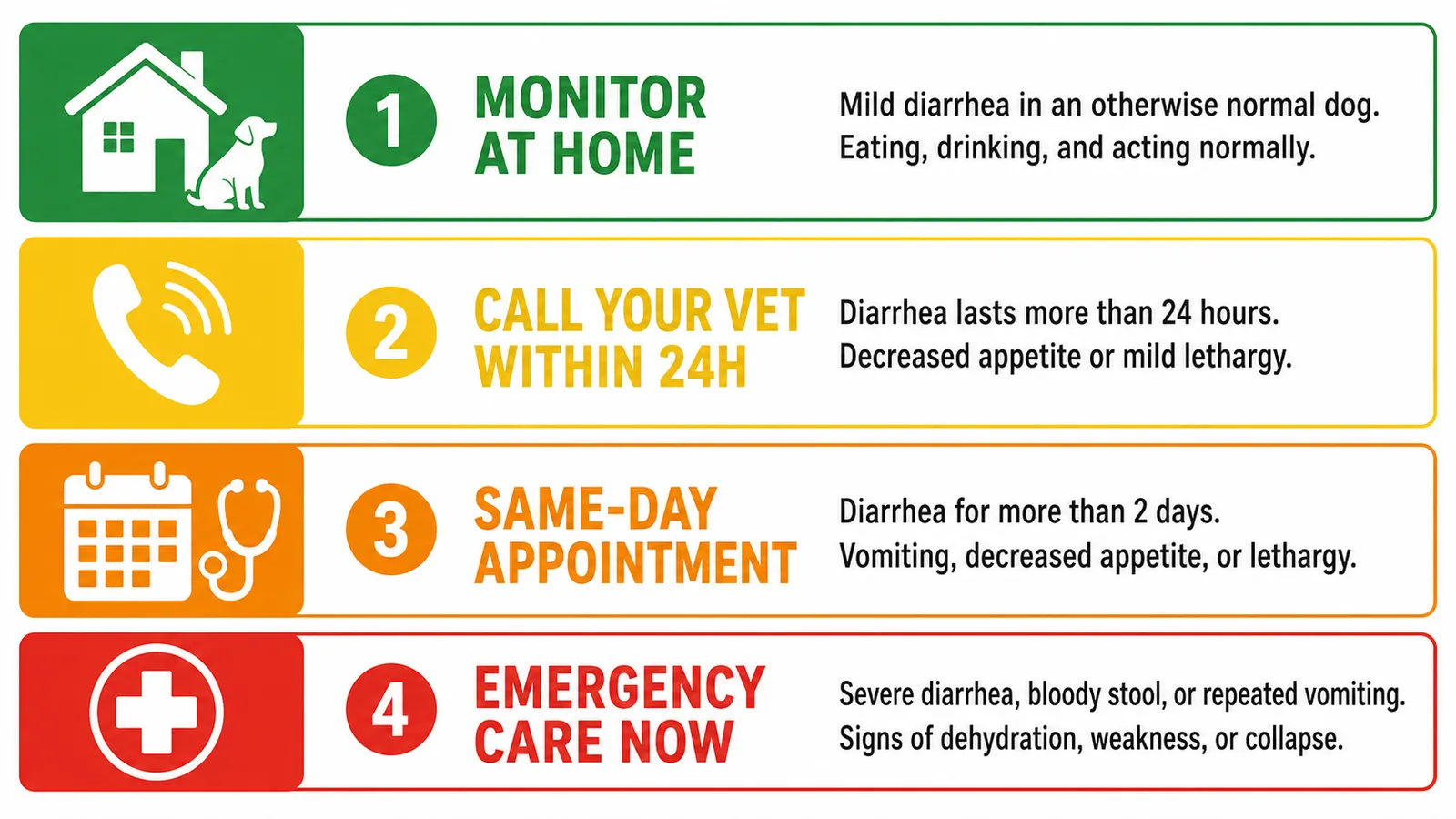
This framework works because it makes you look at the whole picture, not one symptom. The stool pattern tells you how active the problem is. The systemic signs tell you how the rest of the body is coping.
The “bright but diarrheic” dog needs extra attention here. If your dog is still alert but losing fluid quickly, having repeated diarrhea, or starting to vomit, the risk can climb before they look obviously sick. That’s why owners are often right to feel uneasy even when their dog is still asking for treats.
Keep that in mind as you look at the other criteria: dehydration, blood, and exposure history can outweigh cheerful behavior. A dog that seems okay but has had five watery stools and refused water is not in the same category as a dog with one soft stool after stealing a bit of pizza crust.
What usually causes mild diarrhea, and what causes the scary kind?
Mild diarrhea usually comes from a short-lived trigger that irritates the gut without causing major illness. Sudden food changes, scavenging, stress, travel, and minor parasite exposure are the classic examples. If the dog is otherwise bright, drinking, and improving, these cases often settle with close monitoring.
The more serious causes usually bring other clues along with them. Gastrointestinal infections, pancreatitis, foreign bodies, Addison’s disease, and toxin ingestion often add vomiting, pain, weakness, dehydration, or a dog that just doesn’t seem right. The diarrhea is part of the story, not the whole story.
That difference matters because the same loose stool can mean very different things depending on what happens next. A dog with a mild stomach upset may stay energetic and interested in food. A dog with an obstruction or toxin exposure can look fine for a while, then go downhill quickly.
Cornell University College of Veterinary Medicine and the Royal Veterinary College (RVC) both stress the value of context: vomiting, pain, lethargy, and dehydration turn a common symptom into a higher-risk one. If your dog’s behavior changed before or after the diarrhea started, pay close attention to the sequence.
What should you do in the first 12-24 hours?
- Write down the timing: how many loose stools there are, whether they are watery, and whether you see mucus, red blood, or black stool.
- Check the whole dog, not just the bowl: appetite, water intake, energy, vomiting, belly tension, and whether your dog seems uncomfortable when picked up.
- Keep water available and watch for dehydration signs such as dry gums, tacky saliva, sunken eyes, or a dog that is suddenly less interested in drinking.
- Do not reach for human anti-diarrheal medicines without veterinary guidance. Some are unsafe for dogs, and some can mask a problem that needs proper treatment.
- For a healthy adult dog with a single mild episode, a short food pause may be reasonable if your vet has previously advised it. For puppies, toy breeds, weak dogs, or any dog with repeated vomiting, do not wait to feed or fast without speaking to a vet first.
- When reintroducing food after diarrhea, use a bland, easily digested meal only if your dog is holding down water and the diarrhea is easing. If the stool keeps getting worse or your dog refuses food, call the vet instead of trying to manage it alone.
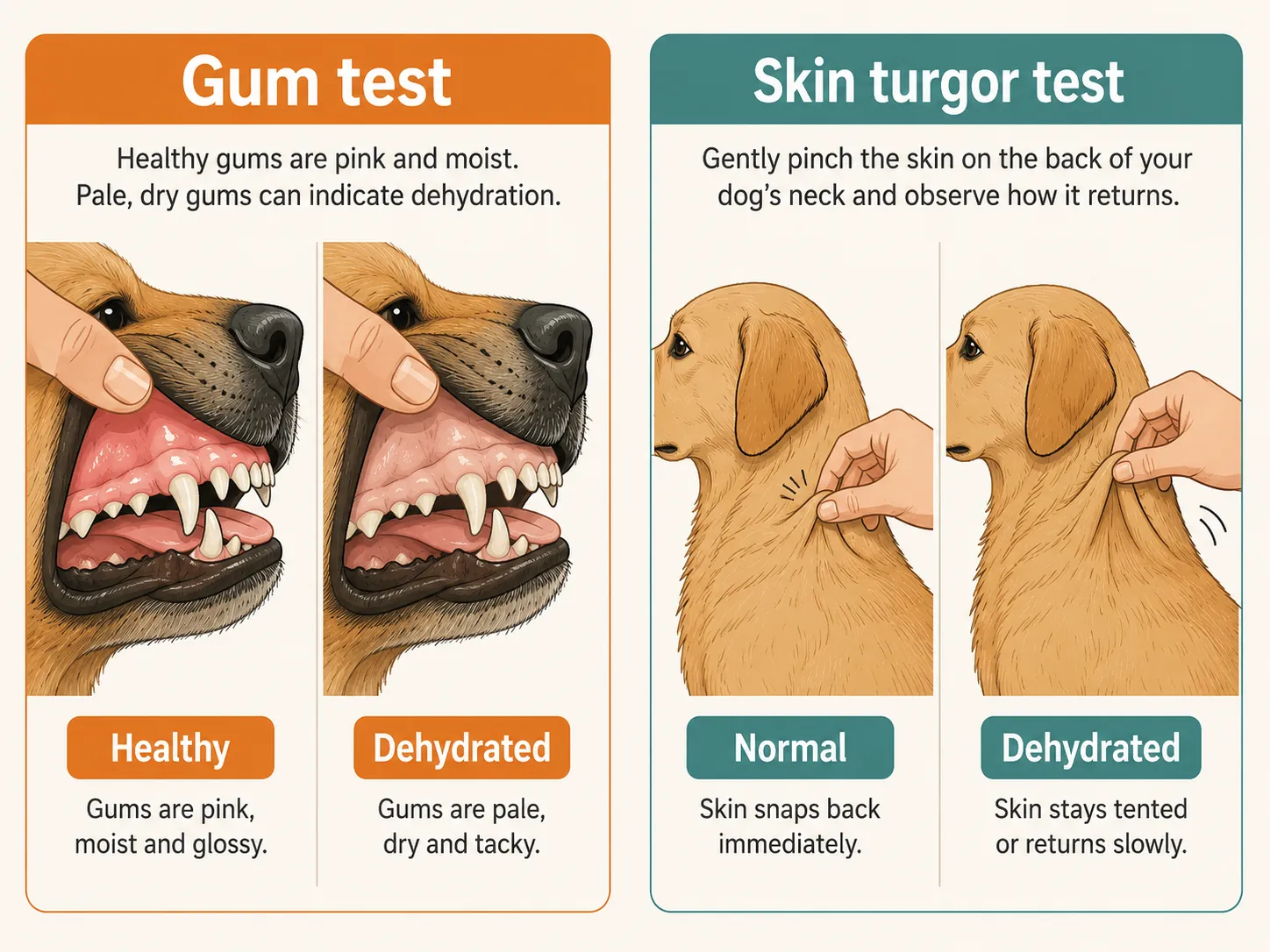
The goal in the first day isn’t to “fix” the stool as fast as possible. It’s to avoid making things worse while you figure out whether this is self-limited or a sign of something that needs treatment.
A lot of owners overcorrect here. They keep switching foods, try random home remedies, or keep waiting because the dog still seems perky. Quiet monitoring, water, and a clear record of what changed is usually more useful than improvising with the medicine cabinet.
When should you see a vet for dog diarrhea?
See a vet the same day if your dog has blood in the stool, repeated diarrhea, vomiting, belly pain, clear fatigue, or falls into a higher-risk group like a puppy, senior dog, or dog with a chronic disease. Those combinations are enough to move it out of simple home monitoring.
Seek urgent or emergency care if the stool is black and tarry, your dog collapses, becomes severely weak, shows obvious dehydration, or may have eaten a toxin or swallowed something that could block the gut. That’s the point where waiting can cost you time you don’t have.
When you call, bring the timing, a photo of the stool if you have one, a list of foods and treats, any medication your dog has taken, and any exposure you can think of, including trash, compost, dead animals, plants, or other sick dogs. Vets use that detail to decide whether to test, treat, or monitor.
If you want the shortest possible answer, here it is: one loose stool in a healthy dog can often wait. Diarrhea plus blood, vomiting, pain, dehydration, weakness, or a risky exposure should not wait. That’s the line worth remembering at 11 p.m.
The hard part is making the call in your own kitchen, with your dog looking at you like everything is normal. Use the stool pattern, systemic signs, risk group, and exposure history together, and you’ll make a better decision than relying on gut feeling alone.
Quick answers
How long can dog diarrhea last before I worry?
If it lasts more than 24 hours, or sooner if it’s watery, frequent, or getting worse, it’s worth calling your vet. Puppies, senior dogs, and dogs with health conditions need a faster response.
Is one episode of diarrhea in dogs an emergency?
No, one isolated episode is usually not an emergency if your dog otherwise seems normal. Watch closely, and act sooner if it repeats or comes with vomiting, blood, pain, or lethargy.
What if my dog has diarrhea but is acting normal?
That can still be a mild stomach upset, especially after scavenging or a food change. But “acting normal” doesn’t rule out a bigger issue if the diarrhea is frequent, watery, or accompanied by blood or vomiting.
Should I feed my dog after diarrhea?
Usually yes, but keep the next meal small and bland if your vet hasn’t told you otherwise. If your dog is vomiting, refusing food, or seems unwell, skip the guesswork and call the vet.
Does blood in dog stool always mean something serious?
Yes, it should always be taken seriously enough to assess promptly. Bright red blood can come from lower in the gut, while black, tarry stool may indicate digested blood and needs urgent veterinary attention.
Sources
Sources consulted for this article:
- AKC, Dog Diarrhea: Signs, Symptoms, and Treatments
- AKC, What to Do If You Find Blood in Your Dog's Stool
- VCA Animal Hospitals, Diarrhea in Dogs
- Merck Veterinary Manual, Introduction to Digestive Disorders of Dogs
- Cornell University College of Veterinary Medicine, Diarrhea
- Royal Veterinary College (RVC), New RVC study gets to the bottom of what causes doggy diarrhoea
- ASPCA Animal Poison Control Center
- Pet Poison Helpline