
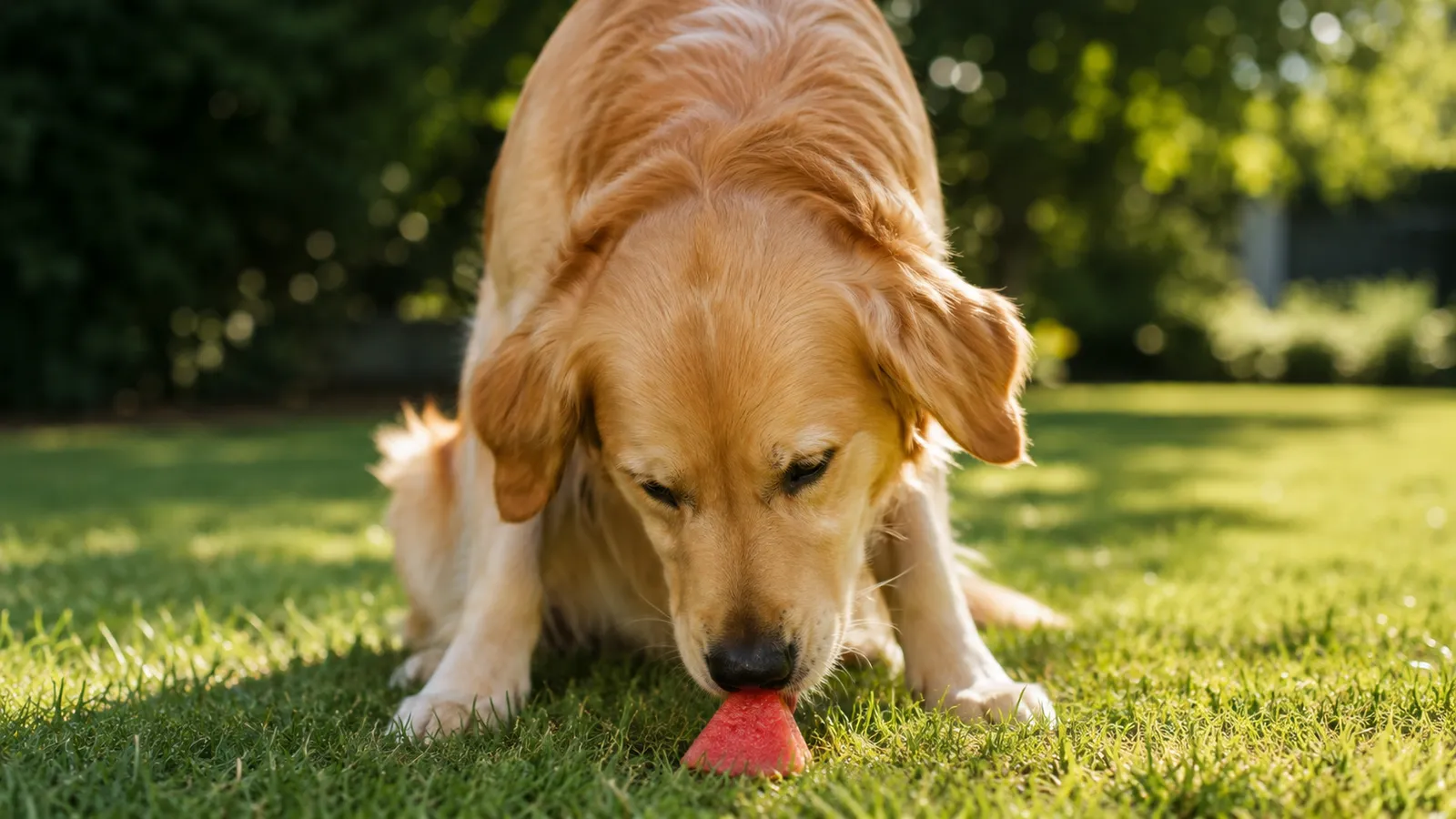
Can Dogs Eat Watermelon Safely? What’s Safe, What to Avoid, and How Much Is Too Much
Yes, most dogs can eat plain watermelon flesh in small amounts. It can be a refreshing, low-calorie treat on a hot day. But the seeds, rind, juice, and sugary watermelon snacks are where the trouble starts. Safe for dogs does not mean free-for-all, and that difference matters.
Watermelon at a glance
- Plain watermelon flesh is usually safe for dogs in small amounts.
- Avoid seeds, rind, and any sweetened or seasoned watermelon products.
- Too much watermelon can cause diarrhea, gas, or nausea.
- Dogs with diabetes, pancreatitis, or sensitive stomachs may need to skip it.
- Frozen cubes can be fine for some dogs, but fresh plain pieces are the safest option.
What parts of watermelon are safe for dogs, and what parts should you avoid?
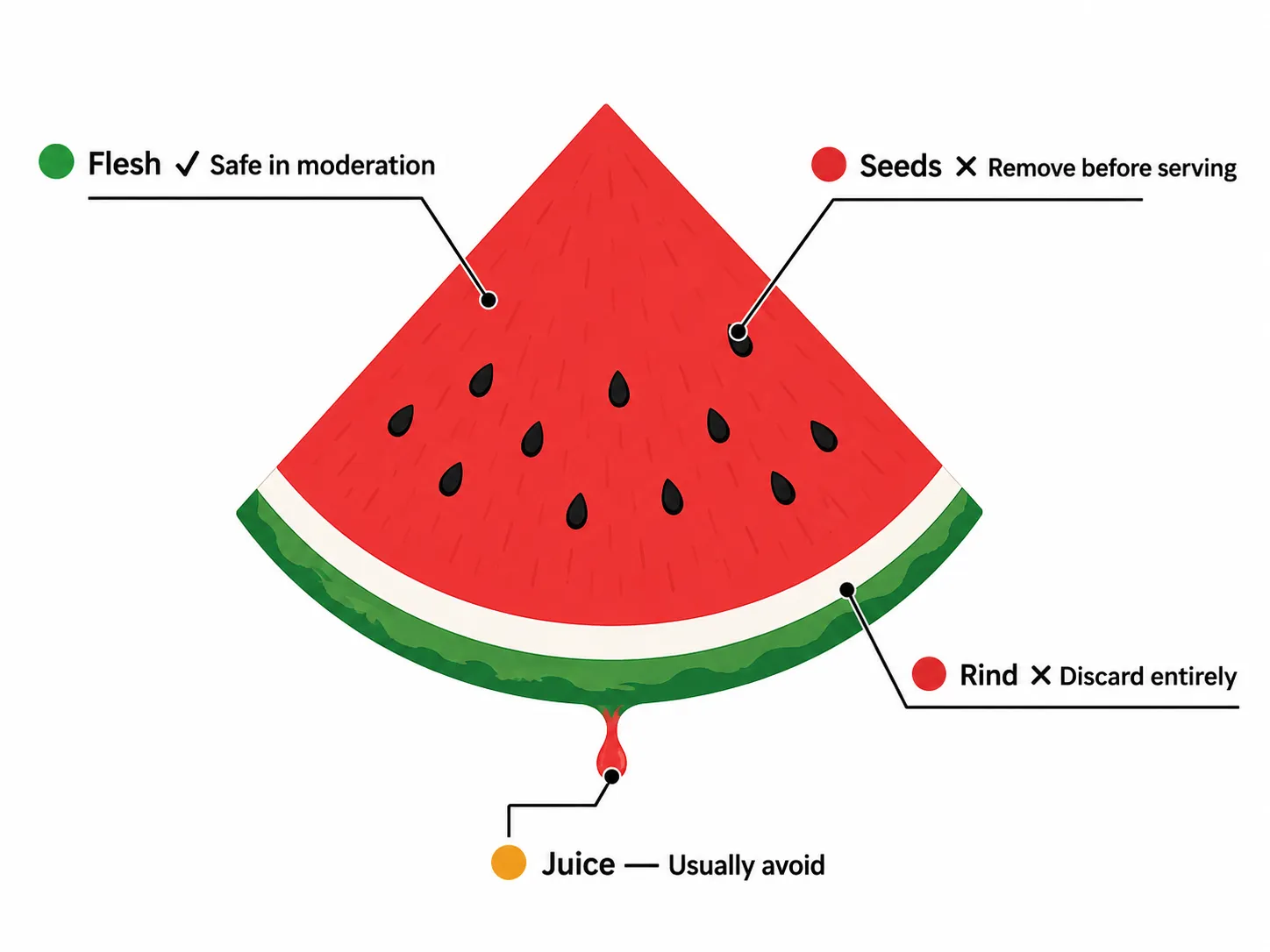
Watermelon flesh is the only part you should actively offer, and even then it should be plain and seed-free as much as possible. Seeds can be a choking hazard and, if enough are swallowed, raise concern for intestinal blockage. Rind is harder to digest and is the part most likely to trigger stomach upset or a more serious obstruction.
| Watermelon part | Safe for dogs? | Why it matters | What to do |
|---|---|---|---|
| Flesh | Yes, in moderation | Hydrating and usually well tolerated when plain | Cut into small pieces and serve as a treat |
| Seeds | No | Can pose a choking risk and may contribute to intestinal blockage if swallowed in quantity | Remove as many as possible before serving |
| Rind | No | Hard to chew and difficult to digest; may trigger vomiting or blockage | Discard it entirely |
| Juice | Usually avoid | Often concentrates sugar and can be too easy to overconsume | Skip unless your vet specifically recommends it |
| Packaged or flavored watermelon snacks | Usually avoid | May contain added sugar, sweeteners, or other ingredients dogs do not need | Read the label carefully or choose plain fresh fruit |
Seedless watermelon is safer, but it is not automatically risk-free. Stray seeds can still show up, and the flesh can still cause problems if your dog eats too much at once. The safest version is pretty simple: plain, fresh, and cut to suit your dog’s size.
How much watermelon can dogs eat without upsetting their stomach?
Watermelon should stay in the treat category, not the snack bowl you keep refilling all afternoon. Even a low-calorie treat can cause diarrhea, gas, or nausea if your dog gets more fruit than their stomach expects, especially if they are small or not used to fruit.
That matters more than people think. A few cubes may be fine for one dog and too much for another, simply because size, routine, and gut sensitivity vary. If your dog has never had watermelon before, give a very small taste first and watch how their stool and appetite look over the next day.
Dogs with sensitive stomachs usually do better with a cautious first serving. If that goes well, you can offer a little more later, but not much more. Treat calories still count, even when the fruit is mostly water.
When is watermelon a bad idea for dogs?
- Dogs with diabetes, unless your vet says a small amount fits their plan
- Dogs on prescription diets, because PetMD notes that food outside the diet should not be added without veterinary approval
- Dogs with a history of pancreatitis, chronic gastrointestinal sensitivity, or known food intolerances
- Dogs that gulp food, chew poorly, or tend to swallow pieces whole
- Dogs offered watermelon that has been seasoned, sweetened, mixed with other ingredients, or turned into a processed snack
- Dogs showing vomiting, bloating, abdominal pain, repeated swallowing, or clear distress after eating seeds or rind
The biggest gray zone is not whether watermelon is toxic. It is whether it fits the dog in front of you. A dog on prescription diets or a dog with diabetes may need a different treat strategy altogether, because even natural sugar can throw off the routine their care plan depends on.
Gulpers deserve special caution. A dog that inhales food instead of chewing it is more likely to turn a harmless snack into a choking scare. In that case, the fruit itself matters less than the way it is served, and the answer may be to skip it completely.
What is the safest way to serve watermelon to a dog?
The safest way to serve watermelon is to wash it, remove the rind, strip out as many seeds as you can, and cut the flesh into small pieces. Keep it plain. No salt, no sugar, no chili, no lime, and no “fun” human toppings that belong in your bowl, not your dog’s.
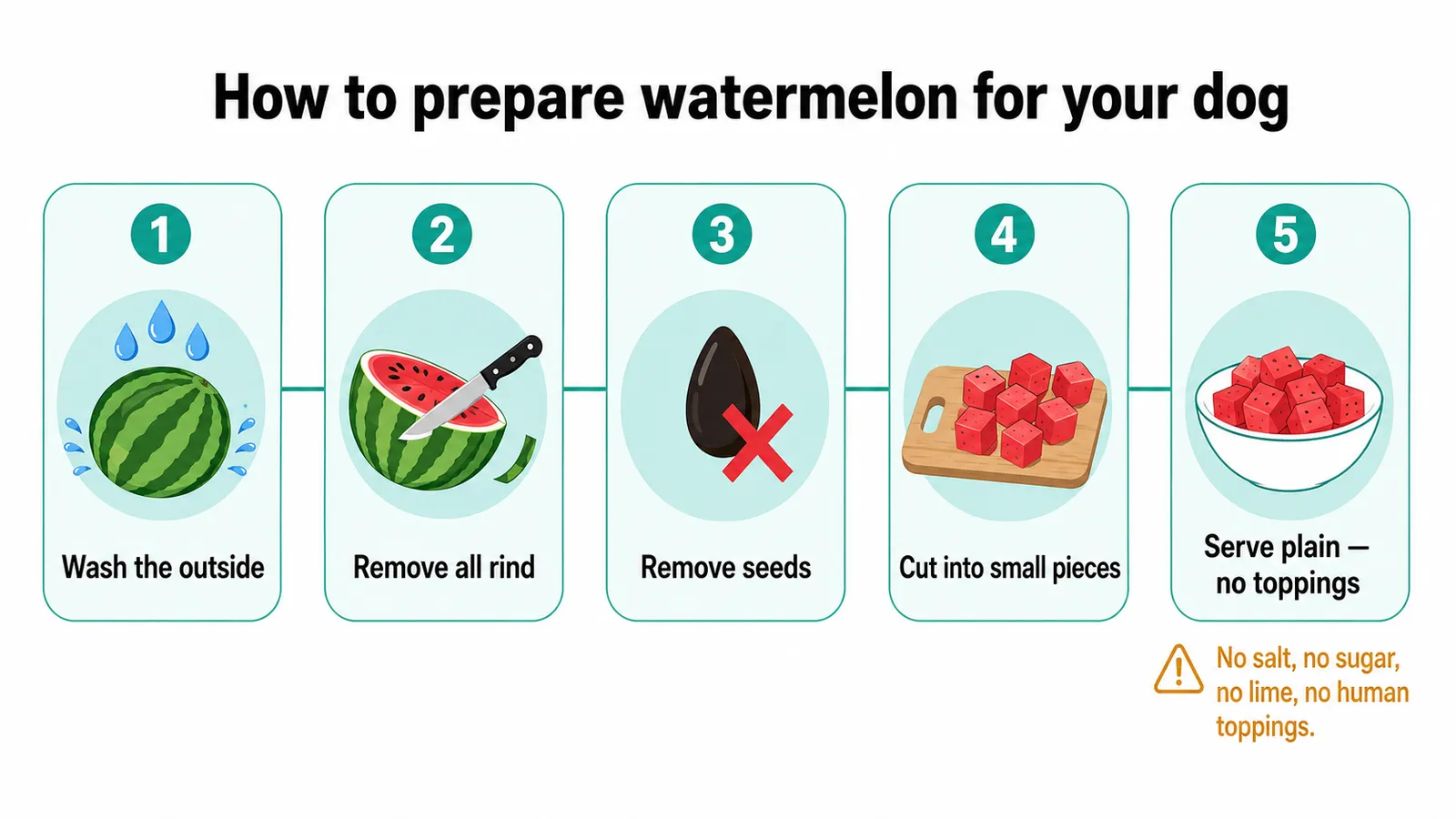
- Wash the outside of the watermelon before cutting it.
- Remove all rind and as many seeds as possible.
- Cut the flesh into bite-sized pieces based on your dog’s size and chewing style.
- Serve it plain only, with no added ingredients.
- Start with a tiny amount and watch for stool changes, drooling, or nausea over the next 24 hours.
If your dog tends to swallow food fast, make the pieces smaller than you think you need to. The goal is not just to make the fruit edible. It is to make it hard to inhale in one gulp. That tiny adjustment can matter more than most people expect.
Which is safer: fresh watermelon, frozen cubes, or dog treats with watermelon?
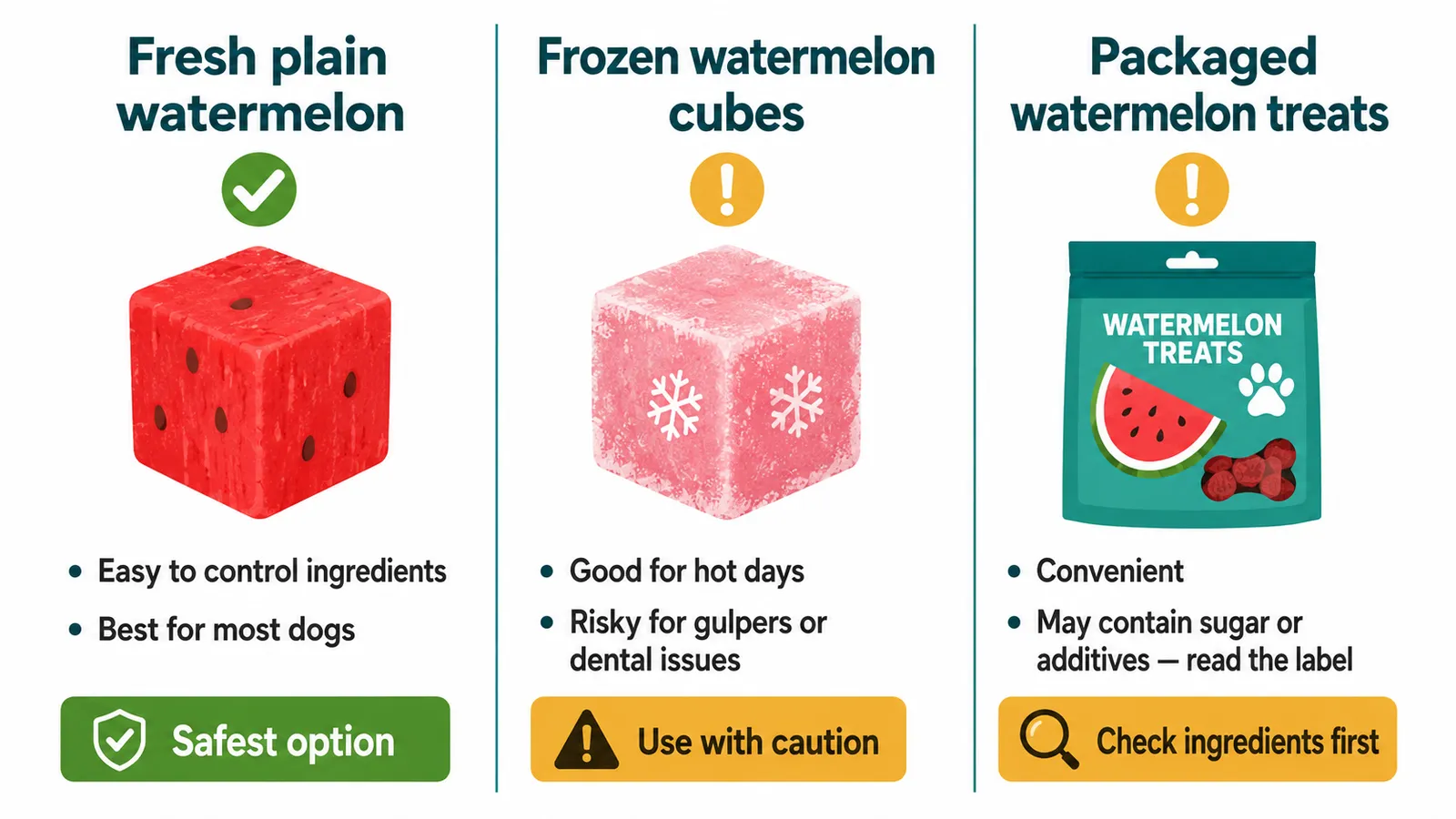
Fresh plain watermelon is usually the simplest and safest option because you control the ingredients, size, and texture. Frozen cubes can be useful in warm weather, but they suit dogs that chew calmly better than dogs that gulp or have dental issues. Packaged watermelon treats are only as safe as their ingredient list and texture.
| Option | Main advantage | Main drawback | Best for |
|---|---|---|---|
| Fresh plain watermelon | Easiest to control; no extra ingredients | Still needs seed and rind removal | Most dogs that tolerate fruit well |
| Frozen watermelon cubes | Cooling option for hot days | Hard chunks can be risky for gulpers or dogs with dental problems | Calm chewers who do well with cold treats |
| Packaged watermelon treats | Convenient | May include sugar, flavorings, or other ingredients you do not want | Owners who carefully read labels and want occasional convenience |
Frozen watermelon sounds healthier than it is if the pieces are too large. A dog that bites down hard on a frozen chunk may handle it fine, but a dog that tries to swallow it whole is a different story. Convenience is nice; safety comes first.
A simple watermelon safety check for your own dog
This quick checklist helps you decide whether watermelon makes sense right now. I call it the H-P-P-R check: Health Fit, Prep Quality, Portion Fit, and Red-Flag Symptoms. If any one of those fails, watermelon stops being a casual treat and becomes a question for your vet.
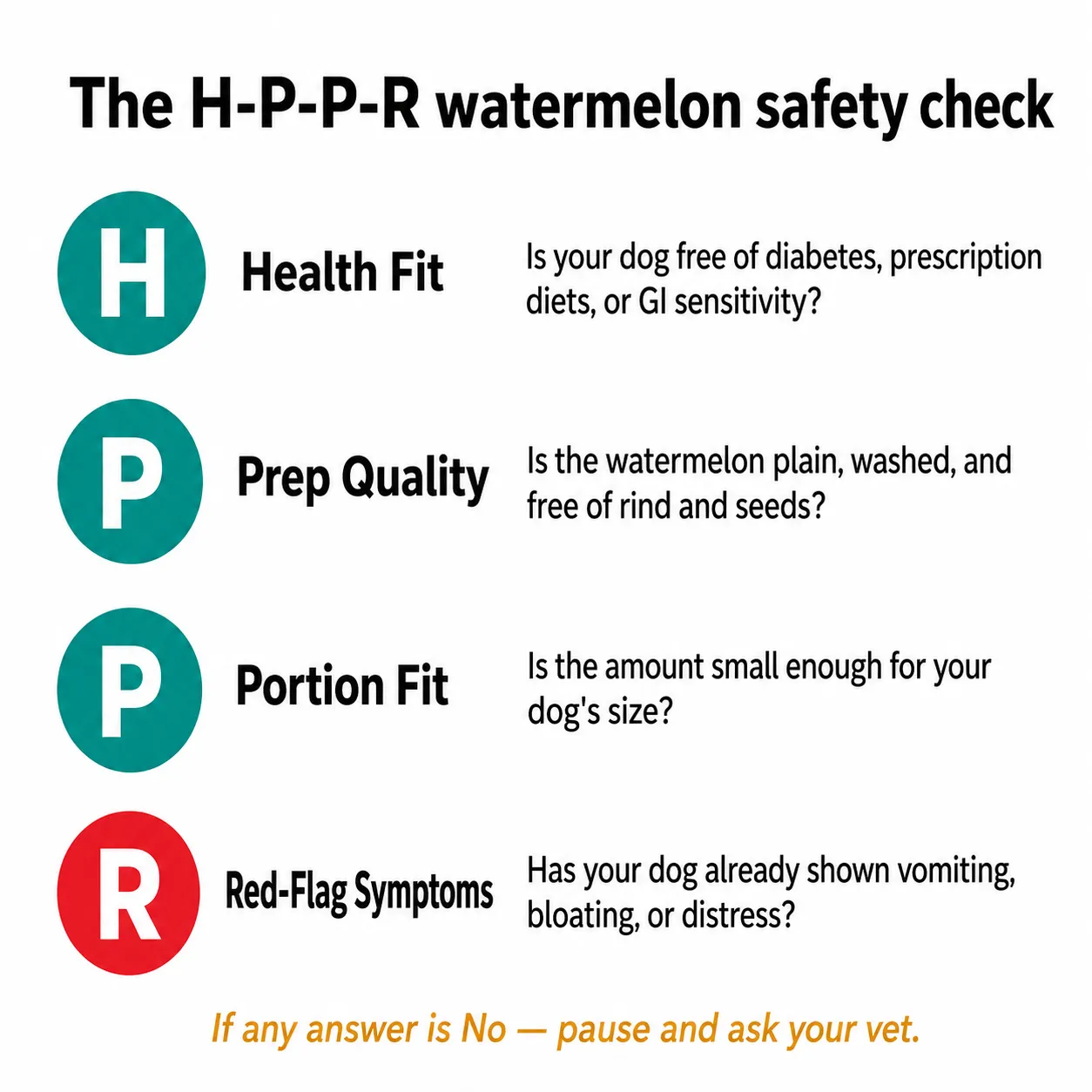
- Health Fit: Is your dog free of diabetes, prescription diet restrictions, pancreatitis history, or ongoing GI sensitivity? If not, pause and ask your vet.
- Prep Quality: Is the fruit plain, washed, ripe, and stripped of rind and as many seeds as possible? If not, do not serve it.
- Portion Fit: Is the amount small enough for your dog’s size and normal treat intake? If not, cut it back.
- Red-Flag Symptoms: Has your dog already vomited, bloated, coughed, retched, or acted painful after eating? If yes, skip more watermelon and call the vet.
- Gulp Factor: Does your dog swallow fast or chew poorly? If yes, use a safer treat or make the pieces much smaller than usual.
The value of a checklist like this is that it stops the “probably fine” spiral. Watermelon is one of those foods that feels harmless until it is not. These four checks keep the decision grounded in your dog’s actual health and behavior, not just the fact that the fruit is popular in summer.
When should you see a vet after your dog ate watermelon?
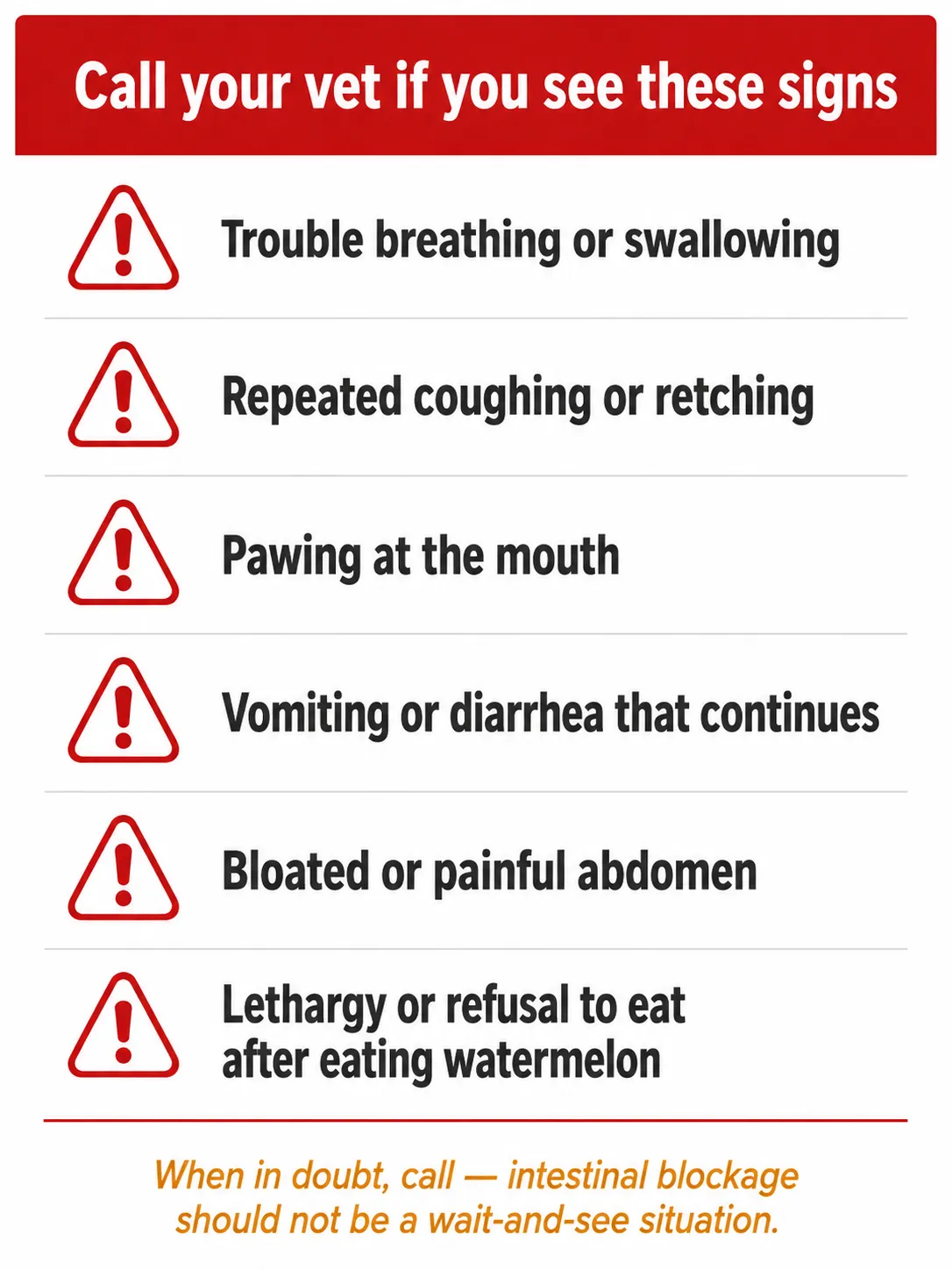
You should call your vet promptly if your dog has trouble breathing, keeps coughing or retching, paws at the mouth, or seems unable to swallow normally after eating watermelon. Those can point to choking or something lodged where it should not be. Vomiting, diarrhea, bloating, abdominal pain, lethargy, or refusing food afterward can mean the fruit did not sit well, or that rind or seeds caused a bigger problem.
A few stray seeds or a tiny bit of flesh may pass without issue, but large amounts of rind or a dog that swallowed pieces whole deserve more attention. Intestinal blockage is the concern nobody wants to miss, and it is not something to wait and see about if your dog looks clearly uncomfortable. If your gut says this is more than a simple tummy upset, trust that instinct and call.
What should you remember before you offer watermelon again?
Watermelon can be a smart summer fruit for many dogs when it is plain, portioned well, and treated like an occasional snack. The safest version is fresh flesh in small bites, not rind, seeds, juice, or packaged sweets. The more your dog has diabetes, a prescription diet, or a sensitive stomach, the more careful you need to be.
- Choose plain fresh flesh over anything flavored, sweetened, or heavily processed.
- Keep portions small and stop if your dog’s stomach seems off.
- Skip watermelon for dogs with diabetes or prescription diet restrictions unless your vet approves it.
- Watch closely after the first serving, especially if your dog is a gulper or has a sensitive gut.
- Call your vet fast if you see vomiting, bloating, pain, coughing, or signs of choking.
Quick answers
Can dogs eat watermelon seeds?
A few stray seeds are usually more of a choking concern than a poison concern, but it’s still best to remove them. If your dog swallowed a lot of seeds or seems unwell, call your vet.
Can dogs eat watermelon rind?
No, it’s better to avoid watermelon rind. It is hard to digest and can cause stomach upset or even an intestinal blockage if enough is eaten.
Is frozen watermelon safe for dogs?
Yes, frozen watermelon can be safe if it’s plain, seed-free, and cut small enough for your dog to chew. Skip it for dogs that gulp food, have dental problems, or tend to swallow pieces whole.
Can dogs with diabetes eat watermelon?
Sometimes, but only if your vet says a small amount fits your dog’s care plan. Watermelon still contains sugar, so it can affect blood glucose.
How do I know if watermelon upset my dog’s stomach?
Common signs include vomiting, diarrhea, gas, drooling, or a reduced appetite after eating it. If symptoms are severe, repeated, or your dog seems painful or weak, contact a vet.
References
Sources consulted for this article:
- Can Dogs Eat Watermelon? | Comal Pet Hospital & Resort
- Can Dogs Eat Watermelon? - American Kennel Club
- Can Dogs Have Watermelon? | Lane Veterinary
- Is it Safe for Dogs to Eat Watermelon? - Cheyenne Mountain
- Can Dogs Eat Watermelon? | PetMD
- Can Dogs Eat Watermelon? A Guide to Safety | Purina US