

Can Dogs Eat Mango? What’s Safe, What’s Not, and How Much to Give
Ripe mango flesh is usually safe for most dogs in small amounts, but the skin and pit are the parts that can turn a harmless snack into a real problem. The fruit is sugary enough, too, that some dogs end up with loose stool, vomiting, or an upset stomach after just a few bites.
Mango at a glance
- Plain mango flesh is usually safe in small amounts if it’s peeled and pit-free.
- Mango skin and pits are the parts most likely to cause trouble, including choking or blockage.
- Too much mango can trigger vomiting, diarrhea, or stomach upset, especially in smaller dogs.
- Puppies and dogs with sensitive stomachs should get even less, or skip mango entirely.
- If your dog swallowed the pit or seems unwell, call your vet promptly.
If your dog only had a little plain mango, there’s probably no reason to panic. But if they ate the skin, swallowed a pit, or already have a sensitive stomach, that changes the picture pretty quickly.
What parts of a mango are safe for dogs, and what should you avoid?
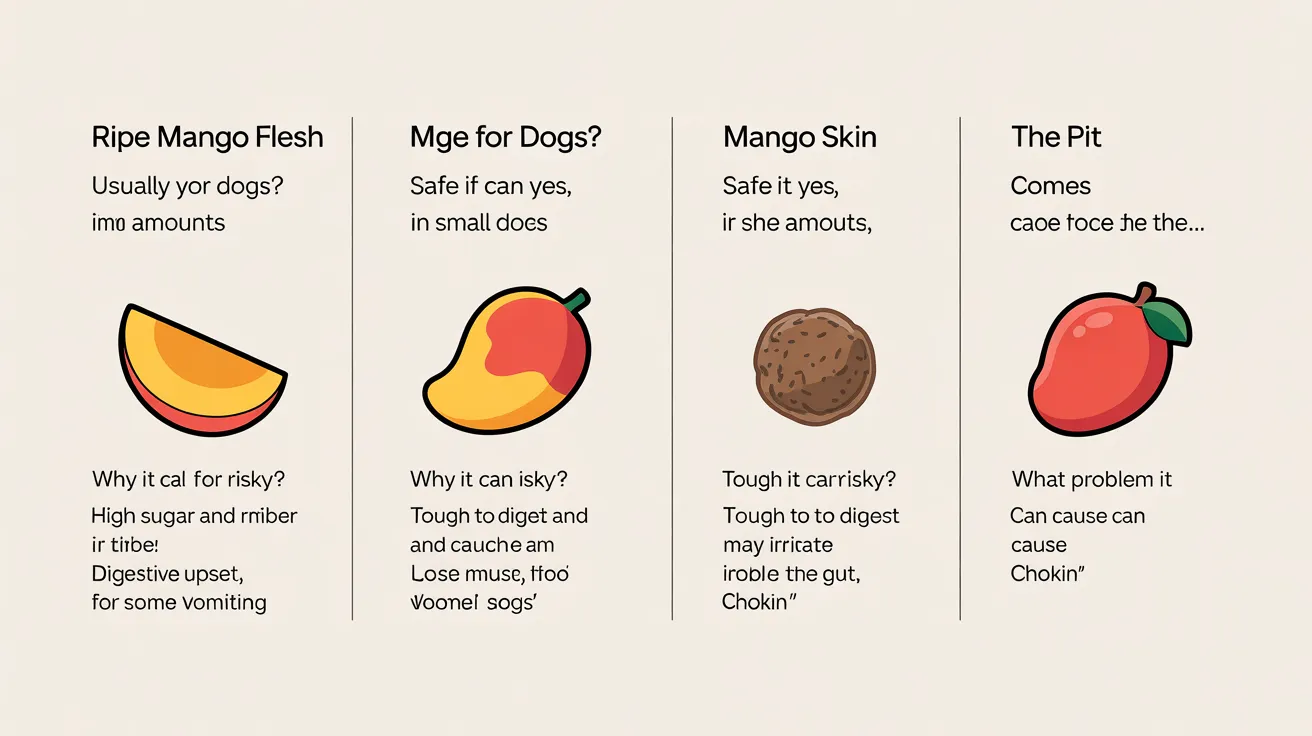
| Mango part | Safe for dogs? | Why it can be risky | What problem it can cause |
|---|---|---|---|
| Ripe mango flesh | Usually yes, in small amounts | High sugar and fiber can be too much for some dogs | Digestive upset, loose stool, vomiting |
| Mango skin | No | Tough to digest and may irritate the gut | Choking risk, intestinal blockage risk, stomach upset |
| Mango pit | No | Large, hard, and easy to chew on like a toy | Choking risk, blockage risk, broken teeth, stomach upset |
The flesh is the only part most owners should even think about offering, and even then it should be peeled, pit-free, and cut into tiny pieces. The skin can be tough for a dog’s digestive tract to break down, and the pit is a bigger worry because it can get stuck in the throat or gut if swallowed.
The pit comes with one more warning: a lot of dogs will mouth it, drag it around, or try to gnaw on it. That kind of chewing can crack teeth before anyone realizes the fruit wasn’t the real issue.
How much mango can dogs eat without upsetting their stomach?
A few small cubes is plenty for most dogs, with smaller dogs getting less and larger dogs getting only a modest handful at most.
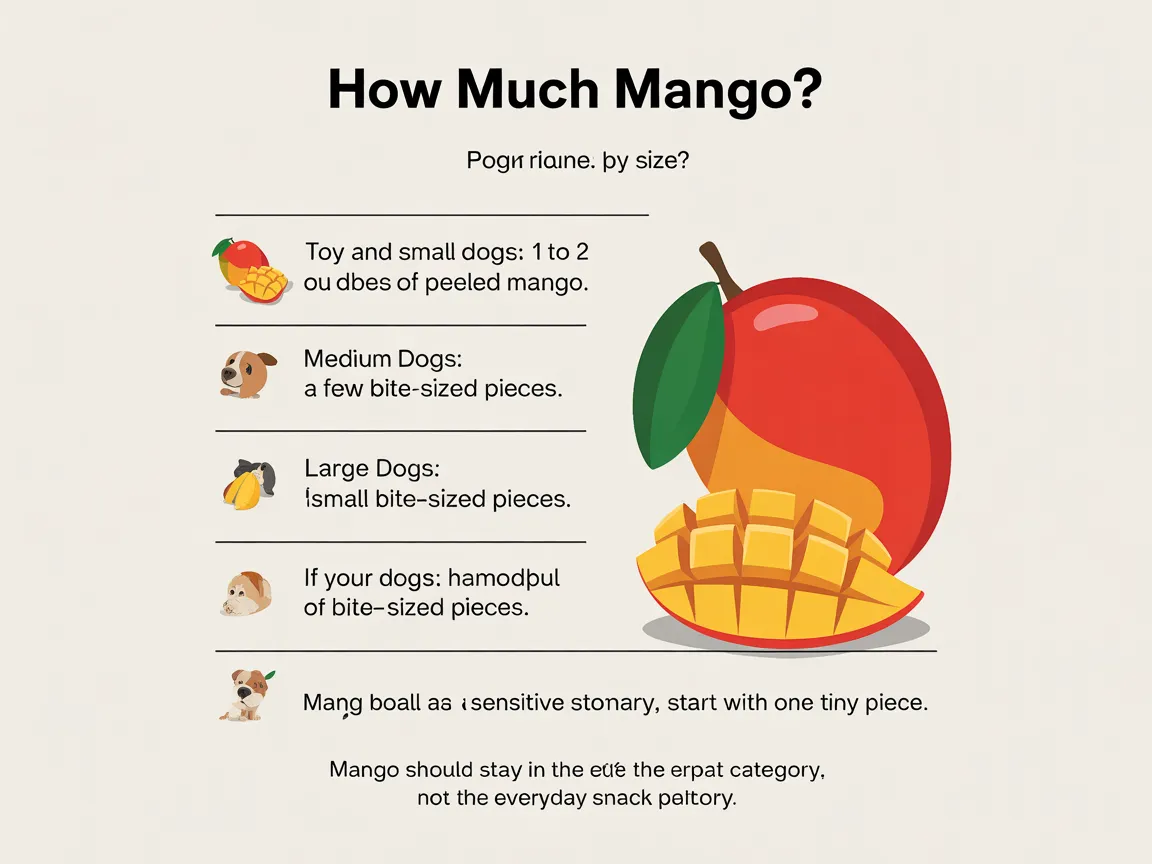
- Toy and small dogs: 1 to 2 small cubes of peeled mango.
- Medium dogs: a few bite-sized pieces.
- Large dogs: a small handful of bite-sized pieces.
- If your dog has a sensitive stomach, start with one tiny piece or skip mango altogether.
Mango should stay in the treat category, not the everyday snack category. Fruit adds sugar fast, and dogs do not need much before their stomach decides it has had enough.
That matters even more for puppies. Can puppies eat mango? Technically yes, but only in very small amounts, because their digestive systems are still easy to upset and they’re more likely to swallow pieces too quickly.
If fruit has ever set off diarrhea in your dog, think of mango as a test, not a reward. A dog with a history of gastroenteritis, pancreatitis, or a food-sensitive stomach may do better with a lower-sugar option altogether.
When is mango dangerous for dogs?
- Your dog swallowed the pit, or you are not sure whether they did.
- Your dog is gagging, coughing, pawing at the mouth, or struggling to breathe.
- Your dog has repeated vomiting, a swollen or painful belly, drooling, severe lethargy, or will not eat.
- Your dog seems weak, restless, or uncomfortable after eating a large amount of mango skin or flesh.
- Your dog has diarrhea that is watery, bloody, or paired with signs of pain.
Those symptoms can point to choking or an intestinal blockage, which is much more serious than a simple fruit upset. The ASPCA Animal Poison Control Center and Pet Poison Helpline both advise acting quickly when a dog may have swallowed something that could block the gut or cause a significant reaction ASPCA Animal Poison Control Center, Pet Poison Helpline.
A mango pit is especially worrisome if your dog is small, because something that might pass in a larger dog can become a problem in a smaller one. If breathing looks difficult, do not wait to see whether it improves on its own.
What should you do if your dog already ate mango?
- Check whether only the flesh was eaten or whether skin or the pit was involved.
- Watch your dog closely for the next several hours for vomiting, diarrhea, drooling, coughing, gagging, belly pain, or a sudden drop in energy.
- Offer water, but do not force food if your dog seems nauseated.
- If your dog seems normal after a small amount of peeled mango flesh, home observation is usually reasonable.
- Call your vet right away if the pit was swallowed, your dog ate a lot of skin, or symptoms start and do not settle quickly.
Have a few details ready before you call: how much mango was eaten, whether the skin or pit was involved, your dog’s weight, and when the snack happened. That information helps your vet or poison-control contact decide whether your dog needs an exam, X-rays, or just close monitoring.
The FDA Center for Veterinary Medicine, AVMA, and Merck Veterinary Manual all stress that the risk depends on what was swallowed, the size of the dog, and which symptoms show up afterward rather than on one blanket rule FDA Center for Veterinary Medicine, AVMA, Merck Veterinary Manual.
Are there better dog-safe fruit options than mango?
| Fruit | Dog-safe? | Prep needed | Main practical risk |
|---|---|---|---|
| Blueberries | Yes | Wash and serve plain | Low risk, but still sugary if overfed |
| Apple slices | Yes, if seeds and core are removed | Cut small and remove seeds | Seeds and core should never be offered |
| Watermelon | Yes, if seedless and rind-free | Remove seeds and rind, serve small pieces | Too much can cause stomach upset |
| Mango | Yes, in small amounts only | Peel it, remove the pit, cut tiny pieces | Higher sugar and more prep than the options above |
If you want a lower-risk snack for a dog with a delicate stomach, blueberries are often the easiest pick because they need almost no prep. Apple slices can work well too, as long as the seeds and core are left out completely, and seedless watermelon is a good warm-weather treat when the rind stays off the plate.
Cornell University College of Veterinary Medicine and Tufts University Cummings School of Veterinary Medicine both emphasize that any treat should fit your dog’s individual digestion, size, and overall diet rather than being treated as automatically healthy just because it’s a fruit Cornell University College of Veterinary Medicine, Tufts University Cummings School of Veterinary Medicine.
When should you call the vet?
Call your vet if your dog ate mango skin, swallowed the pit, or starts vomiting more than once after eating mango. You should also call if your dog has diarrhea that keeps going, seems painful, or is acting off in a way that feels bigger than a simple stomach tweak.
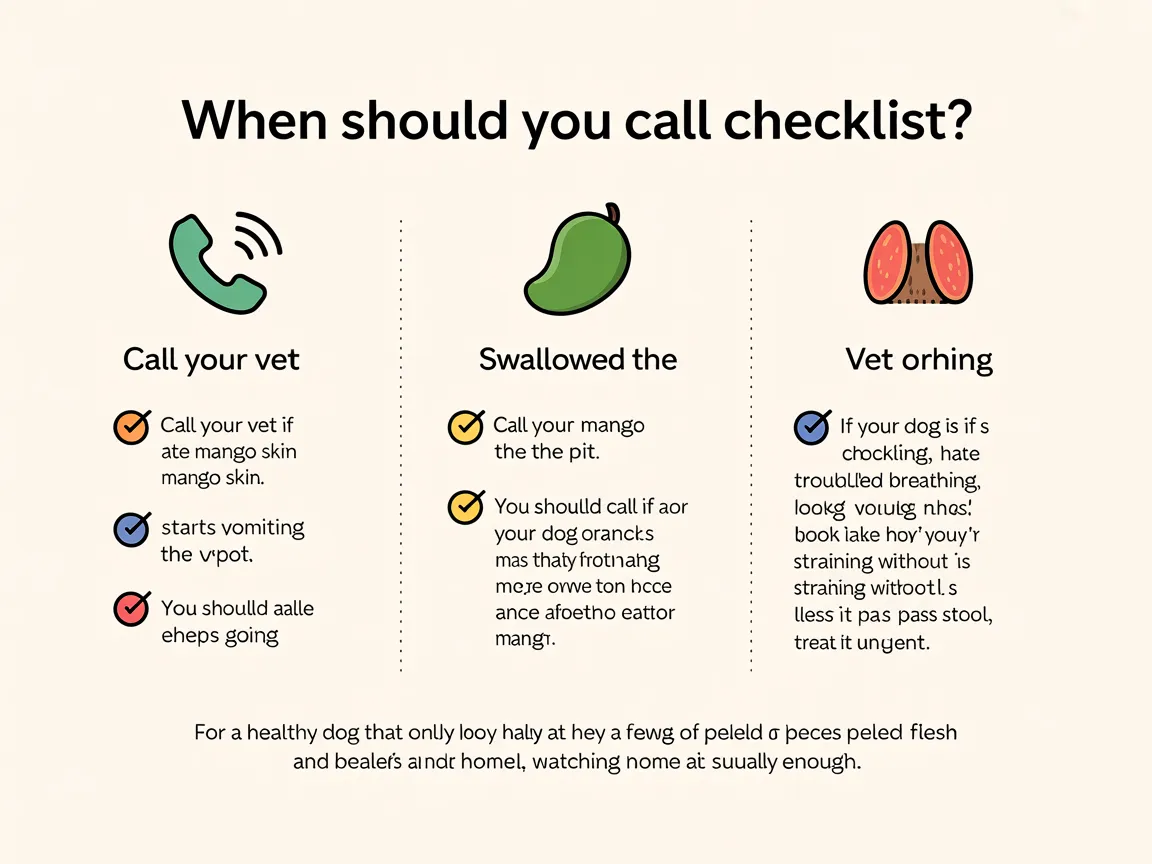
If your dog is choking, has trouble breathing, or looks like they’re straining without being able to pass stool, treat it as urgent. That is not the kind of situation to watch overnight.
For a healthy dog that only had a few pieces of peeled mango flesh and seems normal, watching at home is usually enough. Still, if your gut says something is off, trust that feeling and make the call. Dogs are very good at acting fine until they aren’t.
In practical terms, mango can be a safe little treat, but only when it’s plain, peeled, pit-free, and given sparingly. If you’re ever standing in the kitchen wondering whether your dog just ate too much, the skin and pit are the details that matter most.
Quick answers
Can dogs eat mango skin?
It’s best to avoid it. Mango skin is tough to digest and can irritate the stomach, especially in dogs that already have a delicate gut.
Can dogs eat mango pits?
No. Mango pits can cause choking, block the digestive tract, and may damage teeth if a dog tries to chew on them.
Can puppies eat mango?
Yes, but only tiny pieces of peeled fruit and only occasionally. Puppies are more likely to get diarrhea or gulp pieces down too fast.
What happens if my dog eats too much mango?
The most common result is stomach upset, especially loose stool or vomiting. In some dogs, a large amount can also lead to more persistent digestive trouble.
Is frozen mango okay for dogs?
Yes, if it’s plain, peeled, pit-free mango cut into small pieces. Just make sure the chunks are small enough to prevent choking.
References
The veterinary references behind this guide:
- AKC, Can Dogs Eat Mango?
- AKC, Fruits and Vegetables Dogs Can and Can't Eat
- VCA Animal Hospitals, Can You Feed Pets Certain Fruits and Veggies?
- VCA Animal Hospitals, Nutrition: General Feeding Guidelines for Dogs
- ASPCA Animal Poison Control Center