
Can Dogs Eat Broccoli? Safety Limits, Risks, and the 10% Rule
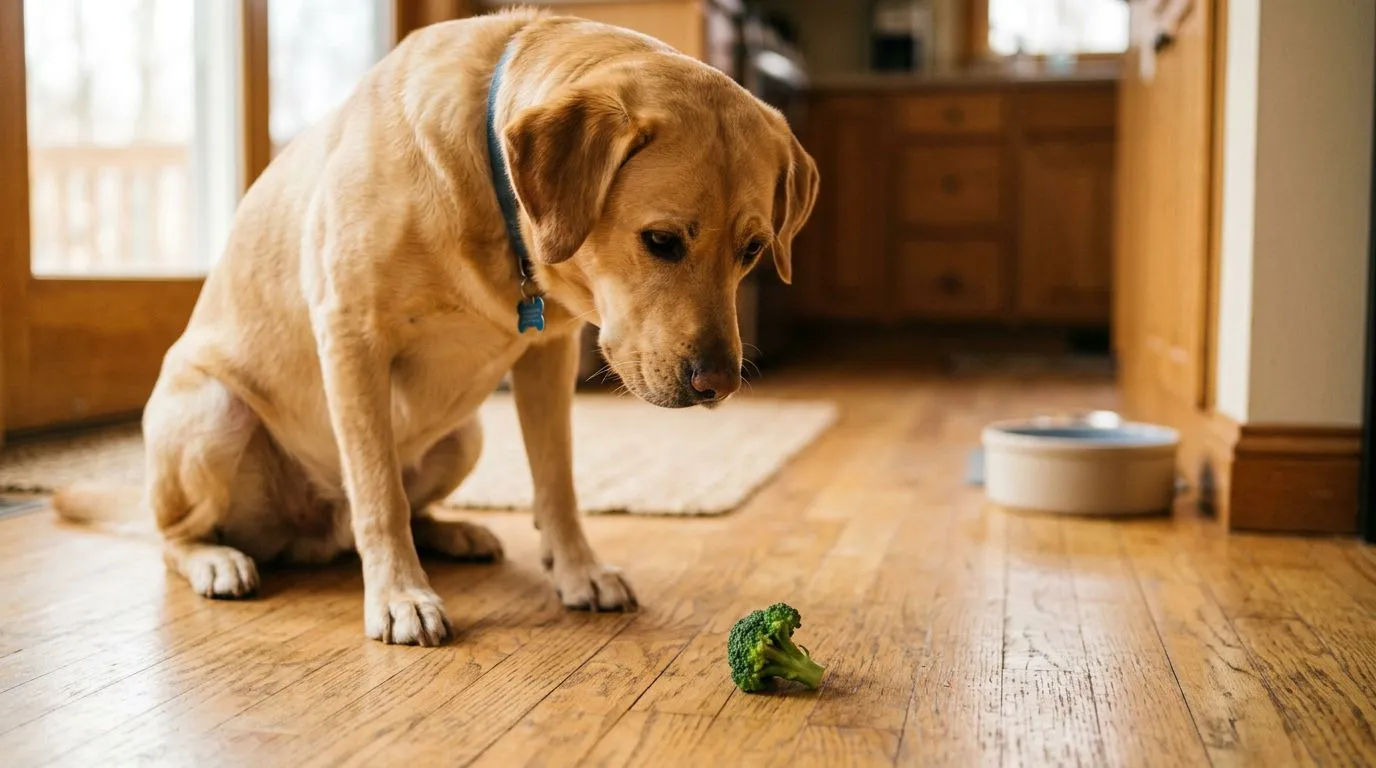
Yes, dogs can eat broccoli, and in small, sensible amounts it's actually a healthy little treat. It's non-toxic, it shows up on standard "safe vegetables for dogs" lists, and most dogs do just fine with a few plain florets now and then.
That said, there are two things worth understanding before you make it a habit: broccoli can cause digestive upset if a dog eats too much of it, and the tougher stalks can be a choking or blockage risk, especially for smaller dogs. Neither of these is a reason to panic, they're just things to plan around.
My Golden Retriever, Barnaby, discovered broccoli by accident years ago when a floret rolled off the cutting board. He's been a fan ever since, though I learned early on to cut pieces small after watching him try to inhale a whole one in a single, slightly alarming gulp.
The 10% rule, in short
- Broccoli is safe for dogs in moderation, it's not a toxic or forbidden food, and it appears on standard lists of dog-safe vegetables.
- The main risk isn't poisoning; it's digestive upset (gas, loose stool) if your dog eats too much at once.
- The stalks are the bigger physical hazard, they're tough and fibrous, and large chunks can cause choking or an intestinal blockage, particularly in small dogs.
- A good general guide is the 10% rule: treats of any kind, broccoli included, shouldn't make up more than about 10% of your dog's daily calories.
- Always serve it plain, no oil, butter, salt, garlic, or onion, cut into small, dog-appropriate pieces.
- Puppies can have a tiny taste occasionally, but their diet should center on a complete puppy food, and any new food should be introduced slowly and cleared with your vet first.
Is Broccoli Actually Good for Dogs?
Broccoli isn't just "not harmful" it genuinely has some nutritional upside when given the right way.
- Fiber: Broccoli is high in fiber, which can support healthy digestion and regular bowel movements when fed in appropriate amounts.
- Vitamin C: Supports the immune system, though dogs also produce their own vitamin C internally, so this is a bonus rather than something they're lacking.
- Vitamin K: Plays a role in healthy blood clotting and bone health.
- Potassium: Supports normal muscle and nerve function.
- Low in calories: Compared to a lot of commercial treats, broccoli is a light option, which can be handy if your dog is watching their weight.
The important caveat: broccoli is a supplement to a good diet, not a substitute for one. A complete, balanced dog food should already be covering your dog's core nutritional needs, broccoli is a bonus, not a requirement. If your dog has a sensitive stomach in general, it's worth reading our guide on the best food for dogs with sensitive stomachs before adding new extras to the mix.
How Much Broccoli Can My Dog Eat?
The simplest rule of thumb: treats, including broccoli, should stay under about 10% of your dog's total daily calorie intake. The other 90% should come from a complete, balanced dog food. Exactly what that 10% looks like depends heavily on your dog's size, a few florets might be nothing for a Great Dane but a full serving for a Chihuahua.
| Dog Size | Weight | Max Amount (occasional treat) | Notes |
|---|---|---|---|
| Toy | Up to 10 lb (4.5 kg) | 1-2 pea-sized pieces | Small dogs hit the 10% limit fast, a little goes a long way. |
| Small | 10-25 lb (4.5-11 kg) | A few small, bite-sized pieces | Cut pieces smaller than you think you need to. |
| Medium | 25-50 lb (11-23 kg) | A small handful of florets | Fine as an occasional add-on to a meal or as a training treat. |
| Large | 50-90 lb (23-41 kg) | A generous handful | Still keep pieces bite-sized rather than whole florets. |
| Giant | Over 90 lb (41+ kg) | Roughly a cup, divided into pieces | Even big dogs should stay within the 10% guideline. |
These are general starting points, not exact prescriptions, your dog's activity level, age, and overall diet all factor in. If you're unsure how treats fit into your dog's daily food budget generally, our piece on how much you should feed your dog is a useful companion read.
The Two Real Risks
It's worth being specific here, because the internet tends to either wildly overstate or completely ignore these two issues.
1. Digestive Upset From Overdoing It
Broccoli florets naturally contain compounds called isothiocyanates, along with a good amount of fiber. In small amounts, neither is a problem. But if a dog eats a large quantity, say, they raid the cutting board, the combination can irritate the digestive tract and lead to gas, loose stool, or mild stomach upset. This is dose-related and usually resolves on its own within a day. It's the same basic reason broccoli, cabbage, and Brussels sprouts have a bit of a reputation for causing gas in humans too.
If your dog already tends to have a sensitive stomach, this reaction can show up with even smaller amounts, so it's worth going slower than the table above suggests and watching how they respond. If loose stool becomes a recurring issue, our guide on when dog diarrhea is something to worry about walks through what's normal and what's not.
2. Choking or Obstruction From the Stalks
This is the risk that deserves more attention than it usually gets. Broccoli stalks are thick, fibrous, and tough, much tougher than the florets. A dog who gulps down a large chunk, rather than chewing it, can end up with it stuck in the throat or, less commonly, further down the digestive tract, where it can cause a blockage. This is a bigger concern for small dogs and for any dog that tends to eat quickly without much chewing.
The fix is simple: don't hand over whole stalks or large pieces. Cut everything down to a size your dog can comfortably chew and swallow, and supervise the first few times you offer it.
How to Prepare Broccoli Safely
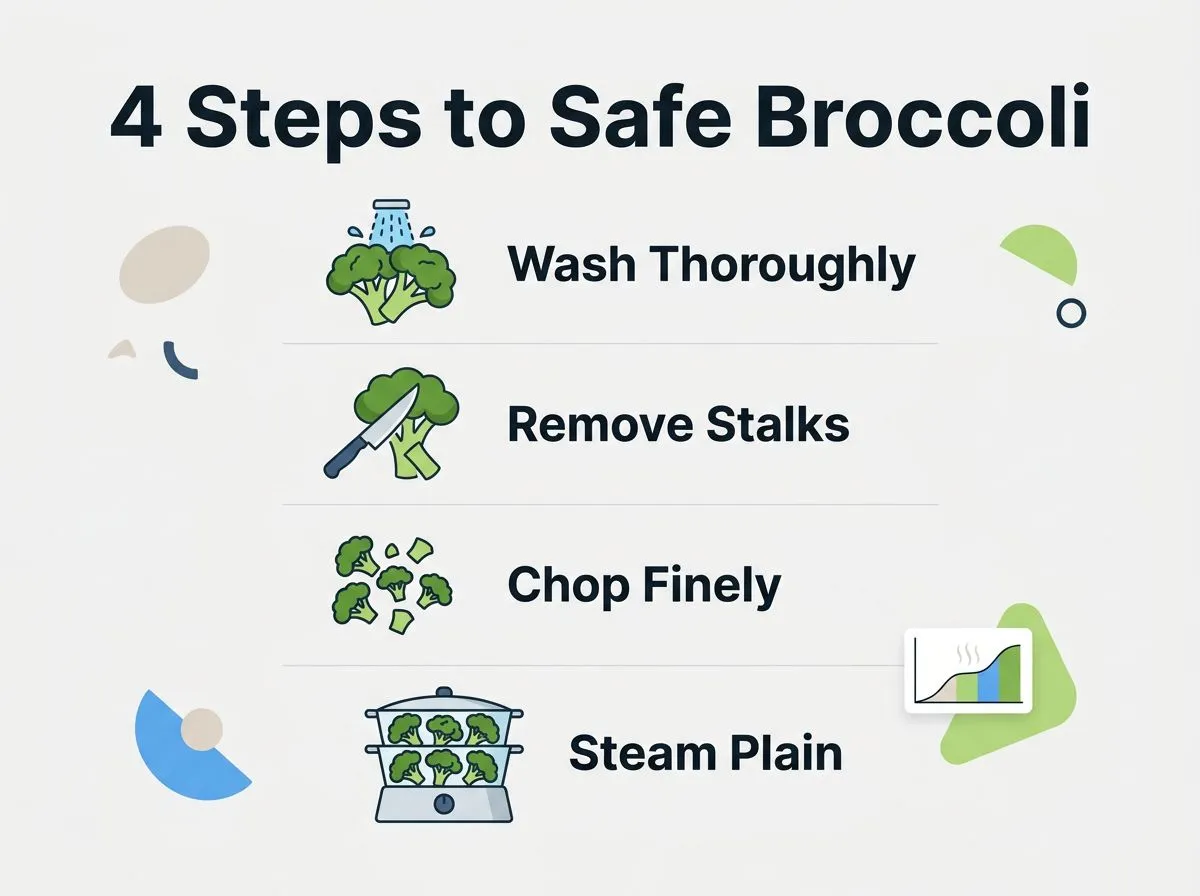
- Wash it thoroughly to remove any dirt, pesticide residue, or bacteria.
- Trim away the toughest part of the stalk, or peel it if you're keeping some of it, the outer layer is the fibrous, harder-to-chew part.
- Cut everything into small, dog-appropriate pieces based on your dog's size, think pea-sized for small dogs, slightly larger for big dogs, but always bite-sized.
- Serve it plain, raw or lightly steamed, with no oil, butter, salt, garlic, onion, or seasoning of any kind. Steaming softens the texture, which makes it easier to chew and digest, and can lower the choking risk compared to raw stalks.
- Introduce it slowly. Start with one small piece the first time, and keep an eye on your dog's stool and energy over the next 24 hours before making it a regular thing.
When to Call the Vet
Most broccoli mishaps resolve with nothing more than a slightly gassy evening. But there are a few signs that mean it's time to call your vet rather than wait it out:
- Vomiting or diarrhea that's persistent, severe, or contains blood
- Retching, gagging, or pawing at the mouth (possible signs of something stuck in the throat)
- Inability to keep water down
- A painful, bloated, or tense-feeling belly
- Straining without producing stool
- Your dog swallowed a large piece of stalk whole, especially if they're a small breed
None of these are common outcomes from a normal-sized broccoli treat, they're mainly relevant if your dog got into a much larger amount than intended, or swallowed a big piece without chewing. If you're ever unsure, a quick call to your vet is always the right move.
How Does Broccoli Compare to Other Dog-Safe Foods?
Broccoli is one of several fruits and vegetables that are fine for dogs in moderation, each with its own quirks:
- Blueberries, low-calorie, antioxidant-rich, and generally easier on the stomach than broccoli.
- Watermelon, hydrating and sweet, but the rind and seeds need to be removed first.
- Mango, tasty and nutritious in small amounts, though higher in natural sugar than broccoli.
- Bananas, a good source of potassium, but also higher in sugar, so smaller portions apply.
If you're building out a rotation of healthy treats, it's worth checking our full list of foods that are actually toxic to dogs, broccoli isn't on it, but plenty of common kitchen staples are, and it's a good one to bookmark.
Common questions
Can dogs eat raw broccoli?
Yes. Raw broccoli is safe as long as it's washed, plain, and cut into small pieces. Some dogs digest it a little more easily when it's lightly steamed instead, since steaming softens the fiber.
Can puppies eat broccoli?
A very small taste occasionally is generally fine for most puppies, but their digestive systems are still developing, so they're more sensitive to new foods than adult dogs. Puppy nutrition should come primarily from a complete, age-appropriate puppy food. If you want to offer a small piece of broccoli, introduce it in a tiny amount, watch closely for any reaction, and check with your vet first, especially for very young or small-breed puppies.
Can dogs eat broccoli stems or stalks?
Yes, but with more caution than the florets. Stalks are tougher and more fibrous, and whole or large pieces are a genuine choking and obstruction risk. If you offer stalk, peel the tough outer layer and cut it into small, thin pieces, or just steam it first to soften it.
Is frozen or cooked broccoli okay?
Plain steamed or lightly cooked broccoli is fine, and frozen broccoli (thawed or offered as a cold treat) is fine too, as long as nothing has been added, no butter, oil, cheese sauce, or seasoning blends.
Can dogs eat broccoli every day?
It's better treated as an occasional extra rather than a daily habit. Feeding it often, even in small amounts, increases the odds of digestive irritation over time for some dogs. Keeping it within the 10% treat rule and not every single day is the safer approach.
Sources
This article was checked against established, veterinarian-reviewed pet nutrition resources:
- ASPCA, guidance on foods for pets
- American Kennel Club, Can Dogs Eat Broccoli?
- Purina, pet feeding guidance on broccoli
- VCA Animal Hospitals, client health resources
- Merck Veterinary Manual