
Can Dogs Eat Bananas? Benefits, Risks, and Safe Servings
Yes, dogs can safely eat bananas in moderation, and most of them absolutely love the taste. My Golden Retriever, Barnaby, has been earning a slice or two as a training reward for years, and bananas have never caused him a single problem when I keep the portions sensible. The catch is that "safe" and "unlimited" are two very different things, bananas are high in natural sugar, and the peel is a real hazard that quick online answers tend to skip over. Before you hand your dog a whole banana, there's more to know than most articles admit. Here's everything I've learned about feeding bananas the right way.
Bananas at a glance
- Bananas are non-toxic and safe for dogs as an occasional treat, never as a daily staple or meal replacement.
- Always peel the banana first, the peel isn't poisonous, but it's tough to digest and can cause an intestinal blockage.
- Follow the 10% rule: treats of any kind, banana included, should make up no more than 10% of your dog's daily calories.
- Limit or skip banana entirely for dogs with diabetes, weight problems, or a sensitive stomach, because of the sugar load.
- Portion strictly by size, a Chihuahua needs one or two thin slices, while a Great Dane can manage a small whole banana.
Is banana safe for dogs? A quick comparison
If you've ever felt a flash of panic after your dog snatched a piece of fruit off the floor, you already know that not all "human foods" are equal. Some are harmless. A few are genuinely dangerous. The good news is that banana sits firmly in the harmless-when-managed category, which is exactly why it's such a popular training treat.
The table below places banana next to foods that veterinarians treat as true emergencies. It's a useful anchor, because plenty of people searching "can dogs eat bananas" are really asking whether bananas belong on the toxic list at all.
| Food | Toxic? | Risk Level | Safe for Dogs? |
|---|---|---|---|
| Banana (peeled) | No | Low, sugar only | Yes, in moderation |
| Grapes & raisins | Yes | Severe, kidney failure | No, never |
| Xylitol (sweetener) | Yes | Severe, rapid toxicity | No, never |
| Macadamia nuts | Yes | High, weakness, tremors | No, never |
The takeaway is simple. Banana carries no toxic compounds the way grapes or xylitol do. Its only real downside is sugar and calories, and that's a management problem, not a poisoning risk. That distinction matters, and it shapes everything else in this guide.
The nutritional benefits of bananas for dogs
Bananas earn their reputation as a "good" treat because they're nutrient-dense rather than empty calories. Here's what one medium banana (118g) actually contains (Source: USDA FoodData Central):
| Nutrient | Amount per 118g banana |
|---|---|
| Potassium | 422 mg |
| Vitamin B6 | 0.43 mg (25% of average daily need) |
| Vitamin C | 10.3 mg |
| Dietary fiber | 3.1 g |
| Natural sugars | 14.4 g |
| Calories | 105 kcal |
Those numbers are calculated for humans, so the relevance to your dog depends heavily on portion size. A Beagle is not eating a whole banana, it's eating a few slices, which means it gets a fraction of these values. Still, even small amounts deliver something worthwhile, and the first time I gave Barnaby a slice, he treated it like I'd handed him a steak. Tail going, full attention, the works.
Potassium, B6, and vitamin C: the heart-and-nerve trio
Potassium is the headline nutrient here, and for good reason. In a dog's body, potassium helps regulate the electrical signals that keep the heart beating steadily and the muscles contracting properly. It also supports healthy fluid balance inside the cells. Dogs eating a complete, balanced commercial diet already get adequate potassium, so a banana slice isn't filling a deficit, it's a gentle bonus rather than a treatment.
Vitamin B6 plays a quieter but important role, helping the body process amino acids and produce the neurotransmitters involved in mood and nerve function. Vitamin C is interesting in dogs specifically, because unlike us, healthy dogs synthesize their own vitamin C in the liver. That means the 10.3 mg in a banana isn't essential the way it is for humans, though a little extra antioxidant support during times of stress or illness does no harm. As pet-care resources like Purina note, fruits like banana work best as a supplement to a balanced diet, not a replacement for it.
Fiber: the digestion factor that cuts both ways
The 3.1 g of fiber in a banana is where things get genuinely useful for some dogs. Fiber adds bulk to stool and feeds the beneficial bacteria in the gut, which can help firm up mild, occasional loose stools. This is why so many owners reach for a little mashed banana when their dog has a slightly off tummy, and there's real logic behind it.
But fiber cuts both ways, and this is the part people forget. Too much, too fast, will do the opposite of what you want, gas, cramping, and loose stools instead of firmer ones. A dog's digestive system handles fiber best when the amount is small and consistent. The veterinary teams at clinics like Comal Pet Hospital make the same point repeatedly: moderation isn't a throwaway caveat with bananas, it's the whole strategy.
The Banana Readiness Check
Before you peel that banana, run through this quick mental checklist I now use every single time, especially with a dog I don't know well or a first-time banana eater.
- 1. SIZE CHECK, Is the piece small enough for your dog's breed? A slice that's a sensible bite for a Labrador is a choking risk for a Yorkie. Match the piece to the mouth, not to your own sense of "small."
- 2. HEALTH CHECK, Does your dog have diabetes, obesity, or a sensitive stomach? If yes, banana's sugar and fiber can tip an already-delicate balance, and it's worth checking with your vet before making it a regular treat.
- 3. TIMING CHECK, Is this an isolated treat, or part of a day that already included other snacks? Treats stack up fast. A banana slice on top of three other rewards quietly blows past the 10% calorie budget.
It takes about five seconds to run through, and it has saved me from absent-mindedly over-treating Barnaby on days we'd already been doing a lot of training. The framework isn't fancy. It just forces a pause before the peel comes off.
The risks: peels, sugar, and choking
Bananas are low-risk, not no-risk. The three problems below are the ones worth taking seriously, and the first one is the one that nearly caught me off guard early on.
Banana peels and the blockage risk
Banana peels are not toxic, which is the reassuring half of the story. If your dog grabs a peel off the counter, you're not dealing with a poisoning. The genuine concern is mechanical: peels are fibrous, tough, and very hard for a dog to digest. Swallowed whole or in large pieces, a peel can lodge in the digestive tract and cause a partial or full blockage, and that's a surgical emergency, not a wait-and-see situation.
I'll be honest, this is the risk I underestimated at first. Early on, I peeled a banana over the trash and a long strip slipped onto the floor, and Barnaby had it in his mouth before I'd even turned around. He spat it out, thankfully, but it changed how I do this. Now I peel directly over a closed bin and never leave a peel within reach. Allstate's pet insurance guidance flags blockages as one of the more common avoidable emergencies, and a discarded peel is exactly the kind of thing that causes them.
Natural sugar: diabetes, weight, and dental health
That 14.4 g of natural sugar is the reason banana can't be an everyday, all-you-want food. For a healthy dog at a healthy weight, the occasional slice is no issue at all. For a dog managing diabetes, sugar from any source, even "natural" fruit sugar, can complicate blood glucose control, so these dogs need a vet's input before banana enters the rotation.
Weight is the slower, sneakier problem. Banana is calorie-dense for a treat, and extra calories that don't get burned turn into extra pounds, which strain joints and shorten lives. The sugar matters for teeth, too. Sticky, sugary residue feeds the bacteria behind plaque and gum disease, so a quick drink of water or a dental chew after a banana treat is a small habit that pays off over years.
Choking hazards and the right piece size
Choking is the most preventable risk on this list, and it comes down entirely to how you cut the banana. A chunk that's too large for your dog's throat, or a slice gulped whole by an enthusiastic eater who barely chews, can lodge in the airway. Small dogs and fast eaters are the highest-risk combination.
The fix is boring and effective: cut to size and supervise. Thin slices for small dogs, slightly larger pieces for big ones, and never walk away while your dog is working through a treat. Minnieville Animal Hospital makes the same recommendation for most fruit treats, and it's the kind of advice that sounds obvious right up until the one time you skip it.
How much banana can your dog safely eat?
Here's where the 10% rule becomes concrete. Use the table below as your starting point, matched to your dog's weight, then adjust down if your dog is less active or watching its weight.
| Dog Size | Weight | Breed Example | Max Daily Serving | 10% Rule Rationale |
|---|---|---|---|---|
| Toy | Under 10 lbs | Chihuahua, Pomeranian | 1-2 thin slices | Small stomachs fill up instantly; even 3 slices can exceed the daily treat calorie budget |
| Small | 10-25 lbs | Shih Tzu, Dachshund | 2-3 slices | Moderate sugar load; safe as a post-training reward |
| Medium | 25-50 lbs | Beagle, Cocker Spaniel | 4-5 slices | Provides a potassium boost without metabolic overload |
| Large | 50-90 lbs | Golden Retriever, Boxer | Half a small banana | Balances potassium intake with standard caloric plan |
| Giant | Over 90 lbs | Great Dane, Mastiff | One small whole banana | Giant breeds process fiber well, but excess leads to loose stools |
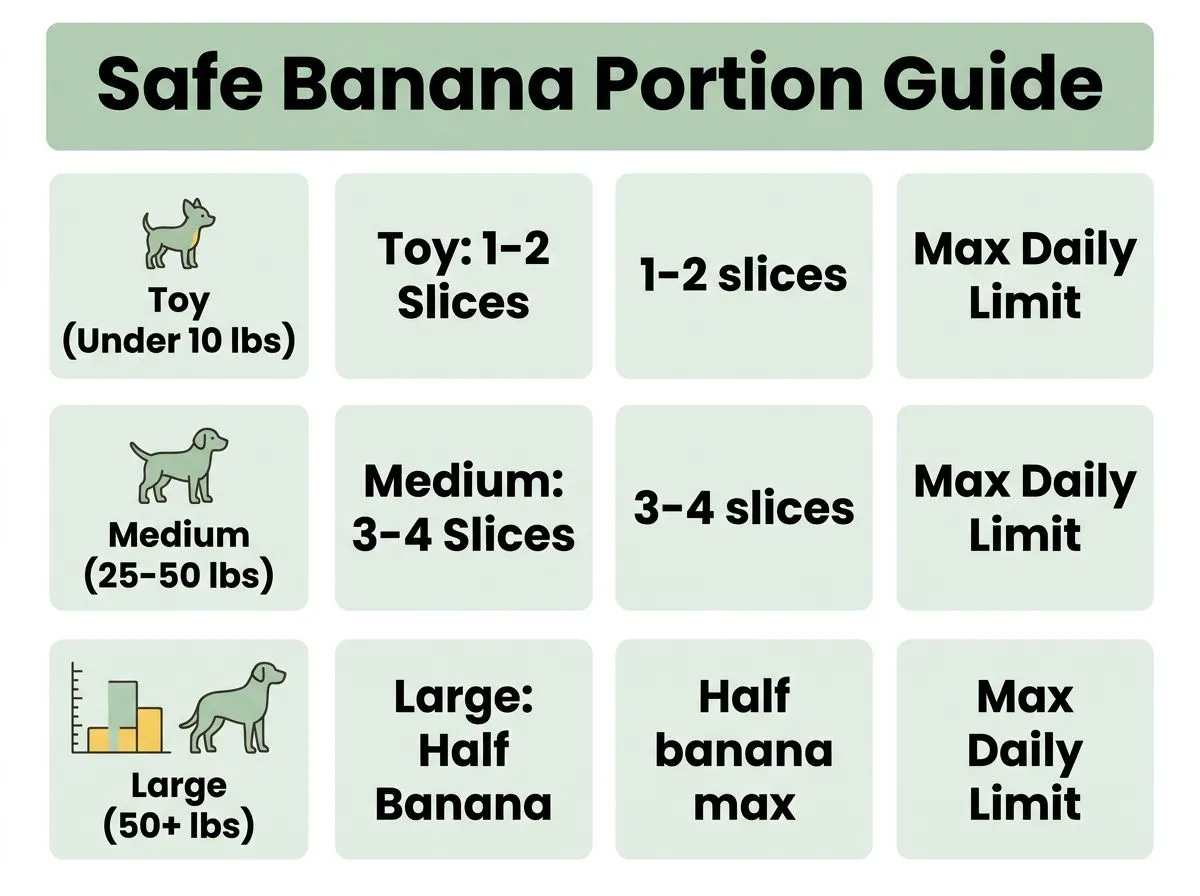
Remember that these are ceilings, not targets. On a typical day, Barnaby gets far less than half a banana, because banana is only one of several things he might earn during training. The table tells you the upper boundary for a dog with no health issues. The Banana Readiness Check tells you whether today is even a banana day.
Safe and creative ways to serve bananas
Half the fun of bananas is how many ways you can serve them, and a little creativity turns a plain slice into genuine enrichment. Here are four methods I rotate through, starting with the one I use most.
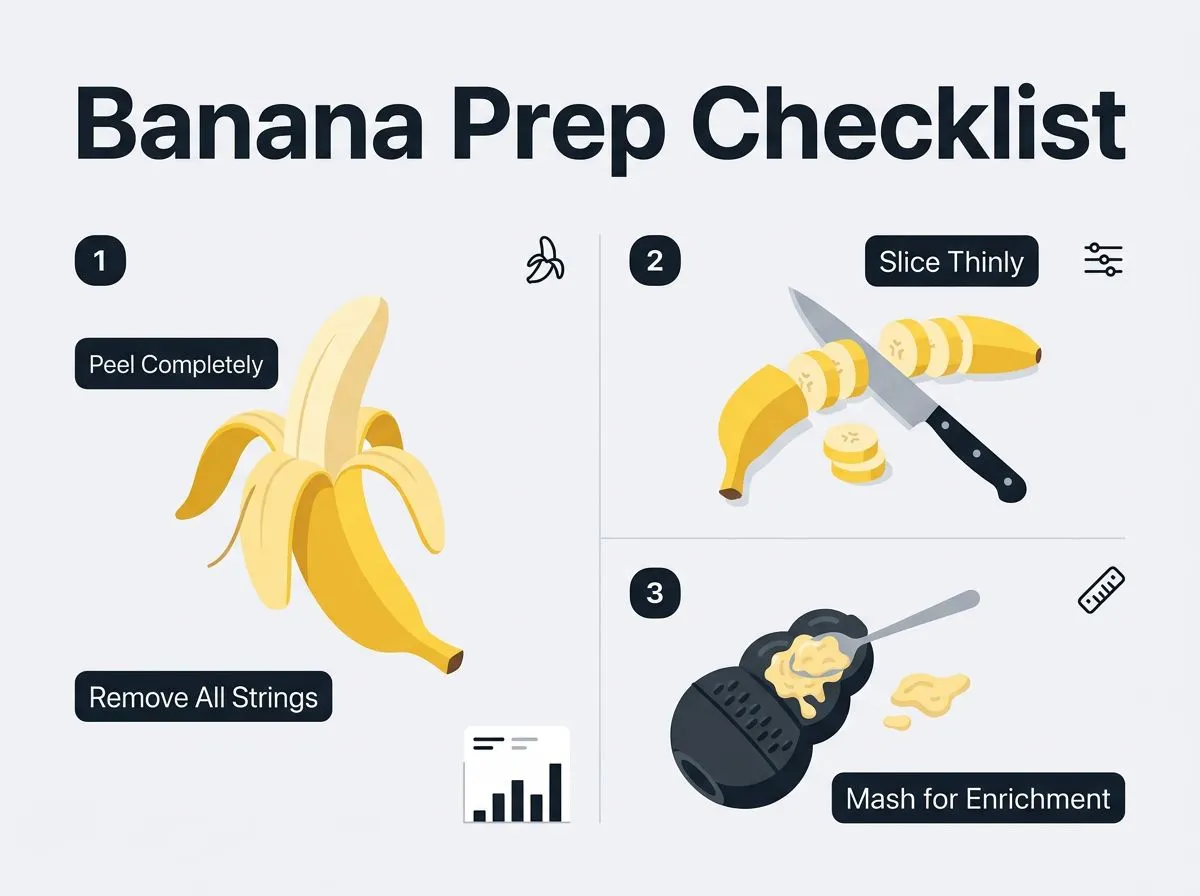
Plain fresh slices. This is my default, and it's Barnaby's favorite. I peel the banana, cut thin coins sized to his mouth, and hand them over one at a time during training. Simple, fast, and easy to portion. My one personal rule: I always slice on a board rather than breaking pieces off by hand, because hand-broken chunks come out uneven and the big ones are where choking risk creeps in.
Frozen banana coins. On hot afternoons, frozen slices become a cooling, longer-lasting treat that takes some effort to crunch through. The cold also slows down gulpers, which is a quiet bonus for fast eaters. Freeze them flat on a tray so they don't clump into one giant lump.
Mashed banana as a meal topper. A small spoonful of mashed banana stirred into regular food adds flavor and a little fiber, and it's a gentle way to introduce banana to a dog who's never tried it. This is also the form most people reach for during a mildly upset stomach.
Banana and a thin smear of dog-safe peanut butter on a lick mat. This one is pure mental enrichment. Spread a little mashed banana and a thin layer of xylitol-free peanut butter across a lick mat, and the slow licking is calming and time-consuming in the best way. Always check that the peanut butter contains no xylitol, which is toxic to dogs even in tiny amounts.
Signs your dog reacted badly to banana
Most dogs tolerate banana beautifully. But the first time you offer any new food, watch how your dog responds over the next half-day. Here's what to look for and when it matters.
Digestive distress (2-12 hours)
The most common reaction to too much banana is a digestive one, and it usually shows up within 2 to 12 hours of eating. Look for loose stools, gas, a gurgling stomach, or temporary loss of appetite. These signs almost always trace back to quantity rather than the banana itself, a dog that did fine on two slices may get an upset gut from ten.
If this happens, the fix is usually simple. Pause banana for a week or two, let the digestive system settle, and reintroduce a much smaller amount later. Mild, short-lived stomach upset that resolves on its own isn't an emergency. But if loose stools persist beyond a day, or your dog seems lethargic or unwell alongside the digestive signs, that's the point to call your vet rather than wait it out.
Allergic reactions (rare but real)
True banana allergies in dogs are uncommon, but they do exist, and they look different from a simple stomach upset. The signs of an allergic response include itchy skin, repeated scratching, red or inflamed patches, swelling around the face or muzzle, or hives. In rare and serious cases, you might see difficulty breathing, which is an immediate emergency.
Because allergies are unpredictable, the safest approach with any first-time food is a small test portion and a watchful eye. If you notice itching or swelling after banana, even mild, stop offering it and mention it to your vet. An allergy that produces minor itching today can produce a stronger reaction next time, so it's not something to test repeatedly at home.
When to call your vet
Some situations move banana from "monitor at home" to "get professional help." Call your vet promptly if your dog shows any breathing difficulty, facial swelling, repeated vomiting, signs of severe abdominal pain, or unusual lethargy after eating banana. These go beyond a normal treat reaction and deserve a professional eye.
If you suspect a peel was swallowed, treat it as an emergency, do not wait for symptoms. A blockage can take hours to become obvious, and by the time clear distress appears, the situation is often more serious and harder to treat. When in doubt, a quick call to your vet or an emergency clinic is always the right move; they would far rather hear from you early than late.
Quick answers
Can dogs eat banana peels?
No, you should never let your dog eat a banana peel. While the peel isn't toxic, it's extremely fibrous and difficult to digest, which makes it a real risk for intestinal blockage, a problem that can require surgery. Always peel the banana fully and dispose of the peel where your dog can't reach it. If your dog does swallow a peel, contact your vet right away rather than waiting to see if symptoms develop.
Can puppies eat bananas?
Yes, puppies can have a tiny amount of banana, but the portion needs to be much smaller than an adult dog's. A puppy's stomach is little and still developing, so start with a sliver of a thin slice and watch for any digestive upset. Their main nutrition should come from a complete puppy food formulated for growth. Treat banana as a very occasional reward, and check with your vet before adding new foods to a young puppy's diet.
Do bananas help a dog's upset stomach?
Sometimes, in small amounts. The fiber in banana can help firm up mild, occasional loose stools, which is why a spoonful of mashed banana is a popular home remedy. That said, it's a gentle support, not a cure. If your dog's stomach upset is severe, lasts more than a day, or comes with vomiting or lethargy, skip the home remedies and call your vet, because those signs can point to something more serious than a simple tummy ache.
Can dogs eat frozen bananas?
Yes, frozen bananas are perfectly safe and make an excellent hot-weather treat. Freezing doesn't change the nutrition, and the cold, harder texture naturally slows down fast eaters, which lowers choking risk. Slice the banana into appropriately sized coins before freezing so the pieces stay easy to portion and chew. The same rules apply as with fresh banana: peel it first, keep servings small, and match the piece size to your dog's breed and mouth.
References
- Can Dogs Eat Bananas? A Guide to Safety | Purina US
- Can Dogs Eat Bananas? - Minnieville Animal Hospital
- Can Dogs Eat Bananas? | Comal Pet Hospital
- What fruits can my dog eat? | Allstate Pet Insurance
- Banana nutrition data | USDA FoodData Central